Warsaw Home & Contract 2027
27–30 October 2027
Ptak Warsaw Expo, Aleja Katowicka 62, 05-830 Nadarzyn, Poland
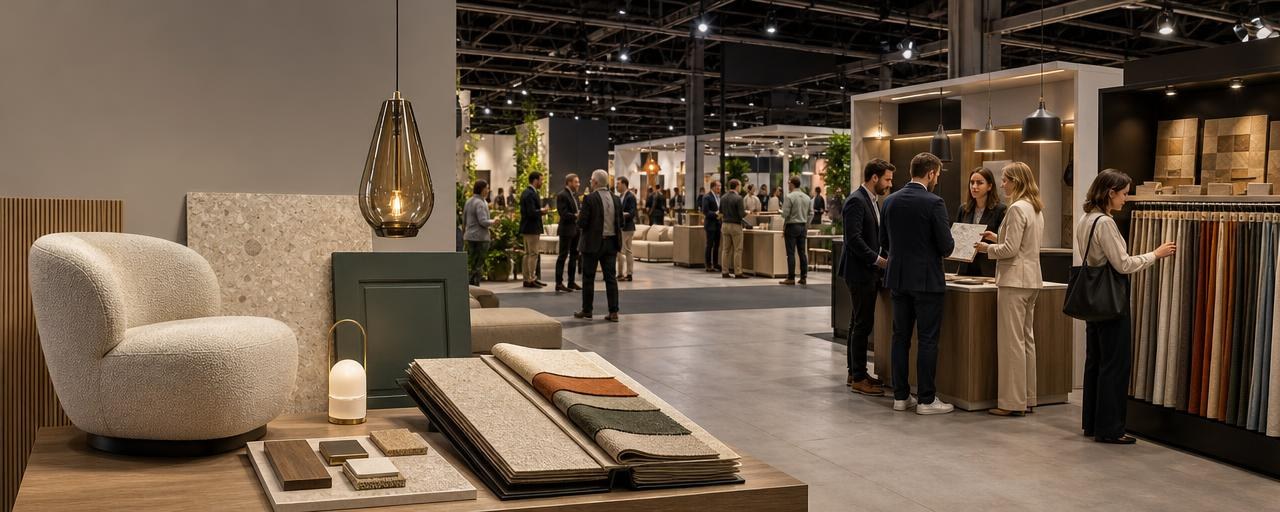
Warsaw Home & Contract is an international contract fair for the interior design industry. Its 2027 presentation brings together furniture, textiles, kitchen, lighting, bathroom, building and contract-interior themes within a multi-sector trade-fair week. The fair is marketed as a Warsaw event; the venue is physically in Nadarzyn. Visitors can use the broad product mix to compare connected solutions, assess suppliers and organise conversations around real design, sourcing or project needs.
Warsaw Home & Contract at a glance
| Item | Information |
|---|
| Edition | 11th edition |
| Event type | Business trade fair |
| Category | Household, Furniture & Interior Design |
| Dates | 27–30 October 2027 |
| City and country | Warsaw, Poland |
| Venue | Ptak Warsaw Expo, Aleja Katowicka 62, 05-830 Nadarzyn |
| Organiser | Ptak Warsaw Expo |
| Main sectors | Furniture, textiles, kitchen, lighting, bathroom, building and contract interiors |
| Core audiences | Interior designers and architects, buyers and distributors, hospitality and commercial-space professionals, manufacturers, developers and contractors |
| Latest published visitor figure | 67,322 professional visitors from 43 countries in 2025; organiser-reported |
The official event site confirms the 2027 dates and 11th edition. The 2025 visitor figure is a previous-edition result, not a forecast. The 2027 programme and exhibitor information should be checked as the organiser updates them.
Why Warsaw Home & Contract matters
See connected decisions together
Interior projects rarely depend on one product group. Designers may need to coordinate furniture with fabrics, lighting, surfaces and fixtures; hospitality buyers may balance durability, maintenance and visual coherence across multiple spaces. The event’s stated furniture, textile, kitchen, light, bathroom and building sectors let visitors consider related choices in one professional setting.
Compare products against a real brief
Bring the project type, target users, finish preferences, technical requirements and purchasing timetable. Use supplier conversations to clarify dimensions, materials, available options, lead times and after-sales support rather than relying on appearance alone.
Build informed supplier conversations
Manufacturers and distributors can present product ranges to professionals working in interiors, construction finishing, retail and contract projects. Visitors can identify which suppliers merit follow-up and compare each option against their project or portfolio criteria.
Put scale in context
The organiser reported 67,322 professional visitors from 43 countries for the 2025 edition. This indicates international reach, but it does not guarantee a particular buyer, meeting or commercial outcome. Define whom you want to meet and what evidence you need from each conversation.
Exhibition sectors and product groups at Warsaw Home & Contract
The official 2027 presentation names furniture, textile, kitchen, light, bathroom and building sectors. The product examples below are practical sourcing prompts, not a promise that every item will appear at a particular stand.
Furniture and interior furnishings
- Living-room, lounge and occasional furniture
- Bedroom, children’s, kitchen and dining furniture
- Office, hotel and contract furnishings
- Outdoor furniture, accessories and decorative products
- Upholstered furniture and furnishing components
Compare construction, dimensions, finishes, upholstery options and intended use. For contract projects, ask about repeated-use suitability and available care or technical information.
Textiles and surface dressing
- Upholstery and furnishing fabrics
- Curtains, drapes and window treatments
- Carpets and floor coverings
- Decorative fabrics and wall textiles
- Patterns, colours and textile accessories
Assess colour and texture under different light, intended application, cleaning guidance and coordination with furniture and other finishes.
Kitchen design and equipment
- Kitchen furniture and cabinetry
- Work surfaces, fronts and finishing details
- Kitchen fittings and storage solutions
- Appliances and household equipment
- Tableware and kitchen accessories
Compare layout, storage, surface finish and equipment. Bring measurements and identify decisions that require an architect, installer or client approval.
Lighting
- Interior and decorative luminaires
- Commercial and architectural lighting
- Exterior and garden lighting
- Lighting controls and automation
- Fittings, accessories and energy-efficient solutions
Ask about light output, colour temperature, controls, installation requirements and intended setting. For commercial work, assess both the visual brief and operating needs.
Bathroom furnishings and fittings
- Bathroom furniture and storage
- Sanitary ceramics and fixtures
- Bathroom fittings and shower enclosures
- Bathroom lighting and heating
- Accessories and water-related solutions
Compare dimensions, installation needs, materials and maintenance. For renovations, note interfaces between fixtures, plumbing, surfaces and installation schedules.
Building and interior finishing
- Flooring and floor coverings
- Wall coverings and decorative surfaces
- Doors, windows and interior joinery
- Stairs, gates and architectural details
- Finishing materials and construction solutions
Compare appearance alongside substrate, installation method, durability, maintenance and coordination with other trades. Confirm product-specific technical details before specification.
Contract interiors and design
- Solutions for commercial and public interiors
- Design and architectural studio services
- Hospitality and workplace concepts
- Products suitable for project specification
- Materials for coordinated spaces
Clarify who is responsible for design development, supply, installation and post-installation support. Treat an exhibition discussion as an initial qualification step and record the next action.
Who should visit Warsaw Home & Contract?
Interior designers, architects and design studios
Useful when developing residential, hospitality, workplace or other interior schemes and comparing products across several finish and furnishing categories.
- Review furniture, fabrics, lighting, bathroom and kitchen ideas against an active brief.
- Compare finish samples and product proportions before specifying a coordinated interior.
- Identify manufacturers or distributors for technical and availability follow-up.
- Record where a product fits, what it replaces and which other components it depends on.
Retailers, wholesalers, importers and distributors
Useful when assessing suppliers, ranges or potential additions across home and contract interiors.
- Compare product breadth, design direction and category fit.
- Ask how suppliers support distribution, product information and service in your target market.
- Separate immediate purchasing needs from longer-term portfolio research.
- Evaluate whether a product fills a genuine gap instead of duplicating an existing range.
Hospitality and commercial-space owners
Useful when planning a new space, renovation or furnishing refresh and selecting products for a defined operating environment.
- Assess furniture, textiles, lighting and bathroom products for their intended users and level of use.
- Compare appearance with maintenance, replacement and installation considerations.
- Coordinate needs across guest rooms, dining areas, offices or public spaces.
- Prepare dimensions, material preferences and delivery milestones before supplier discussions.
Developers, contractors and installers
Useful when delivering or fitting out a property or interior project and aligning design choices with execution.
- Review doors, windows, flooring, finishes, fixtures and furnishings as an integrated specification.
- Clarify dimensions, interfaces, installation sequence and responsibilities.
- Identify products requiring technical review or a sample request.
- Include installers and technical leads when compatibility or site conditions matter.
Manufacturers and product brands
Useful when presenting a range to professionals working in design, retail, distribution, hospitality or construction finishing.
- Choose a clear product story and prepare relevant specifications.
- Identify target company types and projects.
- Plan how enquiries, samples and technical-document requests will be followed up.
- Confirm stand, registration and participation requirements with the organiser.
The official visitor profile also names decorators, office and public-space administrators, construction-company owners, retail-chain representatives, tilers, sanitary installers and architecture students.
Why visit Warsaw Home & Contract?
- Build a supplier shortlist: find furniture, textile, lighting, kitchen, bathroom or finishing-material companies relevant to a project or portfolio.
- Compare alternatives: record differences in materials, dimensions, finishes, technical information and intended applications.
- Coordinate an interior scheme: review how a furniture or finish decision affects lighting, textiles, fixtures or installation.
- Test a specification: identify missing information, compatibility questions and details to confirm before procurement.
- Explore supplier relationships: assess whether manufacturers or distributors could fit your channel or project needs.
- Review professional perspectives: the organiser describes congress and educational elements; check the current programme for relevant sessions.
- Leave with decisions: note products to evaluate, contacts to qualify and questions to resolve rather than collecting unprioritised brochures.
Why exhibit at Warsaw Home & Contract?
Manufacturers, distributors, design studios and suppliers of furniture, textiles, lighting, kitchen and bathroom products, building finishes and contract-interior solutions can consider exhibiting when they want to present a range to professional visitors or explore commercial conversations.
The organiser promotes presenting offers to industry professionals and building business contacts. Those are reasons to assess the fair, not guarantees of enquiries or sales. Before applying, define the product categories to showcase, target companies and follow-up resources.
- Set a clear objective, such as qualifying distributors or introducing a collection to specifiers.
- Choose products and samples that make the range easy to compare.
- Prepare technical details, finish options and project-use examples.
- Plan stand staffing and how enquiries will be recorded after the fair.
- Ask the organiser about current terms, stand options, build requirements and deadlines.
Companies considering Poland should use the fair as one research touchpoint. Assess distribution, product fit, service expectations, competition and applicable requirements before making a commitment. Current sector-specific entry rules were not verified for this guide.
What makes Warsaw Home & Contract different?
The fair’s practical distinction is the breadth of connected interior categories under one professional identity. The official 2027 presentation names furniture, textile, kitchen, light, bathroom and building sectors alongside the wider interior-design and contract focus. This can help professionals working across a complete space compare elements often sourced separately.
Ptak Warsaw Expo presents the event as part of a multi-event week with parallel specialist fairs. Plan around your own project, check which areas are relevant when the final fair plan is available, and reserve time for detailed conversations rather than attempting to see everything.
How to prepare before Warsaw Home & Contract
1. Define the decision
Write one sentence: “I am attending to find, compare or verify…” A designer may be sourcing lighting and upholstery for a hospitality project; a distributor may be evaluating a furniture line; a contractor may be checking finish materials and fixtures. A specific objective makes priorities clearer.
2. Turn the brief into product criteria
List the categories involved and details that affect your choice. For furniture, note dimensions, construction, finish and use environment. For textiles, note application, colour and maintenance. For lighting, record output, controls and installation requirements. For bathroom and kitchen products, bring measurements and compatibility questions. For building finishes, note substrate, installation and coordination with other trades.
3. Review the exhibitor directory
Use the official directory to identify relevant companies and classify them as A, B or C priorities: A for essential project or supplier conversations, B for useful alternatives and C for exploration if time allows. Recheck the directory and fair plan as 2027 information develops.
4. Prepare supplier questions
- Which product or collection best fits this application?
- What dimensions, materials, finishes and customisation options are available?
- Which technical documents, samples or care instructions can I review?
- What installation conditions, interfaces or specialist trades should I plan for?
- What production and delivery lead times apply to my market?
- How are warranty, servicing, replacement parts and after-sales questions handled?
- Which controls, fittings or systems are compatible with the product?
- For distribution, what territories and channels can be discussed?
- What is the best next step: sample, technical review, quotation or follow-up meeting?
5. Organise meetings and materials
Bring a concise company or project introduction, relevant dimensions or plans and a note of which decisions you can make now. Where a supplier offers meeting arrangements, confirm them directly. ilikevents can help with visit planning and business-meeting coordination where relevant.
How to make the most of the exhibition
Use a consistent record for each useful conversation: Company → product → why it fits → evidence to collect → contact → next action. For example, note the collection discussed, the project it may suit, the specification or sample still needed, who will review it and when you will follow up. Separate confirmed information from points needing a written quotation or technical answer.
- Start with A-priority suppliers and categories tied to your main objective.
- Compare similar products using the same criteria rather than relying on memory.
- Record details only when they affect a project, purchasing decision or supplier assessment.
- Ask before photographing products or taking samples, and label any samples you receive.
- Leave time between conversations to write notes and adjust your plan.
- At day’s end, list contacts needing prompt follow-up and questions that could block a decision.
Warsaw Home & Contract visitor profile and business opportunities
| Visitor profile | Potential focus |
|---|
| Interior designers and architects | Furniture, textiles, lighting, finishes and fixtures for a coherent specification. |
| Retailers, wholesalers and distributors | Supplier ranges, product differentiation, portfolio fit and distribution discussions. |
| Hotel and restaurant owners | Furniture, lighting, bathroom products and textiles for guest-facing and operational spaces. |
| Developers and investors | Interior and finishing products for property or commercial-space projects. |
| Contractors and installers | Dimensions, installation interfaces, coordination and technical information. |
| Manufacturers and brands | Product presentation and conversations with potential channel or project partners. |
| Architecture students | Exposure to professional product categories and interior-design approaches. |
These are practical uses of the event’s documented sectors and visitor profile, not promised outcomes. Value depends on how closely participating companies match your brief and how systematically you follow up.
Travelling to Warsaw Home & Contract
The fair is marketed as a Warsaw event, while Ptak Warsaw Expo is physically located at Aleja Katowicka 62, 05-830 Nadarzyn. Keep both details in your plan: event materials may refer to Warsaw, but the venue address is in Nadarzyn.
The organiser’s visitor information names Warsaw Central, Eastern and Western railway stations and gives route guidance by plane, city bus and car. It describes a car journey from the western station to the venue; check current directions and transfer arrangements before travelling. Opening hours and detailed 2027 access arrangements were not established here.
International visitors should confirm entry and visa requirements for their nationality, registration conditions, accommodation and local transport before booking. ilikevents can help with visit planning and travel arrangements where appropriate; requirements and availability depend on the individual case.
Practical information for international visitors
| Item | Verified information |
|---|
| Event city and country | Warsaw, Poland |
| Physical venue municipality | Nadarzyn |
| Venue address | Ptak Warsaw Expo, Aleja Katowicka 62, 05-830 Nadarzyn, Poland |
| Rail stations named by the organiser | Warsaw Central, Warsaw Eastern and Warsaw Western |
Check current route information with the organiser before departure. Visa requirements depend on nationality; verify the rules that apply to you.
One day or several days at Warsaw Home & Contract?
The fair runs for four days. The right duration depends on how many sectors and supplier conversations matter to your goals; confirm opening hours and the final programme before creating a detailed schedule.
One day
- Consider it for a narrow category focus, a short priority list and pre-arranged conversations.
- Concentrate on essential suppliers and capture information needed for an immediate decision.
Two days
- Useful when a project spans several categories such as furniture, textiles, lighting and bathroom or kitchen products.
- Use one day for priority suppliers and another for comparisons, samples or follow-up discussions.
Three or four days
- Consider the full duration for broad supplier research or several product sectors.
- Revisit suppliers only when you have a specific specification, commercial or next-step question.
- Check the current programme and fair plan as they are released; previous-edition activities may not repeat.
After Warsaw Home & Contract: where the value starts
Organise contacts while the conversations are clear:
- A — Immediate: suppliers connected to an active project or decision. Send the specific request agreed at the fair, such as a sample or specification sheet.
- B — Potential: relevant companies needing further evaluation. Request missing technical, delivery or distribution information.
- C — Market intelligence: useful contacts and product observations for a future project or portfolio review.
Record the company, product, agreed action, responsible person and follow-up date. Compare suppliers against the same requirements, and confirm technical specifications, commercial terms, delivery and servicing conditions before purchasing.
Warsaw Home & Contract visitor checklist
Before the fair
- ☐ Define the project, sourcing or market question that makes the visit worthwhile.
- ☐ Review the directory and prioritise relevant suppliers.
- ☐ Prepare dimensions, finish preferences, technical questions and purchasing constraints.
- ☐ Confirm registration, current opening information, venue directions and travel requirements.
- ☐ Arrange priority meetings where possible.
During the fair
- ☐ Compare products against consistent criteria.
- ☐ Label samples and record specifications, source and next action.
- ☐ Separate confirmed details from information needing follow-up.
- ☐ Keep a manageable schedule and review notes each day.
After the fair
- ☐ Send priority suppliers a clear follow-up request.
- ☐ Evaluate samples and technical details against the project brief.
- ☐ Confirm commercial, delivery, installation and servicing conditions.
- ☐ Share comparisons with the people responsible for the decision.
Is Warsaw Home & Contract worth visiting?
The fair is most relevant to professionals working in interiors, furnishings, design, retail, hospitality, property projects or construction finishing who can use its multi-sector range. The 2025 organiser-reported visitor figure indicates an internationally attended professional event, while the 2027 presentation confirms a broad spread of interior-related categories.
A visit is more likely to be useful when you know which products to compare, which companies to meet and what information would move a project forward. Arrive with priorities, document conversations and follow up against clear criteria.
A final question before you go
What interior decision, supplier comparison or project question can you resolve more effectively by examining products and speaking with industry professionals in person?
Discover. Compare. Specify. Follow up.
Furniture opportunities in Poland
Market size and demand
Poland’s furniture exports reached EUR 13.6 billion in 2024, according to the furniture-industry profile published by Trade.gov.pl, the Polish trade-promotion portal supervised by the Ministry of Economic Development and Technology. This is an export indicator, not the value of the entire domestic furniture market. The same profile describes around 32,000 manufacturers and approximately 196,000 jobs, and says exports account for nearly two-thirds of companies’ total turnover.
- Furniture exports: EUR 13.6 billion in 2024, not total market size.
- EU export share: Polish manufacturers accounted for 19% of EU furniture exports in 2023.
- Industry base: around 32,000 manufacturers and approximately 196,000 jobs, as reported in the government trade profile.
Market drivers and commercial opportunities
The government profile describes furniture manufacturing as an established area of Polish industrial expertise and reports strong export orientation, product quality-to-price positioning, design responsiveness and manufacturing flexibility. For event participants, this supports investigation rather than a promise of easy market access.
- Supplier discovery: buyers may identify and compare Polish manufacturers for product or project sourcing. Supplier qualification, capacity and commercial terms need direct assessment.
- Distribution discussions: importers could explore whether Polish furniture ranges fit their channels. Export orientation does not confirm a supplier’s available territory or export readiness.
- Contract sourcing: designers and hospitality buyers may assess furniture and related interiors for projects, checking durability, documentation, lead times and service.
- Portfolio development: retailers and brands can investigate product and finish options while assessing differentiation, competition and customer fit.
Market-entry conditions
Current furniture-specific import, product-compliance and market-entry rules were not verified. Confirm applicable EU and national requirements with relevant authorities and qualified advisers before importing or distributing products.
What this means for exhibitors
Exhibitors may find Poland’s manufacturing base relevant when evaluating suppliers, production partners or distribution conversations. Qualify contacts’ ranges, capacity, target markets and terms; the event does not guarantee buyers or agreements.
What this means for visitors
Visitors may use the fair to compare Polish furniture suppliers, gather product information and assess sourcing or distribution relationships. The market figures apply to furniture, not the fair’s complete interior-design scope.
Explore Event Opportunities
Use Warsaw Home & Contract to identify products, suppliers and professional conversations that match your interior-design or sourcing objectives. ilikevents can help you assess a visit or exhibition participation plan and prepare a practical next step.
Get Expert Assistance from ilikevents for your event planning.
See the ilikevents services for this event
For further information, please click
here .