POLAGRA 2027 in Poznań
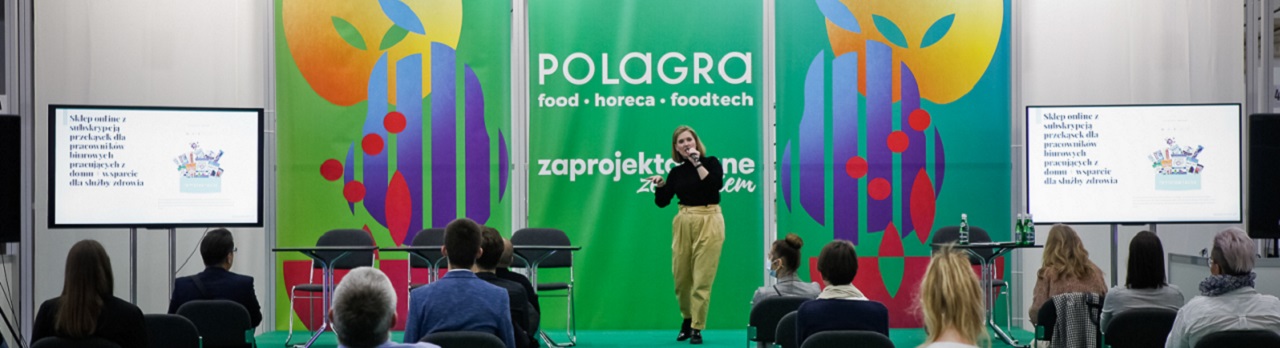
POLAGRA takes place from 15–17 September 2027 at the Poznań International Fair, Poznań, Poland. It is a business fair for the food and beverage industry, food-processing and packaging technology, and equipment and solutions for hotels, restaurants and catering. Its value is in the connections between these fields: food producers can present products, processors can assess production technologies, buyers can compare supply options, and hospitality operators can review equipment relevant to their businesses.
The 2027 dates and Poznań venue are confirmed. The detailed visitor arrangements and programme for the 2027 edition should be checked with the organiser as they are published.
POLAGRA at a glance
| Item | Information |
|---|
| Event | POLAGRA Poznań |
| Official name | POLAGRA |
| Edition | 2027 edition |
| Event type | Business trade fair |
| Category | Food & Beverage |
| Dates | 15–17 September 2027 |
| City and country | Poznań, Poland |
| Venue | Poznań International Fair |
| Organiser | Grupa MTP |
| Main sectors | Food and beverage products; food-processing and packaging technology; HoReCa equipment and solutions |
| Relevant audiences | Food producers and processors; food buyers, importers and distributors; food production specialists; hospitality businesses |
| Latest published scale | 2026: over 8,000 visitors and nearly 300 exhibitors, organiser-published figures |
The 2027 event is confirmed, while detailed programme and visitor arrangements are edition-specific and should be checked before planning participation.
Why POLAGRA matters to the food industry
See products and production solutions together
POLAGRA connects finished food products with machinery, packaging and operational equipment. For manufacturers and processors, this creates a chance to review products and production-related solutions within one professional setting rather than considering them as separate purchasing decisions.
Compare supply and market options
Retail buyers, importers, wholesalers and distributors can use the fair to assess product ranges and discuss potential sourcing or distribution fit. The value comes from defining the categories, quality requirements, volumes and commercial terms that matter to your business before approaching exhibitors.
Relate technology to operating needs
Foodtech covers machinery and equipment for food production, confectionery and ice cream, forming, dosing and packaging, as well as measurement, control, hygiene and pest protection. Production, technology and maintenance teams can focus on how a solution fits their own process, specifications and operating constraints.
Bring hospitality decisions into view
The HoReCa zone covers equipment for professional kitchens, restaurants, bars, cafés, hotels and related facilities. Restaurant and hotel owners, chefs and managers can assess equipment and operating solutions against their service model and planned investment.
Organiser-published figures for 2026 describe over 8,000 visitors and nearly 300 exhibitors. They indicate a sizeable professional setting, but are not an audited count and should be read as figures for the previous edition, not a forecast for 2027.
Exhibition sectors and product groups at POLAGRA
Food products and ingredients
- Meat and meat products
- Dairy products
- Fish and fish products
- Baked goods
- Fruit, vegetables and mushrooms, including processed products
Beverages, specialist foods and food ingredients
- Mineral waters and non-alcoholic beverages
- Fats and oils
- Healthy and ecological food
- Coffee, tea, herbs, spices and seasonings
- Spirits and yeast-industry products
Food processing machinery and equipment
- Machinery and equipment for different branches of the food industry
- Machinery for confectionery and ice-cream production
- Machines for forming food products
- Dosing equipment
- Control and measuring equipment
- Hygiene and pest-protection solutions
Food packaging and production inputs
- Packaging and packaging machines
- Food and bakery mixes
- Components and additives
- Equipment and systems for food production
- Solutions associated with hygiene and process control
HoReCa equipment and hospitality operations
- Specialist kitchen equipment
- Equipment for restaurants, bars and cafés
- Equipment for hotel rooms and bathrooms
- Hotel reception facilities and equipment
- Equipment for conference and training centres
- Relaxation-zone equipment for hotels
- Workwear and cleaning supplies
These product groups reflect the fair's food, foodtech and HoReCa scope. The organiser's 2027 exhibitor catalogue will be the place to confirm which specific brands and products will take part in the next edition.
Who should visit POLAGRA?
Food producers and processors
Useful if you are looking to review food products, processing equipment or production solutions. Prioritise the product categories and technologies relevant to your current lines or planned changes.
- Food and beverage manufacturers
- Meat, dairy, fish, bakery and processed-produce businesses
- Production managers
- Food technologists and quality specialists
- Operations and maintenance teams
Food buyers, importers and distribution businesses
Useful if you source food products, build an assortment or assess new supplier and export relationships. Compare products against your market, customer and distribution requirements rather than collecting catalogues without a decision framework.
- Retail-chain buyers
- Importers and wholesalers
- Food distributors
- Purchasing and category managers
- Export and business-development teams
Foodtech and production-equipment professionals
Useful if you evaluate machinery or production technologies for food, bakery, confectionery or ice-cream operations. Prepare technical questions about throughput, product compatibility, changeover requirements, controls, hygiene, maintenance and integration before discussing a solution.
- Food production managers
- Food technology specialists
- Process and production engineers
- Maintenance and technical managers
- Equipment buyers
Hospitality and HoReCa businesses
Useful if you operate or equip a restaurant, bar, café, hotel or conference facility. Focus on equipment and operational requirements that match your service model, available space and investment priorities.
- Restaurant and café owners
- Chefs and kitchen managers
- Hotel owners and managers
- Hospitality procurement teams
- Conference and training-centre operators
Why visit POLAGRA?
- Compare food ranges: assess products across the categories relevant to your assortment, customers and distribution channels.
- Identify potential suppliers: use conversations with producers, importers and distributors to understand product fit, supply capacity and commercial conditions.
- Review production technology: compare machinery and equipment for food processing, confectionery, ice cream, forming, dosing and packaging against your technical requirements.
- Investigate operational solutions: examine control, measurement, hygiene and pest-protection offerings in relation to your processes and compliance responsibilities.
- Evaluate hospitality equipment: compare kitchen, restaurant, hotel and facility solutions against your operating model and planned investment.
- Explore export and partnership discussions: the 2026 edition included international business activity and a Hosted Buyers Programme; use the 2027 organiser information to confirm what is planned for the next edition.
Why exhibit at POLAGRA?
Food producers, food-technology suppliers and hospitality-equipment companies may consider exhibiting when their target customers include food buyers, processors, importers, distributors or HoReCa operators. The event brings these professional groups together across related product areas, creating scope to present products, explain technical capability and explore potential commercial fit. Participation does not guarantee leads or sales; exhibitors should define the buyers and business questions they want to address before committing.
The 2026 edition featured nearly 300 exhibitors and more than 8,000 visitors in organiser-published figures. Its reported programme included international buyer activity, including a Hosted Buyers Programme, and the Ciao! POLAGRA presentation of Italian producers. These are previous-edition examples only; confirm the 2027 exhibitor offer, audience programme, participation conditions and deadlines with Grupa MTP.
For international companies, market-entry planning should include the product's regulatory status, import and distribution arrangements, after-sales requirements for equipment and the cost of servicing customers. Food businesses must assess the hygiene and product obligations that apply to their role and product category before placing products on the market.
What made the 2026 POLAGRA programme notable?
The 2026 programme combined exhibition activity with business and knowledge sessions. The official post-show coverage described the Africa Food & Trade Forum, a Business Development Centre for business consultations, Hosted Buyers activity, and HoReCa masterclasses and debates. Topics discussed included exports, food security, energy, production costs, supply-chain resilience, certification, artificial intelligence, private labels and hospitality management.
These programme elements show the range of business questions addressed in the previous edition; they are not a confirmed schedule for 2027. When the next programme is published, visitors can compare session topics with their sourcing, production, export or hospitality objectives and reserve time for the parts most relevant to them.
How to prepare before POLAGRA
1. Set a decision objective
Choose the outcome that would make the visit useful: shortlist food suppliers, compare production equipment, review packaging options, or evaluate hospitality equipment. Make the objective specific enough to guide your route and conversations.
2. Build a target list
When the 2027 exhibitor catalogue becomes available, identify the companies and product groups relevant to your objective. Separate essential meetings from useful alternatives and exploratory visits, and confirm the latest catalogue and meeting arrangements with the organiser.
3. Prepare category-specific questions
- For food products: ingredients, product specifications, packaging formats, shelf-life information and supply capacity.
- For import and distribution: target channels, order quantities, delivery terms, export documentation and local representation.
- For machinery: product compatibility, capacity, changeover requirements, controls, cleaning and maintenance needs.
- For packaging: suitable formats, process requirements, material choices and how the solution fits your product and line.
- For HoReCa equipment: installation needs, available space, daily operating demands, maintenance and service arrangements.
- For all suppliers: technical documents, certifications applicable to the product, commercial terms, lead times and the next step after the fair.
4. Arrange focused conversations
Contact priority exhibitors through the organiser's current channels when available. Share a concise description of your products, buying needs or project, and agree what information would make a meeting productive. Do not assume the previous edition's hosted-buyer arrangements will repeat in 2027.
5. Confirm practical details
Check the current visitor registration, opening hours, venue access and programme before travelling. The stored hours belong to the previous listing and were not re-confirmed for 2027.
How to make the most of POLAGRA
Use a simple record for each useful conversation: Company → product or solution → why it fits → contact → next action. For food products, capture the category, specification and distribution questions that need follow-up. For equipment, note the process requirement, technical details to verify and any service or integration questions. For HoReCa solutions, record the operational need and what further evaluation is required.
Compare like with like. A product display, machinery demonstration or brief discussion is a starting point, not a substitute for checking specifications, compliance, commercial terms and suitability for your operation. At the end of each day, review your notes and identify which contacts need a document, sample, technical discussion or commercial follow-up.
POLAGRA visitor profile and business opportunities
| Visitor profile | Main interests |
|---|
| Food producers and processors | Products, processing machinery, food technology, packaging and production-related solutions |
| Retail and category buyers | Food ranges, supplier fit, assortment and commercial discussions |
| Importers, wholesalers and distributors | Products, potential supply relationships and export-market discussions |
| Food technology and production teams | Machinery, forming and dosing, packaging, measurement, control and hygiene solutions |
| Restaurant, café and hotel operators | Professional kitchen, hospitality and facility equipment |
| Chefs and kitchen managers | Operational equipment and products relevant to professional food service |
These are practical audience-to-sector connections based on POLAGRA's published scope and previous-edition reporting. Match them to your own purchasing or business-development priorities.
Practical information for international visitors
| Item | Information |
|---|
| Venue | Poznań International Fair |
| Street address | ul. Głogowska 14, 60-734 Poznań, Poland |
| 2027 visitor hours and access arrangements | Check the organiser's latest visitor information before travel |
| Tickets and registration | Confirm the 2027 visitor registration route and conditions with the organiser |
Arrange travel and any required documents around your own nationality and itinerary. Do not rely on previous-edition entry arrangements as a guarantee of the next edition's terms.
After POLAGRA: where the real value starts
Sort contacts by the action they need. A — immediate: request the specification, catalogue, sample information or commercial terms needed for an active decision. B — potential: follow up when product, equipment or distribution fit needs more evaluation. C — market intelligence: retain contacts and information that help you track food categories, production technology or hospitality equipment.
For equipment discussions, follow up on capacity, installation, cleaning, controls, maintenance and service support. For food products, request the product and supply information your regulatory, quality and purchasing teams require. For potential distribution relationships, clarify territory, channel fit, order conditions and responsibilities before making commitments.
POLAGRA visitor checklist
Before
- ☐ Set a specific sourcing, technology, export or hospitality objective.
- ☐ Check the 2027 exhibitor information, registration, programme and visitor hours.
- ☐ Prepare category-specific questions and arrange priority conversations.
During
- ☐ Compare relevant products and solutions against the same requirements.
- ☐ Record specifications, contacts and a clear next action.
- ☐ Distinguish confirmed product information from points that need follow-up.
After
- ☐ Prioritise contacts and request the documents or commercial details needed for decisions.
- ☐ Review supplier, equipment or distribution fit with the right colleagues.
- ☐ Track commitments and follow-up dates.
Is POLAGRA worth visiting?
POLAGRA is most relevant to professionals with a defined reason to compare food products, food-processing and packaging technology, or HoReCa equipment. Producers, buyers, importers, distributors, technical teams and hospitality operators can each focus on different parts of its multi-sector offer. Preparation matters: a targeted list of suppliers, product requirements and follow-up questions is more useful than trying to see every stand without a decision in mind.
Make your POLAGRA visit count
What do you want to discover, compare or decide at POLAGRA that you cannot resolve through routine supplier research? Set that purpose before you go, then use the fair to test options and plan practical next steps.
Discover. Compare. Discuss. Decide. Follow up.
Food industry opportunities in Poland
Market size and demand
Poland's agri-food exports exceeded EUR 51 billion in 2024, up 3.1% year on year, according to a 2025 report summarised by the Polish government's Trade.gov.pl portal. This is an export-value indicator, not the total domestic food-market size. The same government article reported that the food industry generated over PLN 73 billion in gross added value and employed more than 430,000 people in 2024; it also placed Poland fifth among EU food producers, with about 8% of EU food-industry added value.
- Agri-food exports: more than EUR 51 billion in 2024, +3.1% year on year; export value across agri-food products.
- Food-industry gross added value: over PLN 73 billion in 2024; a measure of sector contribution, not sales revenue.
- Food-industry sold production: increased 4.2% in 2024, as reported in the government portal's summary of the Bank Pekao analysis.
- EU food-industry share: about 8% of EU added value in 2024, with Poland reported as the EU's fifth-largest food producer.
Market drivers and commercial opportunities
The cited analysis describes export-market diversification, higher value-added products and technology upgrades as strategic issues for Polish food businesses. It identifies automation and robotisation of processing plants, refrigeration and export logistics, and stronger positioning of processed or premium products among areas for attention. These are reported strategic priorities, not guaranteed demand for a particular supplier or product.
- Export and distribution relationships: Poland's agri-food export activity may make it relevant for producers and distributors assessing product-market fit. Competition, pricing and market-specific requirements need investigation.
- Higher-value food products: businesses may explore opportunities around processed, premium, organic or ready-to-eat categories noted in the cited analysis. Product compliance, consumer fit and channel economics remain important barriers to assess.
- Processing automation: food manufacturers may evaluate machinery and production technology against operational needs. Investment depends on site requirements, financing and integration.
- Refrigeration and export logistics: suppliers and food businesses may investigate cold-chain and logistics solutions for export operations. The source identifies investment as a strategic need, not a quantified equipment market.
Regulations and market-entry conditions
EU food-hygiene rules under Regulations (EC) No 852/2004 and 853/2004 apply across food production, processing, distribution and placing food on the market. The European Commission says the rules have applied since 2006; official controls are now governed under Regulation (EU) 2027/625, which repealed Regulation 854/2004. Food businesses and suppliers should check which requirements apply to their product, activity and role in the chain; this summary is not a product-specific compliance determination.
What this means for exhibitors
Food producers and technology suppliers may use POLAGRA to test how their products relate to the Polish industry's export activity and reported priorities around value-added production, automation and logistics. They should validate demand with prospective customers and assess regulatory, distribution, service and pricing conditions; the market indicators do not promise buyers or contracts.
What this means for visitors
Buyers and food businesses could compare products, processing equipment and operational solutions against their sourcing or investment needs. International visitors may use the market context to prepare focused discussions on product fit, distribution, export capability and applicable hygiene responsibilities.
How ilikevents can help you at POLAGRA
Turning a visit or an exhibition stand into a focused business plan starts with the right preparation. ilikevents can help visitors and exhibitors organise participation around their sourcing, technology, hospitality or market-development goals.
For visitors
- Exhibition visit planning around food, foodtech or HoReCa priorities
- Flight and hotel arrangements
- Visa application assistance
- Airport transfers and local transportation
- Interpreter and business guide services
- Exhibition ticket and registration assistance
- Business meeting coordination
- Factory visits and industrial tours
For exhibitors
- Exhibition registration and organiser coordination
- Stand selection and participation planning
- Booth design and construction
- Exhibition staffing and interpretation
- Promotional materials and advertising
- Business meeting arrangements
- Local market research and distributor identification
- Accommodation, flights and transportation
Explore Event Opportunities
Explore how POLAGRA may support your product sourcing, supplier evaluation, technology planning or exhibitor participation, with practical assistance from ilikevents.
Get Expert Assistance from ilikevents to plan your visit or exhibition participation.
For further information, please click
here .