Bangkok Intertraffic Asia 2027: event overview
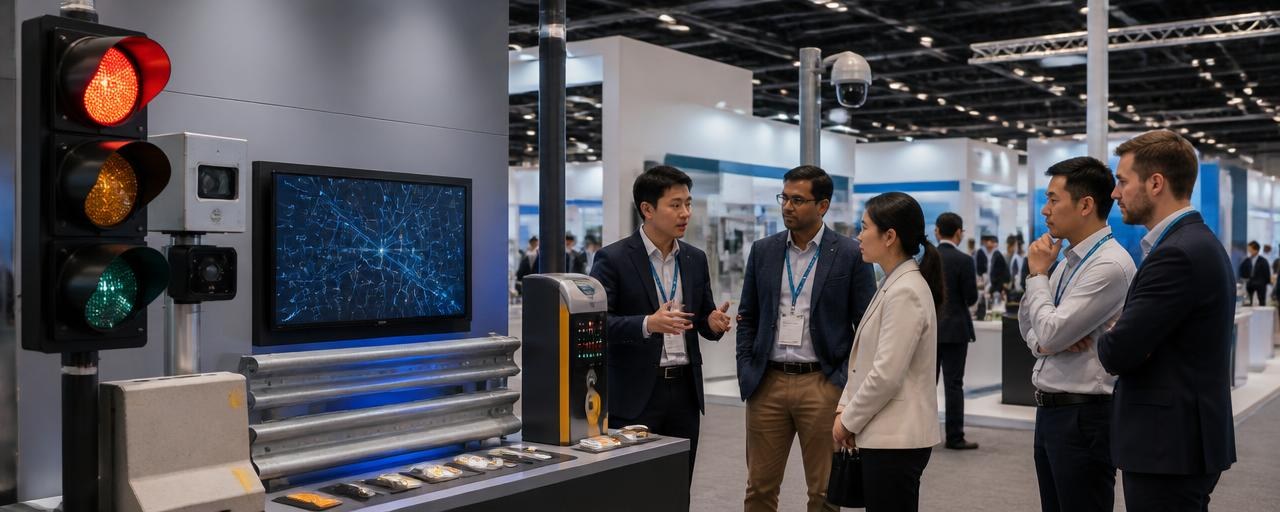
Bangkok Intertraffic Asia is a regional trade exhibition and knowledge programme dedicated to traffic technology and mobility. The organiser confirms the event will take place from 28–30 April 2027 at the Bangkok International Trade & Exhibition Centre (BITEC), Bangkok, Thailand. It is organised by RAI Amsterdam and VNU Exhibitions Asia Pacific, and brings together mobility professionals, public authorities, infrastructure specialists and technology companies. The published show profile covers four sectors: ITS Traffic Management, Road Infrastructure, Road Safety and Parking.
The event combines an exhibition with a knowledge programme. Its announced focus includes digital mobility and intelligent transport systems, safe and resilient infrastructure, and sustainable mobility and investment. The detailed 2027 programme is still to be released.
Why Bangkok Intertraffic Asia matters to mobility professionals
Compare solutions across connected sectors
The four exhibition sectors link the digital management of traffic with the physical road network, safety systems and parking operations. Visitors can use that breadth to compare products and approaches relevant to a project or service portfolio, rather than considering each mobility challenge in isolation.
Connect technology with infrastructure decisions
The published programme brings together policy, infrastructure development, technology innovation and commercial solutions. Its themes include transport data, connectivity, artificial intelligence in transport, road safety, climate resilience, accessibility, electrification, public transport and regional connectivity.
Explore professional and regional questions
The organiser describes the event as a regional showcase for Southeast Asian mobility markets. For visitors and exhibitors, this makes it a setting to investigate how traffic-management, safety, infrastructure and parking products may fit different public and commercial requirements. Specific buyers, project contracts and commercial outcomes are not guaranteed.
Who should visit Bangkok Intertraffic Asia?
Government representatives and road or transport authorities
The organiser identifies public-sector representatives and authorities among the visitor groups. You may want to focus on traffic monitoring and control, road safety, incident management, infrastructure maintenance, parking operations and the programme’s discussion of policy and investment. Bring a shortlist of operational problems and the technical or service conditions a solution must meet.
Engineers, contractors and infrastructure specialists
Contractors, constructors and engineers are named visitor groups. Compare road surfaces, signs and markings, barriers, roadside equipment, charging infrastructure and maintenance approaches against the requirements of your current projects. Note installation conditions, durability, interoperability and service support for follow-up with suppliers.
Consultants, researchers and technical advisers
Consultants and researchers can use the announced sessions and product displays to examine practical approaches to digital mobility, resilient infrastructure and sustainable transport. Since session titles and speakers are not yet published, check the organiser’s programme before choosing which discussions to prioritise.
Distributors, wholesalers and system integrators
The organiser names distributors, wholesalers and system integrators in its visitor profile. You may compare product ranges across the four sectors, identify complementary technologies and assess where local service, installation or integration capabilities would be needed. Treat prospective partner conversations as a starting point for commercial and technical due diligence.
Manufacturers and mobility-technology providers
Manufacturers are included in the stated visitor profile, while the event’s exhibitor sectors span ITS, infrastructure, road safety and parking. Use the show to review adjacent technologies, understand how authorities and operators frame their needs, and identify questions to validate before adapting products for regional markets.
What can you find at Bangkok Intertraffic Asia?
ITS Traffic Management
- Big data and cybersecurity
- Congestion management and connected traffic systems
- Digital infrastructure, traffic monitoring and control
- Real-time traffic information, route advice, simulation and modelling
- Fare and tolling systems, MaaS, on-demand mobility, EV charging and CCAM
Road Infrastructure
- Asset management, maintenance, construction and renovation
- Road surfaces, public lighting and public-space design
- Barriers, blocks, road markings, signs and roadside equipment
- Charging systems and energy grids
Road Safety
- Detection, enforcement and vehicle technology
- Incident management and emergency services
- Road marking, signalling, control, informing and warning
- Barriers, blocks and traffic-calming equipment
Parking
- Parking management, enforcement and operations
- Access control, charging, ticketing and payment
- Parking equipment, services and route guidance
- Kerb management
What makes Bangkok Intertraffic Asia distinctive?
The event combines a four-sector exhibition with a regional knowledge programme. The announced programme has a main Intertraffic Stage for policy, infrastructure investment, transport networks and regional cooperation, alongside breakout sessions for practical experience, case studies, technical insights and technology applications. The organiser says the main stage sessions will be in English and breakout sessions in English and Thai. The detailed schedule, speakers and session timings are still to be announced, so these formats and themes should not be mistaken for a final session list.
What should you try to achieve at Bangkok Intertraffic Asia?
If you work for an authority or operator
Set an objective such as comparing several approaches to a defined traffic-management, road-safety, infrastructure or parking requirement. Record the operating context, data needs, compatibility conditions and procurement questions that each supplier can answer.
If you deliver infrastructure or technical projects
Choose a project-specific objective: shortlist technologies or suppliers for one work package, then compare installation, maintenance, interoperability and lifecycle questions. Distinguish what you learn from a product discussion from what still needs technical verification.
If you distribute, integrate or manufacture solutions
Define the product categories and partner capabilities you want to investigate. A useful outcome is a documented shortlist of potential product fits, local-service requirements and follow-up questions—not an assumption that a meeting will lead to a sale or contract.
How to prepare before Bangkok Intertraffic Asia
- Choose a specific purpose. Decide whether your priority is sourcing, project evaluation, technical learning, market research or partner discovery. Select a small number of questions tied to your work.
- Map your requirements to the sectors. Identify whether your questions concern ITS, infrastructure, safety, parking or connections between them. Group related needs so you can compare alternatives consistently.
- Prepare technical questions. Ask about operating conditions, data and system compatibility, installation, maintenance, safety performance, service coverage and relevant standards. The right questions will depend on your application and jurisdiction.
- Check current event information. Visitor registration is expected to open in mid-December, according to the organiser. Detailed programme sessions, speakers and timings are still to be announced; check the organiser’s website for updates before making a final schedule.
- Plan a follow-up record. For each useful discussion, note the company, product or system, the requirement it may address, evidence or specifications requested, contact details and a next action.
How to make the most of the exhibition
Move through the show with a comparison plan rather than collecting brochures indiscriminately. For each relevant solution, record:
- Company and product: what is being offered and which of the four sectors it relates to.
- Application: the transport, road, safety or parking problem it is intended to address.
- Fit: operating environment, integration needs, maintenance and service conditions to verify.
- Evidence: specifications, case information or references you need to review after the conversation.
- Next action: request information, arrange a technical follow-up or compare it with alternatives.
Use the knowledge programme as a complement to the exhibition. Match its published sessions to your work priorities once detailed topics and timings are available; do not assume a specific session will run until it appears in the organiser’s final programme.
Bangkok Intertraffic Asia knowledge programme
The organiser has announced three content pillars: Digital Mobility & Intelligent Transportation Systems; Safe, Resilient & Climate-Ready Infrastructure; and Sustainable Mobility & Investment. The main stage is planned for regional policy and infrastructure questions, while two breakout stages are intended for practical cases, technology applications and technical insights. The programme page says detailed sessions, speakers and timings will be announced later. Its current description is a framework, not confirmation of individual talks.
After Bangkok Intertraffic Asia: turn notes into decisions
Sort contacts and findings by what you need to do next. Prioritise immediate project requirements, retain potential suppliers or partners for further evaluation, and keep broader market observations separate from purchase decisions. Request specifications, interoperability information, maintenance arrangements, service coverage and applicable compliance documents where relevant. Compare written information against your own technical requirements and local procurement or regulatory conditions before committing resources.
Who should consider exhibiting at Bangkok Intertraffic Asia?
The organiser’s four sectors point to potential relevance for companies supplying intelligent traffic systems, road infrastructure products, road-safety technologies, parking equipment and services, tolling and fare systems, EV charging, connected mobility and traffic information. Exhibitors can set measurable objectives such as introducing a product to a defined professional audience, assessing distributor interest or gathering technical feedback. Identify the audience and evidence needed to judge participation; the organiser’s promotional statements do not guarantee leads, sales or partnerships. Participation details are available from the organiser.
Bangkok Intertraffic Asia visitor checklist
Before
- Define your work objective and the sectors most relevant to it.
- Check registration status and the latest programme information with the organiser.
- Prepare technical, integration, maintenance and market-entry questions relevant to your project.
During
- Compare solutions using consistent requirements and record evidence to follow up.
- Prioritise sessions only after the detailed programme and timings are published.
- Capture contacts with a clear next step rather than relying on memory.
After
- Request missing specifications or documentation from shortlisted suppliers.
- Compare products against operational, technical and compliance requirements.
- Agree internal next steps before pursuing a purchase, pilot or partnership.
Is Bangkok Intertraffic Asia worth visiting?
It is most relevant to professionals working in traffic management, road and transport infrastructure, road safety, parking and connected mobility who have a defined sourcing, project or learning objective. The combination of four exhibition sectors and a multi-format knowledge programme may help visitors compare technical approaches and understand how policy, infrastructure and commercial solutions relate. Because this is a newly launched regional event and published attendance or exhibitor figures are not available, plan around the confirmed sectors and programme framework rather than assuming a particular scale or a guaranteed business outcome.
Bangkok Intertraffic Asia 2027 at a glance
| Item | Information |
|---|
| Event | Bangkok Intertraffic Asia |
| Full name | Intertraffic Asia |
| Date | 28–30 April 2027 |
| City and country | Bangkok, Thailand |
| Venue | Bangkok International Trade & Exhibition Centre (BITEC), 88 Debaratna Road, Bangna Tai, Bang Na, Bangkok 10260, Thailand |
| Organisers | RAI Amsterdam and VNU Exhibitions Asia Pacific |
| Main sectors | ITS Traffic Management; Road Infrastructure; Road Safety; Parking |
| Relevant audiences | Authorities, road and transport professionals, contractors, engineers, consultants, researchers, distributors, system integrators and manufacturers |
| Daily hours | 10:00–17:00 |
| Latest published scale | No visitor, exhibitor or floor-area figures were identified for this new edition. |
| Programme status | Three content pillars and stage formats are published; detailed sessions, speakers and timings are to be announced. |
| Visitor registration | The organiser says registration opens in mid-December. |
The 2027 dates, venue, organisers, sector profile and programme framework are published by the organiser; detailed programme content and event scale figures remain unavailable.
Make your Bangkok Intertraffic Asia visit purposeful
Which traffic, infrastructure, safety or parking decision do you need to make, and what evidence would help you make it? Use that question to select relevant stands and sessions, compare options consistently and organise follow-up. Discover. Compare. Question. Evaluate. Follow up.
Traffic technology and mobility opportunities in Thailand
Market context and evidence limits
The organiser’s Southeast Asia infrastructure-project focus lists Thailand examples including Motorway 6 (Bang Pa-in–Nakhon Ratchasima), the Southern Land Bridge Project, Southern Economic Corridor development, One Bangkok Smart City development and the TRUST road-safety initiative. This is the organiser’s published project focus, not an independently verified project-status or procurement list. The sources reviewed did not establish a quantified Thai traffic-technology market size, current procurement pipeline or product-specific market-entry rules.
Questions for suppliers and visitors
These named focus areas can help suppliers and visitors identify questions about road infrastructure, traffic management, smart-city systems and road safety. Exhibitors may assess whether their products fit those application areas and then verify project status, specifications, tendering routes, standards and local service needs through the responsible authorities. Visitors may compare technologies relevant to their own operational or infrastructure requirements and investigate the local conditions independently. The project list does not establish purchasing demand, access to buyers or a commercial outcome; validate each opportunity before making market or investment decisions.
For further information, please click
here .