Breakbulk Middle East 2027
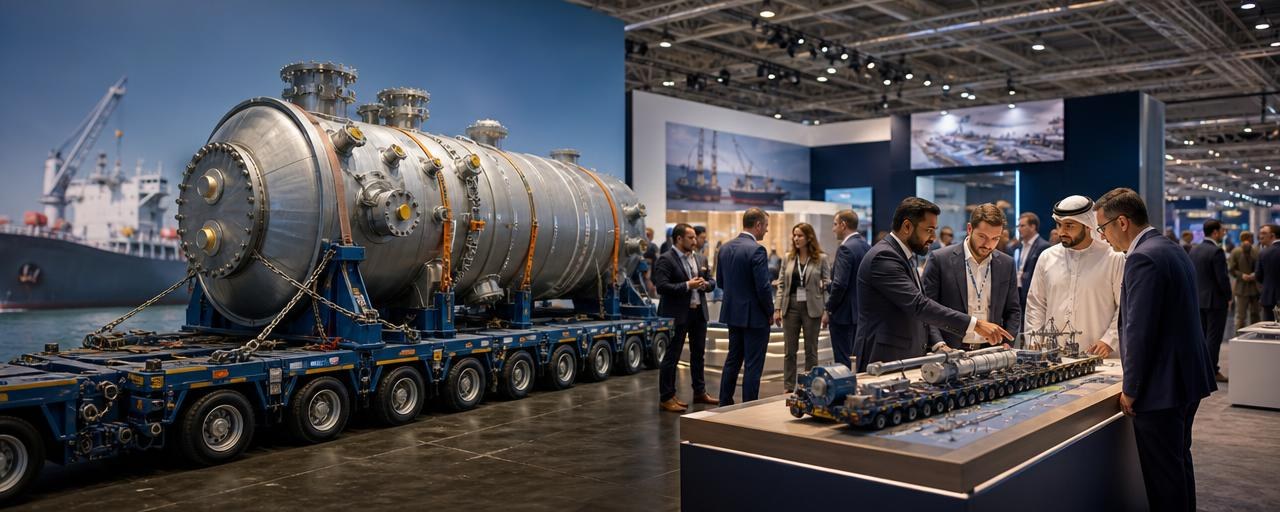
Breakbulk Middle East brings together the project-cargo and breakbulk supply chain: freight forwarders, maritime and other transport providers, ports and terminals, equipment companies and related services. The event is designed for professionals who move oversized, heavy-lift and other complex cargo for major projects.
Dates: 2–3 February 2027
Venue: Dubai World Trade Centre, Halls 4–8, Dubai, United Arab Emirates
Visitor hours: 2 February, 10:00–18:00; 3 February, 10:00–17:00
It is more than a place to review services: visitors can compare transport capabilities, discuss project requirements and identify the companies that may support a complex cargo movement.
Breakbulk Middle East 2027 at a glance
| Item | Information |
|---|
| Type and category | B2B trade exhibition; Traffic, Transportation & Logistics |
| Dates | 2–3 February 2027; selected workshops listed for 1 February |
| Venue | Dubai World Trade Centre, Halls 4–8 |
| Organiser | Breakbulk Events & Media |
| Main sectors | Freight forwarding, maritime, ports and terminals, air, road and rail transport, equipment and related services |
| Main audiences | Shippers, project owners, EPCs, procurement teams, forwarders, carriers, ports and equipment providers |
| Latest published scale | 2026 organiser infographic: 13,700 attendees, 271 exhibitors and participants from 123 countries |
The organiser lists visitor registration as open and has published the 2027 agenda. Check its latest information for changes to programme, passes and access.
Why Breakbulk Middle East matters
See the project-cargo chain together
A complex movement may involve a shipper, project owner, EPC, forwarder, carrier, port, equipment provider and specialist service firm. The exhibition helps professionals identify where those capabilities meet, compare providers and ask how a proposed movement might be planned.
Compare more than one transport mode
The event spans maritime, air, road and rail transport, alongside ports, terminals, equipment and project services. Shippers and procurement teams can consider route options and hand-offs; providers can explain how their service fits into a wider logistics chain.
Connect with decision-makers and peers
The organiser identifies project owners, EPCs, industrial manufacturers, global project forwarders and procurement executives among its audience. Its 2026 infographic reports 13,700 attendees, 271 exhibitors and participants from 123 countries. These organiser figures indicate an international professional gathering, not guaranteed meetings or commercial results.
Pair exhibition conversations with industry learning
The 2027 agenda lists a Heavy Lift Workshop, Voyage Chartering Essentials Workshop and AI in Maritime & Logistics Workshop for 1 February, before the main exhibition dates. Review the live agenda and confirm any separate registration requirements.
Exhibition sectors and product groups
The organiser identifies the sectors below. Examples describe capabilities visitors may evaluate; they do not promise that every product or service will be represented by a particular exhibitor.
Freight forwarding and project logistics
- Project-cargo planning and coordination
- Multimodal routing and transport-chain management
- Shipment documentation and cargo-handling coordination
- Heavy-lift and out-of-gauge movement planning
- Supplier and subcontractor coordination
Maritime transport
- Breakbulk and project-cargo shipping
- Heavy-lift carrier capabilities
- Marine transport and cargo stowage planning
- Chartering and voyage planning
- Coordination between sea legs, ports and inland transport
Ports and terminals
- Port and terminal handling for project cargo
- Heavy-lift and breakbulk operations
- Storage, staging and cargo transfer
- Coordination with carriers and forwarders
- Terminal capabilities for oversized consignments
Air transport
- Air-freight options for time-sensitive components
- Specialised cargo planning and handling
- Air-to-road and air-to-sea connections
- Capacity and routing discussions for non-standard freight
- Coordination between forwarders and project teams
Road and rail transport
- Heavy and out-of-gauge road transport
- Modular trailers and specialised transport equipment
- Rail freight and project-cargo connections
- Route, load and transfer planning
- First- and last-mile movement coordination
Equipment and heavy-lift capabilities
- Heavy-lift transport equipment
- Load handling, securing and transfer systems
- Specialised vehicles and transport configurations
- Equipment support for port and inland movements
- Technical services for complex cargo operations
Industry-related services
- Project-logistics support services
- Operational and technical consultancy
- Marine, port and transport-related services
- Planning support for cargo supply chains
- Services connecting shippers, forwarders and carriers
Who should visit Breakbulk Middle East?
Shippers, project owners and industrial manufacturers
Use the exhibition to assess transport and logistics capabilities for an upcoming project or shipment. Compare the roles of carriers, ports, forwarders and equipment providers before creating a shortlist.
- Bring cargo dimensions, weight, origin, destination and required delivery window where available.
- Ask how providers coordinate sea, air, road or rail legs and transfer points.
- Clarify what information is needed for a technical feasibility review.
- Separate immediate project requirements from longer-term supplier research.
EPC contractors and procurement teams
The organiser names EPCs and procurement executives among the target audience. Map providers against package scope, technical requirements and procurement timing.
- Prepare a concise project scope and decision stage.
- Compare service coverage, equipment capability and operating experience.
- Ask how a provider coordinates with shipper, carrier, port and destination teams.
- Record qualification, compliance and commercial questions for due diligence.
Freight forwarders, carriers and transport providers
Meet potential project partners and explain where your capabilities fit across a complex movement.
- State the transport modes and project-cargo services you provide.
- Identify geographic, equipment or cargo limits that affect your scope.
- Ask prospective partners about hand-offs, documentation and escalation.
- Agree a specific next step for a promising technical discussion.
Ports, terminals and equipment or service providers
Understand project stakeholders' needs and explain how your facilities, equipment or specialist services support cargo movement.
- Prepare clear information on handling, equipment or terminal capability.
- Ask which project stages or interfaces create operational constraints.
- Compare coordination needs with carriers and forwarders.
- Follow up with specifications and the information needed to assess fit.
Relevant roles include project-cargo managers, logistics and supply-chain managers, procurement executives, project directors, EPC commercial teams, forwarding specialists, carrier and port representatives, heavy-lift planners and equipment providers.
Why visit Breakbulk Middle East?
- Map the transport chain. Identify providers for each stage from origin handling through carriage, port transfer and inland movement.
- Compare specialist capabilities. Discuss heavy-lift, breakbulk, out-of-gauge and project-logistics requirements across named sectors.
- Test a route assumption. Use initial discussions to identify missing information, hand-off issues and questions for technical assessment.
- Find potential partners. Explore how forwarders, carriers, ports, equipment providers and project services could complement one another.
- Learn about industry issues. Review sessions and workshops relevant to chartering, heavy lift and maritime-logistics technology.
- Build a follow-up plan. Leave with prioritised companies, information to exchange and decisions still to make.
Why exhibit at Breakbulk Middle East?
Exhibiting may suit companies whose work supports project owners, EPC contractors, industrial manufacturers, shippers, forwarders, carriers or ports. The organiser reports that 74% of exhibitors rebooked for 2027 in its 2026 statistics. This is an organiser-published retention figure, not a guarantee of results for an individual exhibitor.
- Present a specific capability to a concentrated professional audience.
- Explain how your service works with other transport modes and project stakeholders.
- Explore distributor, subcontractor or operating partnerships relevant to your offer.
- Use the exhibitor directory, floorplan and organiser participation information to assess visibility and stand fit.
Market-entry note: Before committing to a stand or quoting work, check requirements that apply to your business, cargo and transport mode, including permits, documentation, insurance, local operating arrangements and any relevant approvals. Confirm these with qualified advisers and authorities; this guide does not establish a particular UAE cargo rule.
What makes Breakbulk Middle East different?
Its focus is the project-cargo chain rather than a single mode. The listed sectors span forwarding, maritime, ports and terminals, air, road transport, equipment and related services. This breadth matters when multiple providers must coordinate along one route.
The 2026 infographic reports 13,700 attendees, 271 exhibitors and participants from 123 countries. The 2027 site says the exhibition expands into Hall 4, increasing its footprint by 21%, and promotes a Premium Pass with fast-track registration, Meetings Lounge access and enhanced app access. Check the current pass terms and floorplan before deciding.
What should you try to achieve?
If you are a shipper or project owner
Identify providers for transport stages your project has not secured. Note the cargo data they need and what you will send next.
If you are an EPC or procurement professional
Map providers against a defined package. Record service scope, interfaces, qualification questions and the next procurement milestone.
If you are a forwarder, carrier or port representative
Find complementary partners for a specific service gap or route. Capture operating scope and a follow-up contact for technical discussion.
If you supply equipment or related services
Identify project teams for whom your capability addresses a handling or coordination need. Prepare the equipment scope, operating conditions and service boundaries.
How to prepare before Breakbulk Middle East
1. Define your reason for attending
Choose one primary objective: source a transport provider, assess a route, meet partners, compare equipment or learn about an industry issue. A narrow objective helps make two exhibition days productive.
2. Build and prioritise a target list
Review the organiser's exhibitor directory and floorplan as they are updated. Classify companies A — essential, B — useful for a current project, and C — explore if time allows. Group targets by transport mode or project function.
3. Request meetings with a clear purpose
State the cargo or service question, the decision you are working toward and relevant timing. Protect time for priority providers while allowing for discovery.
4. Prepare cargo and project information
- What are the cargo dimensions, weight, centre of gravity and lifting points?
- Where does it originate and arrive, and what delivery window applies?
- Which modes, crossings, ports or transfers are specified?
- What handling, storage, insurance or site-access conditions are known?
- Which permits, technical approvals or documents still need confirmation?
- Who owns each decision: shipper, EPC, project owner, forwarder or carrier?
- What can be shared now, and what requires confidentiality?
- What is the next action and decision date?
5. Check the current agenda and participation details
Selected workshops are listed for 1 February and the public exhibition hours for 2–3 February. Confirm the timetable, access, pass conditions and any workshop registration requirements before travelling.
How to make the most of the exhibition
Use one record for each useful conversation: Company → capability → cargo or project fit → open question → next action. For example, note whether a provider could connect a port-to-inland leg, what cargo data it needs and who will send it after the show.
Ask comparable questions across providers. Distinguish an initial discussion from technical feasibility or a commercial quotation; those steps may require detailed cargo data, route information and approvals beyond a show-floor conversation.
Use the official exhibitor directory and the app features described for the 2027 Premium Pass if your pass includes them. Confirm access and functionality rather than assuming all attendees receive the same tools.
Plan your time realistically
The public exhibition runs for two days: 10:00–18:00 on 2 February and 10:00–17:00 on 3 February. Selected workshops are scheduled for 1 February. A practical approach is to reserve the first show day for priority meetings and broad sector mapping, then use the second for comparisons, follow-up conversations and sessions supporting your decisions.
- Before: confirm target companies, meetings and the latest agenda.
- First day: meet priority contacts and note capability gaps.
- Between days: review notes and arrange available follow-up meetings.
- Second day: revisit shortlisted providers and close information gaps.
- After: assign owners and dates to follow-up actions.
Beyond the exhibition floor
The published 2027 agenda lists Heavy Lift, Voyage Chartering Essentials and AI in Maritime & Logistics workshops for 1 February, plus themed stages and sessions on infrastructure and energy, investment, market outlook, fleet capacity, technology, supply-chain risk and shipper perspectives. Check the live agenda because details can change.
The organiser's 2026 highlights describe previous-edition sessions, interactive workshops, Women in Breakbulk Luncheon, Education Day and discussions about regional projects, trade corridors, sanctions and compliance. These are 2026 examples, not a promise they will all recur.
Networking at Breakbulk Middle East
Prepare a short introduction covering your role in the project-cargo chain, cargo or services handled, relevant geography or modes and the partner or information you seek. Bring questions about capacity, equipment, cargo dimensions, route coordination, port interfaces, documentation and project timing.
After each discussion, record a concrete next step: send cargo data, request specifications, arrange a follow-up call, confirm a service boundary or compare a route. This makes later evaluation more useful than collecting contacts without context.
Breakbulk Middle East visitor profile and business opportunities
| Visitor profile | Potential focus |
|---|
| Shippers and project owners | Transport providers and cargo coordination |
| EPCs and procurement teams | Logistics and equipment capabilities for project packages |
| Industrial manufacturers | Planning movement of large or complex components |
| Freight forwarders | Carrier, port and subcontractor relationships |
| Maritime, air, road and rail providers | Project requirements, partners and service fit |
| Ports and terminals | Handling, staging and coordination needs |
| Equipment and related-service companies | Technical capabilities for coordinated cargo movement |
Travelling to Breakbulk Middle East
The organiser identifies Dubai World Trade Centre, Halls 4–8, as the venue and lists Exhibition Plaza and Convention Gate for access. Its visitor information discusses taxi and train access from Dubai International Airport. Check current travel and venue information before departure, particularly if arranging equipment or meetings beyond the exhibition.
Confirm your own entry, travel, insurance and payment requirements with the relevant providers and authorities before booking.
Practical information for international visitors
| Item | Information |
|---|
| Host city and country | Dubai, United Arab Emirates |
| Venue | Dubai World Trade Centre, Halls 4–8 |
| Entrances | Exhibition Plaza and Convention Gate |
| Airport access | Organiser describes taxi and train access from Dubai International Airport; confirm current routes and times |
| Public show hours | 2 February, 10:00–18:00; 3 February, 10:00–17:00 |
| Accommodation | Organiser says its hotel-booking service will be available closer to the event |
Plan travel and accommodation in good time and check entry requirements for your itinerary. ilikevents can assist with exhibition visit planning and travel arrangements where appropriate.
Where should you stay?
The organiser refers to accommodation near Dubai World Trade Centre and says its official hotel-booking service will be available closer to the event. Compare accommodation with your meeting schedule and travel needs; no hotel or rate is assumed here.
One day or both days?
One day
A single day may suit visitors with a short target list and confirmed meetings. Prioritise companies relevant to your current cargo, project or service requirement.
Both show days
Two days may be more useful if you need to compare several modes, meet different providers or combine sessions with exhibition discussions. Use the first day to explore and the second to revisit shortlisted companies.
Add a workshop day
If a listed workshop supports your role, confirm its 1 February timetable, registration and access conditions. Do not assume every exhibition pass includes workshop participation.
Breakbulk Middle East is particularly valuable if you have a project
Bring details that determine provider fit: cargo dimensions and weight, origin and destination, timing, modes under consideration, handling or site constraints, transfer points and procurement stage. For confidential details, ask what can be shared and how a technical discussion should proceed.
Exhibitors should define the cargo or project need their capability addresses, service boundaries, geographic coverage, operating conditions and information needed to qualify a potential opportunity.
After Breakbulk Middle East: where the real value starts
Sort contacts into three groups: A — immediate: a defined project need or time-sensitive question; B — potential: a relevant supplier or partner requiring qualification; and C — market intelligence: useful conversation with no immediate action.
For each A or B contact, send a concise follow-up recalling the cargo or service discussed, sharing agreed information, listing outstanding questions and proposing a next step. Compare scope, capacity, route fit, handling, documentation, insurance and commercial terms before deciding.
Breakbulk Middle East visitor checklist
Before
- ☐ Define the project, sourcing or partnership outcome you seek.
- ☐ Review the exhibitor directory, floorplan and current agenda.
- ☐ Prioritise companies and request meetings where useful.
- ☐ Prepare cargo data, technical questions and travel arrangements.
- ☐ Confirm pass, workshop and venue-access requirements.
During
- ☐ Ask comparable questions about capability, modes and service scope.
- ☐ Record project fit, open questions and next action.
- ☐ Distinguish initial discussions from formal technical or commercial assessment.
- ☐ Revisit priority contacts and attend relevant sessions.
After
- ☐ Sort contacts into immediate, potential and intelligence categories.
- ☐ Send agreed cargo or service information to the right contacts.
- ☐ Compare proposals and verify technical, regulatory and commercial requirements.
- ☐ Assign an owner and date to each follow-up.
Is Breakbulk Middle East worth visiting?
The event is most relevant to professionals in project cargo, breakbulk transport, heavy lift, forwarding, ports, carriers, equipment and project logistics. Its multi-mode sector mix and international audience can help visitors compare capabilities and identify useful contacts. The organiser's 2026 figures show substantial scale, and the 2027 programme adds workshops and industry sessions. Value depends on a clear objective, specific questions and follow-up; walking the exhibition without a plan is less likely to support a decision.
Make your next move count
Ask: Which cargo, project or partnership decision will I be better prepared to make after these conversations? Discover. Compare. Coordinate. Decide. Follow up.
Project logistics opportunities in the United Arab Emirates
Market size and demand
The UAE Ministry of Energy and Infrastructure's 2025 achievements summary describes national transport and road projects valued at more than AED 170 billion through 2030. This is a government-reported project-value indicator, not the size of the UAE project-cargo or logistics market. It signals transport infrastructure activity that may create logistics requirements, but specific cargo packages and procurement routes need project-by-project assessment.
Market drivers and commercial opportunities
Companies in the event's sectors may investigate whether transport and road-project packages need oversized-component carriage, specialist forwarding, port or terminal transfers, inland transport or heavy-lift equipment. Providers could map their scope against EPC and project-owner requirements and identify where local operating partners or technical information may be needed. The indicator alone does not prove demand for any one service or access to a project.
What this means for exhibitors
Forwarders, carriers, equipment providers and project-logistics firms may use the event to test which segments fit their capabilities, identify potential partners and clarify the information needed for a qualified discussion.
What this means for visitors
Shippers and EPC teams could compare providers for a defined cargo package, considering route, capacity, handling interfaces, local service coverage and requirements to confirm before procurement. Verify cargo-specific market sizing and applicable entry rules independently.
Explore Event Opportunities
Use Breakbulk Middle East to identify relevant transport providers, compare project-cargo capabilities and plan a purposeful visit or participation. ilikevents can help you assess your event goals and next steps.
Get Expert Assistance from ilikevents to plan your participation.
See the ilikevents services for this event
For further information, please click
here .