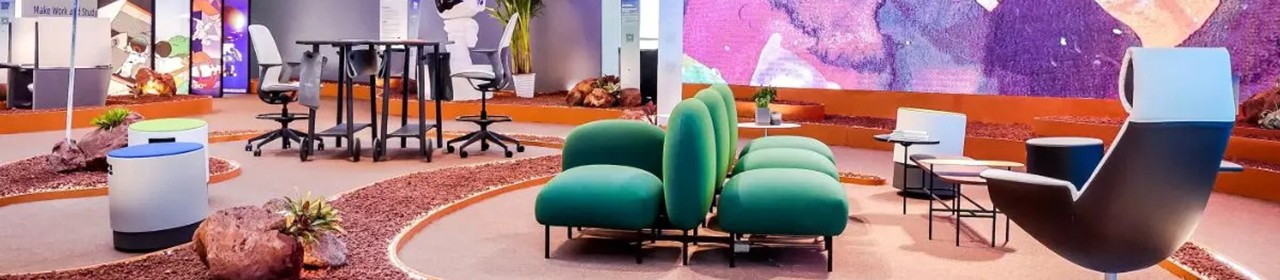
Guangzhou CIFF Home & Decor 2027
18–21 March 2027 at China Import & Export Fair Pazhou Complex and PWTC Expo, Guangzhou, China. The home-furnishing phase of the 59th China International Furniture Fair (Guangzhou), known as CIFF, brings together home furniture, home décor and home textiles, and outdoor leisure. It is designed as a professional sourcing and trade platform for domestic and international buyers and industry partners. The organiser also lists the full Guangzhou fair across two March phases; the dates here refer to the home-furnishing phase.
For visitors, the value lies in seeing connected product groups in one setting: furniture collections, upholstered pieces, soft furnishings, textiles, decorative products and outdoor-living ranges. Buyers can compare construction, materials, design and supplier capabilities; designers can explore finishes and product directions; distributors can assess ranges for their portfolios. The organiser’s 2026 results provide scale context, while the 2027 edition’s detailed programme and visitor arrangements should be checked with the organiser as they are released.
Why Guangzhou CIFF Home & Decor matters
Discover connected home-furnishing ranges
The official home-furnishing description covers high-end design, suite furniture, whole-house customisation, upholstered furniture, soft furnishings, home textiles and outdoor living. This breadth lets a visitor look beyond one isolated product and consider how furniture, fabrics, décor and outdoor pieces work together in a complete range or project.
Compare products and suppliers directly
Buyers can use the exhibition to compare visible details such as frame construction, upholstery, finish, dimensions, available combinations and product styling. Record the specification and follow-up question for each product; a photograph or catalogue alone may not answer questions about production capacity, minimum order, lead time, compliance documentation or after-sales support.
Use design discoveries to inform commercial choices
Designers and product teams can observe combinations of materials, forms and finishes across multiple product categories. Retailers and distributors can consider how a new range would fit their customers, price architecture and existing assortment. Treat inspiration as a starting point for checking feasibility, not as evidence of a product’s commercial performance.
In its report on the full 2026 Guangzhou fair, the organiser recorded 850,000 m² across 90 halls, over 5,100 brands from 36 countries and regions, and 353,106 professional visitors from 185 countries and regions, including 64,291 overseas attendees. The Home Furniture exhibition accounted for 430,000 m² in that edition. These are 2026 figures for the previous edition, and some attendance and scale totals cover both March phases rather than only the home-furnishing dates.
Who should visit Guangzhou CIFF Home & Decor?
The event is most useful when you arrive with a defined sourcing, design or product-development objective. Prioritise the sectors that match your work rather than trying to see every display.
Furniture buyers, retailers and purchasing teams
Useful if you are reviewing furniture ranges, looking for new suppliers or planning a category refresh. Compare collections by target customer, material, finish, configuration and the practical terms that affect your buying decision. Separate products that are visually interesting from suppliers that can meet your requirements.
- Compare suite, upholstered and design-led furniture against your assortment plan.
- Check construction, dimensions, finishes, material options and product combinations.
- Ask about minimum order quantities, production lead times, packaging and after-sales support.
- Record which items need samples, technical documents or a quotation after the fair.
The organiser describes the fair as a sourcing and purchasing platform for domestic and international buyers and partners.
Importers, distributors and sourcing professionals
Useful if you need to evaluate manufacturers, identify products for a market or build a qualified supplier shortlist. The event’s home-furniture, décor, textile and outdoor-living categories allow you to compare adjacent product groups, but supplier fit still depends on your target market, logistics, pricing and compliance requirements.
- Set out the product categories and price positions you are seeking before visiting.
- Compare supplier capabilities, export experience and product documentation.
- Ask which customisation options are available and what they change in cost or lead time.
- Keep separate notes for confirmed facts, estimates and questions requiring later verification.
Interior designers, architects and specifiers
Useful if you are sourcing furniture, textiles, lighting or decorative details for residential interiors, hospitality or other projects. Focus on design intent and technical suitability together: the finish, dimensions, fabric performance, maintenance needs and availability all matter to a specification.
- Bring a brief with room types, dimensions, palette and functional requirements.
- Compare upholstery and finish samples in person where available.
- Ask for technical sheets, care guidance and options for matching products.
- Note which suppliers can provide the documents needed for your project review.
Furniture and home-living manufacturers
Useful if you are assessing design directions, complementary products, materials or potential business relationships. The fair’s breadth can help product and commercial teams understand how adjacent categories are presented, but do not assume that a conversation establishes a partnership or a commercial commitment.
- Review adjacent ranges for potential product, material or distribution fit.
- Compare how competitors position finishes, configurations and complete-room concepts.
- Prepare a concise company and product introduction tailored to the contacts you want to meet.
- Agree on a specific next step before leaving a promising discussion.
What can you find at Guangzhou CIFF Home & Decor?
Home furniture
The organiser identifies high-end design, suite furniture, whole-house customisation and upholstered furniture among the home-furniture themes. Visitors can compare living, dining and other residential furniture collections, concentrating on the construction and configuration details relevant to their projects or retail ranges.
Home décor and soft furnishings
The wider home-living categories include soft furnishings, decorative accessories and home textiles. The official site’s sector description lists items such as curtains, bedding, carpets, ceramics, glassware, lighting, decorative objects and lifestyle home products. Use category planning to avoid spending time on products outside your sourcing brief.
Home textiles
Textile-related displays include fabrics and finished home-textile products such as bedding, curtains, cushions and upholstery materials. Buyers and designers can assess texture, colour and coordination in person, then request the technical and commercial information needed to confirm suitability.
Outdoor and leisure living
The outdoor sector covers outdoor furniture, sunshade products, accessories and leisure products. Visitors sourcing outdoor ranges should compare material suitability, finish, care requirements and the intended use environment; verify product claims and specifications directly with each supplier.
What makes Guangzhou CIFF Home & Decor distinctive?
Its home-furnishing phase connects furniture, home decoration, textiles and outdoor living within a single sourcing visit. That mix can help a buyer or designer examine how products relate across a room or assortment instead of treating every category in isolation.
The organiser’s 2026 post-show report also described themed areas within Home Furniture. These included Healthy Aging, Pet Home, Massage Chairs / Function Sofas and New Retail. It reported nearly 60 companies in the Healthy Elderly Living themed exhibition, presenting senior-friendly furniture, smart-care technologies and service systems, and around 40 companies in the Living with Pet themed exhibition, spanning furniture, smart devices, accessories and services. These examples describe the 2026 edition and should not be read as a confirmed 2027 programme.
The same report recorded 227 design brands, 11 design-hall clusters covering 96,000 m² and 675 entries to the CIFF Guangzhou Design Awards across the full 2026 fair. These figures illustrate the previous edition’s design activity, not a promise about the next edition’s programme.
What should you aim to achieve at Guangzhou CIFF Home & Decor?
If you are a buyer or retailer
Set a measurable objective such as: Shortlist five furniture suppliers that fit a defined customer and price segment, and identify the product details still needed to compare them. A useful visit ends with a documented shortlist rather than a large folder of unlabelled catalogues.
If you are a distributor or importer
Set an objective such as: Compare three product groups for distribution fit and record the commercial, service and documentation questions for each supplier. Do not treat an introductory discussion as proof of exclusivity, demand or market access.
If you are a designer or specifier
Set an objective such as: Find furniture and textile options for a live project, then collect dimensions, finish references and technical information for design review. Keep a separate list of products that inspire a concept but still need validation against the project brief.
If you are a manufacturer
Set an objective such as: Identify potential product or distribution connections and agree on a concrete follow-up with each relevant contact. Prepare to explain your capabilities and intended market clearly; the exhibition itself does not guarantee sales or partnerships.
How to prepare before Guangzhou CIFF Home & Decor
1. Define your buying or design brief
Write down what you need to source, compare or learn. For furniture, note the intended room or application, customer group, size range, materials, construction, finish and target price position. For textiles and décor, record fibre or material preferences, colour direction, performance requirements and how products need to coordinate with furniture.
2. Build a focused supplier shortlist
Use the organiser’s current exhibitor information and hall plan when available to identify relevant companies and prioritise them. Classify targets as A — must discuss, B — useful to compare and C — explore if time allows. Confirm current company details and product categories in the organiser’s materials rather than relying on an old directory.
3. Prepare product-specific questions
- Which materials, finishes, dimensions and configurations are standard, and which are custom?
- What is the construction method and what care or maintenance does the product require?
- Which test reports, material declarations or product documents can the supplier provide?
- What are the minimum order, sample, packaging and delivery arrangements?
- How do custom options affect price, tooling, lead time and repeat orders?
- What parts, warranty or after-sales support are available for the intended market?
- For textiles, what fibre content, performance information, colour options and repeatability are documented?
- For outdoor products, what use conditions and maintenance instructions does the supplier specify?
4. Plan your visit around priorities
Group must-see companies and categories so you can use the exhibition efficiently. Allow time to compare alternatives and record details immediately; a large exhibition can make similar products difficult to distinguish later. Confirm the current registration, opening and access arrangements with the organiser before travel.
How to make the most of the exhibition
Use one consistent note for every worthwhile product or supplier: Company → product → why it fits → evidence collected → open question → next action. For example, note whether an upholstered chair’s dimensions and fabric fit your brief, what construction information was supplied, and whether a sample or quotation is still needed.
Photograph product details only where permitted and record the company and product reference at the same time. Keep swatches, catalogues and business contacts tied to the relevant product. Mark claims that need independent checking—such as performance, certification, production capacity or delivery time—rather than treating a verbal statement as verified documentation.
After each substantial conversation, decide whether the contact is an immediate priority, a possible alternative or simply useful market intelligence. This keeps the visit focused and gives your team a clear basis for follow-up.
Plan your time at Guangzhou CIFF Home & Decor
The organiser reported that the Home Furniture exhibition covered 430,000 m² in 2026, within the larger two-phase Guangzhou fair. Use the current hall plan to understand the 2027 layout when it is published; do not assume that a previous edition’s route or hall allocation will remain unchanged.
Before each day
Choose a small number of priority categories and target companies. Check the organiser’s current information for hall locations and any programme items relevant to your visit.
During the day
Start with must-meet suppliers, then compare alternatives while the specification and buying criteria are fresh. Reserve time for unplanned discoveries, but avoid letting browsing replace your core objectives.
At the end of the day
Review notes, tag contacts for follow-up and list missing documents or answers. Update the next day’s plan based on what you learned, including any products that are no longer a fit.
Beyond the Guangzhou CIFF Home & Decor exhibition floor
The organiser’s 2026 account describes design activities and themed exhibitions as part of the full fair. It reported the Healthy Elderly Living themed exhibition, the Living with Pet – Pet Home & Supplies themed exhibition, design-hall clusters and the CIFF Guangzhou Design Awards. These are examples of the previous edition only. Check the organiser’s 2027 programme for confirmed activities before making a schedule around a particular theme or session.
Networking at Guangzhou CIFF Home & Decor
Prepare a short introduction that explains your business, the products or projects you are working on and the kind of supplier or partner you are seeking. Bring specific requirements—such as product specifications, target markets, order expectations or design briefs—so discussions can move beyond general introductions.
When a conversation is relevant, agree on the next step: a product specification, quotation, sample, technical document or follow-up meeting. Record who will send it and by when. The 2026 post-show report described networking and business-matching initiatives for that edition; confirm which tools or arrangements are available for 2027 rather than assuming they will be repeated.
Travelling to Guangzhou CIFF Home & Decor
The organiser lists China Import & Export Fair Pazhou Complex and PWTC Expo for the March 2027 Guangzhou fair. Check the current organiser information for the venue and hall associated with your target exhibitors, as well as registration, opening and transport arrangements. The 2027 access details should be confirmed before booking travel; this guide does not assume a particular shuttle, entrance or transport service.
How many days should you plan for Guangzhou CIFF Home & Decor?
The home-furnishing phase is scheduled across four days. How much time you need depends on the number of sectors and supplier meetings in your plan, not simply on the event’s duration.
- One focused day: may suit a visitor with a narrow category brief and a short, prioritised supplier list.
- Two days: may help buyers who need to compare several furniture and décor groups or revisit shortlisted suppliers.
- More time: may be useful for a broad sourcing brief across furniture, textiles, décor and outdoor living, or for exhibitors and teams with multiple meetings. Check the separate dates for the fair’s later March phase if your interests extend to office/commercial space or furniture manufacturing equipment.
The later phase is a separate schedule from the home-furnishing dates shown above; plan against the official calendar for the specific sections you intend to visit.
Visit Guangzhou CIFF Home & Decor with a live project
If you are sourcing for a project, bring a concise brief with room type, dimensions, intended use, preferred materials, finish direction, quantity and decision timeline. For specified products, note any safety, performance, cleaning or installation requirements that your project team must review.
Use a product comparison sheet to capture dimensions, material and finish references, available configurations, technical documents, sample status and supplier follow-up. For textiles, retain the product code with each swatch. For outdoor furniture, document the intended environment and ask the supplier for care and use guidance. Avoid making a specification decision from appearance alone when the project depends on technical or compliance evidence.
After Guangzhou CIFF Home & Decor: turn findings into decisions
Within a short time after the visit, sort contacts into three groups: A — immediate: suppliers or products that fit a current brief; B — potential: options that need a quotation, sample or further comparison; and C — market intelligence: useful design or category observations without an immediate buying action.
Send each contact a concise follow-up that names the product and the information you need. Depending on your objective, request a current specification, material declaration, quotation, sample, minimum order, production lead time, packing details, warranty terms or distribution information. Compare responses against the same criteria and document any assumptions before placing an order or approving a design.
Who should consider exhibiting at Guangzhou CIFF Home & Decor?
The organiser’s stated product scope is relevant to manufacturers and suppliers of home furniture, home décor, home textiles, soft furnishings and outdoor-living products. Companies considering an exhibit can define a clear objective—such as presenting a new collection, testing buyer response to a product range or identifying potential distribution conversations—and decide how success will be assessed after the event.
Prepare product specifications, material information, customisation options and a practical follow-up process before exhibiting. Match the display to the buyers you want to reach, and make it easy for visitors to understand which products are standard, which can be adapted and what information is available after the conversation. Confirm 2027 application terms, deadlines, stand options and audience services directly with the organiser; they are not stated here.
Guangzhou CIFF Home & Decor visitor checklist
Before
- ☐ Define the product categories, project needs and buying criteria that matter most.
- ☐ Check the official 2027 dates, registration status, venue information and current hall plan.
- ☐ Prioritise companies and prepare category-specific supplier questions.
- ☐ Bring project dimensions, finish references and any technical requirements that can be shared.
During
- ☐ Record each product code, supplier, material and open question together.
- ☐ Compare alternatives using the same criteria rather than relying on memory.
- ☐ Request only the technical and commercial information needed for your decision.
- ☐ Agree a clear follow-up action with each priority contact.
After
- ☐ Sort contacts into immediate, potential and market-intelligence groups.
- ☐ Request outstanding quotations, samples, specifications and compliance documents.
- ☐ Review supplier responses against your brief before making purchasing or design decisions.
- ☐ Share a concise outcome summary with colleagues involved in the decision.
Is Guangzhou CIFF Home & Decor worth visiting?
It is most relevant for professionals sourcing or specifying furniture, home décor, textiles and outdoor-living products, especially when they need to compare several suppliers or product categories in one visit. Buyers benefit from a defined product and supplier shortlist; designers can connect visual ideas with dimensions, materials and technical details; distributors can test whether ranges merit further commercial review.
The event’s breadth is also a reason to prepare carefully. Visitors without a category focus may spend time on products that do not fit their needs, while a catalogue collected without specifications or follow-up can be difficult to use. A visit is more likely to support a decision when you arrive with clear criteria, document what you learn and check all commercial and technical details after the exhibition.
Guangzhou CIFF Home & Decor 2027 at a glance
| Item | Information |
|---|
| Event | Guangzhou CIFF Home & Decor, the home-furnishing phase of CIFF Guangzhou |
| Edition | 59th China International Furniture Fair (Guangzhou) |
| Dates | 18–21 March 2027 |
| City and country | Guangzhou, China |
| Venues | China Import & Export Fair Pazhou Complex and PWTC Expo |
| Organiser | China Foreign Trade Guangzhou Exhibition Co., Ltd. |
| Main sectors | Home furniture, home décor, home textiles, soft furnishings and outdoor living |
| Audience | Professional buyers, furniture and interior designers, retailers, distributors and industry partners |
| Previous edition scale | 2026 full fair: 850,000 m², over 5,100 brands and 353,106 professional visitors; Home Furniture exhibition: 430,000 m² |
| 2027 programme | Check the organiser’s current announcements for confirmed activities and visitor arrangements |
The official 2027 dates and venues are published. Scale and themed-programme figures in this guide refer to the 2026 edition unless otherwise stated.
Make your visit to Guangzhou CIFF Home & Decor count
Decide what you need to source, compare or specify, then leave with documented product information and clear follow-up actions. Discover. Compare. Specify. Follow up.
Furniture and home-furnishing opportunities in China
Market size and demand
China’s National Bureau of Statistics reported business revenue of 4,562.0 in the unit of 100 million yuan for furniture manufacturing enterprises above designated size in January–September 2025, down 6.7% year on year. This is a measure of reported manufacturing revenue, not retail sales, imports or a forecast. The decline is a reason for suppliers and buyers to examine product-level demand and commercial terms carefully rather than assume uniform growth across furniture categories.
Market drivers and commercial opportunities
The documented manufacturing activity gives home-furnishing companies a concrete context for assessing the sector, while CIFF’s official categories identify furniture, décor, textiles and outdoor living products present at the fair. Buyers may compare domestic suppliers, designs and product specifications across these categories. Manufacturers and distributors may use the exhibition to evaluate product fit, sourcing relationships or distribution conversations, but the revenue figure does not establish demand for a particular product or guarantee access to buyers.
- Supplier and range evaluation: compare furniture collections, upholstery, textiles and décor against a defined customer segment; verify quality evidence, price, delivery and service before deciding.
- Product and design comparison: review finishes, materials and configurations across exhibitors; market-wide revenue does not show which styles or price points will sell.
- Distribution assessment: explore whether a product range merits further market or partner research; confirm competition, compliance needs and commercial terms independently.
Regulations and market-entry conditions
Industry-specific product standards, import requirements and market-entry conditions were not verified for this guide. Companies should obtain current requirements from competent authorities and qualified advisers before importing, selling or specifying products.
What this means for exhibitors
Furniture and home-living exhibitors may use the fair to present a focused range and explore supplier, buyer or distribution discussions. The National Bureau of Statistics figure describes the wider manufacturing sector, not the prospects of an individual product; exhibitors should validate target segments, competition, documentation and service expectations.
What this means for visitors
Buyers and designers may use the event to compare furniture and home-furnishing products against a real sourcing or project brief. Treat national revenue as context only, and confirm each supplier’s specifications, compliance documents, pricing and delivery terms before making a decision.
For further information, please click
here .