SIAL Shanghai Food and Beverage Exhibition 2027
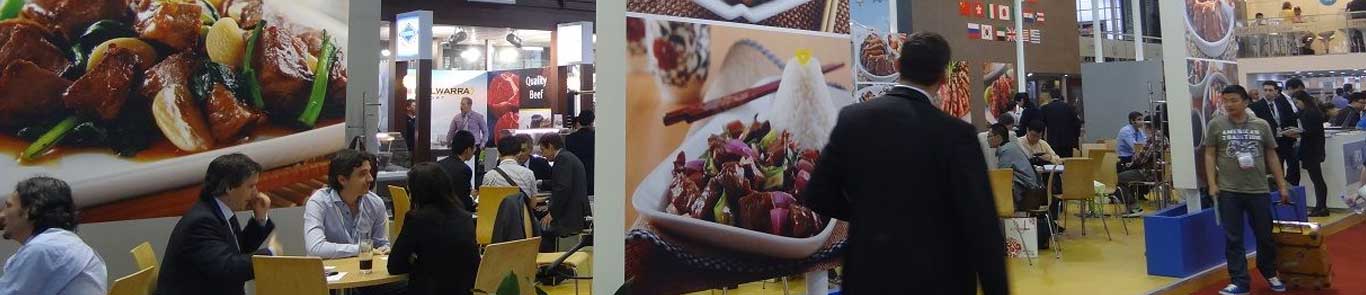
SIAL Shanghai Food and Beverage Exhibition is the Shanghai edition of SIAL’s international food and beverage trade fair. The 2027 edition is scheduled for 18–20 May 2027 at Shanghai New International Expo Centre (SNIEC), Shanghai, China. Its exhibition layout covers food and drink categories from groceries, meat and seafood to dairy, beverages, bakery, healthy food, and food processing and packaging. Buyers can compare products and suppliers, while exhibitors can present offerings and pursue business conversations with trade visitors.
SIAL Shanghai 2027 at a glance
| Item | Information |
|---|
| Event | SIAL Shanghai Food and Beverage Exhibition |
| Official event name | SIAL Shanghai |
| Edition | 2027 |
| Type and category | Business event; food and beverage trade fair |
| Dates | 18–20 May 2027 |
| Visitor hours | 18–19 May: 09:00–17:00; 20 May: 09:00–16:00 |
| Venue | Shanghai New International Expo Centre (SNIEC), No. 2345 Longyang Road, Pudong New Area, Shanghai, China |
| Organizers | SIAL (Beijing) Exhibitions Co., Ltd.; Comexposium-SIAL Exhibition Co., Ltd.; Comexposium; China General Chamber of Commerce |
| Main sectors | Food and beverages, meat, seafood, dairy, bakery and snacks, produce, grains and pulses, healthy food, processing and packaging |
| Main audiences | Importers, distributors, retailers, e-commerce and HoReCa buyers, food-service businesses, manufacturers and food-industry professionals |
| Reported programme figure | The organiser says Match Me facilitated 12,870 business matchings in 2025; this is an organiser-reported programme figure, not an audited attendance statistic |
Check the organiser’s website for later operational updates and current visitor-badge requirements.
Why SIAL Shanghai matters to food businesses
Compare products across a wide food portfolio
The event is a multi-category fair rather than a single-product show. Buyers can organise their visit around priority product areas, compare specifications and packaging, and identify suppliers for follow-up. A category-led plan is more useful than trying to cover every aisle equally.
Connect sourcing with channel needs
The organiser identifies importers, distributors, retailers, e-commerce and HoReCa decision-makers among its professional audience. These channels have different requirements: buyers may distinguish retail-ready products from food-service formats, while distributors may focus on assortment, packaging, supply continuity and market fit. Use conversations to test those questions rather than treating a product display as proof of commercial suitability.
Explore innovation and industry discussion
The published programme includes SIAL Innovation, the Global Food Industry Summit, La Cuisine, SIAL Chic & Tea Contest, SIAL Cup Barista Challenge, SIAL Snacking Awards and SIAL Chinese Restaurant. These activities create additional ways to examine product ideas and food-industry themes; check the organiser’s current schedule before deciding which sessions or contests to prioritise.
Exhibition sectors and product groups at SIAL Shanghai
Meat, poultry and seafood
- Fresh and frozen meat and poultry
- Cured and prepared meat products
- Seafood, fish and shellfish
- Processed and convenience formats
- Cold-chain and food-safety questions to discuss with suppliers
Dairy, bakery and confectionery
- Dairy products and eggs
- Bakery products and baked snacks
- Confectionery, biscuits and pastry
- Ingredients and semi-finished products
- Product formats for retail and food service
Produce, grains and grocery
- Fresh fruits and vegetables
- Dried fruits, nuts and grocery products
- Cereals, pulses and grains
- Oils and fats
- Local specialities and international groceries
Beverages
- Alcoholic beverages
- Non-alcoholic beverages
- Coffee and tea products
- Drink ingredients and beverage concepts
- Formats for retail, hospitality and food service
Healthy, organic and specialised foods
- Healthy and wellness foods
- Organic products
- Diet products
- Baby food
- Products for specialised consumer and channel requirements
Convenience and prepared foods
- Instant food
- Frozen products
- Preserved and canned foods
- Delicatessen and prepared meal products
- Pet food
Processing, packaging and delivery
- Food-processing equipment and technologies
- Packaging systems and materials
- Contract processing services
- Delivery-related solutions
- Production and handling services for food businesses
These product lines describe goods and solutions associated with published sector headings; they are not a named exhibitor list. The organiser’s venue layout assigns categories to halls, including a processing, packaging and delivery area. Verify the final hall plan and exhibitor directory before building a detailed route.
Who should visit SIAL Shanghai Food and Beverage Exhibition?
Importers and distributors
Useful if you are reviewing products for a defined market or channel. Prioritise:
- Product category and target customer
- Ingredients, formats, packaging and shelf-life information
- Export readiness and supplier experience with your destination market
- Minimum order, lead time and supply capacity
- Labelling, certification and import documentation to verify after the meeting
Bring a clear sourcing brief and record which questions require documentary follow-up.
Retail, e-commerce and grocery buyers
Useful if you are evaluating assortment options across food and beverage categories. Compare product differentiation, pack size, presentation, category fit, replenishment and the evidence needed for product claims and local labelling.
HoReCa and food-service professionals
Useful if you source ingredients, prepared foods, drinks or equipment for hospitality and catering operations. Focus on ingredient specifications, formats and pack sizes, preparation and storage requirements, and products that could support an operational or menu concept.
Food producers and brand owners
Useful if you want to present products, assess international buyer interest or explore distribution conversations. Prepare a company profile, target markets, specifications, packaging details, production capacity and a realistic next step for buyers.
Roles to consider: owners and directors, procurement managers, category buyers, import and export managers, distributors, product-development teams, food technologists, quality and regulatory staff, HoReCa purchasing teams and sales representatives.
Why visit SIAL Shanghai?
- Identify relevant suppliers: map producers and brands to priority categories rather than collecting contacts without a sourcing purpose.
- Compare products consistently: use the same checklist for ingredients, formats, packaging, quality documentation and channel suitability.
- Explore adjacent categories: a multi-sector fair may help buyers find complementary products for retail, hospitality or distribution assortments.
- Assess processing and packaging solutions: the published hall plan includes a processing, packaging and delivery area alongside food products.
- Use the programme deliberately: select relevant forums, contests and food-industry activities after checking the confirmed schedule.
- Plan business conversations: the organiser’s Match Me service supports buyer-supplier meetings; confirm how the 2027 service works and what participation requires.
Why exhibit at SIAL Shanghai?
Food and beverage manufacturers, brand owners, ingredient suppliers, processors and packaging or delivery solution providers may consider the event when their goals include presenting products, meeting trade professionals or evaluating channels. The organiser identifies importers, distributors, retailers, e-commerce and HoReCa among relevant professional groups, and promotes Match Me for business meetings.
- Present a focused range rather than an undifferentiated catalogue.
- Use buyer conversations to understand channel requirements and product questions.
- Compare feedback from import, distribution, retail and food-service audiences.
- Assess whether products and documentation suit the markets being discussed.
- Develop a follow-up list that distinguishes immediate requests from longer-term market research.
Before committing, verify participation costs and terms with the organizer, and check product registration, standards, labelling and import conditions that apply to each destination market. Evaluate market fit on a product basis rather than assuming that a broad sector indicator applies to every category.
What makes SIAL Shanghai different?
Its value lies in the combination of a broad food and beverage sourcing floor with buyer tools and a varied programme.
The official event site presents multiple food categories, a hall-by-hall product layout, an online marketplace for previewing exhibitors and products, and Match Me for buyer-supplier meeting coordination. Listed activities span product innovation, culinary demonstrations and competitions. Check the specific exhibitor mix and programme for the 2027 edition.
What should you try to achieve at SIAL Shanghai?
Replace a general goal such as “see what is new” with an outcome you can evaluate after the visit.
If you are an importer or distributor
Shortlist suppliers in two priority categories and document the product, export-readiness questions and next action for each.
If you are a retail or e-commerce buyer
Identify products that fit a defined customer or assortment need, then record the evidence required before any listing decision.
If you are a HoReCa or food-service buyer
Compare a focused set of ingredients, prepared foods or beverage products against your operational specifications.
If you are exhibiting
Set a target for qualified conversations by product group and define what information you will collect for each follow-up.
How to prepare before SIAL Shanghai
- Define your reason for attending.
Choose between supplier discovery, category research, distribution discussions, product presentation or industry learning. Write down the decisions the trip should support.
- Build a target list.
Use the organiser’s exhibitor and product tools when the relevant edition’s information is available. Group targets by food category and note why each one matters.
- Prioritise meetings.
Classify companies as A — essential, B — useful and C — explore if time allows. For A targets, prepare a specific question and request a meeting through the organiser’s current process if available.
- Prepare product questions.
Ask about ingredients and specifications, packaging and formats, production capacity, lead times, minimum order quantities, export documentation, quality systems and intended sales channels. Confirm details against documents after the show.
- Check registration and travel details.
Review current visitor-badge eligibility, daily hours, venue access and travel-document requirements. Do not rely on a previous edition’s arrangements.
- Plan interpretation and follow-up.
Prepare a short company introduction and a consistent way to record company, product, relevance, contact and next action. Arrange language support in advance if useful.
How to make the most of the exhibition
At each meeting, record Company → Product → Why relevant → Contact → Next action. A buyer reviewing seafood, for example, could note product form, species or format, required documentation, cold-chain questions and who will send the next specification. This is a note-taking example, not a claim about any specific exhibitor.
Use the hall layout to group visits by category, and keep time for meetings and programme items that support your objectives. Confirm the tools and functions available for 2027 before relying on the organiser’s Match Me or online marketplace.
Beyond the exhibition floor
The organiser’s published event pages list SIAL Innovation, the Global Food Industry Summit, La Cuisine, SIAL Chic & Tea Contest, SIAL Cup Barista Challenge, SIAL Snacking Awards and SIAL Chinese Restaurant. These provide examples of the event’s innovation, food-service and beverage programming. Check the final 2027 schedule for dates, access and changes.
Networking at SIAL Shanghai
Be ready to explain your product interests, target channel, market requirements and likely purchase or distribution timeline. Ask what information the other party needs to assess fit, then agree on a practical next step such as exchanging specifications or arranging a follow-up discussion. The organiser promotes Match Me for buyer-supplier meetings; confirm participation details through its current event service.
SIAL Shanghai visitor profile and business opportunities
| Visitor profile | Potential focus at the event |
|---|
| Importers | Product fit, export readiness, documentation and supply conditions |
| Distributors | Brands, assortment, channel fit and supplier follow-up |
| Retail and e-commerce buyers | Consumer-facing products, packaging and category opportunities |
| HoReCa and food-service buyers | Ingredients, prepared foods, beverages and operational formats |
| Food manufacturers | Ingredients, processing, packaging and product development |
| Food brands and exporters | Buyer discussions, product presentation and market requirements |
These are practical priorities inferred from the organiser’s named audiences and product categories, not attendance statistics or a promise of access to particular buyers.
Travelling to SIAL Shanghai
The organiser’s visitor information places the venue at Shanghai New International Expo Centre, No. 2345 Longyang Road, Pudong New Area. Its travel page lists Pudong International Airport and Hongqiao Airport, with indicative journey times of about 40 minutes and 50 minutes respectively. It also lists Shanghai Metro Lines 7 and 2, the Maglev connection from Pudong International Airport to Longyang Road, and an organiser shuttle between Longyang Road metro station and the SNIEC south lobby. Confirm 2027 arrangements before travelling.
For drivers, the organiser identifies parking areas P1, P2, P4 and P5 and notes that SNIEC charges for parking. Access and parking arrangements can change; consult current organizer and venue information before the visit.
Practical information for international visitors
| Item | Information |
|---|
| Venue | Shanghai New International Expo Centre (SNIEC), Pudong New Area, Shanghai |
| Airports named by the organizer | Pudong International Airport and Hongqiao Airport |
| Metro access listed by the organizer | Line 7 to Huamu Road Station near the North Hall; Line 2 to Longyang Road Station near the South Hall |
| Airport rail connection | Maglev from Pudong International Airport to Longyang Road |
| Shuttle | Between Longyang Road metro station and the SNIEC south lobby |
| Visitor hours | 09:00–17:00 on 18–19 May; 09:00–16:00 on 20 May 2027 |
Arrange travel documents, accommodation, local transport and payment needs in advance. Entry and visa requirements depend on nationality and individual circumstances; check applicable official requirements before booking.
One day or several days at SIAL Shanghai?
One day may suit visitors with a short target list and a few priority meetings. Focus on one or two categories and allow time to move between halls.
Two days can allow a buyer to compare more categories, hold planned conversations and attend selected programme activities. A written route helps protect meeting time.
All three days may be worthwhile for broad sourcing, multi-category businesses, exhibitors with scheduled meetings or visitors combining the exhibition with the programme. The best duration depends on your targets and confirmed schedule.
If you have a sourcing or market-entry project
Bring the product category, target customer, required formats, key specifications, quality and labelling needs, expected volumes and decision timeline. For food products, note documents and compliance questions to check for your destination market. For processing or packaging solutions, prepare capacity, material, output and integration requirements. Verify technical, regulatory and commercial claims independently before making a commitment.
After SIAL Shanghai: where the real value starts
Sort contacts into three groups: A — immediate follow-up for suppliers or buyers with a clear next step; B — potential for contacts needing more information; and C — market intelligence for useful category or competitor observations. Send tailored follow-up while the discussion is fresh. Request specifications, ingredient and labelling details, quality documents, samples where appropriate, prices, minimum orders, lead times and commercial terms. Compare like with like, check destination-market requirements, and record why each option does or does not fit.
Is SIAL Shanghai worth visiting?
SIAL Shanghai is most relevant to food and beverage professionals with defined sourcing, distribution, retail, HoReCa, product-development or exhibiting goals. Its multi-category layout, buyer-oriented tools and programme can support comparison and business conversations, but value depends on selecting relevant targets and verifying products, documents and terms. A focused plan is more useful than attempting to see everything.
Make your SIAL Shanghai plan
What do you need to discover, compare, meet or decide that you cannot resolve through desk research alone? Set that objective before you arrive, and use the event to move from broad interest to documented next steps. Discover. Compare. Meet. Decide. Follow up.
Food and beverage opportunities in China
Market size and demand
The 2025 China Fishery Products Report records 4.4 million metric tonnes of broad fishery-product imports in China in 2024. This is an import-volume indicator for broad fishery products, not the size of the whole food and beverage market or demand for any single seafood product. It provides dated context for investigating product-specific sourcing and sales fit.
Market indicators
- Broad fishery-product imports by volume: 4.4 million metric tonnes in 2024; national scope. This does not establish species-level demand.
Commercial opportunities and limits
Importers and wholesalers may use the fair to compare aquatic products, formats and supplier documentation against specific sourcing needs. Seafood exhibitors may investigate product and channel fit with buyers. The indicator does not prove a supply gap, profitability or buyer access; product-specific demand, competition and compliance need separate checks.
What this means for exhibitors
Seafood suppliers could use the event to test whether their products and documentation match the needs of importers, wholesalers and food buyers. The broad import figure is context only and does not guarantee buyer interest or sales.
What this means for visitors
Buyers may compare seafood products and suppliers against defined species, formats, quality requirements and documentation needs. The national import figure is not a procurement forecast, so decisions should rest on product-level evidence and supplier checks.
Explore Event Opportunities
Explore how SIAL Shanghai may support your food and beverage sourcing or exhibiting objectives, and plan the conversations and practical steps that fit your business.
Get Expert Assistance from ilikevents to plan your visit or exhibition participation.
See the ilikevents services for this event
For further information, please click
here .