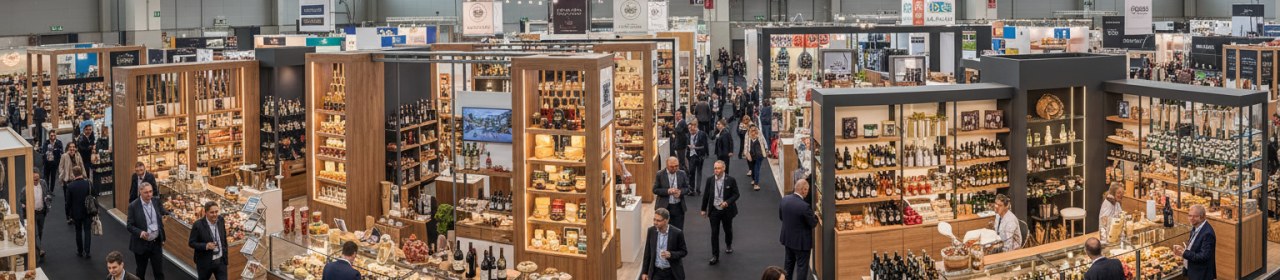
Salón Gourmets 2027: a professional guide to fine food and drink
26–29 April 2027
IFEMA Madrid, Madrid, Spain
Salón Gourmets is the annual trade fair for high-end food and beverages organised by Grupo Gourmets. Its 40th edition is scheduled for four days at IFEMA Madrid. The event is intended for gastronomy professionals; the organiser states that entry is restricted to registered trade visitors and that under-18s are not admitted. The 2027 dates and venue are published, while detailed schedules, participating brands and the full programme should be checked in the organiser's current information as they are released.
Why Salón Gourmets matters to food businesses
Discover products across the premium food chain
The organiser's fair spans fine food and beverages, with previous-edition areas for wine, extra-virgin olive oil, organic products, cheeses, pizza and other specialist food categories. A buyer can use one visit to scan established lines and new products, then focus on the categories that fit their menu, shop, distribution portfolio or customer base.
Compare products in person
Packaging, format, ingredients, provenance and serving characteristics can all affect a product's fit for a business. Tastings and product presentations—where offered—can help visitors form questions and make a shortlist, but commercial specifications, supply capacity, certifications and terms still need direct confirmation from each producer.
Meet the trade and learn from demonstrations
The 2026 edition included themed areas, tastings, competitions, awards and culinary demonstrations. These are examples of the previous programme, not a promise that the same items will appear in 2027. The organiser's 2026 figures reported 1,993 exhibitors, more than 110,154 professional visitors, over 55,000 products and 66,000 m² of exhibition surface. Those figures describe the 2026 edition, not a forecast for 2027.
Who should visit Salón Gourmets?
Restaurant, hotel and catering buyers
Use the fair to look for products that suit your customer profile, service model and menu development plans. Prioritise ingredients, drinks and formats that match your purchasing needs, and ask producers about pack sizes, storage, handling, seasonality and dependable supply. Keep separate notes for products that are ready for trial and those needing operational or cost review.
Specialist food retailers and delicatessens
Retail buyers can compare distinctive foods and beverages, assess how clearly a product's origin and attributes are communicated, and consider whether its format and price positioning fit the store. Ask about minimum order quantities, shelf life, recommended storage, merchandising materials and delivery arrangements before treating a tasting as a buying decision.
Distributors, wholesalers and importers
For channel businesses, the value lies in assessing whether a producer's range can complement existing lines and serve a defined customer segment. Discuss territory, current distribution, export documentation, volume capacity, packaging languages and after-sales support. Record which details are confirmed and which need written follow-up.
Food and beverage producers
Producers can use the event to present their range to trade visitors, understand how buyers compare products and explore potential distribution or hospitality relationships. Prepare concise product information, provenance details, ingredients and allergen information, certifications where applicable, production capacity and a clear next step for interested contacts.
What can you find at Salón Gourmets?
Fine foods and regional specialities
- Speciality and gourmet foods, including artisan and regional products.
- Cheeses and dairy products, cured meats, preserves, oils, sauces and other delicatessen categories.
- Organic products and selected food innovations presented in themed areas.
Wine and other beverages
- Wines and wine-related tasting or presentation areas, including the organiser's Wine Tunnel in the previous edition.
- Premium drinks and beverage products for hospitality, retail and distribution.
Foodservice and culinary products
- Products for restaurants, hotels, catering and specialist food retail.
- Pizza and culinary categories represented in previous-edition dedicated areas and competitions.
The 2026 catalogue and thematic-area information describe previous-edition participation. Use the current organiser catalogue for 2027 exhibitors and product availability; a category's past presence does not guarantee it will return.
What makes Salón Gourmets distinctive?
It combines product discovery with trade-focused tastings, specialist areas and culinary competitions. This mix lets buyers examine products while also seeing how categories are presented and used in gastronomy. The 2026 edition listed dedicated areas such as the Innovation Area, Wine Tunnel, EVOO Tunnel, Organic Exhibition Area, cheese activities and a pizza gallery, alongside contests in ham cutting, sommellerie, cheese, pizza and other culinary disciplines. These examples demonstrate the event's format; check the 2027 programme for confirmed activities.
Set a useful objective for Salón Gourmets
For hospitality buyers
Example objective: shortlist products for a defined menu or beverage requirement. Compare taste and format, then check cost, supply continuity, storage and service practicality with the supplier.
For retail and distribution teams
Example objective: identify a small group of products that could fill a clear gap in your range. Record target customer, territory, order minimums, product documentation and delivery conditions for each candidate.
For producers
Example objective: qualify follow-up conversations with buyers who match your target channel. Note the buyer's market, customer type, volume expectations and agreed next action rather than counting contacts alone.
How to prepare before Salón Gourmets
1. Define your buying or selling brief
Write down the categories you need, the customer or menu they serve, the price and format constraints, and what a suitable supplier must demonstrate. Producers should define their target channels and the markets they can serve.
2. Review the current exhibitor catalogue
Use the organiser's current catalogue and thematic-area information when available. Build a priority list and group companies as A (essential), B (useful) and C (explore if time allows). Leave room for discovery, but do not let an unplanned tasting displace a pre-arranged supplier conversation.
3. Prepare product-specific questions
- What ingredients, origin and production method define the product?
- Which formats, pack sizes and private-label options are available?
- What are the shelf life, storage and handling requirements?
- Which allergens, certifications or technical documents should a buyer review?
- What are the minimum order, production capacity and lead time?
- Can the supplier support the destination market's labelling and export requirements?
- How does the product perform in a menu, retail display or foodservice application?
- What are the delivery, temperature-control and replenishment arrangements?
- Which markets or channels does the producer currently supply?
4. Arrange focused conversations
Where the organiser's hosted-buyer or business-centre options are open to your profile, review their current eligibility and terms. Request meetings with priority suppliers when the official service is available. Bring non-confidential requirements and agree what information should be sent after the fair.
How to make the most of the exhibition
For every product worth considering, record: Producer → Product → Customer fit → Evidence or sample requested → Commercial question → Next action. For a cheese, for example, note milk type or origin information offered, format, storage conditions, shelf life and the buyer's intended use. For a beverage, record serving context, pack format, target channel and supply terms to confirm.
Keep tasting impressions separate from commercial assessment. Take notes soon after each conversation and ask permission before photographing product or commercial material. If a product needs a technical or regulatory review, identify the colleague who will assess it and the document the supplier must provide.
Programme and activities beyond the stands
The 2026 edition's official technical information listed more than 800 activities and described competitions, awards, tastings, demonstrations and themed areas. Examples included the Wine Tunnel, EVOO Tunnel, cheese activities, the Innovation Area, sommelier and ham-cutting contests, pizza competitions and culinary showcases. These are previous-edition examples only. Check the organiser's 2027 programme for confirmed demonstrations, contests, award schedules and any registration requirements.
Plan your time across the four days
A single day may work for a visitor with a short supplier list and a narrow category focus. More time can help buyers compare several categories, attend relevant demonstrations and revisit shortlisted producers. With five halls used in the previous technical plan and 66,000 m² of reported 2026 exhibition surface, an unprioritised walk can consume time quickly. Base your visit length on the final 2027 floor plan, catalogue and programme rather than assuming every hall or activity will be relevant.
Before opening
Confirm your professional registration, daily schedule, exhibitor locations and any meeting times. Set an attainable number of priority conversations and identify the product questions you need answered.
During the day
Alternate scheduled meetings with category exploration. Leave time to revisit promising suppliers, compare similar products and attend only those activities that support your objectives. Record product names and supplier contacts while the conversation is fresh.
At close
Review notes, flag missing documents and identify next steps for each priority contact. Use the final day or remaining hours for follow-up conversations rather than collecting more material without a decision purpose.
Networking at Salón Gourmets
A short introduction should explain your role, customer base and product interest. Buyers can state the category, format or supply challenge they are trying to solve. Producers can lead with their product's verified characteristics and the channels they can supply. Ask what information the other party needs next, agree how it will be shared and record the timing. A tasting or brief exchange is a useful start, not proof of a commercial fit.
Getting to IFEMA Madrid
The organiser identifies IFEMA Madrid at Avenida del Partenón, 5, Madrid. Check the venue's current transport, entrance, parking and access information before travelling, and confirm any event-specific arrangements closer to the 2027 dates. The fair's professional-entry rules require registration and identity documentation; review current admission requirements with the organiser.
How many days should you attend?
One day may suit a focused buying brief and a limited list of priority suppliers. Two days can allow category comparisons and a programme activity without compressing every conversation. Several days may be useful for broad portfolios, hosted-buyer meetings or teams dividing coverage across product groups. Choose according to the confirmed 2027 programme, exhibitor catalogue and your follow-up capacity.
After Salón Gourmets: turn notes into decisions
Sort contacts into A (current purchasing or distribution need), B (potential future fit) and C (general market intelligence). For priority suppliers, request written product specifications, prices, order minimums, delivery schedules, storage guidance, certifications and export documentation where relevant. Compare alternatives against the same criteria and involve culinary, technical, quality and procurement colleagues as needed. For producers, send the promised catalogue or sample information promptly and record the buyer's market, channel and requested next step. Do not treat a positive tasting or conversation as a confirmed order.
Who should consider exhibiting at Salón Gourmets?
The organiser's positioning targets gastronomy professionals and its previous-edition areas covered premium foods, wine, olive oil, organic products, cheese and culinary categories. Producers, specialist brands, distributors and foodservice suppliers may find the format relevant if they can explain their product range and serve professional buyers. Before exhibiting, define the channels and customer types you want to meet, prepare clear product and supply information, and confirm participation conditions, deadlines and any buyer-meeting programme directly with Grupo Gourmets.
Salón Gourmets visitor checklist
Before
- ☐ Confirm professional registration and current admission requirements.
- ☐ Select priority product groups and review the current exhibitor catalogue.
- ☐ Prepare questions on provenance, ingredients, pack formats, storage and supply.
- ☐ Request meetings with priority suppliers where the organiser's service is available.
During
- ☐ Record producer, product, intended customer fit and the evidence still needed.
- ☐ Separate tasting notes from commercial and compliance checks.
- ☐ Prioritise relevant demonstrations, tastings and competitions from the confirmed programme.
- ☐ Agree a specific follow-up action with each priority contact.
After
- ☐ Compare shortlisted products against consistent buying criteria.
- ☐ Request specifications, prices, order terms and delivery details in writing.
- ☐ Assign an owner and date to every worthwhile follow-up.
Is Salón Gourmets worth visiting?
Salón Gourmets is most relevant to professional buyers, distributors, hospitality businesses, specialist retailers and producers working with premium food and beverages. Its reported 2026 scale and programme of category areas and culinary activities indicate a broad trade environment, but the value of attending depends on selecting relevant products and using conversations to verify supply and commercial details. Visitors seeking a defined sourcing, range-development or product-presentation objective are better placed to turn the fair into useful follow-up than those who browse without priorities.
Salón Gourmets 2027 at a glance
| Item | Information |
|---|
| Event | 40th Salón Gourmets, the professional fine food and beverage fair |
| Date | 26–29 April 2027 |
| Venue | IFEMA Madrid, Avenida del Partenón, 5 |
| City and country | Madrid, Spain |
| Organiser | Grupo Gourmets |
| Main sectors | Fine foods, wine and beverages, cheese, olive oil, organic and specialist products |
| Audience | Registered gastronomy professionals, including hospitality, catering, distribution, wholesale and specialist retail |
| Latest published scale | 2026: 1,993 exhibitors; 110,154 professional visitors; 66,000 m² exhibition surface; over 55,000 products |
| 2027 programme | Check current organiser announcements for confirmed activities and exhibitors |
Plan your Salón Gourmets visit
Which product or supplier decision do you want to make easier, and what evidence will you need after the conversation? Discover. Taste. Compare. Verify. Follow up.
Fine food opportunities in Spain
Market context
CaixaBank Research reported that Spain exported approximately 34.4 million tonnes of agri-food products worth EUR 69.6 billion in 2023, representing 18.1% of total Spanish goods exports. This country-level trade context connects to Salón Gourmets' focus on premium food and beverage products, but it does not establish demand for any individual product or guarantee buyers.
Opportunities for exhibitors
- Producers may use the fair to present premium foods, beverages and regional specialities to professional buyers from hospitality, retail, wholesale and distribution.
- Brands exploring export channels could use conversations to identify potential importer or distributor requirements, then verify market access, documentation and supply terms independently.
Opportunities for visitors
- Buyers could compare products and producer portfolios relevant to Spain's substantial agri-food export base, while testing whether provenance, format and supply conditions fit their customer segment.
- Hospitality and retail professionals may use tastings and product presentations to identify options for menus, shelves or specialist ranges, subject to commercial and technical checks.
Spain's documented agri-food trade scale makes it a relevant setting for exploring food products and supplier relationships. Fit depends on each participant's category, customers and market-entry requirements; the export figure is national context, not a forecast of fair outcomes.
Discover Madrid
Madrid offers cultural visits that can complement a business trip to IFEMA Madrid, which is located in the city's Barajas district. The attractions below are in Madrid proper, away from the fair complex, so allow for separate planning and check current visitor information.
Prado Museum
The Prado Museum is a major art collection on Madrid's Paseo del Arte, with works from Spanish, Italian and Flemish schools. The city's official tourism guide recommends planning a focused visit because the collection is extensive.
Royal Palace of Madrid
The Royal Palace connects the city's historic centre with the history of the Spanish monarchy. Madrid's official tourism information describes it as a key historic attraction; check the palace's current visitor arrangements before planning a visit.
El Retiro Park
El Retiro is a large city park and part of Madrid's UNESCO-listed Landscape of Light cultural landscape. Its gardens and lake offer a contrasting outdoor setting after time indoors at the exhibition.
Visitors can reserve a cultural stop before or after fair commitments, choosing an attraction that fits their available time. Confirm current opening and access information with each site.
For further information, please click
here .