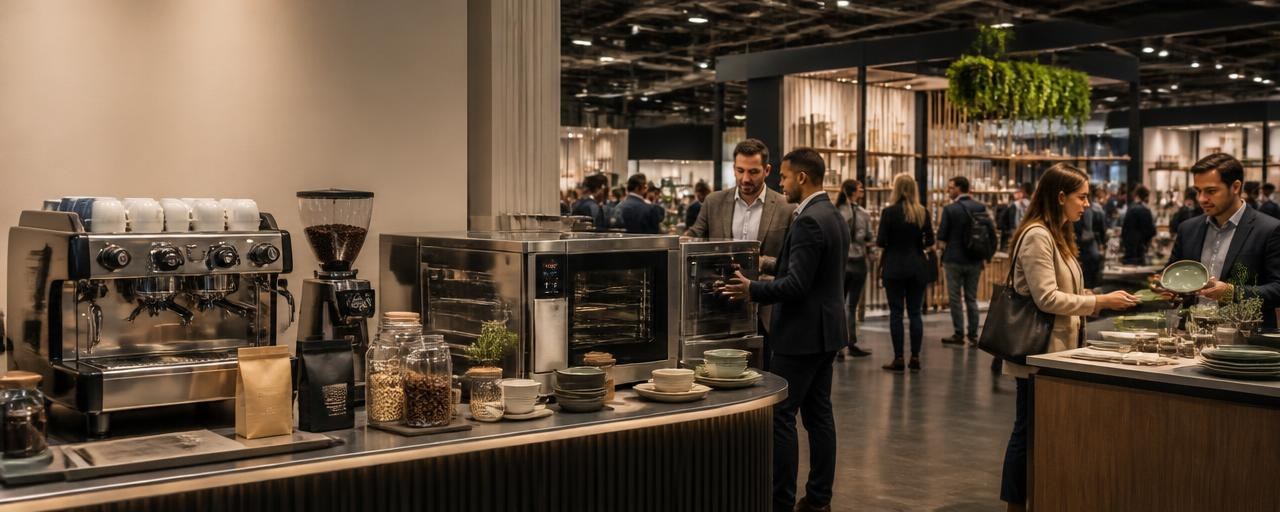
London HRC 2027: a practical guide
5–7 April 2027 at ExCeL London, Royal Victoria Dock, 1 Western Gateway, London E16 1XL, England. HRC is the Hotel, Restaurant & Catering trade exhibition organised by Montgomery Group. It is part of Food, Drink & Hospitality Week, which brings together seven co-located events.
HRC serves hospitality and foodservice professionals looking to source products, compare suppliers and consider operational ideas across food, drink, commercial equipment, interiors and business services. The 2027 daily hours are 10:00–17:00 on 5 and 6 April and 10:00–16:00 on 7 April. Online registration closes on 6 April, when onsite registration remains available; on 7 April onsite registration closes at 14:00 and last entry is 15:00.
Why London HRC matters
Compare products for real operations
HRC’s sections cover equipment, food, hot drinks, bar products, furniture, interiors and tableware, as well as services such as energy, finance, insurance, human resources, compliance and consultancy. That mix lets buyers consider products alongside the practical needs of hospitality venues.
Put market questions to suppliers
Operators can compare specifications, suitability and service requirements in person. Suppliers can hear how buyers across hotels, restaurants, contract catering and other hospitality settings assess their products. Use conversations to identify what needs checking after the show rather than treating a product display as a substitute for due diligence.
Who should visit London HRC?
Hotel, restaurant and catering operators
Prioritise products that address an identified project or operating need: equipment capacity, food and drink range, tableware, furniture or business support. Note the specification, likely fit and follow-up question for each supplier you want to assess.
Chefs and food-and-beverage teams
Explore food, ingredients, hot drinks and bar products with menu development and service requirements in mind. Compare how products could fit your menu, preparation workflow and customer offer, and record any samples or technical information to request later.
Procurement teams, distributors and consultants
Use the breadth of equipment and product categories to compare suppliers, specifications and potential portfolio fit. Prepare a shortlist of requirements before walking the floor so that discussions stay focused on your purchasing or client needs.
Designers, architects and specifiers
Focus on furniture, lighting, interiors, tableware and other products that shape hospitality spaces. Record materials, dimensions and maintenance questions for project review.
What can you find at London HRC?
- Equipment: commercial kitchen equipment, refrigeration, warewashing, preparation and light equipment.
- Food: meat, seafood, dairy, pizza, bakery, desserts, premium ingredients and condiments.
- Hot drinks and bar: coffee, tea, matcha, barista equipment, brewing technology, spirits, wine, ready-to-drink products, mixers and cocktail ingredients.
- Furniture, interiors and tableware: furniture, lighting, tableware, glassware, linen, décor and design solutions.
- Business services: energy, finance, insurance, HR, compliance and consultancy.
What the 2026 programme can tell visitors
The published 2026 seminar programme covered food and drink trends, health and ingredients, inclusive hospitality, design, sustainability, recruitment and retention, technology, leadership and business operations. Sessions also included live demonstrations, hosted networking and culinary features. These are examples from the previous edition, not a confirmed programme for 2027; check the organiser’s published programme when planning around sessions.
How to prepare for London HRC
- Set a clear objective. Choose a few decisions you need to make, such as reviewing kitchen equipment, widening a drinks range or specifying furniture for a venue.
- Group the relevant sections. Use HRC’s published categories to identify the products and services most relevant to your role. The 2026 exhibitor list is available as a reference point; the 2027 line-up may differ.
- Prepare supplier questions. Ask about specifications, compatibility, maintenance, supply arrangements, materials and product information relevant to your requirements.
- Keep a comparison record. For each useful conversation, note the company, product, why it fits, information still needed and next action.
Getting to ExCeL London
HRC lists ExCeL London at Royal Victoria Dock, 1 Western Gateway, London E16 1XL. The organiser’s travel guidance identifies Custom House on the Elizabeth line for the venue and a route via Canning Town and the DLR to Prince Regent. It also advises visitors to plan ahead and check for travel disruption. Recheck current transport, parking and venue arrangements before setting out.
After London HRC: turn comparisons into decisions
Sort contacts into immediate follow-up, potential fit and market information. Request the specifications, product details or service information needed to compare suppliers fairly. For equipment, confirm compatibility and maintenance needs; for food and drink, record the product and supply questions that matter to your menu or distribution plans; for interiors, retain materials and dimensions for project review.
Who should consider exhibiting?
HRC’s published categories are relevant to suppliers of commercial kitchen equipment, food and drink, hot-drink and bar products, furniture, interiors, tableware and hospitality business services. Exhibitors may want to define which operator groups and purchasing needs their stand is intended to address, and prepare clear product information for conversations with buyers, consultants, distributors and end-users.
London HRC visitor checklist
Before
- Choose a small set of sourcing or project objectives.
- Check the latest exhibitor list, seminar programme, registration details and daily opening information.
- Prepare product requirements and supplier questions.
During
- Prioritise the relevant product sections and sessions.
- Record specifications, contact details and agreed follow-up actions.
- Compare alternatives against the same operational or project criteria.
After
- Follow up for missing product information and assess suppliers against your requirements.
- Share useful findings with purchasing, operations or project colleagues.
Is London HRC worth visiting?
HRC is most useful for hospitality and foodservice professionals with a defined need across products, equipment, interiors or business services. Its range can support cross-category comparison, while the seminars provide a previous-edition example of industry discussion. The value of a visit depends on matching the sections and conversations to your own purchasing, menu, operational or design priorities.
Make your visit purposeful
Which product, supplier or operating decision do you need to move forward? Start with that question, then use HRC’s categories to build a focused shortlist and record the information needed for follow-up.
Foodservice opportunities in the United Kingdom
Market demand
The UK Office for National Statistics reported that food and beverage service activities output rose 2.6% in the three months to February 2026 compared with the three months to November 2025. This is a short-period output indicator, not a measure of equipment spending or demand for any individual product category.
Market-entry conditions
Food Standards Agency guidance, updated in August 2026, says food businesses operating in England, Wales and Northern Ireland must register with their local authority at least 28 days before trading. The guidance applies to businesses that sell, cook, store, handle, prepare or distribute food; the precise requirements depend on the activity and location.
What this may mean for exhibitors and visitors
Food and drink suppliers, equipment makers and hospitality service providers could use HRC to test operator interest and discuss requirements, while visitors can compare products and ask suppliers about suitability and compliance information. The ONS figure does not establish category-level purchasing demand, and the registration guidance is not a complete account of requirements for every product or business model.
For further information, please click
here .