International Jewellery Tokyo (IJT) 2027
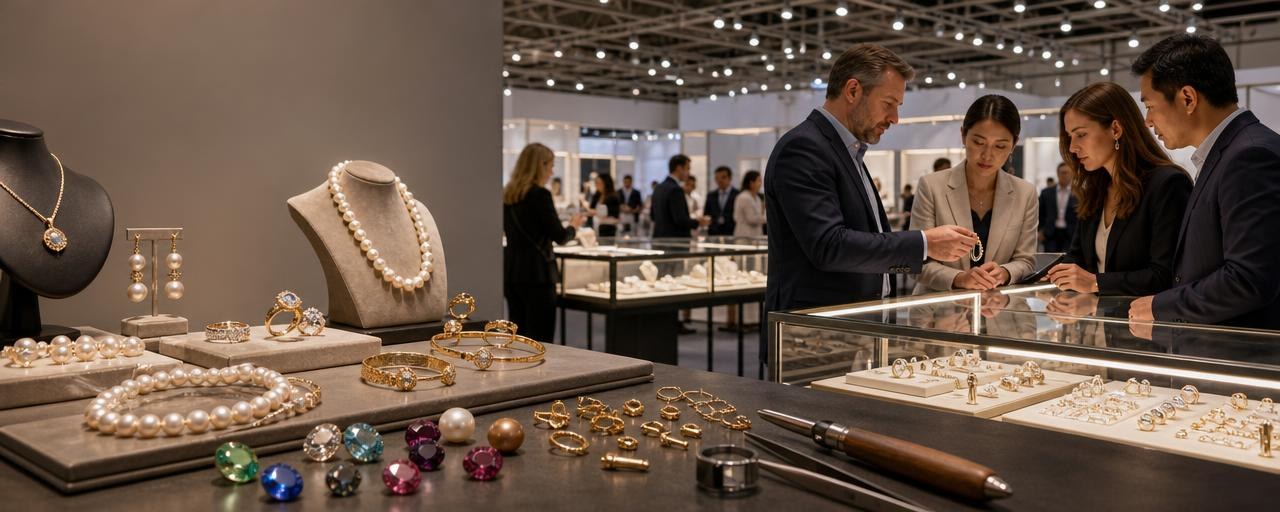
27–29 January 2027 at Makuhari Messe, Chiba City, in the Tokyo metropolitan area, Japan. International Jewellery Tokyo (IJT) is a trade fair for finished jewellery, gemstones, pearls, jewellery materials and components, and tools and services related to jewellery production and retail. It gives retailers, wholesalers, manufacturers, designers and craftspeople a place to inspect products, compare suppliers and explore purchasing or business-development priorities.
International Jewellery Tokyo at a glance
| Item | Information |
|---|
| Event | International Jewellery Tokyo (IJT) |
| Edition | 38th edition, 2027 |
| Event type | Business trade fair |
| Category | Gems, jewellery and watches |
| Dates | 27–29 January 2027 |
| Opening hours | 10:00–18:00; final day until 17:00 |
| Venue | Makuhari Messe, 2-1 Nakase, Mihama-ku, Chiba City, Chiba 261-8550, Japan |
| Organisers | RX Japan GK and Japan Jewellery Association |
| Main sectors | Jewellery, gemstones, pearls, jewellery materials and parts, production machinery, tools and retail-related products |
| Main audiences | Retail buyers, wholesalers, manufacturers, designers and craftspeople |
| Announced 2027 show scale | The organiser advertises 520 exhibitors and more than 1.13 million jewellery products |
| Latest published visitor count | 19,826 visitors in 2026, organiser-reported |
The event dates, venue and opening hours are published for 2027. The organiser’s 2027 exhibitor and product figures are forward-looking show information; the latest post-show visitor count available on the official site is for 2026.
Why International Jewellery Tokyo matters
Discover products across the jewellery supply chain
IJT covers more than finished pieces. Its official exhibitor profile includes jewellery, loose gemstones, pearls, materials and components, production machinery, tools, displays and other jewellery-related products. Visitors can therefore connect product selection with the materials, making requirements and retail presentation behind it.
Compare before committing
Seeing collections and materials together can help you compare style, workmanship and product range in person. Retail buyers and wholesalers may use that comparison to shape an assortment, while manufacturers and designers can identify materials or components relevant to their next collection.
Use a focused business setting
IJT is organised for jewellery-sector purchasing and trade. Its hosted-buyer programme is designed for selected international buyers with strong purchasing needs and includes business matching with Japanese suppliers. Participation is subject to programme qualification; it is not a promise of a particular meeting or commercial result.
Published scale
- 19,826 visitors in 2026 — organiser-reported attendance, counted once per person regardless of repeated days; exhibitors and press are excluded.
- 520 exhibitors and more than 1.13 million jewellery products — the organiser’s announced figures for the 2027 show, not a post-show result.
The 2026 visitor count indicates a substantial professional audience; the announced 2027 exhibitor and product figures suggest a broad selection to investigate, while individual ranges and supplier details should be checked in the current directory.
Exhibition sectors and product groups at IJT
Jewellery products
Finished pieces range from classic fine jewellery to fashion and craft-led designs. The official profile lists:
- Diamond and platinum jewellery
- Gold, silver and gem-set jewellery
- Bridal and antique jewellery
- Chains, necklaces and earrings
- Pearl and men’s jewellery
- Designer, branded and costume jewellery
Diamonds and coloured gemstones
Loose and set stones are relevant to buyers, designers and jewellery manufacturers assessing materials and product choices. Listed examples include:
- Diamonds
- Sapphires and rubies
- Emeralds and aquamarines
- Tanzanites and tourmalines
- Opals and agates
- Turquoise and other natural stones
Other gemstones and decorative materials
The show’s category list also includes decorative, natural and synthetic materials used in jewellery and craft products:
- Amber and coral
- Jade and cameos
- Crystals
- Synthetic stones
- Other decorative stones
Pearls
Pearl types span established and specialist varieties, giving jewellery businesses material options to compare:
- Akoya pearls
- Keshi pearls
- Mabe pearls
- South Sea pearls
- Freshwater pearls
- Conch pearls
Jewellery materials, components and production support
For businesses developing or making jewellery, the exhibitor profile includes products and services around production and retail operations:
- Clasps, empty frames and jewellery parts
- Jewellery production machinery
- Jewellery-making tools
- Showcases, displays and shop design
- Jewellery boxes and maintenance products
- Customer-management and other IT-related products
- Certification, consulting and publications
Who should visit International Jewellery Tokyo?
Jewellery retailers and buying teams
Useful if you are responsible for choosing products, suppliers or a retail assortment. Focus your visit on:
- Comparing fine, fashion, bridal and costume jewellery ranges
- Reviewing diamonds, coloured stones and pearl options
- Assessing whether designs fit your customer and price segments
- Checking supplier terms, minimum orders and replenishment directly
- Considering displays, packaging and jewellery-care products for your store
The official visitor profile names jewellery retailers, department shops, mass retailers, apparel boutiques, specialist stores and mail-order or online stores.
Wholesalers, importers and distributors
Use the fair to develop a structured supplier review rather than relying on a general walk-through:
- Identify manufacturers and brands aligned with your territory or channel
- Compare product categories, materials and collection breadth
- Explore potential distribution or sourcing conversations
- Check product documentation, origin information and commercial terms
- Record follow-up requirements for samples, catalogues and quotations
Wholesalers are explicitly listed in the official visitor profile. Distribution and import suitability should be evaluated product by product.
Jewellery manufacturers and brands
For production businesses, the fair brings finished jewellery together with components and production-related products:
- Assess clasps, frames, parts and other materials for a defined product need
- Compare machinery and tools relevant to jewellery production
- Review display and packaging options for collections
- Discuss sourcing or product-development requirements with suppliers
- Compare how other products address design, finish and presentation
Manufacturers are named among the visitor groups, and jewellery manufacturers are part of the show’s exhibitor profile.
Designers, craftspeople and handmade creators
Design and craft professionals can focus on materials and production details that inform a specific collection:
- Compare gemstone, pearl and metal options for a design brief
- Look for components and tools suited to the intended technique
- Examine how different materials are combined in finished pieces
- Identify questions about consistency, sourcing and repeat supply
- Explore products relevant to handmade work and potential retail presentation
Designers and craftspeople are named in the official visitor profile; the organiser also describes the show as relevant to handmade artists and people entering the jewellery business.
Relevant roles include jewellery buyers, retail and category managers, owners, import and sourcing managers, wholesale buyers, product developers, designers, craftspeople and production managers.
Why visit IJT?
- Compare finished jewellery styles across fine, bridal, fashion, antique and costume categories.
- Review diamonds, coloured gemstones, pearls and other materials against a defined product or collection brief.
- Identify potential manufacturers, wholesalers or brands to evaluate for your business.
- Assess components, tools and production machinery relevant to jewellery manufacturing or craft work.
- Consider displays, boxes, maintenance products and retail-related systems alongside the products they support.
- Use the official product and exhibitor directories to prioritise relevant companies before arriving.
- Discuss supply, documentation and commercial terms directly with prospective suppliers, then record clear follow-up actions.
Why exhibit at International Jewellery Tokyo?
Jewellery manufacturers, wholesalers, brands, gemstone and pearl suppliers, component businesses, production-equipment providers, designers and jewellery-related service companies may consider IJT when they want to present products to a specialist trade audience. The organiser identifies retailers, wholesalers, manufacturers, designers and craftspeople among its visitor groups, and describes buyers from Japan, China and other Asian countries as part of the audience.
Exhibitors may use the show to:
- Present collections, materials or production capabilities to jewellery-sector buyers
- Compare buyer responses to specific product ranges and designs
- Explore potential supplier, sourcing or distribution conversations
- Introduce product lines to businesses entering or expanding in jewellery
- Explain technical details or material choices face to face
Before committing, define the customer and channel you want to reach, the products you will display, the commercial terms you can support and the documentation buyers may request. Japan’s customs tariff schedule is product-classification specific; confirm the correct classification and applicable rate for each item with a qualified customs professional before pricing or shipping. Exhibition participation does not guarantee sales, distribution or buyer access.
What makes IJT different?
Its product scope links finished jewellery with the materials and tools behind jewellery making and retail presentation. The official profile spans finished jewellery, gemstones, pearls, components, production machinery, tools, displays, shop design and jewellery-related support products. That makes the event relevant not only to assortment buyers but also to manufacturers, designers and craftspeople evaluating inputs or production support. The organiser also runs separate jewellery fairs in Kobe and Tokyo in autumn; IJT is the January Tokyo edition.
What should you try to achieve at IJT?
Set an outcome that helps you decide what to do next, not simply “see what is new.”
If you are a retailer or buyer
Identify a short list of jewellery ranges and suppliers that fit a defined customer segment, and record the product, terms and follow-up information needed to assess each one.
If you are a wholesaler or distributor
Find product categories and manufacturers that could complement your channel, then check territory, supply capacity, documentation and commercial terms directly.
If you are a manufacturer or designer
Specify the materials, components or tools you need for a real product brief, compare alternatives and note which suppliers can answer your technical and sourcing questions.
If you are exhibiting
Define the visitor type and product range you want to engage, and prepare concise product, sourcing and distribution information for relevant conversations.
How to prepare before IJT
1. Define your reason for attending
Choose a primary objective: sourcing finished jewellery, comparing stones or pearls, finding production inputs, reviewing retail support products or meeting prospective suppliers. Write down the product specifications, customer segment or business question that will make a conversation useful.
2. Build a target-company list
Use the official exhibitor and product directories to locate businesses by product category. Add the company, relevant products, reason to meet and a question to resolve. The 2027 show information indicates a large product selection, so a shortlist will help you use the three days purposefully.
3. Prioritise meetings
- A — Must meet: suppliers or buyers tied directly to a purchase, product brief or market plan.
- B — Useful: alternatives, adjacent categories or businesses that may broaden your options.
- C — If time allows: interesting products that are not central to your current objective.
4. Prepare jewellery-specific questions
- What materials and stones are used, and how are they described?
- What are the available designs, sizes, finishes and customisation options?
- What are the minimum order quantities and lead times?
- Can the supplier provide origin, quality or product documentation relevant to your requirements?
- How are consistency and replenishment handled across repeat orders?
- What packaging, display or care information is supplied?
- For machinery or tools, what materials and production tasks are they designed for?
- What commercial, shipping and after-sales terms should be considered?
5. Complete visitor requirements
Each visitor must register; the official site describes registration as valid for all three days and states that photo identification is required at the venue. Check the current registration instructions and eligibility before travelling. The published page currently lists free visitor registration through 26 January 2027 JST.
How to make the most of IJT on site
Use the directory and your A/B/C priorities to navigate product categories with a clear purpose. For each useful conversation, record:
Company → Product or material → Why it fits → Contact → Next action
For example, note whether a pearl or gemstone range fits a particular assortment, the supplier’s stated specifications, what documentation or pricing is still needed, and who will follow up. Photograph or catalogue items only with permission, and distinguish confirmed terms from points that still need written confirmation.
Keep time for adjacent categories: components, tools, production machinery, displays and jewellery-care products may answer a manufacturing or retail need that is not solved by finished pieces alone. The official product directory and exhibitor list are available for the 2027 show; the organiser’s seminar and zone information is marked as forthcoming, so check the official programme as it is updated rather than assuming sessions or special areas.
Networking at IJT
Prepare a concise introduction to your business, the products or customers you serve and the specific sourcing or partnership question you want to discuss. Buyers can bring an assortment brief and target price range; manufacturers and designers can bring material requirements, sketches or relevant specifications; exhibitors can prepare clear product and supply information.
At the end of each conversation, agree on a practical next step such as a catalogue, written specification, sample discussion or follow-up contact. Record the person’s role and the context of the conversation so that later evaluation is more useful than a stack of business cards.
IJT visitor profile and business opportunities
| Visitor profile | Potential focus at IJT |
|---|
| Jewellery retailers and department shops | Finished collections, stones, pearls, displays and products suited to their customer segments |
| Mass retailers, boutiques and specialist stores | Design range, product positioning, replenishment and supplier terms |
| Online and mail-order retailers | Product breadth, imagery and product information, packaging and repeat supply |
| Wholesalers and importers | Manufacturers, brands, materials and sourcing or distribution discussions |
| Jewellery manufacturers | Components, production machinery, tools, materials and supplier alternatives |
| Designers and craftspeople | Gemstones, pearls, metals, findings and tools for product development or handmade work |
| Jewellery-related businesses | Displays, shop design, jewellery boxes, maintenance, certification and business-support products |
Travelling to IJT
IJT 2027 takes place at Makuhari Messe, 2-1 Nakase, Mihama-ku, Chiba City. The venue is a short walk from Kaihin-Makuhari Station. Check current transport arrangements and allow time to navigate the exhibition centre, which the organiser notes is large.
- From Tokyo Station, the official IJT access guide gives approximately 30 minutes on the JR Keiyo Line rapid service to Kaihin-Makuhari, followed by about a five-minute walk.
- The guide lists an approximately 40-minute highway bus from Haneda Airport to Makuhari Messe Central, with a fare of JPY 1,500.
- From Narita Airport, it lists an approximately 30–40-minute highway bus to Makuhari Messe Central, with a fare of JPY 1,200.
Confirm the 2027 transport timetable, fares and service arrangements before travelling.
Practical information for international visitors
| Item | Information |
|---|
| Venue | Makuhari Messe, Chiba City, Chiba |
| Nearest station | Kaihin-Makuhari Station; approximately five minutes on foot to the venue |
| From Tokyo Station | Approximately 30 minutes by JR Keiyo Line rapid service to Kaihin-Makuhari |
| Haneda Airport | Official access guide lists an approximately 40-minute highway bus and JPY 1,500 fare |
| Narita Airport | Official access guide lists an approximately 30–40-minute highway bus and JPY 1,200 fare |
| Visitor identification | Photo ID is required at the venue according to the current organiser notice |
Check transport, registration and travel requirements before departure. For help planning a visit, registration and travel arrangements, you can contact ilikevents.
One day or several days at IJT?
One day
Worth considering if your target list is short and focused on a small number of suppliers or product groups. Prioritise meetings and the categories most directly related to your buying or design brief.
Two days
May suit visitors who need to compare several product families, return to shortlisted suppliers or include both finished pieces and manufacturing inputs in their review.
Three days
The full three-day registration is available to visitors. It may be useful if you have a broad sourcing agenda, need time for supplier discussions and follow-up visits, or are combining retail, material and production categories. Build the schedule around your own priorities rather than assuming every category needs equal time.
After IJT: where the value starts
Review your notes while the conversations are fresh and classify contacts by next action:
- A — Immediate: a supplier, product or buyer discussion that needs a prompt quotation, specification or meeting follow-up.
- B — Potential: a relevant option that needs more information, sample review or internal discussion.
- C — Market intelligence: useful product, design or sourcing information that may inform future decisions.
For jewellery products, request the details that determine whether an option is workable: material and stone specifications, product documentation, minimum quantities, prices, lead times, packaging, repeat-supply terms and shipping conditions. Compare offers against the same requirements before making a purchasing decision. Exhibitors can record buyer questions and follow up with the requested product information or next step.
International Jewellery Tokyo visitor checklist
Before
- ☐ Set a purchasing, product-development or supplier-research objective.
- ☐ Review the exhibitor and product directories and shortlist relevant companies.
- ☐ Prepare product specifications and supplier questions.
- ☐ Complete visitor registration and check the photo-ID requirement.
- ☐ Confirm transport and travel arrangements for the 2027 dates.
During
- ☐ Prioritise A-list companies and leave time for planned comparisons.
- ☐ Record product, specifications, terms and follow-up action for each useful contact.
- ☐ Check materials, documentation and supply conditions directly with prospective suppliers.
- ☐ Confirm seminar or zone information from the organiser if it is relevant to your plan.
After
- ☐ Sort contacts into immediate, potential and market-intelligence follow-up.
- ☐ Request missing specifications, catalogues, quotations or samples.
- ☐ Compare supplier responses against the same product and commercial criteria.
- ☐ Assign an owner and date to each next step.
Is International Jewellery Tokyo worth visiting?
IJT is most useful for jewellery-sector buyers, wholesalers, manufacturers, designers and craftspeople who arrive with a defined product, sourcing or production question. Its mix of finished jewellery, stones, pearls and jewellery-related materials and equipment can support comparisons across connected parts of the trade. The organiser’s published visitor count and announced 2027 product range indicate meaningful scale, but value depends on whether the exhibitors and products match your requirements. A target list and a clear follow-up process will make the three days more purposeful than walking the halls without a plan.
Make your visit count
What do you want to compare, source or decide at IJT that you cannot resolve through a catalogue alone? Arrive with a question, leave with a decision path: discover, compare, meet, evaluate and follow up.
Jewellery opportunities in Japan
Market size and demand
Japan’s jewellery retail sales reached JPY 1.130 trillion in 2024, the highest level in more than a decade, according to the EU-Japan Centre for Industrial Cooperation’s jewellery-sector briefing, which cites Yano Research Institute. This is a retail-sales indicator, not the value of every jewellery product category or a forecast of sales for any individual supplier. The briefing links the market’s strength to higher gold prices, purchases for investment and spending by affluent consumers; inbound tourism also supported imported-brand sales.
Market drivers and commercial opportunities
- Retail assortment review: retailers and importers may compare fine, fashion, bridal and pearl products against their defined customer segments. The national retail-sales figure does not establish demand for a particular style or price band; validate channel fit and margins.
- Gemstone and pearl sourcing: buyers may evaluate loose stones, pearls and finished pieces against current sourcing needs. Confirm material descriptions, origin information, quality documentation and commercial terms with each supplier.
- Handmade and design inputs: designers and craftspeople may assess stones, findings, components and tools for specific product briefs. Check repeat availability, specifications and minimum quantities before building a production plan.
- Retail presentation and support: businesses may compare displays, boxes, maintenance products and related systems alongside jewellery ranges. The event lists these supporting categories, but their suitability depends on the buyer’s store format and operating requirements.
Regulations and market-entry conditions
Japan Customs publishes a product-specific import tariff schedule. Importers and exporters should confirm the correct customs classification and applicable duty for each jewellery item; rates and requirements depend on the product and transaction. The schedule is a reference point, not a substitute for product-specific customs advice.
What this may mean for exhibitors
Jewellery brands, manufacturers and materials suppliers may use the event to test whether their products fit the requirements of Japanese retailers, wholesalers or sourcing businesses. The retail-sales figure is a market-level indicator, not evidence of demand for an individual product or a guarantee of buyers. Prepare product documentation and clear supply terms, and validate distribution and compliance requirements before committing to market entry.
What this may mean for visitors
Visitors may use IJT to compare products and suppliers against a defined assortment, manufacturing or design need, then check documentation, pricing and terms directly. The market figure provides context for the retail sector; it does not replace category-level research or supplier due diligence.
Explore Event Opportunities
Find suppliers, compare jewellery products and plan a purposeful participation at International Jewellery Tokyo with professional support from ilikevents.
Get Expert Assistance from ilikevents to plan your visit or exhibition participation.
See the ilikevents services for this event
For further information, please click
here .