Morocco Fashion Style & Tex 2027
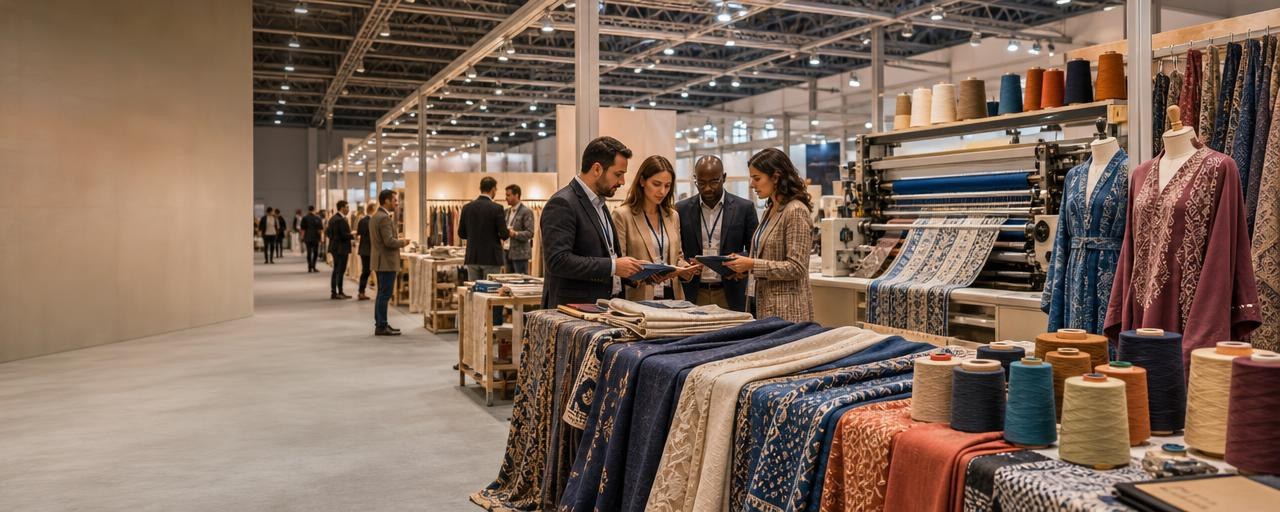
Morocco Fashion Style & Tex is an international fashion, textile and machinery exhibition for professionals working across fabrics, fibres and yarns, apparel, accessories and textile production equipment. The 12th edition takes place from 1–4 April 2027 at Mohammed VI Exhibition Park, Route Nationale 1, Douar Oulad Ghadbane, El Jadida 24000, Morocco. The fair is more than a display of finished garments: it brings together material and product categories with machinery and professional audiences who can compare ranges, assess specifications and explore commercial relationships.
Morocco Fashion Style & Tex 2027 at a glance
| Item | Information |
|---|
| Event | Morocco Fashion Style & Tex |
| Full name | International Fashion, Textile and Machinery Exhibition |
| Edition | 12th edition |
| Event type | International business trade fair and exhibition |
| Category | Textiles, home textiles, fabrics and yarns |
| Dates | 1–4 April 2027 |
| Visitor hours | 10:30–18:30 daily |
| City and country | El Jadida, Morocco |
| Venue | Mohammed VI Exhibition Park |
| Organiser | Pyramids Group |
| Main sectors | Fashion, fabrics, fibres and yarns, textile accessories, leather, textile machinery |
| Main audiences | Designers, wholesalers, department stores, boutique owners, chain-store buyers, agents and distributors |
| Latest published scale | 2026: 470 exhibitors from 20 countries and 11,328 visitors from 23 countries; organiser-reported figures |
The 2027 dates, venue and visitor hours are published by the organiser. The latest scale figures available on the event site describe the 2026 edition.
Why Morocco Fashion Style & Tex matters
Compare materials and finished products
Fashion and textile buyers often need to assess more than colour or appearance. The fair’s published categories span woven and printed fabrics, fibres, yarns, wool, silk, lace, leather, ready-to-wear clothing and accessories. Seeing multiple product families together can help buyers shortlist ranges, compare material qualities and identify questions about specifications, minimum order quantities, lead times and supply continuity.
Connect textile products with production technology
The exhibition also lists weaving, spinning, digital printing, knitting and hosiery, dyeing, finishing, washing and cutting machinery. This gives manufacturers and production teams a reason to consider both the materials they source and the equipment or processes used to make them. Visitors can use the combination to frame practical questions about product compatibility, capacity, finishing requirements and after-sales support.
Explore an international supplier mix
The organiser reports that the 2026 edition included 470 exhibitors from 20 countries and 11,328 visitors from 23 countries. Those figures indicate an international participant mix, although they do not guarantee that a particular supplier, buyer or distributor will be present in 2027. For companies comparing sources or looking for representation, the published figures make it sensible to prepare targeted conversations rather than rely on unplanned browsing.
- Exhibitors: 470 in 2026, organiser-reported.
- Visitors: 11,328 in 2026, organiser-reported.
- Exhibitor countries: 20 in 2026, organiser-reported.
- Visitor countries: 23 in 2026, organiser-reported.
Exhibition sectors and product groups at Morocco Fashion Style & Tex
Fashion fabrics and woven materials
- Colour-woven fabrics
- Fashion fabrics for apparel collections
- Printed fabrics
- Denim fabrics
- Wool, silk and lace materials
Fibres, yarns and raw materials
- Textile fibres and raw materials
- Spun yarns
- Wool and silk yarns
- Yarn for woven and knitted products
- Materials for textile and apparel production
Apparel and fashion products
- Men’s and women’s ready-to-wear
- Knitted garments and tricot
- Nightwear
- Sportswear
- Lingerie
Textile accessories, leather and related products
- Textile accessories and garment trims
- Leather materials
- Leather clothing
- Shoes
- Bags
Textile machinery and production equipment
- Weaving machinery
- Spinning machinery
- Digital textile-printing machinery
- Knitting and hosiery machinery
- Dyeing, finishing and washing machinery
- Cutting machinery
- Textile machine spare parts and accessories
Design and textile development
- Fashion and textile design
- Printed and surface-pattern concepts
- Fabric and colour selection
- Product development for apparel collections
- Design-led material and accessory coordination
Who should visit Morocco Fashion Style & Tex?
Wholesalers, department stores and chain-store purchasing teams
Useful if you are looking for:
- Fashion fabrics and ready-to-wear ranges to assess for your assortment
- Fibre, yarn and raw-material suppliers relevant to your sourcing brief
- Textile accessories and related products that complement existing lines
- Contacts for discussing product specifications, commercial terms and supply requirements
- Comparable alternatives across the event’s published product groups
The organiser names wholesalers, department stores and purchasers of chain stores among its visitor profiles. Bring a category plan, target price bands and a written list of technical and commercial requirements.
Boutique owners and fashion retailers
Useful if you are looking for:
- Distinctive fabrics, apparel and accessories for a clearly defined customer segment
- Ready-to-wear, knitwear, nightwear, sportswear or lingerie ranges to evaluate
- New supplier options that fit your current assortment and ordering scale
- Materials and products that can be compared for finish, construction and intended use
- Potential agents or distributors to discuss after the fair
Boutique owners are part of the organiser’s stated visitor profile. Prioritise products that fit your store’s customer, season and replenishment needs instead of trying to review every category.
Designers and apparel product developers
Useful if you are looking for:
- Woven, printed, denim, wool, silk and lace materials for collection development
- Colour and surface options to compare alongside garment and accessory ideas
- Textile technologies that may affect the finish or repeatability of a product
- Contacts who can clarify material properties, sampling and production constraints
- Ways to connect design choices with a realistic sourcing and manufacturing plan
Designers are explicitly named by the organiser. A focused material brief—end use, composition, weight, finish, colour, performance and required delivery window—will make comparisons more useful.
Agents, distributors and textile suppliers
Useful if you are looking for:
- Manufacturers or brands seeking representation in markets you serve
- Potential principals whose product lines complement your portfolio
- Textile machinery and accessories to discuss with production customers
- Market and customer questions to validate before accepting a new line
- Business relationships that can be assessed after an initial meeting
Agents and distributors are listed in the organiser’s visitor profile. Prepare a concise account of your territory, customer segments, existing portfolio and service capability before discussing representation.
Relevant roles: buyers, purchasing managers, textile and apparel designers, product developers, sourcing managers, wholesalers, retail buyers, agents, distributors and production decision-makers.
Why visit Morocco Fashion Style & Tex?
- Shortlist fabric suppliers: compare woven, printed, denim, wool, silk and lace materials against a defined collection or sourcing brief.
- Review apparel ranges: assess ready-to-wear, knitwear, nightwear, sportswear, lingerie and leather products for the customers you serve.
- Evaluate raw materials: discuss fibre and yarn options in relation to fabric construction, intended use and production requirements.
- Compare production equipment: ask machinery suppliers about the processes, materials and capacity requirements relevant to your operation.
- Explore distribution relationships: agents and distributors can identify companies whose products may fit their territories and customer base.
- Build a better market picture: use the international participant mix as a reason to compare sources and perspectives, not as a promise of a specific contact.
Why exhibit at Morocco Fashion Style & Tex?
Companies whose products fit the published categories—fabrics, fibres and yarns, apparel, accessories, leather products or textile machinery—may consider the fair as a place to present their range to trade visitors. The 2026 edition’s organiser-reported figures were 470 exhibitors from 20 countries and 11,328 visitors from 23 countries. They describe the previous edition and should not be treated as a forecast for 2027.
Before committing, define the buyer or business profile you need to reach, select a focused product range, prepare clear specifications and identify which markets or distribution relationships you want to investigate. A stand can support product presentation and business conversations, but it does not guarantee qualified enquiries, orders or partnerships. Check the organiser’s current exhibitor information for participation terms, stand options, deadlines and the services included.
Market-entry note: if you plan to sell or place industrial products on the Moroccan market, establish which technical regulations, mandatory standards and conformity obligations apply to each product. Requirements are product-specific; do not assume a single textile rule covers every material, garment or machine. Local representation, after-sales support, spare parts, labelling and customs treatment should be assessed for your product and target market before participation.
What makes Morocco Fashion Style & Tex different?
The fair combines fashion and textile products with machinery categories serving the production chain. Its published scope ranges from fabrics, fibres, yarns, wool, silk, lace and apparel to weaving, spinning, digital printing, knitting, finishing and cutting equipment. That breadth gives buyers, designers and production professionals the option to compare connected parts of a sourcing or manufacturing decision in one event.
The organiser’s published 2026 figures also show participants from multiple countries: 20 exhibitor countries and 23 visitor countries. The value for an individual company depends on whether the 2027 exhibitors and products match its requirements, so use the event to investigate specific suppliers and capabilities rather than assume a particular category or company will be present.
What should you try to achieve at Morocco Fashion Style & Tex?
Replace the broad aim “see what is new” with a result you can evaluate after the visit. Choose one main objective and a small number of secondary ones.
If you are a buyer or retailer
Example objective: shortlist five fabric or apparel suppliers that fit a named product category, with specifications and next-step information recorded for each.
If you are a designer or product developer
Example objective: identify material options for one collection brief and record composition, finish, colour, sampling route and production constraints to confirm.
If you are an agent or distributor
Example objective: identify three brands or machinery suppliers whose range fits a defined customer segment and territory, then agree what information each side will exchange.
If you are an exhibitor
Example objective: identify the buyer profiles and product questions most relevant to your range, then leave with a prioritised follow-up list rather than a pile of unqualified contacts.
How to prepare before Morocco Fashion Style & Tex
1. Define the sourcing or market question
Write down what decision the fair should help you make: a new fabric source, an apparel range, a machinery comparison, an agent search or a view of textile materials relevant to a collection. Set boundaries for product category, quality, cost, order scale and timing.
2. Build a target-category list
Use the published sector groups—fabrics, fibres and yarns, apparel, accessories, leather and machinery—to divide your time. The organiser has not been confirmed here as publishing a 2027 exhibitor directory, so check its current visitor information before relying on a company list or meeting tool.
3. Rank meetings and products
Use three priorities: A — must assess for products directly tied to a current buying or development decision; B — useful for credible alternatives or adjacent categories; C — explore if time allows for emerging ideas outside the immediate brief. Leave room to compare products encountered on site.
4. Prepare textile-specific questions
- What fibre composition, yarn type and fabric construction does the product use?
- What are the weight, width, finish and colour options?
- How does the material perform for its intended garment or end use?
- Are samples, swatches or technical sheets available for evaluation?
- What minimum order quantities and repeat-order conditions apply?
- What are the standard lead times and how are seasonal changes handled?
- Which certifications, test reports or labelling details are relevant to the intended market?
- For machinery, which materials and processes can the equipment handle?
- What throughput, staffing, utilities, maintenance and spare-parts requirements should be checked?
- What installation, training and after-sales support can the supplier document?
- Which commercial terms, payment arrangements and delivery responsibilities need further review?
5. Plan practical arrangements
Confirm your registration, travel requirements, accommodation and transfer plan before departure. The venue address published by the organiser is Route Nationale 1, Douar Oulad Ghadbane, El Jadida 24000, Morocco. Check the current event information and venue arrangements again before travelling.
How to make the most of Morocco Fashion Style & Tex
Do not collect brochures without a decision attached. For each product or company, record:
Company → Product → Why relevant → Specification to confirm → Contact → Next action.
For a printed-fabric supplier, for example, note the intended garment use, composition, width, print or finish, available swatch, minimum order, lead time and the person who will review the sample. For a machinery supplier, record the process, material compatibility, required output, installation needs, service support, spare parts and the technical information your production team needs next.
Keep comparisons consistent. Use the same specification questions with suppliers in the same category, separate confirmed details from items to verify later, and take photographs only when the exhibitor permits it. Close each conversation by agreeing what information should be exchanged and when you will follow up.
Plan your time realistically at Morocco Fashion Style & Tex
The fair is scheduled across four days, with published visitor hours of 10:30–18:30 daily. No floor plan or hall-size information was established for this guide, so avoid assuming walking times between stands. A simple rhythm can still help you use the day well.
- Opening period: start with the A-priority product groups and any meetings you have confirmed.
- Middle of the day: compare suppliers in the same category while the technical questions are fresh; take a short break to update your notes.
- Later hours: revisit promising products, check missing specifications and explore B-priority categories.
- End of each day: sort contacts into immediate follow-up, further evaluation and market-information groups; write down the next action for each.
For a one-day visit, select one or two product groups and protect time for follow-up conversations. For multiple days, dedicate blocks to materials, apparel and machinery rather than trying to cover every category continuously.
Networking at Morocco Fashion Style & Tex
Make introductions useful by explaining your role, customer or product segment, what you are sourcing or offering and what would make a follow-up worthwhile. Buyers can describe their target material or assortment; designers can show a concise collection brief; agents and distributors can explain their territory and customer base; machinery suppliers can ask about process and capacity requirements.
Before leaving a conversation, confirm the product or opportunity discussed, the information each side will share, the preferred contact route and an appropriate next step. Treat an initial discussion as a way to assess fit, not as a completed commercial agreement.
Morocco Fashion Style & Tex visitor profile and business opportunities
| Visitor profile | Main interests |
|---|
| Wholesalers | Fabric, apparel and accessory ranges; supplier terms and repeat availability |
| Department stores | Ready-to-wear, fabrics and product categories suited to a defined assortment |
| Boutique owners | Distinctive apparel, material and accessory options for their customer segment |
| Chain-store purchasers | Comparable products, specifications, supply capability and ordering requirements |
| Designers | Woven, printed, denim, wool, silk and lace materials for product development |
| Agents and distributors | Brands, principals and machinery suppliers whose ranges may fit their markets |
| Associations and institutions | Sector coverage, product development and industry contacts |
| Trade publications | Fashion, fabric, machinery and textile-sector developments to assess for coverage |
One day or several days at Morocco Fashion Style & Tex?
One day
Worth considering if your objective is narrow: focus on one or two categories, prioritise key suppliers and record complete technical and commercial notes before moving on.
Two days
Useful when you need to compare materials and apparel on one day, then examine production equipment or return to shortlisted suppliers on the next. Keep a shared comparison sheet so that the second day builds on the first.
Three or four days
May suit visitors with several sourcing categories, machinery evaluation or planned meetings. Use the additional time for follow-up discussions and verification of specifications rather than expanding the target list without limit. The organiser publishes the fair dates as 1–4 April 2027 and daily hours as 10:30–18:30.
Morocco Fashion Style & Tex is particularly valuable if you have a project
A current collection, sourcing change or equipment decision gives the visit a practical frame. Bring a concise brief with the product type, end use, target customer, material or process requirements, colour and finish preferences, expected order scale, delivery window and any market-specific compliance questions. For a machinery project, add the materials to be processed, current workflow, required output and the technical constraints your team needs to resolve.
Keep commercially sensitive information private unless you have decided it is appropriate to share. Ask suppliers for written product specifications and supporting documents, then review them with the colleagues responsible for quality, production, procurement and market compliance.
After Morocco Fashion Style & Tex: where the real value starts
Within a few days of returning, sort your notes into three groups:
- A — immediate: products or suppliers that match a live requirement and need a specification, sample, quotation or technical discussion.
- B — potential: options that need internal review, market checks or comparison with current suppliers.
- C — market intelligence: useful observations about categories, materials, machinery and possible commercial directions.
For fabrics and apparel, request the composition, construction, finish, available colours, sample conditions, order quantities, lead times and commercial terms needed for a fair comparison. For machinery, request technical specifications, compatible materials, service arrangements, spare-parts information, installation needs and operating requirements. Record who owns each follow-up and when the next decision will be made.
Morocco Fashion Style & Tex visitor checklist
Before the fair
- ☐ Define the sourcing, product-development or machinery decision you want to advance.
- ☐ Choose priority categories and prepare textile- or process-specific questions.
- ☐ Check current registration, travel requirements and venue arrangements.
- ☐ Prepare a concise company, collection or project brief.
- ☐ Confirm meetings and note what you need to learn from each.
During the fair
- ☐ Record product specifications and the reason each item fits your brief.
- ☐ Separate confirmed details from points that need written verification.
- ☐ Compare suppliers using consistent questions within each category.
- ☐ Agree a practical next action before closing a useful conversation.
- ☐ Review your notes at the end of the day and adjust priorities.
After the fair
- ☐ Follow up with the most relevant contacts while the discussion is clear.
- ☐ Request samples, specifications or technical information needed for comparison.
- ☐ Check product-specific market requirements and commercial terms.
- ☐ Share findings with procurement, design, production and compliance colleagues.
- ☐ Decide which suppliers or equipment options merit a deeper review.
Is Morocco Fashion Style & Tex worth visiting?
The fair is most relevant to textile and apparel buyers, wholesalers, department stores, boutique owners, chain-store purchasers, designers, agents, distributors and production professionals whose work connects with the published categories. Its combination of fabrics, fibres, yarns, apparel, accessories and machinery can support a more connected sourcing or product-development review than a single-category search. The organiser-reported 2026 figures show an international participant mix, but they do not predict which companies will attend in 2027. A visit is more likely to be useful when you arrive with a defined category, specific questions and time reserved to verify and follow up on promising conversations.
A clear objective for Morocco Fashion Style & Tex
Ask yourself: Which material, supplier, product range or production decision do I want to understand better after these four days? Discover. Compare. Discuss. Decide. Follow up.
Fashion and textile opportunities in Morocco
Market size and demand
An IFC report published in July 2026 describes Morocco’s textile and apparel sector as employing 246,000 people and generating MAD 67.8 billion (approximately US?.4 billion) in revenue. These are sector-wide figures reported in the IFC publication, not a measure of the market for any one product group. The same report says 93% of textile exports flow to the European Union, linking commercial conditions in the sector to EU buyer requirements and sustainability rules.
- Sector employment: 246,000 people, reported in the IFC’s 2026 publication.
- Sector revenue: MAD 67.8 billion (approximately US?.4 billion), as reported in the 2026 IFC publication; this is revenue, not imports or retail sales.
- Export orientation: 93% of textile exports flow to the EU, according to the same report; this is an export-destination share, not the share of all Moroccan production.
Market drivers and commercial opportunities
The IFC report highlights the importance of EU sustainability and circularity requirements for a sector with substantial EU export exposure. Its 2023–26 Textile Circularity Exchange examined post-industrial cutting waste, known as chute, and engaged brands, factories, collectors and recyclers. Pilot supply chains found that recycled-content fabric could meet commercial quality benchmarks. The report also identifies gaps in regulation, infrastructure, brand commitment and finance that need to be addressed before circular systems can scale.
- Textile-waste collection and sorting: factories and collection partners may investigate systems for separating post-industrial cutting waste; the report describes infrastructure and formal recognition gaps, so implementation depends on workable collection and processing arrangements.
- Recycled-content fabrics and yarns: fibre, yarn and fabric suppliers may explore recycled inputs where buyers’ quality and traceability requirements can be met; pilot results are not a guarantee for every material or application.
- Machinery and process upgrades: textile-equipment suppliers may assess demand for sorting, recycling, finishing or production technologies tied to circular manufacturing; technical fit, financing and service support are important barriers to test.
- Traceability and value-chain partnerships: brands, factories, collectors and recyclers may need systems and commercial relationships to document material flows; the report identifies traceability infrastructure and brand commitment as areas requiring development.
The IFC report cites a World Bank Group country diagnostic in estimating that a reform package could attract US?.9 billion in additional private investment and create 30,800 jobs. This is a conditional estimate tied to proposed reforms, not a confirmed investment pipeline or a guarantee of project availability.
Regulations and market-entry conditions
Morocco’s Ministry of Industry and Trade describes market surveillance under Law 24-09 on the safety of products and services and related implementing texts. Industrial products made available on the national market must meet applicable essential safety requirements; Moroccan standards can be made mandatory when the competent authority adopts them. This is a general industrial-product framework, not confirmation that every textile, garment or machine is subject to the same technical rule. Companies should identify the relevant product classification, mandatory standards, conformity procedures, labelling and import requirements before supplying the market.
What this means for exhibitors
Textile-material, apparel and machinery exhibitors may use the fair to explore how their products fit the needs of a sector with significant export activity and a documented circularity transition. Before investing in a market plan, test the product-specific demand, route to market, applicable requirements, local service capability and financing conditions. The reported figures provide context, not proof of demand for an individual exhibitor’s product.
What this means for visitors
Buyers and production professionals may use the fair to compare materials, equipment and supplier capabilities against export-market quality, traceability and sustainability requirements. Ask for written evidence on composition, performance, recycled content, conformity and service support, then validate the details for the destination market and product category.
Explore Event Opportunities
Explore how Morocco Fashion Style & Tex could support your textile sourcing, product development or participation objectives, and identify the suppliers or business relationships worth evaluating with ilikevents.
Get Expert Assistance from ilikevents to plan a focused visit or exhibition participation.
See the ilikevents services for this event
For further information, please click
here .