Intelligent Manufacturing Kuala Lumpur 2027
Intelligent Manufacturing Kuala Lumpur (IMKL) is a conference-led business event and product showcase for smart manufacturing and Industry 4.0. The 2027 edition is scheduled for 7–8 April 2027 at Kuala Lumpur Convention Centre, Kuala Lumpur, Malaysia. Its focus spans digital factory systems, manufacturing software, industrial connectivity, operational technologies and the people responsible for adopting them. For manufacturers, engineers and technology providers, the value lies in connecting strategic questions about digital transformation with technologies and practical implementation discussions.
Intelligent Manufacturing Kuala Lumpur at a glance
| Item | Information |
|---|
| Event | Intelligent Manufacturing Kuala Lumpur (IMKL) |
| Edition | 2027 |
| Format | Conference-led event with a product showcase |
| Dates | 7–8 April 2027 |
| Opening hours | 09:00–18:00 |
| Venue | Kuala Lumpur Convention Centre, Kuala Lumpur City Centre, 50088 Kuala Lumpur, Malaysia |
| Organiser | Messe Frankfurt |
| Main sectors | Smart manufacturing, digital factory systems, industrial automation, robotics, software and connectivity |
| Main audiences | Manufacturing leaders, operations and engineering professionals, technology providers, researchers and industry organisations |
| Latest published scale | 3,064 attendees as a 2026 reference figure, organiser-reported |
The dates, venue and daily hours are published for 2027. The conference agenda is still marked to be confirmed; the latest attendance figure refers to 2026.
Why Intelligent Manufacturing Kuala Lumpur matters
Connect manufacturing priorities with technology choices
Digital transformation is not one purchase or software deployment. Manufacturers must assess how data, equipment, people and processes work together. IMKL brings technology and implementation conversations into a conference-led setting where attendees can consider options against real operational priorities.
Compare factory digitalisation approaches
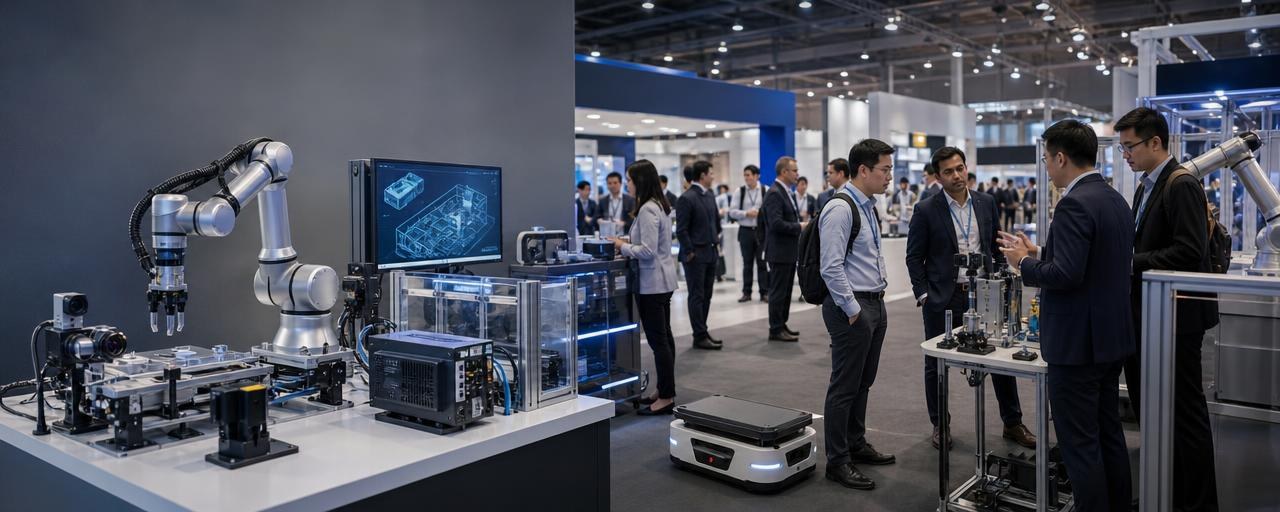
Digital factory platforms, manufacturing execution systems, industrial connectivity, robotics and sensors address different parts of a production environment. Seeing these areas together can help technical and business teams identify dependencies, compare approaches and develop more specific questions for suppliers.
Learn from practical transformation discussions
The 2026 conference included tracks on the future of manufacturing, global trends in manufacturing digitalisation, turning digitalisation into value, and overcoming barriers on the adoption journey. These are useful reference points for the event’s recent focus; the 2027 agenda has not yet been confirmed.
The organiser gives 3,064 attendees as the 2026 reference attendance. This previous-edition figure gives a sense of the event’s recent scale, not a prediction for 2027.
Exhibition sectors and product groups at Intelligent Manufacturing Kuala Lumpur
Digital factory systems
Digital factory solutions connect planning, production information and operational decision-making. Relevant product areas include:
- Enterprise resource planning (ERP)
- Manufacturing execution systems (MES)
- 3D modelling and factory-planning software
- Data generation and analytics
- Artificial intelligence of things (AIoT) applications
Industrial software and information systems
Software and information technologies support the secure management and use of manufacturing data:
- Cloud services and computing
- Big-data analytics
- Cybersecurity for industrial environments
- Smart operations technology
- Asset-management systems
Industrial connectivity and infrastructure
Connected production depends on reliable communications and integration between equipment and systems. Product areas include:
- 5G and industrial network infrastructure
- Cyber-physical systems
- Industrial data connectivity
- Interfaces between operational and information technology
Robotics and automated operations
Automation technologies can address repetitive, precision-sensitive or coordinated tasks across production and internal logistics:
- Industrial robots
- Collaborative robots
- Automation and control systems
- Smart warehousing solutions
- Automated guided vehicles (AGVs)
Sensing, measurement and control
Monitoring and control technologies provide information about equipment and process conditions:
- Industrial sensors
- Measurement and control instruments
- Production monitoring systems
- Predictive-maintenance technologies
- Equipment and process-control systems
Advanced production technologies
Other operational-technology interests include 3D printing machines and systems that combine connected devices, production data and automated processes. Attendees should check the current product showcase information for the participating technologies and exhibitors.
Who should visit Intelligent Manufacturing Kuala Lumpur?
Manufacturing companies and factory operators
Useful if your organisation is reviewing production performance, adding automation or building a digitalisation roadmap. Focus on:
- Solutions relevant to your production processes
- Compatibility with installed equipment and existing systems
- Data needed for operational decisions
- Maintenance, reliability and service requirements
- Implementation stages and workforce implications
Bring a defined operational challenge rather than a general brief to “see what is new.”
Technology providers, manufacturers and distributors
Useful if you supply factory technologies or are assessing regional commercial relationships. Prioritise:
- Clear use cases for your product categories
- Integration requirements and supported interfaces
- Target customer industries and plant profiles
- Service, training and support expectations
- Potential distributor or system-integrator fit
Exhibitor participation and showcase terms should be confirmed directly with the organiser.
Automation engineers and system integrators
Useful if you design, deploy or maintain connected production environments. Compare:
- Robotics, control and sensing options
- Data flows between operational and enterprise systems
- Cybersecurity and network architecture
- Predictive-maintenance approaches
- Technical support and integration scope
Research, education and industry organisations
Useful if your work concerns manufacturing capability, applied research, workforce development or industrial transformation. Use the conference discussions to identify relevant topics and questions, then check the published agenda and participation conditions before planning attendance.
Roles that may benefit
Manufacturing executives, plant and operations managers, production and process engineers, automation and control engineers, IT and OT leaders, maintenance managers, procurement teams, system integrators, technology founders, researchers and industry-association representatives.
Why visit Intelligent Manufacturing Kuala Lumpur?
- Compare digital factory platforms: assess ERP, MES and factory-data tools against your current systems and process priorities.
- Evaluate automation choices: compare robotics, collaborative robots, sensors and controls for a defined production task.
- Improve the quality of a technology decision: ask vendors about compatibility, deployment, maintenance, training and support before advancing a proposal.
- Explore connected operations: examine how industrial networks, 5G, cloud services and cybersecurity fit together in a manufacturing environment.
- Learn from implementation discussions: use conference sessions to frame questions about adoption, investment and moving from a digitalisation plan to operational value.
- Build a practical supplier shortlist: record product fit, technical evidence and the next step for each relevant provider.
Why exhibit at Intelligent Manufacturing Kuala Lumpur?
Manufacturing technology companies, automation suppliers, software providers, robotics and sensor specialists, system integrators and research-driven solution developers may consider the event when seeking to present products to a professional manufacturing audience. A conference-led format and product showcase can support product explanation alongside industry discussion, but no particular buyer access or commercial result is guaranteed.
Before committing, define the customer problem your solution addresses, prepare a concise demonstration and identify the technical questions visitors should be able to resolve. Confirm participation terms, showcase arrangements and audience information with the organiser. For market entry, verify product-specific standards, cybersecurity expectations, import requirements, local service capacity and partner responsibilities before making commercial commitments; this is a due-diligence checklist, not a statement of a particular Malaysian regulatory requirement.
What makes Intelligent Manufacturing Kuala Lumpur different?
Its conference-led approach places smart-manufacturing technologies alongside discussion of how manufacturers can adopt them. The organiser describes the event as a platform for businesses of different sizes to understand smart manufacturing pathways. Its 2026 conference covered manufacturing’s future, global digitalisation trends, realising value and obstacles in the transformation journey, while the event’s product groups span digital factory systems and operational technologies. The 2027 programme remains to be confirmed, so use the published agenda when it becomes available to select sessions that match your priorities.
How to prepare before Intelligent Manufacturing Kuala Lumpur
1. Define the operational question
Choose one or two priorities: for example, reducing unplanned downtime, connecting production data, improving traceability or evaluating a robotic task. Note the current process, desired result, constraints and decision timeline.
2. Prepare a technical brief
For each project, bring non-confidential details about equipment, interfaces, volumes, space, existing software, security requirements and maintenance arrangements. State what must integrate and what can be changed.
3. Identify relevant showcase participants
Use the organiser’s current exhibitor or product information when it is available. The 2027 participation list may change, so verify which companies and technologies are confirmed before arranging meetings.
4. Prioritise conversations
Classify targets as A — essential to the project, B — useful for comparison, and C — explore if time allows. Prepare specific questions for each supplier rather than relying on a general product presentation.
5. Agree on a follow-up measure
Decide what evidence would justify a next step: technical documentation, a site assessment, a pilot proposal, integration review or a lifecycle-cost estimate. This keeps conversations tied to a decision.
How to make the most of the showcase
Capture each useful discussion in a consistent record: Company → product or system → operational fit → evidence needed → next action. For a predictive-maintenance solution, for example, note which equipment data it needs, how it connects to existing controls, what alert or workflow it supports, and what validation would be required at your site.
Compare solutions against the same criteria: interfaces, data ownership, cybersecurity, service coverage, training, implementation effort and measurable operational benefit. Ask providers to distinguish current capabilities from planned features, and request supporting material for claims that affect a purchasing decision.
Beyond the Intelligent Manufacturing Kuala Lumpur exhibition floor
The 2026 conference theme was “Beyond automation: your roadmap for human-centric digital transformation.” Its four tracks addressed the future of manufacturing, global trends in manufacturing digitalisation, turning digitalisation into value, and overcoming obstacles along the adoption journey. The event’s 2026 press coverage also described discussions of agentic manufacturing, industrial 5G, humanoid robots and the investment and adoption considerations facing manufacturers.
These are examples from the previous edition, not a confirmed 2027 programme. Check the organiser’s 2027 conference agenda when it is published and align sessions with your project, investment or workforce questions.
Intelligent Manufacturing Kuala Lumpur visitor profile and business opportunities
| Visitor profile | Main interests |
|---|
| Manufacturing business leaders | Digitalisation priorities, investment cases and transformation roadmaps |
| Plant and operations managers | Productivity, reliability, maintenance and practical deployment |
| Automation and control engineers | Robotics, sensors, controls, machine data and system integration |
| IT and OT teams | Industrial connectivity, cloud, cybersecurity and data architecture |
| Technology providers and integrators | Product presentation, customer needs and potential commercial relationships |
| Researchers and industry organisations | Manufacturing innovation, applied research and capability development |
Travelling to Intelligent Manufacturing Kuala Lumpur
The venue is Kuala Lumpur Convention Centre in Kuala Lumpur City Centre. The organiser’s arrival guidance provides information on reaching the venue by car or taxi and via KLIA Ekspres, and identifies Kuala Lumpur International Airport as the air connection. Check the event’s current travel guidance and transport arrangements before departure, as details can change.
Practical information for international visitors
| Item | Information |
|---|
| Venue address | Kuala Lumpur City Centre, 50088 Kuala Lumpur, Wilayah Persekutuan Kuala Lumpur, Malaysia |
| Airport connection | The organiser’s arrival guidance refers to Kuala Lumpur International Airport (KLIA) and KLIA Ekspres. |
| Local access | Car or taxi and rail access are covered in the organiser’s arrival information; verify current 2027 details before travelling. |
| Accommodation | The organiser recommends staying near Kuala Lumpur Convention Centre and describes nearby accommodation within walking distance. Check current options and availability independently. |
Check entry requirements for your nationality and confirm accommodation, local transport and event registration before travelling. ilikevents can assist with visit planning and travel arrangements.
After Intelligent Manufacturing Kuala Lumpur: turn discussions into decisions
Within a few days, sort contacts into three groups: A — immediate project relevance, B — potential supplier or integration fit, and C — useful market or technology intelligence. Follow up with the specific evidence you need: interface documentation, cybersecurity information, deployment references, maintenance requirements, training plans and a clear scope for any proposed assessment.
Compare alternatives against the same operational criteria and involve production, engineering, IT/OT, procurement and finance where relevant. Keep a record of assumptions and unresolved technical questions so that a promising conversation does not become an untested purchasing decision.
Intelligent Manufacturing Kuala Lumpur visitor checklist
Before the event
- ☐ Set a defined manufacturing or technology objective.
- ☐ Prepare a concise project and system brief.
- ☐ Check the current agenda, registration terms and confirmed product showcase information.
- ☐ Prioritise exhibitors and request meetings where appropriate.
- ☐ Confirm travel and entry requirements for your circumstances.
During the event
- ☐ Compare solutions against the same technical and operational criteria.
- ☐ Ask about integration, support, cybersecurity, training and lifecycle needs.
- ☐ Record evidence required and the next action for each relevant contact.
- ☐ Select conference sessions that match your transformation questions.
After the event
- ☐ Send tailored follow-ups while discussions are still recent.
- ☐ Validate technical claims with documentation and internal stakeholders.
- ☐ Decide whether a supplier review, pilot or further assessment is justified.
- ☐ Update your technology shortlist and project assumptions.
Is Intelligent Manufacturing Kuala Lumpur worth visiting?
IMKL is most relevant to manufacturing companies assessing digitalisation, automation or connected operations, and to technology providers seeking informed conversations with industry professionals. It can be useful for leaders who need to compare solution approaches and for technical teams who can test compatibility questions directly. Its value depends on arriving with a defined problem and checking the 2027 agenda and participation details as they are confirmed; an unstructured visit is less likely to produce actionable decisions.
A focused next step
Ask: Which manufacturing decision can I advance by comparing technologies and implementation approaches in person? Define it before you go, then leave with the evidence and follow-up needed to make that decision. Question. Compare. Validate. Decide.
Explore Event Opportunities
Use Intelligent Manufacturing Kuala Lumpur to explore smart-manufacturing solutions, compare approaches and develop informed next steps for your business with support from ilikevents.
Get Expert Assistance from ilikevents to plan your visit or exhibition participation.
See the ilikevents services for this event
For further information, please click
here .