Frankfurt E-Waste World Expo 2027
12–13 May 2027
Messe Frankfurt Hall 3, Frankfurt, Germany
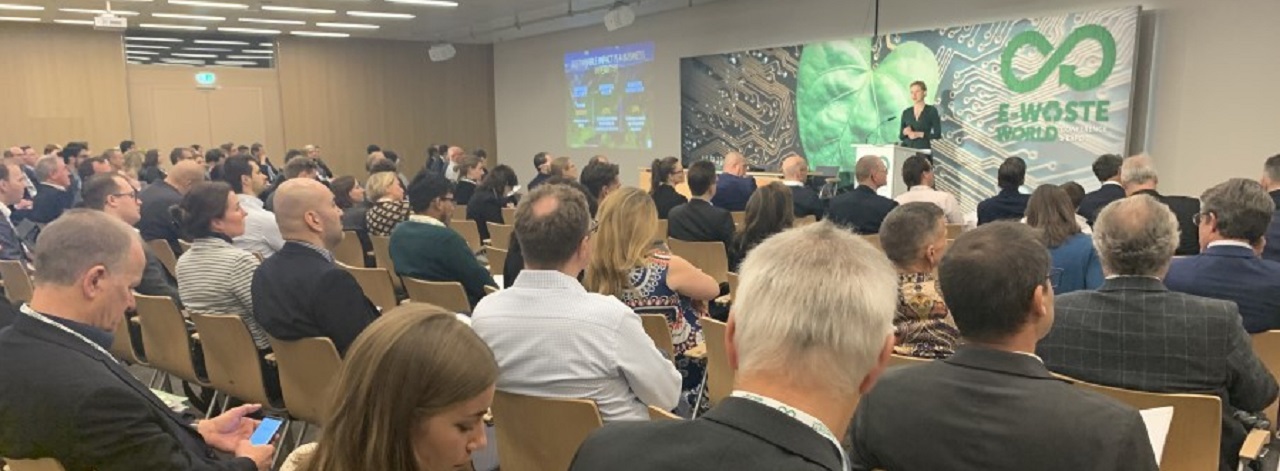
E-Waste World Expo is the trade exhibition and conference dedicated to electronics recycling and sustainable e-waste management. It brings together recyclers, manufacturers, material processors, technology suppliers and other industry professionals around the recovery, reuse and responsible treatment of electronic equipment. The 2027 event is presented alongside Battery Recycling Expo, Metal Recycling Expo and ITAD & Circular Electronics Expo.
The organiser lists expo hours of 09:00–17:00 on 12 May and 09:00–16:30 on 13 May. Conference hours are 09:30–16:30 on 12 May and 09:30–15:30 on 13 May. Check the organiser’s current information before planning your visit.
Why Frankfurt E-Waste World Expo matters
Understand the recovery chain
Electronic waste is not a single material stream. Collection, sorting, dismantling, treatment, reuse and the recovery of usable materials involve different operational decisions. E-Waste World Expo brings these subjects into a professional exhibition and conference setting, giving visitors a way to examine technologies and discuss where they might fit in a recovery process.
Compare equipment and approaches
The organiser describes the exhibition as a place to explore recycling technologies, refurbishment solutions and e-waste strategies. Visitors can use the stands to compare what suppliers present, ask about the kinds of equipment and input streams addressed, and identify which technical claims need to be tested against their own operating conditions.
Connect operational and policy questions
WEEE management links the practical work of collecting and processing equipment with producer responsibilities, material recovery and circular-electronics policy. The conference and exhibition can help professionals connect those perspectives without assuming that one process or technology suits every product stream.
For the 2025 edition, the organiser reported 320 exhibiting companies, more than 4,500 attendees and more than 175 conference speakers. These are figures for the 2025 event, not a forecast for 2027.
Who should visit Frankfurt E-Waste World Expo?
E-waste recyclers and material processors
Useful if you are assessing how to improve the collection, sorting, dismantling or treatment of electronic equipment. Focus on:
- Which input streams a technology is designed to handle
- How equipment separates mixed components and materials
- How battery-containing devices are identified and managed safely
- What output quality or material fractions a supplier can document
- How a system might fit your existing process and facility constraints
- Which operating data you would need before considering an investment
The organiser positions the event for recyclers and material processors, and its 2026 conference programme included sessions on WEEE, battery detection and recycling automation.
Electronics manufacturers and producer-responsibility teams
Useful if your work involves product design, end-of-life planning, take-back, compliance or sustainability. Consider:
- How product construction affects repair, dismantling and material separation
- What information recovery partners need to identify product components
- How producer obligations connect with collection and downstream treatment
- What refurbishment or reuse options may be relevant to your products
- How suppliers document the handling and recovery of materials
The event’s focus on sustainable e-waste management and circular electronics makes these issues relevant to manufacturers and professionals responsible for product end-of-life.
Technology developers and equipment suppliers
Useful if you develop machinery, sorting systems, treatment processes or services for electronics recovery. Use the event to:
- Explain clearly which streams and process stages your solution addresses
- Compare the operating conditions your equipment requires with visitor needs
- Discuss safety, separation quality, throughput measurement and maintenance evidence
- Identify which types of processors or manufacturers may need a closer technical discussion
- Separate verified performance data from claims that still need site-level testing
The organiser identifies manufacturers, technology leaders and industry innovators among the event’s professional community.
Buyers, procurement teams and recycling project owners
Useful if you are planning a facility upgrade, selecting a treatment partner or comparing equipment. Prioritise:
- Suppliers whose technology addresses a defined stream or bottleneck
- Documented performance under conditions comparable to your operation
- Integration, safety, service and maintenance requirements
- Material-quality specifications and downstream acceptance criteria
- Questions that require a follow-up technical review after the exhibition
Policy, research and circular-economy professionals
Useful if you follow collection systems, WEEE rules, material recovery or circular-electronics practice. The 2026 conference included sessions on the WEEE outlook, collection and reuse, and emerging recycling technologies. Treat those as examples from the previous programme; the 2027 agenda should be checked when published.
What can you find at Frankfurt E-Waste World Expo?
Electronics recycling and WEEE management
The event is dedicated to recycling electronics and managing e-waste. The exhibition and conference address the systems and decisions involved in collecting, preparing and treating waste electrical and electronic equipment.
Sorting, processing and materials recovery
The organiser promotes recycling technologies and resource-recovery solutions. Visitors can examine the equipment and services represented by exhibitors and ask how they handle particular materials, component mixtures and processing requirements.
Refurbishment, reuse and circular electronics
Refurbishment and responsible e-waste strategies are among the event’s stated themes. These subjects are relevant to organisations deciding whether equipment or components can be kept in use, prepared for reuse or sent into a recycling route.
Co-located recycling events
E-Waste World Expo is presented with Battery Recycling Expo, Metal Recycling Expo and ITAD & Circular Electronics Expo. The organiser says one free professional entry pass provides access to the four exhibitions and the conference. The wider co-location can help visitors explore adjacent resource-recovery topics, while the E-Waste World component remains focused on electronics recycling and e-waste management.
What makes Frankfurt E-Waste World Expo distinctive?
It places electronics recycling in a wider resource-recovery setting while retaining a dedicated e-waste focus.
The event combines an exhibition with conference content and sits alongside three related recycling exhibitions. The 2026 E-Waste conference programme included a WEEE 2050 outlook, battery detection in e-waste recycling, AI and robotics in recycling, collection and reuse of laptops, mobile phones and tablets, and safe and efficient flat-panel-display recycling. These examples show the range of questions discussed in the previous edition; they should not be read as confirmed sessions for 2027.
For visitors, the combination offers a reason to compare equipment, process approaches and professional perspectives across related parts of the circular-economy supply chain. The value depends on selecting the relevant stands and sessions rather than trying to cover every co-located topic.
What should you try to achieve during Frankfurt E-Waste World Expo?
If you operate a recycling or treatment facility
Define one process issue and leave with a shortlist of solutions to investigate. For example, compare how several suppliers approach a specific device stream, separation step or battery-safety challenge. Record what input assumptions each system makes and what operating evidence you still need.
If you manufacture or place electronics on the market
Clarify the end-of-life and producer-responsibility questions that affect one product family. Identify which design, collection, reporting or recovery information you need from partners and where further compliance advice is required.
If you buy or supply recovery technology
Identify relevant suppliers or project partners and agree a practical next step for technical evaluation. A useful outcome may be a request for process data, a facility discussion or a review of the material specifications—not an assumption that a conversation guarantees a purchase or contract.
How to prepare before Frankfurt E-Waste World Expo
1. Write down the decision you need to make
Choose a concrete objective: improve a collection route, compare sorting approaches, investigate refurbishment, assess a treatment line or understand producer obligations. Separate immediate procurement needs from longer-term market research.
2. Build a targeted exhibitor shortlist
The organiser publishes an exhibitor list and floor plan for the 2027 exhibition. Use those tools to identify companies relevant to your process, then group them as essential, useful or optional. Verify the list and layout close to the event because exhibitor information can change.
3. Prepare technical questions
Ask suppliers questions that fit the e-waste stream you handle:
- Which device categories, component mixes or input conditions does the system accept?
- How does it identify or separate batteries and other components requiring special handling?
- What evidence is available on separation performance and recovered-material quality?
- Which operating conditions and assumptions underlie any throughput figures?
- What pre-processing, staffing, space or utilities are required?
- How are maintenance, consumables, safety and service support handled?
- Which outputs can be reused, sold or sent to a downstream processor?
- What product or producer data is needed to support traceability and reporting?
4. Request meetings where they matter
For priority suppliers, ask in advance whether a technical conversation can be arranged. Bring a short description of your facility, material stream or project constraint, but do not share confidential information unless appropriate safeguards are in place.
5. Plan around the two-day schedule
The organiser lists expo hours of 09:00–17:00 on 12 May and 09:00–16:30 on 13 May, with conference hours beginning at 09:30. Review the latest event information and reserve time for both the stands and any relevant conference sessions.
How to make the most of the exhibition
A large exhibition can produce many conversations but little clarity unless you record what each supplier actually offers. Use a simple note structure:
Company → process stage → input stream → evidence to request → next action.
For example, distinguish a sorting system for a defined WEEE stream from a general materials-recovery claim. Record the feedstock assumptions, separation method, output specification and any site conditions that need validating. Keep product claims separate from your own evaluation.
Use the official exhibitor list and floor plan to sequence visits by process stage. Compare like with like where possible; a collection service, a refurbishment provider and a treatment-equipment manufacturer address different parts of the recovery chain.
What to take from the previous conference programme
The 2027 conference agenda was not found in the official information reviewed. The 2026 programme is useful as context, not as a promise of repeat sessions. Its E-Waste & WEEE Recycling track included:
- A WEEE 2050 outlook on critical raw materials and future recovery
- A session on detecting batteries in e-waste recycling
- Discussion of AI and robotics in industrial recycling
- Collection and reuse of laptops, mobile phones and tablets
- Approaches to safe and efficient flat-panel-display recycling
- Sessions on circular electronics and e-waste solutions in different regions
When the 2027 programme is released, compare its sessions with your operational questions and avoid assuming that a topic or speaker from 2026 will return.
Networking at Frankfurt E-Waste World Expo
Prepare a concise introduction that explains your role, the electronic-waste stream or technology you work with, and the question you want to resolve. For a supplier discussion, describe the process stage and the type of evidence you need. For a processor or project owner, explain the operational constraint without overstating the maturity of a project.
After a useful conversation, confirm the next step: technical documentation, a follow-up call, a facility assessment or a review of compliance requirements. Record who owns that action and when to reconnect. A badge scan or business card is only a starting point; assess technical fit and commercial terms separately.
Travelling to Frankfurt E-Waste World Expo
The organiser lists the venue as Messe Frankfurt Hall 3, Ludwig-Erhard-Anlage 1, 60327 Frankfurt am Main, Germany. Check the organiser’s current travel and venue information before departure for up-to-date access arrangements, transport options and any event-specific instructions.
One day or both days at Frankfurt E-Waste World Expo?
One day
A single day may suit visitors with a narrow objective, a pre-selected exhibitor list and only a small number of priority technical conversations. Check the conference schedule first if a particular topic is central to your visit.
Both days
Two days may be more useful if you need to compare several process stages, attend conference sessions and leave time for follow-up conversations. The event runs across two days, and the organiser publishes different daily expo and conference closing times.
Choose the duration according to the number of decisions and meetings you need to support, not simply the size of the overall event.
Frankfurt E-Waste World Expo is particularly valuable if you have a project
Visitors evaluating an upgrade, new treatment line or recovery partnership can prepare a short, non-confidential project brief. Include the types of equipment or materials involved, the process stage under review, the intended output quality, the facility constraints and the evidence needed for a decision. If a project concerns producer responsibility or placing electrical equipment on the German market, identify the relevant product categories and confirm applicable obligations with the responsible authority or adviser.
After Frankfurt E-Waste World Expo: where the real value starts
Within a few days, sort contacts into three groups:
- A — Immediate technical follow-up: suppliers or partners linked to a defined process need. Request the missing operating data, material specifications, safety information or service details.
- B — Potential fit: organisations worth reviewing after comparing their products with your feedstock, facility or compliance requirements.
- C — Market intelligence: contacts and discussions that help you understand policy, collection systems or industry direction but do not yet support a purchasing decision.
Compare suppliers using consistent criteria: accepted inputs, outputs, performance evidence, operating assumptions, maintenance, safety, integration and commercial terms. For a reuse or refurbishment route, establish product condition, testing requirements and downstream responsibilities. Do not treat a conference discussion or supplier claim as a substitute for technical due diligence.
Who should consider exhibiting at Frankfurt E-Waste World Expo?
The organiser’s 2027 exhibition information features companies in recycling technology, material processing, e-waste treatment and related recovery solutions. Relevant exhibitors may include:
- Manufacturers of sorting, separation and recycling equipment
- Technology suppliers for WEEE treatment and material recovery
- Electronics refurbishment and circular-economy solution providers
- Recyclers and material processors
- Companies developing e-waste management and recovery services
Before exhibiting, define the professional problem your solution addresses, the evidence visitors can review and the follow-up action that would qualify a project. The organiser describes the 2027 show as a four-event platform; exhibitors should make their e-waste relevance clear while checking the audience and requirements for their specific stand or conference participation.
Frankfurt E-Waste World Expo visitor checklist
Before
- ☐ Set one or two decisions you want the visit to support.
- ☐ Review the current exhibitor list, floor plan and published conference agenda.
- ☐ Prepare process-specific questions and a non-confidential project summary.
- ☐ Confirm registration, opening times, venue access and travel arrangements.
During
- ☐ Record each supplier’s target stream, process stage and evidence offered.
- ☐ Compare technologies against the same operating assumptions.
- ☐ Note follow-up actions, responsible contacts and information still needed.
- ☐ Separate verified performance data from claims requiring validation.
After
- ☐ Prioritise technical follow-up and request missing specifications.
- ☐ Compare proposals against safety, integration, output quality and service needs.
- ☐ Check relevant producer-responsibility and WEEE requirements for your products or projects.
- ☐ Record which contacts are ready for procurement review and which are still exploratory.
Is Frankfurt E-Waste World Expo worth visiting?
The event is most relevant to professionals working in electronics recycling, WEEE treatment, material recovery, refurbishment, producer responsibility and related technology supply. Its combination of a dedicated e-waste exhibition, conference content and co-located recycling events can support supplier comparison and cross-industry learning. A prepared visit is more likely to answer a specific operational or compliance question than an unplanned walk through the stands. Evaluate technologies against your own stream, site conditions and evidence requirements.
Frankfurt E-Waste World Expo 2027 at a glance
| Item | Information |
|---|
| Event | Frankfurt E-Waste World Expo |
| Official name | E-Waste World Expo |
| Date | 12–13 May 2027 |
| City and country | Frankfurt, Germany |
| Venue | Messe Frankfurt Hall 3, Ludwig-Erhard-Anlage 1, 60327 Frankfurt am Main |
| Organiser | Trans-World Events Ltd |
| Main subject | Electronics recycling and sustainable e-waste management |
| Related exhibitions | Battery Recycling Expo, Metal Recycling Expo and ITAD & Circular Electronics Expo |
| Relevant audiences | Recyclers, manufacturers, material processors, technology suppliers, policy and research professionals |
| Latest published scale | In 2025, the organiser reported 320 exhibiting companies, more than 4,500 attendees and more than 175 conference speakers |
| 2027 programme | A full 2027 conference agenda was not found in the official information reviewed; 2026 sessions are previous-edition context |
The organiser lists free entry for industry professionals. Confirm current registration, programme and venue details before making arrangements.
Plan your Frankfurt E-Waste World Expo visit with a clear objective
Which recovery, reuse or producer-responsibility decision do you want to move forward? Use the exhibition to compare relevant approaches, verify the questions that matter to your process and agree practical next steps.
Define. Compare. Verify. Follow up.
E-waste recycling opportunities in Germany
Market size and demand
Germany collected around 920,000 tonnes of waste electrical and electronic equipment in 2024, according to the German Environment Agency (UBA), which updated its data on 24 September 2026. The reported collection rate was 28.7%, well below the 65% minimum target. UBA also reported that collection rose by about 13,600 tonnes year on year while the amount of new equipment placed on the market fell by about 66,000 tonnes from 2023. These are collection and compliance indicators, not a market-value estimate or proof of demand for a particular supplier.
Market drivers and commercial opportunities
The gap between the 2024 collection rate and the statutory target keeps collection systems, treatment capacity and material recovery relevant areas to investigate. UBA reported that Germany met the applicable preparation-for-reuse, recycling and recovery targets in all six equipment categories in 2024.
- Collection and sorting: operators and project teams may assess systems that improve identification and routing of WEEE; actual feedstock volumes and local collection arrangements need project-level validation.
- Treatment and resource recovery: processors may compare separation and recovery technologies against the materials in their own incoming streams; performance, output quality and downstream acceptance should be verified.
- Refurbishment and reuse: manufacturers, service providers and processors may investigate where testing, repair or reuse fits before recycling, subject to product condition and applicable requirements.
Regulations and market-entry conditions
Germany’s ElektroG implements the EU WEEE framework. The minimum collection target has been 65% since 2027; recovery and recycling or preparation-for-reuse targets vary by equipment category. Stiftung ear states that producers must be registered before selling electrical and electronic equipment in Germany. A foreign producer required to register must appoint an authorised representative. Product scope and specific obligations should be checked with the authority.
What this means for exhibitors
Equipment, sorting, treatment and recovery suppliers may use these figures to frame discussions about collection and processing needs, but the national collection gap does not guarantee contracts or prove a product-specific supply shortage. Exhibitors should qualify feedstock, project timing, regulatory scope and technical fit with each prospective customer.
What this means for visitors
Processors, manufacturers and project teams could use the event to compare collection, sorting, recovery and reuse approaches against their own material streams and responsibilities. The German collection data helps frame the question; local volumes, facility requirements and compliance conditions still need to be verified for each project.
See the ilikevents services for this event
For further information, please click
here .