InfraTech 2027: practical visitor guide
InfraTech is a professional infrastructure trade fair and knowledge platform organised by Rotterdam Ahoy. The organiser schedules its 17th edition for 12–15 January 2027 at Rotterdam Ahoy, Ahoyweg 10, Rotterdam, the Netherlands. Clients, contractors, suppliers, knowledge institutions and government bodies meet around infrastructure challenges, products, services and specialist knowledge. The organiser’s visitor page lists four exhibition themes: Water & Climate, Infrastructure, Public Space & Mobility, and Energy. Its programme information also sets out six knowledge themes for 2027.
Opening hours vary by day: Tuesday 10:00–18:00, Wednesday 10:00–21:00, Thursday 10:00–18:00 and Friday 10:00–16:00. Confirm the latest visitor information before travelling.
Why InfraTech matters to infrastructure professionals
Connect the project chain
Infrastructure decisions involve asset owners, public authorities, designers, contractors, operators, suppliers and knowledge partners. InfraTech provides a shared setting for these groups to compare approaches and discuss where products, services and project requirements meet. For visitors, the value is strongest when a conversation is tied to a defined asset, project stage or operational challenge.
Compare solutions across related themes
The exhibition is grouped into Water & Climate, Infrastructure, Public Space & Mobility, and Energy. This makes it possible to explore connected questions—such as how renewal work interacts with water management, public space or mobility—while keeping a visit focused on relevant areas.
Review recent scale in context
- In 2025, the organiser reported 23,344 visitors.
- The 2025 edition included 500 exhibitors across 30,000 m².
- The organiser also reported more than 200 knowledge sessions, workshops and lectures in 2025.
These are published results for 2025, not forecasts or guarantees for the 2027 edition. They indicate the recent breadth of the platform and help visitors plan for a substantial exhibition.
Who should visit InfraTech?
Public clients and infrastructure asset owners
The organiser positions InfraTech as a meeting place for clients and government bodies, and names public authorities among its hosts. It may be useful if you commission, own or manage infrastructure and need to evaluate approaches to renewal, resilience, maintenance or service delivery.
Useful priorities include:
- Bring one asset or service challenge, its decision stage and the constraints that solutions must meet.
- Compare replacement and renovation approaches against continuity of service, maintenance requirements and operating conditions.
- Ask what technical evidence, standards and implementation assumptions are available for review.
- Identify which internal teams or delivery partners should assess a promising option after the fair.
- Distinguish general market learning from a solution that is ready for a formal project or procurement process.
Contractors and civil engineering teams
Contractors are among the professional groups the organiser says meet at InfraTech. The event’s infrastructure, mobility, water and energy themes can help delivery teams examine products and methods that may affect constructability, sequencing, safety, interfaces and maintenance.
- Relate each product or method to the project stage and site conditions where it could be used.
- Ask about installation, integration, handover, maintenance and service-continuity requirements.
- Compare technical documentation and record what your engineering or operations colleagues need to validate.
- Use the programme themes to select learning relevant to a live delivery issue rather than trying to attend everything.
Engineering and consulting firms
Engineering and consulting organisations can use InfraTech to survey technical options and gather information relevant to design, specification and client advice. The cross-sector themes and dedicated software area are useful when a project combines physical assets with data or system interfaces.
- Map a promising product or service to a design, specification or advisory question.
- Ask about interfaces, data inputs, operating assumptions and the conditions under which performance claims apply.
- Record source material and open questions for independent technical assessment.
- Where a client or operator will own the outcome, include their requirements in follow-up discussions.
Infrastructure suppliers and technology providers
Suppliers can meet clients, contractors, public bodies and engineering organisations. The 2027 programme page describes a Rijkswaterstaat Pavilion, a municipalities square, a provincial projects area, a start-up and scale-up square, and a Software Area covering subjects such as digital twins and data analysis.
- Present a defined infrastructure use case rather than a general product claim.
- Explain deployment, integration, maintenance and support requirements clearly.
- Ask visitors what evidence, standards or project conditions they need to assess fit.
- Use conversations to learn about stakeholder priorities; interest at a fair is not a commitment to buy or procure.
Water authorities and infrastructure knowledge organisations
Water authorities and knowledge institutions form part of the organiser’s stated partner and professional community. Water & Climate and Underground Infrastructure may be especially relevant to organisations working across water systems, public assets and climate-related challenges.
- Identify where water, public space, mobility and infrastructure renewal meet in a planning or operational question.
- Select sessions or exhibitors that can inform that question, and note which assumptions need further evidence.
- Use conversations to identify possible knowledge exchange or technical follow-up with relevant organisations.
What can you find at InfraTech?
Exhibition themes
The official 2027 exhibition page lists these four themes:
- Water & Climate: products and expertise connected to water systems and climate challenges.
- Infrastructure: solutions and knowledge for infrastructure construction, management and renewal.
- Public Space & Mobility: approaches relevant to public environments and mobility.
- Energy: infrastructure-related energy solutions and services.
Knowledge themes and programme areas
The organiser’s 2027 information highlights climate and sustainability, mobility and logistics, replacement and renovation, digitalisation, human capital and underground infrastructure. These are useful lenses for choosing what to investigate, but check the current agenda for confirmed sessions and speakers.
The organiser also describes several themed areas: the municipalities square showcases smart solutions from cities including Rotterdam, Amsterdam, Utrecht and The Hague; the Rijkswaterstaat Pavilion focuses on innovations and insights from a major infrastructure client; the provincial area spotlights provincial projects and challenges; and the Start-up & Scale-up Square features young companies. The Software Area covers digital twins and data analysis in infrastructure. Treat these as announced areas, not as a complete list of exhibitors or programme contents.
What makes InfraTech distinctive?
InfraTech combines a broad infrastructure exhibition with a professional knowledge programme and spaces organised around public-sector projects and specialist technologies. Its stated community includes clients, market parties, knowledge institutions and government bodies. That mix can help visitors consider a project across design, delivery, operation and renewal rather than viewing a product in isolation.
The 2025 edition brought together 23,344 visitors and 500 exhibitors, with more than 200 knowledge sessions, workshops and lectures. For 2027, the organiser has announced the four exhibition themes, six knowledge themes and several dedicated squares and areas. Use the latest agenda and exhibitor information to identify the sessions and companies that are actually relevant to your visit.
Set a useful objective before InfraTech
If you represent a public client or asset owner
Objective: shortlist approaches relevant to one asset or service challenge. Define the performance need, operating constraints and decision stage. Leave with a list of evidence and lifecycle questions for technical or procurement review.
If you work in contracting or engineering
Objective: compare options against a real project requirement. Prepare the site conditions, system interfaces, sequencing concerns and standards that will determine whether a solution is technically suitable.
If you supply products or software
Objective: learn what proof and implementation detail users need. Prepare a concise use case, explain the deployment and support model, and record the next technical question rather than treating a positive conversation as a sale.
If you work in water, climate or public space
Objective: connect one theme to a cross-sector planning question. Note which other asset owners, operators or delivery partners need to be involved in evaluating the issue.
How to prepare for InfraTech
1. Define the decision behind your visit
“See what is new” is too broad to guide a visit. Write down the asset, process or service question you need to explore, the project stage and the constraints any solution must satisfy. That gives you a practical filter for stands and sessions.
2. Build a short target list
Use the organiser’s exhibitor information and programme pages to identify relevant companies, themes and areas. Sort priorities into A — essential, B — useful and C — explore if time allows. The 2025 exhibitor list is historical; verify which organisations are confirmed for 2027 before arranging meetings.
3. Prepare infrastructure-specific questions
- Which construction, maintenance, renewal or operational problem is this solution designed to address?
- What site conditions, asset interfaces or operating assumptions affect its use?
- What standards, test results, specifications or project references can be reviewed?
- How do installation and maintenance affect sequencing, access and continuity of service?
- What data inputs, interfaces, security assumptions and user capabilities does a software product require?
- For water or climate applications, which design conditions determine performance?
- What lifecycle support, repair or replacement arrangements should an owner evaluate?
- What remains to be confirmed before a pilot, specification or procurement discussion?
4. Coordinate the people who will assess the answer
A solution may involve the client, designer, contractor, operator and technical specialist. Decide who should join important conversations and what information each person needs. Avoid sharing confidential project material on the exhibition floor.
5. Plan around the four days
Opening hours differ: Wednesday runs later, while Friday closes earlier. Allocate time for priority themes, programme sessions and follow-up conversations, and leave room to compare notes with colleagues. Check the organiser’s current practical information before setting a daily plan.
How to use the exhibition floor
Keep the same record for each promising conversation: organisation → infrastructure challenge → proposed solution → evidence available → project fit → open question → next action. For a digital tool, for example, record the data and system interfaces it needs, who would use its output and what validation an asset owner or project team would require.
Separate a demonstration from independently reviewed performance evidence. Ask for documentation you can examine after the show and note limitations, deployment conditions and maintenance implications. If a product is not relevant to an active project, label it as future market intelligence so that it does not displace higher-priority discussions.
Knowledge programme, innovation and software
The 2027 knowledge themes include climate and sustainability, mobility and logistics, replacement and renovation, digitalisation, human capital and underground infrastructure. The programme page also describes areas for municipal and provincial projects, Rijkswaterstaat, start-ups and software innovations such as digital twins and data analysis.
Before attending a session, write down the decision or technical uncertainty it should help you explore. During the session, record the infrastructure context, evidence and assumptions presented. Afterwards, identify what needs independent review and whether it applies to a current project or longer-term planning. The organiser’s programme information is the place to check the latest session details.
Networking across the infrastructure chain
Prepare a short introduction that names your role, the assets or projects you work with and the question you are investigating. Public clients can describe the challenge and decision stage without disclosing sensitive details. Suppliers can explain the use case and ask which deployment, integration or evidence questions matter to visitors.
When a conversation crosses organisational roles, clarify who owns the next step and what information each party needs. A useful follow-up could be technical documentation, a design discussion or a structured review; a meeting at the fair does not by itself create a procurement opportunity.
Getting to Rotterdam Ahoy
InfraTech takes place at Rotterdam Ahoy, Ahoyweg 10, 3084 BA Rotterdam. The organiser and venue describe access by public transport, car and bicycle. Zuidplein metro and bus station is about a five-minute walk from Ahoy. Venue information also refers visitors to route planning and parking guidance; check current arrangements, availability and charges before travelling.
One day or several?
- One day: may work when your question is narrow and you have selected the relevant companies or sessions in advance. Use the time to compare a short list and capture follow-up needs.
- Two days: may suit visitors balancing the exhibition floor with the knowledge programme, or teams that need time to compare technical findings and discuss them internally.
- Three or four days: consider a longer visit if your role spans several themes, you have multiple project discussions or you want to combine sessions on different days. Match your schedule to the priorities you have set rather than aiming to see every stand.
Who should consider exhibiting at InfraTech?
The organiser’s exhibition themes indicate potential relevance for infrastructure, water and climate, public-space and mobility, and energy organisations. Its 2027 areas also identify municipal and provincial projects, a Rijkswaterstaat Pavilion, start-ups and infrastructure software. Suppliers, engineering organisations, contractors and knowledge providers should define the user group and application they want to discuss before planning participation.
Set an objective that can be assessed afterwards: demonstrate a defined application, understand user requirements, discuss a project interface or gather feedback on technical documentation. Prepare clear information on deployment, integration, maintenance and evidence. Participation creates a setting for discussion; it does not guarantee leads, contracts or access to projects. The organiser’s exhibitor pages provide the current participation details.
After InfraTech: turn conversations into project intelligence
Within a few days, sort notes into A — active project relevance, B — potential future application and C — sector intelligence. For A items, request the evidence or technical detail needed by the people who will assess the solution. For B items, record the conditions under which the option might become relevant. For C items, summarise the trend and why it matters to your organisation.
Share relevant findings with asset owners, engineering, delivery or operations colleagues. Compare claims with project requirements, standards, interfaces, delivery constraints and lifecycle support. Assign an owner and timing to each follow-up so that a useful conversation becomes an informed review rather than an untracked contact.
InfraTech visitor checklist
Before
- ☐ Define the asset, infrastructure challenge or decision your visit should support.
- ☐ Shortlist relevant 2027 themes, exhibitors and sessions from current organiser information.
- ☐ Prepare questions about evidence, standards, data, interfaces and maintenance.
- ☐ Coordinate project colleagues and confirm the latest daily hours and transport arrangements.
During
- ☐ Compare solutions against the same use case and constraints.
- ☐ Record evidence, assumptions, limitations and a named follow-up action.
- ☐ Connect programme learning to a specific project or planning question.
- ☐ Distinguish general interest from options ready for technical review.
After
- ☐ Request missing specifications or technical evidence.
- ☐ Share findings with the relevant client, engineering, delivery or operations team.
- ☐ Review lifecycle and implementation implications before advancing a solution.
Is InfraTech worth visiting?
InfraTech is relevant to infrastructure clients, authorities, contractors, engineering and consulting firms, suppliers, water authorities and knowledge organisations with a defined technical, operational or project question. Its 2025 edition reported 23,344 visitors, 500 exhibitors and 30,000 m², while its 2027 information connects four exhibition themes with knowledge themes and specialist areas. A focused agenda can help you use that breadth; an unplanned visit may produce many conversations without the evidence needed for a decision.
InfraTech 2027 at a glance
| Item | Information |
|---|
| Event | InfraTech |
| Edition | 17th edition |
| Date | 12–15 January 2027 |
| City and country | Rotterdam, the Netherlands |
| Venue | Rotterdam Ahoy, Ahoyweg 10, 3084 BA Rotterdam |
| Organiser | Rotterdam Ahoy |
| Exhibition themes | Water & Climate; Infrastructure; Public Space & Mobility; Energy |
| Knowledge themes | Climate & Sustainability; Mobility & Logistics; Replacement & Renovation; Digitalisation; Human Capital; Underground Infrastructure |
| Recent published scale | 2025: 23,344 visitors, 500 exhibitors, 30,000 m² and more than 200 knowledge sessions, workshops and lectures |
| Daily hours | Tue 10:00–18:00; Wed 10:00–21:00; Thu 10:00–18:00; Fri 10:00–16:00 |
Dates, venue, hours, themes and areas are organiser-published; scale figures refer to 2025.
Plan a useful InfraTech visit
Choose one infrastructure challenge and use the fair to compare possible approaches, ask for evidence and identify responsible follow-up. The aim is not to see every stand, but to leave with clearer options and the next questions your project team needs to answer.
Define. Compare. Validate. Collaborate. Follow through.
Infrastructure opportunities in the Netherlands
Market context
The Government of the Netherlands says it will allocate approximately EUR 25 billion up to 2028 to constructing new roads and resolving bottlenecks. This is a government infrastructure investment plan, not a guarantee that any particular project will proceed or that a company will gain access to it. It identifies road construction and network capacity among stated public priorities.
Opportunities for exhibitors
- Providers of road, bridge, mobility, engineering and digital infrastructure solutions may explore how their products relate to public infrastructure needs and potential project partners.
- Suppliers can use discussions to learn what asset owners and delivery organisations require, and explain technical evidence, implementation constraints and maintenance implications.
- Companies should treat the investment plan as market context, not as a tender notice or promise of a contract.
Opportunities for visitors
- Public clients and engineering teams could compare approaches to road capacity, renovation, maintenance and infrastructure data against their own planning requirements.
- Contractors and suppliers may examine technologies and services across the event’s infrastructure, mobility, water and energy themes, then assess their relevance to specific projects.
The Netherlands may be relevant to infrastructure participants because the government identifies investment in new roads and bottleneck resolution through 2028. Commercial fit depends on project timing, procurement, technical standards and each organisation’s needs.
Discover Rotterdam
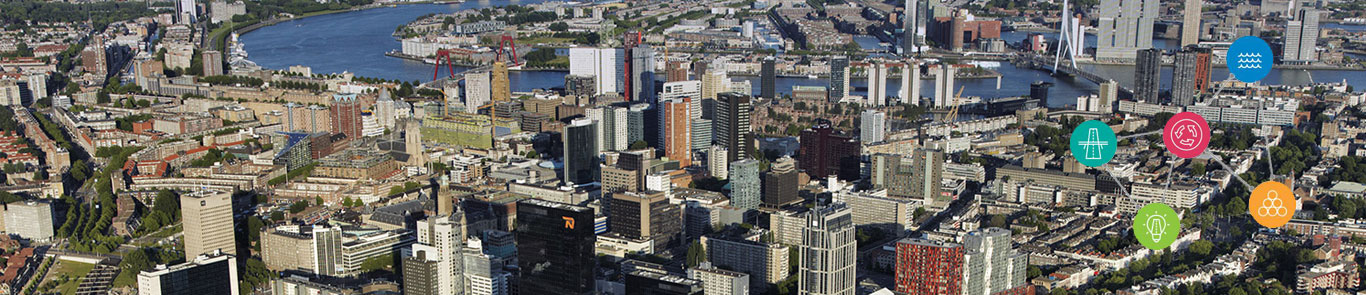
Rotterdam Ahoy is located in Rotterdam, the host city, so visitors can combine event days with city-centre architecture, food and culture when their schedule allows.
Cube Houses and Kijk-Kubus museum house
The yellow, cube-shaped houses designed by Piet Blom form the Blaakse Bos complex near Station Blaak. The furnished Kijk-Kubus museum house offers a look inside one of the distinctive homes.
Markthal
The horseshoe-shaped Markthal brings food stalls, restaurants and specialist shops together beneath the large Horn of Plenty artwork. It is also close to the Cube Houses and other central sights.
Depot Boijmans Van Beuningen
Located in Museumpark, the Depot is the world’s first publicly accessible art storage facility. Visitors can see collection objects and aspects of the work involved in preserving and managing them.
Choose one or two places that fit around the fair rather than trying to cover the whole city between sessions. Check each attraction’s current visitor information when making plans.
For further information, please click
here .