Munich iba 2027
24–28 October 2027 | Messe München, Munich, Germany
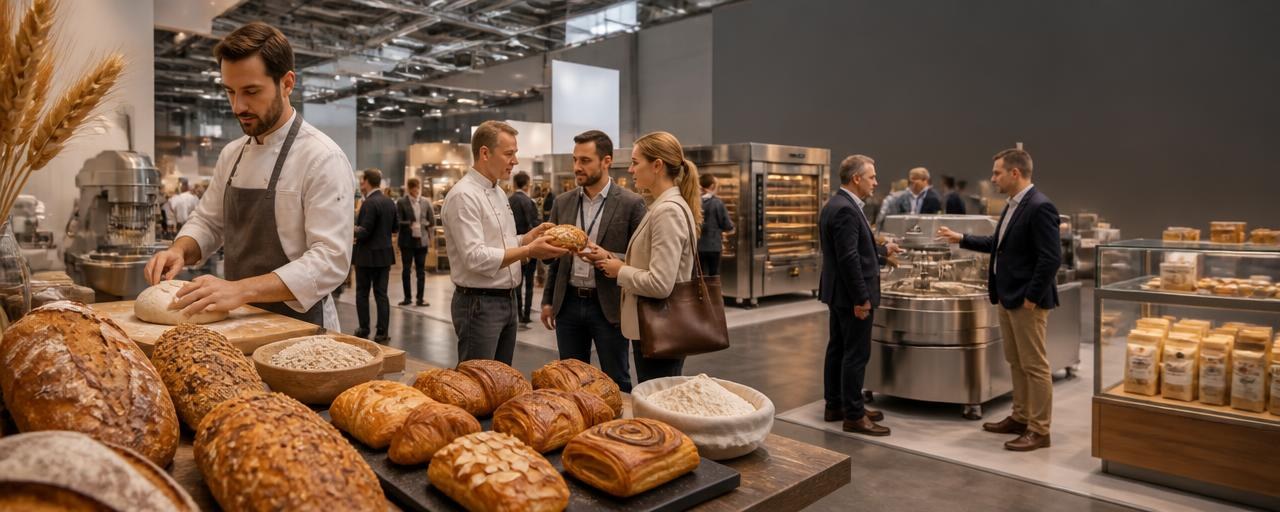
iba is an international trade fair for the baking and confectionery industry. Its official product range spans production equipment, ingredients, process optimisation, packaging, retail systems and services. The 2027 edition is scheduled in Munich. The organiser’s visitor information lists opening hours of 09:30–18:00 from Sunday to Wednesday and 09:30–17:00 on Thursday.
For visitors, the value lies in comparing practical solutions across the bakery supply chain: from craft production and ingredients to industrial machinery, hygiene, packaging and point-of-sale. Use the guide below to turn those choices into a focused visit.
Why Munich iba matters to baking professionals
Explore the supply chain
The official product range includes ingredient preparation and storage, dough preparation and transport, bread and pastry machinery, ovens, refrigeration and fermentation technology, baking accessories, raw materials, packaging, cleaning and hygiene, IT, analytics, logistics, energy systems, sales and point-of-sale equipment, frozen and finished products, and services. Seeing these areas within one professional event can help connect upstream ingredients and production choices with packaging and customer-facing needs.
Compare solutions against operating needs
Equipment that looks promising on a stand still needs to fit your production volume, product range, available space, staff skills, cleaning routines, energy use and service requirements. Use supplier conversations to establish those details and identify what needs technical review after the fair.
Follow changes in the market
iba’s published 2027 focus topics include turnkey solutions, artisan bakery, food trends, quality management, digitalisation, sustainability, health, and business succession and new talent. These themes raise practical questions about integrated production, ingredients, quality, workforce and customer expectations. Check the organiser’s current programme for the format and timing of sessions or demonstrations; a detailed schedule was not confirmed in the sources reviewed.
Who should visit Munich iba?
Artisan bakers and bakery owners
Useful if you are evaluating equipment, ingredients or shop improvements for an independent or multi-site bakery.
- Compare ovens, dough preparation, refrigeration and fermentation options against your product mix.
- Review ingredients, premixes, flavourings and baking agents for products you are developing.
- Look at shop fittings, display cases, point-of-sale tools and drinks equipment as part of the customer experience.
- Ask about cleaning, maintenance, training and service requirements before comparing headline specifications.
Industrial bakery and confectionery producers
Useful if you are planning production changes or reviewing equipment and process technologies.
- Compare ingredient handling, dough transport, forming, baking, cooling and packaging equipment.
- Discuss automation, production planning, robotics, traceability and quality management against a defined process need.
- Check cleaning, hygiene, ventilation, energy and maintenance implications alongside throughput.
- Record integration requirements and request technical documentation for follow-up evaluation.
Buyers, distributors and food-trade professionals
Useful if you source bakery products, ingredients, equipment or services for retail, wholesale or food-service customers.
- Compare product ranges, packaging formats and supplier capabilities against the needs of your channels.
- Assess ingredient and finished-product options for the customers you serve.
- Ask about ordering units, shelf life, availability, service coverage and documentation where relevant.
- Separate immediate sourcing needs from longer-term market research and supplier discovery.
Bakery technology, ingredient and service suppliers
Useful if your company sells into craft, industrial or trade segments of the baking and confectionery supply chain.
- Identify which buyer segment and operational problem your offer addresses.
- Compare complementary technologies and services that could form part of a broader solution.
- Prepare clear specifications, application examples and service information for professional discussions.
- Use conversations to learn what evidence buyers need before evaluating a new supplier.
What can you find at Munich iba?
Production technology and equipment
Official categories include ingredient preparation and storage, dough preparation and transport, machinery for bread, rolls and pastry, ovens, refrigeration and fermentation technology, bakery equipment and baking accessories.
Ingredients and finished products
The product range includes milled products, seeds and grain products, baking agents, premixes, processed flour, enzymes, flavourings, fats, oils and ice cream. Finished and frozen products include pastries, small bread products, lye products, muffins, cakes, doughnuts, fruit and sweet or savoury snacks.
Process optimisation, information technology and analytics
Published categories include automation, distribution and production management, planning, robotics, product improvement, quality management and goods traceability. IT includes industry software, e-commerce, cash-desk and stock-management systems; analytics includes laboratory and measuring instruments.
Packaging, hygiene and operating systems
Packaging categories include feed systems, bread and roll packaging machines, labels, labelling, vacuum packaging, materials and sealing machines. Cleaning and hygiene include extraction systems, wastewater engineering, workwear, foreign-material detection, cleaning machines, agents, disinfectants and pest control. Energy and ventilation topics include energy management, ventilation, air purification and heat recovery.
Services and customer-facing equipment
Listed services include occupational safety, education and training, customer care and maintenance, marketing, site planning, business consultancy, insurance, science and research. Sales and point-of-sale categories include shop fittings, advertising materials, drinks and drink machines, cream and ice cream, and snacks for sale.
What makes Munich iba distinctive?
Its documented range connects bakery craft, production technology and customer-facing trade. The official focus topics pair artisan bakery and food trends with turnkey solutions, quality management, digitalisation, sustainability, health and business succession. Product categories span raw materials through processing, packaging, logistics and shop equipment. This breadth is useful when a decision crosses departments: a new product may affect ingredients, machinery, packaging, hygiene and retail presentation at once.
The organiser identifies craft, industry and trade as key sectors represented among exhibitors. The current website presents 2027 as the next edition and lists focus topics, but detailed programme and visitor registration arrangements should be checked with the organiser as they are released.
What should you try to achieve at Munich iba?
If you run an artisan bakery
Choose one product or operational issue to improve. For example, compare equipment approaches for a defined product family, then record footprint, capacity, cleaning, energy and service questions for follow-up.
If you manage industrial production
Map a process bottleneck to a supplier shortlist. Identify the stage, product, throughput and integration constraints before comparing automation, machinery or quality-control options.
If you buy or distribute
Build a shortlist by customer and channel. Compare specifications, packaging, supply requirements and documentation rather than collecting brochures without a next step.
If you exhibit
Define the business question for each target conversation. Decide whether you are testing product fit, seeking a distributor, presenting a technical solution or learning about buyer requirements. The fair does not guarantee leads or contracts.
How to prepare before Munich iba
1. Set a specific objective
Write down the decision you want to make: an ingredient shortlist, a packaging review, a production-line upgrade, a shop refit or a supplier comparison. Bring the product and operating context needed to make conversations useful.
2. Prepare technical questions
For machinery, ask about capacity, product changeovers, line integration, footprint, cleaning, maintenance, energy needs, operator training and service coverage. For ingredients, ask about composition, application, handling, consistency, packaging and documentation. For packaging, compare material, format, sealing, labelling and compatibility with your product and equipment.
3. Prioritise the exhibition
Divide potential meetings into A (essential to a current decision), B (useful alternatives or complementary suppliers) and C (exploratory). Check the organiser’s current exhibitor information and programme before travelling; the directory linked on the site is labelled for 2025 and should not be treated as the 2027 exhibitor list.
4. Bring a comparison template
For each conversation record: company and product; intended application; key specifications; fit with your operation; questions still open; documents requested; contact and agreed next action. Keep supplier claims separate from verified technical details until you review the supporting material.
How to make the most of the exhibition
A stand conversation is a starting point, not a purchase decision. Capture comparable information for each option and ask how the solution performs in the conditions that matter to you. Bakery operators may record product range, batch size and changeover needs; production teams may add line interfaces, sanitation and planned downtime; buyers may focus on supply terms, packaging and documentation.
Use the published categories to organise your route: ingredients; production and process; packaging and hygiene; software and analytics; logistics and energy; sales and finished products. Leave room to explore adjacent categories when a supplier’s solution affects more than one part of your operation. Confirm the 2027 hall plan and programme with the organiser when available.
Plan your time realistically
iba runs over five days. The official visitor page lists opening hours as 09:30–18:00 from Sunday to Wednesday and 09:30–17:00 on Thursday. A focused visit can prioritise one decision area and pre-planned conversations; a broader sourcing or technology review may need time across multiple categories. Leave time to compare notes, revisit a stand with a technical question and capture follow-up actions.
Programme and focus topics beyond the stands
The organiser’s 2027 focus-topic page lists turnkey solutions, artisan bakery, food trends, quality management, digitalisation, sustainability, health, and business succession and new talent. Use these as lenses for selecting what to investigate. The sources reviewed did not establish a complete timetable or confirm specific conference, workshop or demonstration sessions, so check the current programme before planning around an individual item.
Networking at Munich iba
Prepare a short introduction stating your role, product or operational focus and the decision you are working on. For a supplier meeting, explain the application and constraints; for a buyer discussion, be clear about the product range or supply requirement. Ask what information the other party needs for a useful next conversation, and agree a specific follow-up rather than relying on a general exchange of contact details.
Travelling to Munich iba
The organiser says the exhibition centre can be reached from Munich Hauptbahnhof or Ostbahnhof by underground in approximately 20 or 10 minutes respectively, using the U2 to Messestadt West. From Munich Airport, it describes rail connections and an airport shuttle to the exhibition grounds; the shuttle is described as chargeable and running every 30 minutes. By car, the site is reached from the A94. Routes, services and fares can change, so confirm current travel information before departure.
Where to stay
Choose accommodation according to the work you need to do: proximity to the exhibition may suit a stand-focused visit, while meetings elsewhere may make another location more practical. The organiser provides accommodation information for visitors, but hotel names and rates were not verified here. Check current availability, cancellation terms and travel time directly before booking.
One day or several days at Munich iba?
- One day: suitable when you have a narrow objective, a short supplier shortlist and a planned route.
- Two days: may help when you need to compare several product groups or separate technical discussions from sourcing.
- More than two days: consider this when your work spans craft production, industrial systems, ingredients, packaging and retail, or requires a broad supplier review.
These are planning approaches rather than organiser recommendations; base the length of your visit on the current hall plan, appointments and programme.
Munich iba for a defined bakery project
If you are evaluating equipment or a process change, bring the product range, approximate batch or line requirements, available space, current process steps, cleaning constraints and target timing. For ingredients or packaging, bring relevant specifications and explain storage, handling, shelf-life or labelling needs. You do not need to disclose confidential information to begin a conversation; agree what technical detail can be shared and what requires later review.
After Munich iba: turn comparisons into decisions
Within a few days, sort contacts into A (a live operational or sourcing need), B (a credible future option) and C (market intelligence). For A contacts, request the specific follow-up material you need: technical specifications, product information, packaging data, service coverage, commercial terms or references appropriate to your process. Compare alternatives against the same criteria and involve production, quality, procurement or retail colleagues before committing. Record unresolved questions and the next owner for each action.
Who should consider exhibiting at Munich iba?
The organiser’s product range points to manufacturers and suppliers across bakery machinery, ovens, refrigeration and fermentation, ingredients, packaging, process optimisation, software, analytics, hygiene, energy systems, logistics, shop equipment and specialist services. Exhibiting may be relevant if your offer serves craft, industrial or trade professionals in these areas. Before committing, define the audience and measurable business objective, check current participation terms and costs, and plan how you will explain technical fit and follow up. No commercial result is guaranteed by taking part.
Munich iba visitor checklist
Before
- ☐ Set one primary objective and list the decision criteria.
- ☐ Check current 2027 visitor registration, exhibitor information, hall plan and programme with the organiser.
- ☐ Prepare product, process, ingredient or packaging questions relevant to your role.
- ☐ Prioritise suppliers and allow time between meetings.
During
- ☐ Compare solutions using the same specifications and operating constraints.
- ☐ Record claims, evidence requested, contacts and agreed next steps.
- ☐ Confirm whether programme items are running before planning around them.
After
- ☐ Sort contacts by urgency and fit.
- ☐ Request missing technical or product documentation.
- ☐ Review options with colleagues responsible for production, quality, procurement or retail.
Is Munich iba worth visiting?
iba is most relevant to professionals who can connect its baking and confectionery product range to a sourcing, production, quality, packaging, retail or service decision. Its published categories support investigation across connected parts of the supply chain, while the 2027 focus topics provide additional questions to explore. Visitors who arrive without a defined objective may find it harder to distinguish useful options from the volume of products and ideas. Set a goal, compare evidence and leave with follow-up actions.
Munich iba 2027 at a glance
| Item | Information |
|---|
| Event | iba, the trade fair for the baking and confectionery industry |
| Date | 24–28 October 2027 |
| City and country | Munich, Germany |
| Venue | Messe München |
| Industries | Bakery and confectionery; production equipment; ingredients; packaging; process technology; hygiene; retail systems and related services |
| Relevant audiences | Artisan bakeries, industrial producers, buyers, distributors, technology and service suppliers |
| Published scale | Current website figures were not tied clearly to a dated previous-edition result in the sources reviewed; no historical attendance or area figure is quoted here. |
| 2027 programme | Focus topics are published; a complete schedule was not confirmed in the sources reviewed. |
| Visitor hours | 09:30–18:00 Sunday–Wednesday; 09:30–17:00 Thursday, according to the current organiser page |
Dates, location and listed focus topics are confirmed on the organiser’s current website. Check the latest visitor information before making arrangements.
A focused visit to Munich iba
Choose the decisions that matter to your bakery, production line, product range or customer channel. Compare relevant suppliers, check the evidence and follow up with a clear next step.
Bakery and confectionery opportunities in Germany
Market size and demand
The German Bakers’ Confederation reports that the craft baking trade generated €18.14 billion in turnover in 2025, with 8,659 registered craft bakery businesses. It also reports that German households bought about 1.519 million tonnes of bread in 2025, down 1.4% from 2024. These figures describe craft baking and household bread purchases, not the whole confectionery or industrial equipment market.
Market drivers and commercial opportunities
The Confederation says German craft bakeries invest around €500 million each year in machinery, vehicle fleets and premises. This is context for equipment suppliers, not proof of demand for a particular product or a market gap. Companies at iba could investigate:
- Bakery machinery and production systems: compare ovens, dough handling, refrigeration, fermentation and automation against craft and industrial operators’ needs; investment decisions remain specific to each business.
- Ingredients and product development: assess grains, baking agents, premixes, enzymes and flavourings against bakery applications; the cited figures do not quantify demand by ingredient.
- Packaging and retail systems: evaluate packaging, labelling, shop fittings and point-of-sale solutions against product formats and sales channels; suitability and commercial terms need direct assessment.
Regulations and market-entry conditions
Germany applies the EU Food Information Regulation (EU) No 1169/2011 to food information and labelling. The Federal Ministry states that the regulation is directly applicable across EU member states; requirements include mandatory food information and emphasis of the 14 listed allergen groups. Producers and sellers of prepacked bakery or confectionery products should verify product-specific duties and applicable national provisions before placing goods on the market. This rule concerns food products, not a general certification rule for machinery.
What this means for exhibitors
Machinery, ingredient, packaging and service exhibitors may use the fair to assess how their offer fits documented bakery-sector investment and product needs. Turnover and investment figures are context, not a guarantee of buyers, orders or return. Product-specific regulatory and channel requirements should be checked separately.
What this means for visitors
Bakery and food-trade visitors could compare equipment, ingredients and packaging against operational requirements, using sector turnover and bread-purchase figures as context rather than proof of demand for a particular solution.
See the ilikevents services for this event
For further information, please click
here .