INTERMOLD Tokyo ٢٠٢٧
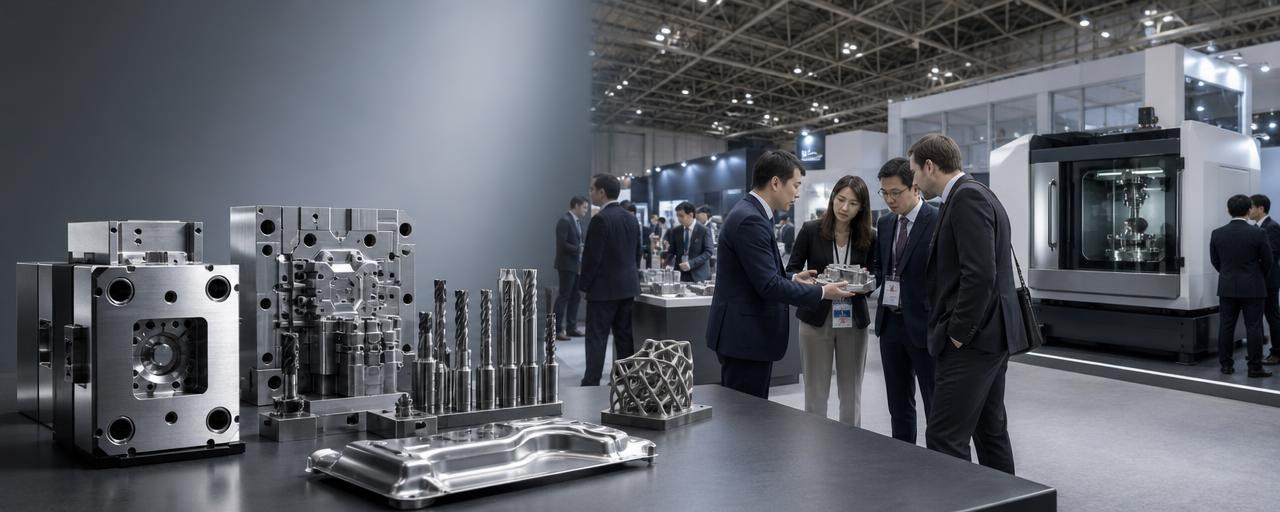
١٤–١٦ April ٢٠٢٧ at Tokyo Big Sight, Tokyo, Japan. INTERMOLD Tokyo is a manufacturing trade exhibition for dies and moulds, metalworking and related production technologies. Die & Mold Asia Tokyo, Japan Metal Stamping Technology Exhibition Tokyo and AM EXPO Tokyo are listed as concurrent events, bringing adjacent parts of the manufacturing supply chain into the same visit. The value for a professional visitor is the chance to compare tooling, machinery, materials and digital production systems against a specific purchasing, engineering or market-development objective.
INTERMOLD Tokyo ٢٠٢٧ at a glance
| Item | Information |
|---|
| Event | INTERMOLD Tokyo |
| Official show names | INTERMOLD TOKYO and Die & Mold Asia TOKYO |
| Concurrent events | Japan Metal Stamping Technology Exhibition TOKYO and AM EXPO TOKYO |
| Event type | Business trade exhibition |
| Main subject | Dies and moulds, metalworking, stamping and manufacturing technologies |
| Dates | ١٤–١٦ April ٢٠٢٧ |
| Opening hours | ١٠:٠٠–١٧:٠٠ daily |
| Venue | Tokyo Big Sight, ٣-١١-١ Ariake, Koto-ku, Tokyo, Japan ١٣٥-٠٠٦٣ |
| Organiser | Japan Die & Mold Industry Association; event management by INTERMOLD Development Association |
| Programme formats | Keynote address, technical workshops, private seminars and business matching are listed |
| Admission | JPY ٣,٠٠٠; free admission with a visitor pass after pre-registration |
| ٢٠٢٥ Tokyo report | Organiser-reported combined-event figures: ٥٢٥ companies and associations, ٧٤٥ booths and ٤١,٤٦١ visitors |
| ٢٠٢٧ expected attendance | ٤٠,٠٠٠ visitors across INTERMOLD, Die & Mold Asia and Japan Metal Stamping Technology Exhibition |
The ٢٠٢٥ results and ٢٠٢٧ attendance expectation refer to the combined Tokyo event programme, not INTERMOLD alone. The ٢٠٢٧ exhibitor list and floor plan are scheduled to open in February ٢٠٢٧.
Why INTERMOLD Tokyo matters
Evaluate production technology side by side
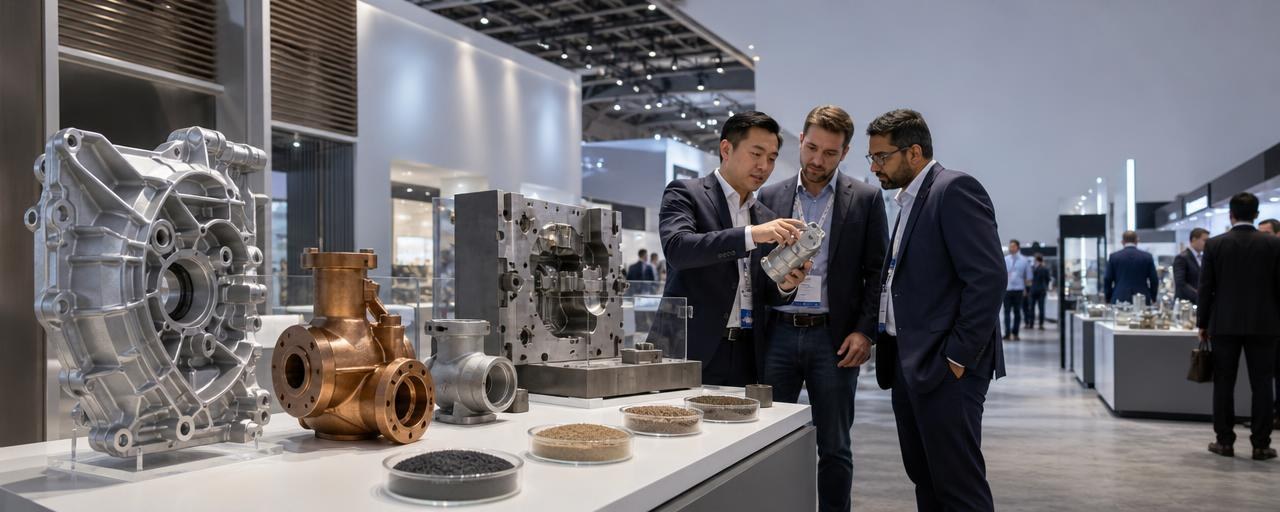
The concurrent programme spans tooling, presses and forming, machine tools, additive manufacturing and automation. That breadth can help an engineering or procurement team compare options across a production requirement rather than assess one component in isolation. Bring a real part, process or capacity question and note the material, tolerance, production volume and target cycle time that matter to the project.
Connect tooling with the processes around it
Moulds and dies depend on materials, machining, measurement, forming equipment and the systems used to design and manage production. Seeing these categories together can help toolmakers, component manufacturers and production engineers identify where a tooling decision affects downstream quality, repeatability or equipment needs.
Use the published scale carefully
The organiser’s ٢٠٢٥ Tokyo report records ٥٢٥ exhibiting companies and associations, ٧٤٥ booths and ٤١,٤٦١ visitors for the combined concurrent shows. The ٢٠٢٧ outline expects ٤٠,٠٠٠ visitors across the events. These organiser-reported figures describe the broader event cluster and are useful for understanding its scale; they are not figures for INTERMOLD in isolation.
Exhibition sectors and product groups at INTERMOLD Tokyo
Dies, moulds and tooling materials
- Dies and moulds
- Mould bases, components and working systems
- Die and mould materials
- High-speed steels
- Cemented-carbide and diamond tools
- Formed parts and related products
Metal-cutting and grinding technology
- Metal machine tools
- Grinding machines
- Grinding wheels and abrasives
- Cutting and wear-resistant tools
- Machine accessories
- High-precision machining technologies
Metal forming and stamping
- Metal-stamping technology
- Press-forming machines
- Servo presses
- Transfer presses
- Forging presses
- Forming-machine accessories and tools
Measurement and precision engineering
- Precision measuring instruments
- Optical measuring machines and instruments
- Ultra-high-precision manufacturing technology
- Quality-control equipment for manufactured parts
- Measurement-related machine accessories
Additive manufacturing and digital design
- Industrial ٣D printers and modelling equipment
- ٣D scanners and ٣D data solutions
- Rapid prototyping and rapid manufacturing
- CAD/CAM/CAE systems
- Additive-manufacturing materials and contract services
- Trial production and modelling
Robotics, automation and factory systems
- Industrial robots and automation
- Factory-automation equipment
- Digital transformation solutions
- Data analysis and predictive maintenance
- Factory equipment and supplies
- Environmental improvement and temperature-control systems
The categories above reflect the official exhibit-item descriptions for INTERMOLD and the concurrent shows. The ٢٠٢٧ exhibitor directory is scheduled for February; named exhibitors and stand locations should be checked when it opens.
Who should visit INTERMOLD Tokyo?
Toolmakers, mould makers and die manufacturers
Useful if you are looking for:
- Tool steels, mould materials and components for a defined tool design
- Machining, grinding and finishing equipment relevant to your tolerances
- Measurement systems for inspection and process control
- CAD/CAM/CAE, modelling or rapid-prototyping options
- Potential technical suppliers or contract-production capabilities
Bring drawings or specifications that can be shared appropriately, plus questions about material grades, dimensional accuracy, tool life and maintenance.
Manufacturers and production engineering teams
Useful if your company makes automotive, electrical, IT-device, aircraft, energy or other industrial components and you are assessing production equipment or process improvements. Prioritise press-forming, metalworking, automation, measurement and tooling exhibits according to the bottleneck you need to solve.
Purchasing managers, equipment buyers and distributors
Use the exhibition to create a comparable supplier shortlist. Record each supplier’s product fit, technical specifications, service arrangements, delivery assumptions and next step; a catalogue alone does not establish whether a solution fits your production conditions.
Additive-manufacturing and automation professionals
AM EXPO and the automation categories are relevant to teams evaluating ٣D printing, scanning, rapid prototyping, robotics, digital production or predictive-maintenance tools. Compare where a technology fits in the process and what equipment, materials or data it depends on.
Roles likely to benefit include tooling and mould designers, manufacturing and process engineers, production managers, metal-stamping specialists, quality and metrology engineers, procurement managers, machine-tool distributors, additive-manufacturing specialists and factory-automation integrators.
Why visit INTERMOLD Tokyo?
- Compare tool and mould solutions: assess materials, bases, components and machining systems against a specific part or tool requirement.
- Review press-forming options: compare servo, transfer and forging press technologies with the process, material and output you need.
- Shortlist machine-tool suppliers: examine cutting, grinding and accessory categories together, then record the specifications that distinguish suitable options.
- Explore measurement and quality systems: identify precision or optical measurement equipment relevant to your inspection and tolerance requirements.
- Evaluate additive manufacturing: investigate printers, scanners, ٣D data solutions, materials and contract services for prototyping or production use.
- Assess automation opportunities: review robotics, factory-automation and predictive-maintenance categories against a defined production challenge.
- Build purposeful conversations: use the listed business-matching and technical-programme formats to focus questions and follow-up, subject to the published ٢٠٢٧ arrangements.
Why exhibit at INTERMOLD Tokyo?
Manufacturers and suppliers of dies, moulds, tooling materials, metalworking and forming machinery, measurement equipment, additive-manufacturing systems and factory automation may find a relevant professional audience. The ٢٠٢٥ organiser report records a combined-event platform of ٥٢٥ companies and associations and ٤١,٤٦١ visitors, while the ٢٠٢٧ outline expects ٤٠,٠٠٠ visitors across the concurrent shows. These are broad event-cluster figures, not a guarantee of buyer numbers or business results.
Before applying, define which product group you serve, the industries and production problems it addresses, the technical evidence visitors need, and the type of conversation you want to have. Prepare clear product specifications, application examples, material compatibility, service and spare-parts information, and a way to qualify prospective enquiries. Ask the organiser for the current exhibitor prospectus, stand options, application status and the latest participation terms. A custom-built stand and shell-scheme options are described in the exhibitor information; confirm current inclusions and costs directly before budgeting.
For a first participation, build the budget around the stand package and the additional items that may be required, such as stand construction, electricity, rental furniture, travel, accommodation and promotional materials. A market-entry plan should also address local distribution, technical support, product documentation, import classification and any standards or conformity requirements that apply to the particular product. These depend on the equipment and transaction; check them before committing.
What makes INTERMOLD Tokyo different?
Its distinctiveness is the combination of die-and-mould technologies with related metal-forming, stamping and advanced-manufacturing exhibitions. The ٢٠٢٧ outline names INTERMOLD TOKYO and Die & Mold Asia TOKYO alongside Japan Metal Stamping Technology Exhibition TOKYO and AM EXPO TOKYO. Their listed categories extend from mould materials and press systems to additive manufacturing, robotics, measurement and digital production. For visitors, the combined format makes cross-process comparison possible; confirm the ٢٠٢٧ floor plan and exhibitor directory when they are released to understand how the categories are arranged.
What should you try to achieve at INTERMOLD Tokyo?
Replace the broad objective “see what is new” with an outcome you can evaluate after the visit.
If you are a toolmaker or mould manufacturer
Identify a short list of material, component or machining suppliers that meet a named tool specification. Compare technical suitability, delivery assumptions, quality evidence and support needs.
If you are a production engineer or equipment buyer
Compare three candidate technologies against one production bottleneck. Record the required capacity, accuracy, process integration, operator needs and follow-up information for each.
If you are a distributor or technology supplier
Map the product categories and customer applications where your portfolio may fit. Use conversations to test requirements and identify what local technical or service support would be needed.
How to prepare before INTERMOLD Tokyo
١. Define your engineering or commercial question
Choose whether the priority is a new tool, replacement equipment, process quality, production capacity, automation, additive manufacturing or supplier development. Write down the current condition and the decision you hope to make next.
٢. Prepare a target list
The official exhibitor list and floor plan are scheduled to open in February ٢٠٢٧. Once available, sort relevant companies into A—must meet, B—useful to meet and C—explore if time allows. Avoid planning from a category label alone; confirm each company’s actual products and applications in the published directory.
٣. Write technical questions before travelling
- Which material grades, workpiece dimensions and hardness ranges can the tool or machine handle?
- What tolerance, repeatability or surface-finish data is available for the application?
- What tool life, maintenance interval and replacement parts should be expected under comparable conditions?
- Which press force, speed, stroke, die size and automation interfaces are required?
- How do the machine, controller and software connect with existing CAD/CAM/CAE or factory systems?
- What inspection method and measurement uncertainty support the quoted precision?
- For additive manufacturing, which material, build volume, post-processing and validation steps are involved?
- What installation, training, local service and spare-parts arrangements are available?
٤. Arrange conversations and prepare a record
For each priority supplier, prepare a concise description of your company, application and decision timeline. Use the published business-matching arrangements if they suit your objective. Keep a consistent record: Company → Product → Technical fit → Evidence to request → Contact → Next action.
How to make the most of the exhibition
Use the three show days to investigate, compare and validate—not simply collect brochures. Start with the products tied to your project, then expand to adjacent categories only where they may solve a related production need. When comparing machines or tooling, record the same variables for each supplier: capacity, accuracy, materials, integration, maintenance, training, service coverage and total items still to confirm.
Technical workshops, private seminars, a keynote address and business matching are listed among the programme formats. Check the current schedule when it is published, then select sessions that answer a live engineering or investment question. The ٢٠٢٧ exhibitor directory and floor plan are scheduled for February, so revisit the official information before finalising appointments and routes.
Beyond the INTERMOLD Tokyo exhibition floor
The official ٢٠٢٧ outline lists a keynote address, technical workshops, private seminars and business matching. These formats can complement equipment comparisons with technical context or structured conversations. Specific session titles, speakers and the final timetable should be confirmed from the ٢٠٢٧ programme when published; do not assume that a previous or planned format guarantees a particular session.
Networking at INTERMOLD Tokyo
Technical discussions are more useful when both sides can quickly understand the application. Prepare a brief introduction that covers your product or process, target materials, production conditions and what a useful next step would be. Ask suppliers for the evidence needed to evaluate fit—such as drawings, machine specifications, inspection data, material details or service information—and note what they need from you to respond.
For potential suppliers or partners, close each conversation by agreeing what information should be exchanged next and when. For confidential projects, share only what your organisation permits; use a non-confidential specification summary until an appropriate process is agreed.
INTERMOLD Tokyo visitor profile and business opportunities
| Visitor profile | Potential focus at the combined shows |
|---|
| Toolmakers and mould makers | Mould materials, components, machining, measurement and tool-life requirements |
| Metal-stamping manufacturers | Press-forming systems, servo or transfer presses, tooling and process equipment |
| Automotive and component manufacturers | Production tooling, formed parts, machine tools and manufacturing quality |
| Electrical and IT-device manufacturers | Precision components, moulding systems, inspection and process consistency |
| Aircraft and energy manufacturers | High-precision manufacturing, material processing and production equipment |
| Procurement teams and equipment buyers | Supplier comparison, product specifications, service arrangements and investment evaluation |
| Additive-manufacturing teams | ٣D printers, scanners, materials, data solutions and contract services |
| Automation and factory-system specialists | Robotics, factory automation, digital solutions and predictive maintenance |
These interests reflect the official exhibit categories and visitor motivations published in the Tokyo show information and report; individual priorities depend on each project.
Travelling to INTERMOLD Tokyo
Tokyo Big Sight’s official access guidance lists rail, bus, car and airport routes. By rail, the published journey from Osaki to Kokusai-Tenjijo is about ١٣ minutes, and from Shinkiba to Kokusai-Tenjijo about ٥ minutes. Bus routes to the venue include services from Tokyo Station, Hamamatsucho and Yokohama; published travel estimates vary by route. The venue also lists airport limousine-bus routes from Narita Airport at approximately ٦٠ minutes and from Haneda Airport at approximately ٢٥ minutes. Check the current operator timetable and the ٢٠٢٧ event arrangements before travel, as journey times and services can change.
Plan your time at INTERMOLD Tokyo
One day
Worth considering when your objective is narrow: prioritise the confirmed exhibitor list, book or request key meetings where available, and focus on one or two related product groups.
Two days
Can suit visitors comparing several supplier categories—for example, tooling and machine tools on one day, then measurement, automation or additive manufacturing on the next. Reserve time for a relevant technical session if the published programme supports your objective.
Three days
The full event runs for three days. All three may be useful when you have multiple projects, a broad supplier shortlist or a need to compare the concurrent shows in depth. Set daily priorities and leave time to revisit promising suppliers with follow-up questions.
After INTERMOLD Tokyo: where the value starts
Within a few working days, sort contacts into A—immediate project relevance, B—potential supplier or partner, and C—market or technology information. For each A contact, send the agreed technical details and request the next evidence needed: drawings, material specifications, machine configuration, inspection results, quotations, delivery assumptions, minimum order quantities or service terms as appropriate.
Compare suppliers against the same requirements rather than relying on the impression of a stand demonstration. Record unanswered questions, technical risks, integration work and the people who need to approve the decision. For a potential purchase, confirm the full scope, installation, training, maintenance, spare parts, compliance and commercial terms before moving to a commitment.
INTERMOLD Tokyo visitor checklist
Before
- ☐ Define the production, tooling or sourcing decision you need to advance.
- ☐ Check registration, the official exhibitor directory and the floor plan when released.
- ☐ Select A/B/C target companies and prepare technical questions.
- ☐ Confirm travel plans and current venue access information.
During
- ☐ Record specifications, evidence requested, contact details and the next action for each priority conversation.
- ☐ Compare similar equipment against consistent requirements.
- ☐ Attend relevant listed sessions and note the question each one helps answer.
After
- ☐ Send the promised information and follow-up requests promptly.
- ☐ Evaluate technical fit, service, integration and total project requirements before selecting a supplier.
- ☐ Share relevant findings with engineering, operations and procurement decision-makers.
Is INTERMOLD Tokyo worth visiting?
INTERMOLD Tokyo is most relevant to professionals working with dies and moulds, metal forming and stamping, machine tools, precision measurement, additive manufacturing or factory automation. Its concurrent exhibitions make it particularly useful when a project crosses these categories. The event is less valuable as an unstructured walk: the scale of the combined programme and range of technologies reward a clear target list, comparable technical questions and a follow-up plan. Decide in advance which supplier, process or investment question you need to resolve, then judge the visit by the decisions and next steps it enables.
Closing: what will you decide at INTERMOLD Tokyo?
What do you need to learn, compare or confirm in Tokyo that you cannot resolve through a catalogue alone? Bring the requirement, test the fit, and leave with a documented next step. Discover. Compare. Evaluate. Follow up.
Manufacturing technology opportunities in Japan
Market size and demand
Japan installed ٥٠,٤١٣ industrial robots in ٢٠٢٢, ٩% more than in ٢٠٢١, according to the Japan External Trade Organization’s manufacturing market overview. This indicator measures annual robot installations, not the total Japanese manufacturing market or demand for dies and moulds. JETRO links robot demand to manufacturing labour shortages, making automation a relevant adjacent segment for visitors and exhibitors whose products address robot-enabled production.
Market drivers and commercial opportunities
- Robot-cell tooling and workholding: manufacturers assessing robotic production may also evaluate compatible fixtures, mould or die interfaces and precision components; confirm application requirements and integration responsibility with the buyer.
- Precision tooling and formed components: the event’s die, mould and stamping categories provide a place to investigate suppliers and technologies relevant to component-production projects; product-specific demand and qualification requirements need to be assessed case by case.
- Automation, measurement and maintenance: robot installations can create adjacent needs for inspection, machine connectivity and maintenance solutions. Visitors can compare whether these systems fit their existing equipment and data environment.
Regulations and market-entry conditions
Japan Customs publishes an import tariff schedule with product-specific classifications and revisions. Exporters and buyers should confirm the correct tariff classification and applicable rate for each machine, tool or material with a qualified customs professional before pricing or shipping; the rate is not uniform across this exhibition’s product range.
What this may mean for exhibitors
Suppliers of automation, tooling, measurement and metal-forming technologies may use the show to investigate how their products fit Japanese manufacturing applications and what technical support, distribution and product documentation buyers require. The robot-installation indicator is a reason to research adjacent automation applications, not evidence of guaranteed demand or customer access.
What this may mean for visitors
Buyers and engineers can compare robot-compatible tooling, measurement and production systems against a defined application, while checking integration, service and import requirements before making a purchase decision. INTERMOLD’s connection is strongest for visitors whose project links tooling or metalworking with automated production.
Explore Event Opportunities
Use INTERMOLD Tokyo to compare manufacturing technologies, identify relevant suppliers and shape a clear participation plan with support from ilikevents.
Get Expert Assistance from ilikevents to plan your visit or exhibition participation.
خدمات ilikevents برای این رویداد را ببینید
جهت کسب اطلاعات بیشتر و مشاهده وبسایت رسمی رویداد
اینجا کلیک نمایید.