Event rate of 1 vote

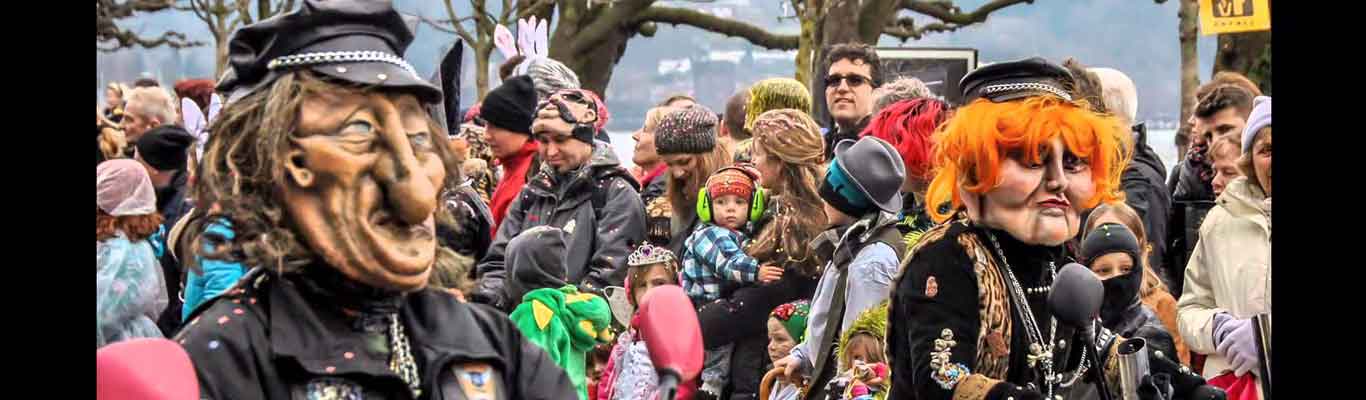
Lucerne Carnival (Fasnacht) will be held 08 to 13 Feb 2020 in Lucerne, Switzerland. Lucerne Carnival (Fasnacht) is the biggest event in Central Switzerland, taking place annually in February or March. Fasnacht is a traditional Swiss folk festival, which attracts hundreds of thousands of visitors every year in Lucerne. The Swiss carnival called fasnacht is a major event in many cities. Like Rio has its samba tradition, several Swiss cities have their own enthusiastically cultivated fasnacht customs. And Lucerne has one of the liveliest and loudest ones. Many Luzerner literally live for this celebration which takes place in February or March, waiting all year for Lucerne Carnival (Fasnacht) to come, creating new elaborate costumes and rehearsing their music routines in many fasnacht- associations, guilds or brass bands (guggemusig). For a few days in late winter Lucerne goes wild. The streets are full of people in wild and wonderful masks, playing horrendously loud music on trumpets, horns and drums – this is fasnacht, the Swiss version of carnival. Lucerne Carnival (Fasnacht) is an event and I like events...