Why Whirling Dervishes Festival 2024?
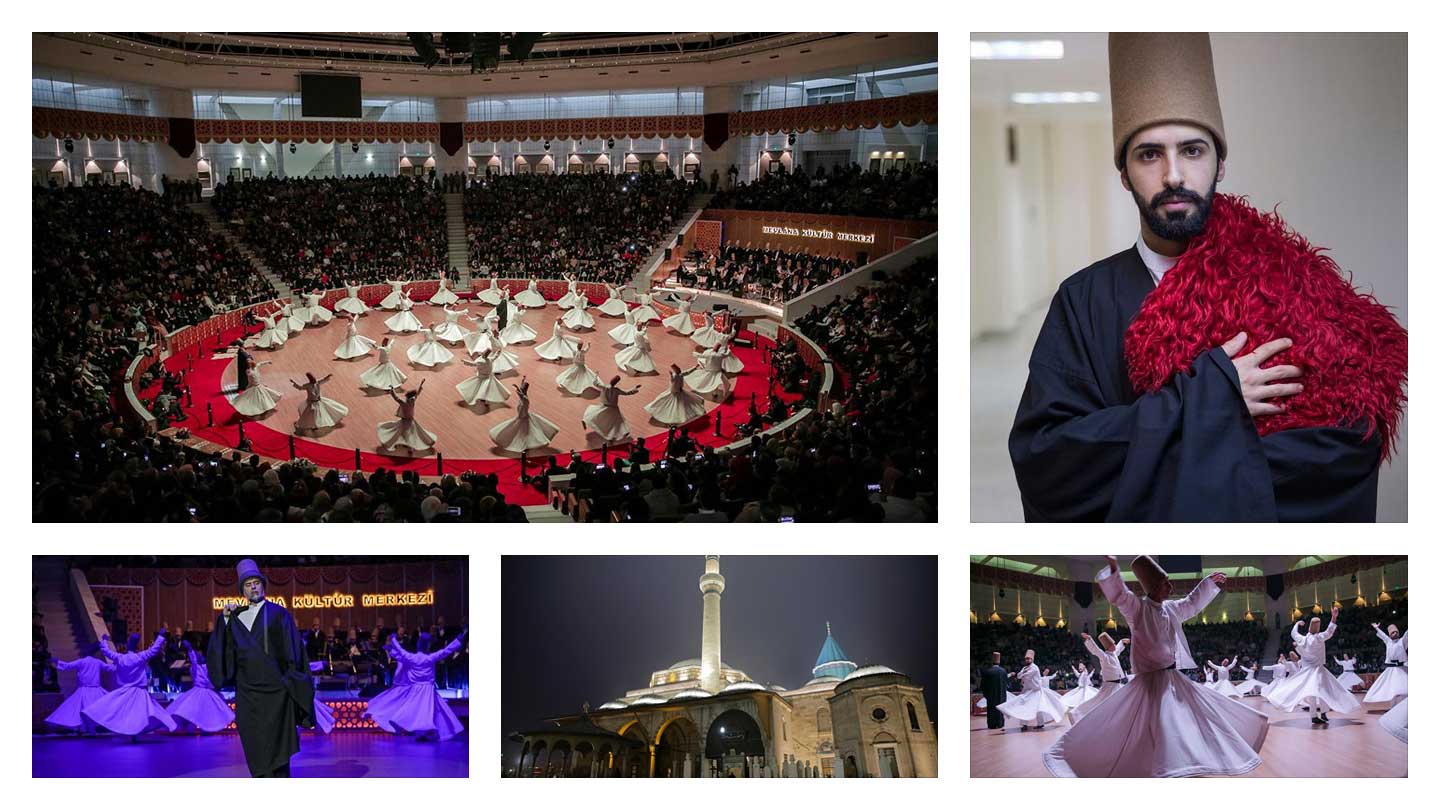
Spiritual and sensual, ascetic and aesthetic, this is one of religious and cultural festivals in the world even though it occurs during mid-December’s biting cold in an off-the-beaten track Turkish city. You’ll be drawn in by both the visuals and the deep, devotional energy as the dervishes (known as Semazen) parade in a circle and drop their black cloaks (hirkas; representing their earthly personalities or “worldly tombs”), before starting their hour of ecstatic twirling. You will learn how to whirl yourself. This festival will help you understand why Sufi Muslims believe “Our only purpose in life is love.”
Remembering Rumi:
The idea to find inner peace through whirling didn’t come out of nowhere. Rumi was born inwas born in the town of Balkh (1207-1273), in Khurasan (near Mazar-I-Sharif in Afghanistan) and spent time in Iran before moving to Konya, Turkey, where his father was invited to be a scholar. Rumi became a scholar himself, teaching peace, love and tolerance, for which he gained a large following. Educated followers saw him as a wise philosopher, while the uneducated regarded him as a prophet. Rumi’s life changed when he developed an intense learning relationship with an older, wandering mystic named Shams of Tabriz. Unfortunately Rumi’s followers didn’t approve of Shams’ influence, and supposedly killed the mystic.
From tragedy comes discovery, and Rumi found within him an ability to channel poetry. It was also at this time that Rumi introduced whirling as a method to achieve divine harmony. Thus a movement was born. The Whirling Dervishes (also known as the Mevlevi Order) have been honoring Rumi’s death for almost 750 years, marking his “wedding night” with God on December 17, 1273.
What is his significance to the west?
Despite his origins in the east, Rumi is widely known in western countries. He was the bestselling poet in America for a number of years and his poems have been globally translated into many languages.
Tips:
- In accordance with the Sufi principle of tolerance, Muslims and non-Muslims alike are welcome at the Whirling Dervishes Festival. Women will need to bring a headscarf to wear once inside and will be seated apart from the men during the ceremony.
-
Wrap up Konya is extremely cold during December and known for frigid prairie winds.
-
Capture the moment Video cameras are only allowed for the first few minutes, but cameras without a flash can be used the entire time. Also consider taking notes and bringing some of Rumi’s poetry.
-
Shop for souvenirs The Mevlâna Cultural Center hosts a trade show with lots of Rumi tchotchkes.
For further information, please click
here .