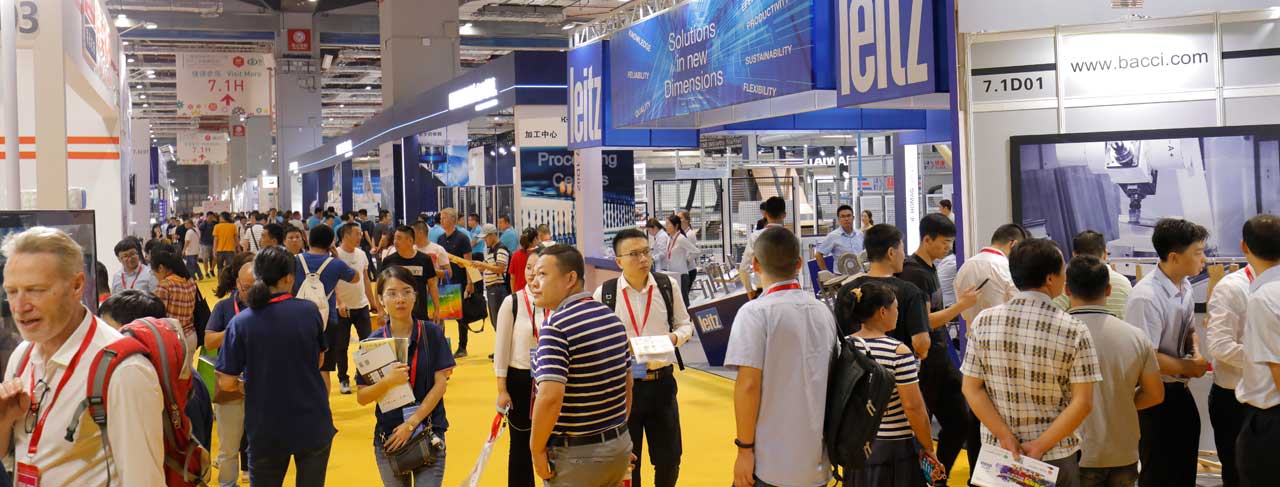
WMF Shanghai Woodworking Machinery Fair 2027
7–10 September 2027
National Exhibition and Convention Center (Shanghai, Hongqiao), Halls 7.1 and 8.1
Shanghai, China
Officially named the China International Furniture Machinery & Woodworking Machinery Fair (Shanghai), WMF is a professional trade fair for machinery, equipment, materials and technologies used in furniture and wood-product manufacturing. It covers wood primary processing, panel production, custom and mass-production machinery, automation, surface treatment, upholstery technology and related tools. The show is part of Furniture Tech Week, alongside the China International Furniture Fair (Shanghai), the Shanghai International Exhibition on Upholstery Technology for Home Furnishing and the China International Building Decoration Fair (Shanghai). It is more than a machinery display: factory owners can compare production approaches, sourcing teams can assess equipment and suppliers, and manufacturers can examine how machinery and materials fit a real production plan.
WMF Shanghai 2027 at a glance
| Item | Information |
|---|
| Event | WMF Shanghai Woodworking Machinery Fair |
| Official name | China International Furniture Machinery & Woodworking Machinery Fair (Shanghai) |
| Edition | 40th edition, 2027 |
| Event type | Business trade fair |
| Category | Industrial manufacturing and factory automation, focused on woodworking and furniture machinery |
| Dates | 7–10 September 2027 |
| City and country | Shanghai, China |
| Venue | National Exhibition and Convention Center (Shanghai, Hongqiao), Halls 7.1 and 8.1 |
| Organising committee | China National Forestry Machinery Association; China Foreign Trade Guangzhou Exhibition Co., Ltd.; Adsale Exhibition Services Ltd.; China Foreign Trade Macalline Exhibition Co., Ltd. |
| Main sectors | Woodworking and furniture machinery, CNC and automation, wood-based panels, solid-wood processing, surface treatment, upholstery technology, forestry and wood products |
| Core audiences | Furniture and wood-products manufacturers, factory owners, machinery buyers, sourcing teams, distributors and technical professionals |
| Latest published scale | WMF 2026 organiser-reported: 400+ exhibitors, 30,000+ trade visitors and 52,000 m² of exhibition space |
The 2027 dates, venue and halls are published on the WMF event site. The latest scale figures shown there are for the 2026 edition; details such as 2027 visitor hours and registration arrangements should be checked as the organiser updates them.
Why WMF Shanghai matters to furniture and woodworking production
Compare production technologies
Wood-product manufacturers make linked decisions about cutting, machining, drilling, edge processing, panel production and finishing. WMF brings machinery and production technologies across those stages into one professional exhibition. Visitors can use the show to compare the functions, configuration and intended applications of equipment, then identify which suppliers merit a closer technical discussion.
Look beyond an individual machine
The official event description includes integrated machinery, materials and components, from wood pre-processing and panel production through edge banding, surface treatment and digitalised line integration. This wider scope helps production teams consider how a new machine could fit with upstream preparation, downstream finishing, existing floor layouts and the products they manufacture. A catalogue comparison is only a first step: buyers should test each option against their own throughput, material and service requirements.
Connect manufacturing with materials and design
WMF’s place within Furniture Tech Week links machinery with furniture, upholstery and building-decoration exhibitions. For a visitor assessing a new furniture range or factory upgrade, that co-location can broaden the questions asked about materials, surface finishes, hardware and production methods. The exhibitions remain distinct; the practical value is the chance to view related parts of the furniture value chain during one visit.
Latest published scale
- 400+ exhibitors at WMF 2026, organiser-reported.
- 30,000+ trade visitors at WMF 2026, organiser-reported.
- 52,000 m² of exhibition space at WMF 2026, organiser-reported.
These figures describe the 2026 edition, not a forecast for 2027. They indicate a substantial trade-show setting in which a pre-planned shortlist can help buyers use their time more deliberately.
Exhibition sectors and product groups at WMF Shanghai
The official scope spans machinery and technologies for custom and mass production, primary wood processing, panel manufacturing, finishing, upholstery and wood products. Use these groups to build a visit plan around your factory’s actual processes.
Wood primary processing and sawmill technology
- Wood primary-processing machinery
- Sawmill technology and timber preparation
- Wood processing and sizing equipment
- Wood-energy and forestry technology
Wood-based panel and panel-furniture production
- Wood-based panel production equipment
- Panel-furniture manufacturing machinery
- Machinery for custom and mass production
- Production systems for panels, doors, floors and mouldings
CNC machining and automated production
- CNC machining centres and processing equipment
- Automated production equipment and machine components
- Integrated production-line technologies
- Digitalised line integration and manufacturing software
Solid-wood and wood-product processing
- Solid-wood processing machinery
- Equipment for wooden doors, floors and mouldings
- Engraving machinery and related production technology
- Wood-product packaging equipment
Surface treatment and green production
- Furniture surface-treatment technology
- Coating and finishing equipment
- Green production and energy-saving solutions
- Safety-control technologies for production environments
Upholstery, accessories and digital technologies
- Upholstery machinery
- CAD/CAM technology for furniture and upholstery production
- Knives, blades, machinery accessories and hand tools
- Digital printing technology, raw materials and production auxiliaries
These groupings follow the organiser’s published scope. Product availability and stand details for 2027 should be confirmed through the current exhibitor information.
Who should visit WMF Shanghai?
Furniture, panel and wood-product manufacturers
WMF is relevant if you are responsible for producing furniture, panels or other wood products and are evaluating a process improvement or equipment purchase. Prioritise machinery that matches your materials, product mix and production volume.
Useful areas to assess:
- Machinery for custom or mass production
- Panel production and panel-furniture equipment
- Solid-wood processing and primary preparation
- Surface treatment, upholstery or finishing technologies
- Automation and components that could fit an existing line
Factory owners and production managers
For owners and managers planning a factory upgrade, the exhibition’s linked machinery and production categories can support a more complete evaluation than considering one machine in isolation. Bring a process map and a short list of the production constraints you want to address.
Useful questions include:
- Which step in the current process limits capacity or consistency?
- What materials and product dimensions must the machine handle?
- What staffing, floor space and utilities would installation require?
- How will equipment integrate with existing machines and software?
- What training, spare parts and after-sales support are available?
Machinery buyers, importers and distributors
Sourcing teams and distributors can compare machinery categories, identify manufacturers whose products suit a target portfolio and discuss local servicing or channel requirements. The official WMF site also presents supplier and product search and business-matching services; check which tools and listings are active for the 2027 edition.
Use the visit to:
- Shortlist suppliers by machine type and target customer
- Compare specifications, configuration and service arrangements
- Clarify export, installation, training and spare-parts support
- Identify product lines that complement an existing distribution portfolio
- Record follow-up actions for each promising supplier
Designers and technical professionals
Designers, engineers and technical specialists may find the exhibition useful when a project depends on production feasibility, complex forms, material selection or finishing. Focus conversations on how a manufacturing method affects tolerances, repeatability, material waste, surface quality and the transition from prototype to production.
Relevant roles include factory and production managers, procurement professionals, machinery importers and distributors, process engineers, furniture designers and wood-processing specialists. The best fit is a professional with a defined sourcing, production or project question.
Why visit WMF Shanghai?
- Compare machinery for a defined process: assess CNC, panel, solid-wood or surface-treatment equipment against a specific production requirement.
- Build a supplier shortlist: identify manufacturers whose equipment, product range and support model match your company’s needs.
- Evaluate integrated production: ask how machines, components and automation could work together across preparation, processing and finishing.
- Explore materials and production inputs: review wood-based panels, timber, accessories and production auxiliaries alongside machinery.
- Assess factory-upgrade options: compare the requirements for a new machine or production line with your current workflow, staff and space.
- Investigate distribution potential: discuss territory, technical support, parts and training with prospective suppliers.
Keep each objective tied to a decision. “See what is new” is too broad; “compare three panel-processing options for our current board thickness and output target” gives a visit a usable result.
Why exhibit at WMF Shanghai?
WMF is suited to manufacturers and suppliers of woodworking machinery, furniture-production equipment, automation, components, surface-treatment systems, upholstery technology, tools and wood-production materials. Exhibitors can present products to professional audiences working across furniture, panel and wood-product manufacturing, and use technical conversations to understand application requirements.
Exhibiting can support product demonstration, supplier visibility, distributor discussions and feedback on how a machine or material fits regional production needs. The 2026 organiser-reported visitor and exhibitor figures provide context for the event’s recent scale; they do not guarantee a particular audience, lead volume or commercial result in 2027.
Before committing, define which product lines and buyer profiles matter most, prepare technical specifications and case examples, and plan follow-up capacity. International participants should independently check the applicable customs classification, import costs, product-compliance requirements, payment arrangements, local distribution and after-sales service for their own equipment and target market. Those requirements depend on the product and transaction and should not be assumed from a trade-show listing.
What makes WMF Shanghai distinctive?
WMF connects woodworking machinery with the wider furniture-production chain. Its published scope moves from wood primary processing and panel production to CNC and automation, surface treatment, upholstery machinery, digital printing and related materials. The fair is also presented as part of Furniture Tech Week with CIFF (Shanghai), Upholstery Tech and the China International Building Decoration Fair (Shanghai).
This combination is useful for professionals whose decisions cross factory boundaries: a machinery buyer can consider equipment alongside furniture and upholstery technologies, while a manufacturer can frame production choices around the materials and finished products it needs to deliver. WMF identifies its 2027 show as the 40th edition of the China International Furniture Machinery & Woodworking Machinery Fair (Shanghai).
How to prepare before WMF Shanghai
1. Define the production or sourcing decision
Write down the process you want to improve, the product family involved and the decision you expect to make after the show. Examples include replacing a bottleneck machine, assessing a panel-production step, adding CNC capacity or finding a distributor-ready product range.
2. Prepare a technical brief
For machinery, record the materials, dimensions, tolerances, output target, current process, available floor space, power or utility constraints and desired delivery window. For a distribution discussion, prepare the customer profile, territory, expected service capability and product categories you already represent. Share sensitive production data selectively.
3. Build and rank a supplier list
Review the organiser’s current exhibitor, product or supplier information when it becomes available. Mark companies as A (essential), B (relevant) or C (if time allows). Check whether the 2027 edition’s official supplier search or business-matching tools are available, and arrange meetings through confirmed channels rather than assuming a listing guarantees an appointment.
4. Prepare comparison questions
- What materials, thicknesses, sizes and product geometries can the machine process?
- What are the machine’s documented throughput and quality parameters for comparable applications?
- Which software, controls, tooling or upstream/downstream equipment are required?
- What are the installation, commissioning, training and operator requirements?
- Which spare parts and service support are available in the buyer’s market?
- What are the machine’s energy, dust extraction and safety requirements?
- How are product quality, measurement accuracy and repeatability demonstrated?
- What warranty, maintenance and technical-support terms apply?
- Can the supplier provide references or process demonstrations relevant to your material and product?
- What configuration, price, delivery and payment details require a formal quotation?
5. Plan meetings and practical arrangements
Prioritise suppliers and allow time for technical discussions rather than trying to cover every aisle. Confirm event registration, visitor hours, travel arrangements and any appointment details from current official information before booking. If you need interpretation, business-meeting coordination or help organising a visit, ilikevents can discuss the support available for your plan.
How to make the most of WMF Shanghai
For each supplier, use a consistent record: Company → Product → Application → Evidence → Contact → Next action. Note the machine model or configuration, the materials discussed, the specifications still needed and the person responsible for follow-up. Photograph or collect only material you are permitted to share and keep technical claims tied to written product information.
Compare machines on the same basis. A low purchase price may not answer questions about tooling, installation, energy use, production speed, training, service coverage or spare parts. Ask exhibitors to distinguish standard configuration from optional equipment, and record assumptions that need to be confirmed in a quotation or technical review.
For distributors, capture territory, exclusivity conditions if offered, minimum order requirements, marketing support, parts supply, service responsibilities and training. For factory buyers, record how the equipment fits the process before and after it, not only the standalone machine specification.
Use any organiser-provided supplier search, catalogue or business-matching facility only after confirming it is current for WMF 2027. The official site lists such services, but access and availability may vary by edition.
WMF Shanghai visitor profile and business opportunities
| Visitor profile | Main interests at WMF |
|---|
| Furniture manufacturers | Machinery for custom and mass production, surface treatment, upholstery and integrated production |
| Panel and wood-product manufacturers | Panel production, primary processing, doors, floors, mouldings and packaging |
| Factory owners and production managers | Automation, line integration, process bottlenecks, equipment requirements and productivity evaluation |
| Machinery buyers and importers | Supplier comparison, machine specifications, installation, service and spare parts |
| Distributors and agents | Product ranges, customer fit, territory discussions and local support responsibilities |
| Designers and technical specialists | Production feasibility, complex processing, material choice and finishing technologies |
This profile is a practical way to organise a visit, not an attendance breakdown. Match each supplier conversation to the production, sourcing or distribution decision you need to make.
Travelling to WMF Shanghai
The organiser identifies the National Exhibition and Convention Center (Shanghai, Hongqiao) as the 2027 venue and places WMF in Halls 7.1 and 8.1. The venue authority describes NECC as connected by metro to Hongqiao Airport and Hongqiao Railway Station. The WMF visitor information lists Metro Line 2 access to the West Entrance and Line 17 access to the North Entrance. Confirm the current station exits, entrance arrangements and transport notices before travelling, as operational information can change.
Plan to arrive with enough time to reach the relevant hall and any scheduled supplier meeting. Keep the venue name and hall information accessible, and check the organiser’s current visitor guidance for entry and registration requirements.
Practical information for international visitors
| Item | Verified information |
|---|
| Venue | National Exhibition and Convention Center (Shanghai, Hongqiao), Halls 7.1 and 8.1 |
| Address | 333 Songze Avenue, Shanghai, China |
| Airport and rail connection | NECC is about 1.5 km from the Hongqiao Transportation Hub and is linked to Hongqiao Airport and Hongqiao Railway Station by metro. |
| Metro access noted by WMF | Line 2 for the West Entrance; Line 17 for the North Entrance. Confirm current exits and service information before travel. |
Arrange entry documents, accommodation, transport and payment arrangements in advance; visa and entry requirements depend on each traveller’s nationality and circumstances. Check current official travel information before booking. ilikevents can assist with visit planning, flight and hotel arrangements, visa application assistance and local transportation where appropriate.
How many days should you plan for WMF?
The 2027 exhibition runs for four days. The right visit length depends on how many machinery groups and supplier meetings are relevant to your work.
- A focused day: prioritise one or two production decisions, attend pre-arranged supplier discussions and compare a concise shortlist.
- Two days: allow more time to compare machinery families, discuss integration and revisit suppliers with specific technical questions.
- Longer participation: consider a broader schedule when you have several production lines, distribution territories or related Furniture Tech Week exhibitions to evaluate.
Build in time for detailed conversations and note-taking. A shorter, prepared visit can be more useful than covering many stands without a comparison plan.
After WMF Shanghai: turn comparisons into decisions
Within a few days of the exhibition, organise supplier notes into three groups: A for an active purchase or project, B for a credible future option, and C for market intelligence. Send each priority supplier a specific follow-up request rather than a general message.
- Request the exact machine configuration, technical specifications and process assumptions discussed.
- Ask for a formal quotation that separates standard equipment, options, tooling, installation, training and delivery.
- Confirm service coverage, maintenance arrangements, spare-parts availability and warranty terms for your location.
- Compare references and demonstrations against your material, product dimensions and output requirements.
- For potential distribution, confirm product territory, customer segment, channel responsibilities and support expectations.
- Set an internal decision date and identify any factory trial, engineering review or compliance check needed before purchase.
For exhibitors, follow up by buyer role and application, record the technical or commercial question raised, and agree a realistic next step. Exhibition conversations are a starting point for evaluation, not a substitute for due diligence.
WMF Shanghai visitor checklist
Before the fair
- ☐ Define the production, sourcing or distribution decision you want to advance.
- ☐ Prepare a machine and material brief with specifications and constraints.
- ☐ Rank suppliers and confirm appointments through official channels.
- ☐ Check current registration, opening hours, transport and travel requirements.
- ☐ Prepare technical questions and a consistent comparison template.
During the fair
- ☐ Record the supplier, machine, application, evidence and next action.
- ☐ Compare machines using the same production assumptions.
- ☐ Ask about installation, training, servicing, spare parts and total operating requirements.
- ☐ Keep time for follow-up discussions with priority suppliers.
After the fair
- ☐ Sort contacts into active project, future option and market-intelligence groups.
- ☐ Request written specifications and quotations for shortlisted equipment.
- ☐ Verify service, compliance and import requirements for your transaction.
- ☐ Assign a decision owner and follow-up date for each priority supplier.
Is WMF Shanghai worth visiting?
WMF is most relevant to businesses making or sourcing furniture and wood products, evaluating woodworking machinery, or building a supplier and distribution portfolio. Its breadth—from primary wood processing and panels to CNC machinery, finishing, upholstery and automation—can support comparisons across connected production stages. The 2026 organiser-reported scale and the 2027 co-location provide useful context, but value depends on choosing relevant suppliers and verifying the details that matter to your own project. A defined technical brief, ranked meetings and disciplined follow-up will make a visit more useful than an unplanned walk through the halls.
Plan your WMF Shanghai objectives
Before you travel, ask: Which production or sourcing decision should I be better prepared to make after WMF? Bring that question into every supplier conversation and leave with evidence, contacts and clearly assigned next steps.
Compare. Specify. Evaluate. Follow up.
Woodworking machinery opportunities in China
Market size and demand
OEC trade data records US? million of Chinese imports of woodworking machines in 2025 under HS 84.65. This is an import-flow indicator for a defined machinery classification, not the total size of China’s furniture or woodworking market. The same dataset records US?.4 billion in exports of woodworking machines from China in 2025, showing that the country is also a substantial producer and exporter in this category.
- Woodworking-machine imports: US? million, China, 2025; product trade under HS 84.65, not total market revenue.
- Woodworking-machine exports: US?.4 billion, China, 2025; the same broad product classification.
- Imports from Germany: US? million in 2025, the largest origin shown in the same OEC data; this measures a supplier-country flow, not total German market share across all equipment.
Market drivers and commercial opportunities
The two-way trade flows show both imported machinery and domestic export activity, but do not establish demand for a specific machine type or prove that any segment is underserved. Within those limits, WMF visitors and exhibitors could investigate two practical areas:
- Evaluate imported machinery and supplier fit: the 2025 import figure and reported supplier origins provide a starting point for buyers comparing equipment categories, specifications and service arrangements. Product-level demand, competition and transaction costs need separate checking.
- Explore production and export relationships: China’s recorded machinery exports may make supplier, component or distribution discussions relevant to companies operating in export markets. The broad HS category does not identify individual manufacturers or guarantee a partnership opportunity.
Regulations and market-entry conditions
Applicable customs classification, tariffs, product standards, certification and import procedures depend on the machine and transaction. Confirm current requirements with the relevant authorities and qualified trade advisers before pricing, importing or committing to distribution; this page does not treat a general machinery rule as verified for every product.
What this means for exhibitors
Machinery and component suppliers may use WMF to understand how their products compare with imported equipment and China-based production offerings, and to discuss distribution, service and spare-parts expectations with relevant partners. The trade figures are category-level context, not a forecast of show buyers or sales.
What this means for visitors
Buyers can use the fair to compare domestic and international machinery against a defined production requirement, then verify specifications, compliance, installation and service terms independently. Import and export values should guide questions, not replace supplier due diligence.
Explore Event Opportunities
Explore how WMF Shanghai may help your business compare woodworking technologies, identify relevant suppliers or plan a focused exhibition presence. ilikevents can discuss the practical support that fits your objectives.
Get Expert Assistance from ilikevents to plan your visit or exhibition participation.
See the ilikevents services for this event
For further information, please click
here .