News of GeoTHERM
Time left to the end of event
Available services for GeoTHERM
GeoTHERM travel services
GeoTHERM Exhibition services
Most visited Power & Energy
Video clips of GeoTHERM
More Information about GeoTHERM
- More Less
GeoTHERM Expo & Congress
where the geothermal industry meets real projects and hard choices
I once read the event’s own line — “experience two intensive days full of innovation, exchange and expertise” — and imagined it as a quiet corridor conversation: a project manager comparing drilling logs with a manufacturer over coffee, an engineer sketching retrofit ideas on a napkin, a buyer shaking hands with a supplier because the technical proof finally existed. That scene captures what GeoTHERM is for the industry — not a sales fair, but a concentrated place where engineering decisions are made and projects move from plan to permit to pipeline.
GeoTHERM Expo & Congress Highlights
- Visitors: 8,522 trade visitors attended the most recent edition.
Exhibitors: 300 exhibiting companies from across Europe and beyond.
International reach: attendees and exhibitors came from 25 countries, reflecting the event’s pan-European and global pull.
What GeoTHERM actually covers
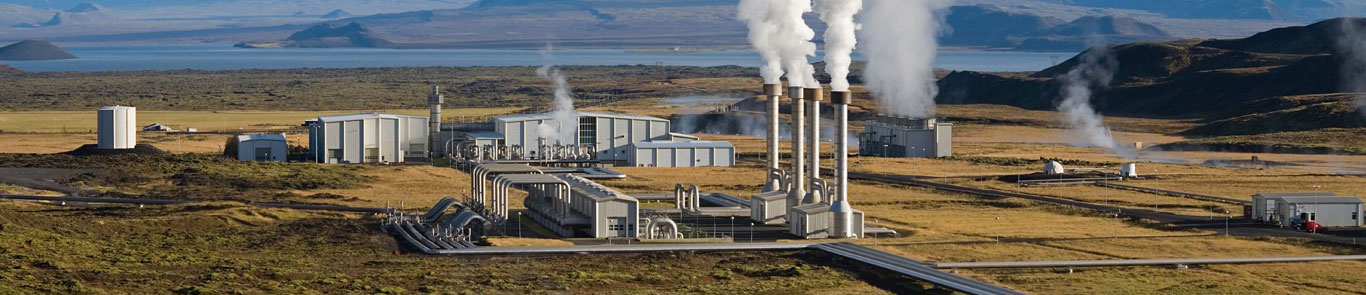
GeoTHERM brings together the full geothermal value chain: site investigation, reservoir engineering, drilling and rig services, heat exchangers, heat pump systems, thermal energy storage, geochemical monitoring, and grid-integration technologies for low-enthalpy and high-enthalpy systems.
Its dual congress tracks span near-surface ground-source heating & cooling, deep geothermal power, and hybrid systems that blend heat, storage, and hydrogen-ready assets.Reasons to exhibit (for manufacturers, suppliers, and service providers)
Show technical proof, not just brochures. Bring real test data, case studies, and maintenance logs. buyers here judge readiness by evidence.
Short sales cycles, high technical scrutiny. Many buyers are project developers or engineers who can commit after one convincing, well-structured technical conversation.
Network around procurement timelines. Drilling contractors, component suppliers, and system integrators converge exactly when project budgets and scopes are locked in.
Thought leadership ROI: Speaking in a congress track can move you from “vendor” to “specialist partner.”
Strategic positioning: Presence signals delivery capability to utilities, municipalities, ESCOs, and investors.
Friendly reminder: Engineers remember the people who make complexity simple. Exhibitors who bring clarity, data, and integration-ready guidance tend to secure follow-up calls.
Reasons to visit
- One-stop technical reconnaissance: compare drilling approaches, materials, thermal response test methods, sensor systems, and heat pump performance ranges — all in curated proximity.
Peer validation: Field reports, case study debriefs, and failure-mode discussions help refine your risk assessments and procurement criteria.
Procurement efficiency: You can compress months of supplier screening and specification refinement into a few structured conversations.
Cross-discipline insight: Grid integration, storage, and hybrid asset content gives you a wider systems view of geothermal applications.
Friendly reminder: Visitors who ask precise questions walk away with far clearer paths forward.
Conferences & special programming — what you’ll learn
Two parallel congress tracks, one focused on near-surface, the other on deep geothermal, deliver practical, engineering-led sessions. Expect material on drilling optimization, corrosion-resistant materials, reservoir modelling, fluid chemistry management, O&M practices, permitting workflows, and system integration lessons from operational sites.
Discussions stay close to real-world constraints — budgets, geology, policy, and timelines.How to prepare (practical advice)
- Prioritize ruthlessly: Choose three exhibitors and two technical sessions that align directly with your workstream; ignore the rest until those are done.
Bring concise technical leave-behinds: Schematics, performance ranges, integration notes. not marketing slogans.
Establish a rapid follow-up routine: A crisp, data-backed reply within a week after the show can convert a lukewarm lead into a committed project partner.
Carry social proof: A small performance curve or brief client quote creates instant credibility during short conversations.
Project calendars don’t wait. Procurement teams use GeoTHERM to shortlist suppliers, validate components, and finalize specifications. Once those lists close, it often takes months. sometimes an entire development cycle. before new suppliers can influence anything.
For further information, please click here .
Missing this concentrated decision environment can quietly push you out of alignment with ongoing tenders, feasibility phases, and drilling campaigns already moving ahead. Venue of GeoTHERM
Weather Forecast of GeoTHERM
Comment
You can also enter your comment about this event
Event rate of 1 vote

GeoTHERM will be held 26 to 27 Feb 2026 in Offenburg, Germany. GeoTHERM has grown into one of Europe’s most closely watched gatherings for anyone tracking the future of geothermal energy. Each year, engineers, policymakers, and researchers converge to examine how this once-niche resource is rapidly becoming a cornerstone of long-term energy resilience. What makes the event compelling is not its scale, but its clarity: real technologies, real field data, and real debates about how geothermal can anchor a stable, low-carbon grid. This year’s agenda signals a shift from theoretical potential to operational proof. Deep geothermal systems, district heating projects, and drilling innovations are no longer pilot ideas – they are case studies with measurable outcomes. For observers seeking a grounded look at how geothermal is moving from the margins to the mainstream, GeoTHERM offers a rare, unfiltered vantage point. GeoTHERM is an event and I like events...