Japan International Seafood Show Tokyo ٢٠٢٧
١٨–٢٠ August ٢٠٢٧
Tokyo Big Sight East Exhibition Halls, Tokyo, Japan
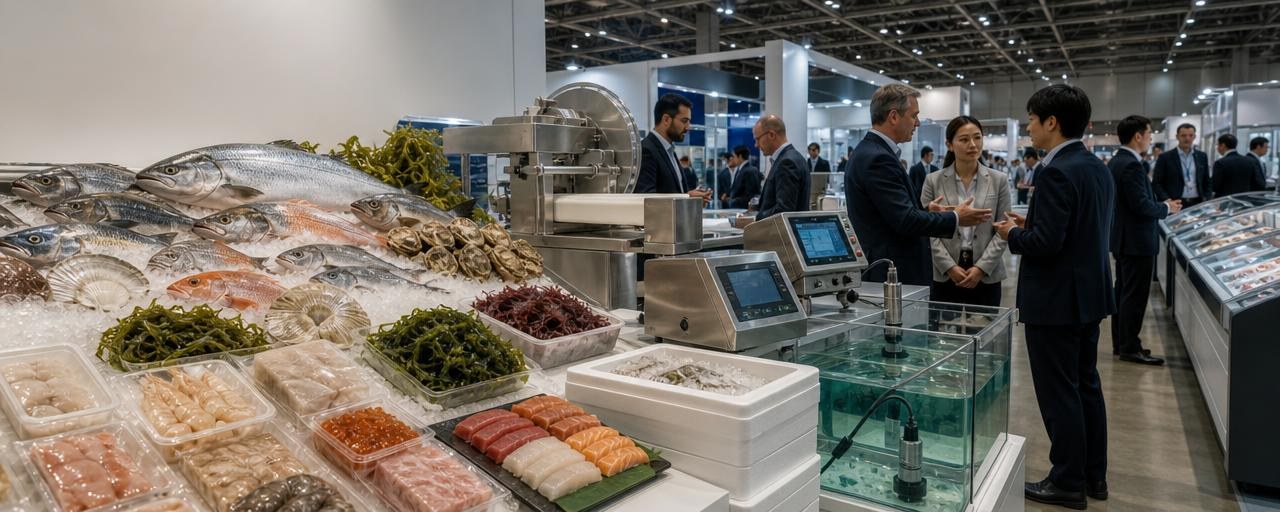
The ٢٩th Tokyo edition is a professional seafood and fisheries exhibition spanning fish and shellfish, seafood processing, aquaculture, freshness and cold-chain technology, packaging, logistics, hygiene and related services. Buyers can compare products and suppliers, while producers and technology companies can present products, equipment and capabilities to professionals across the seafood value chain.
Japan International Seafood Show Tokyo at a glance
| Item | Information |
|---|
| Event | Japan International Seafood Show Tokyo |
| Edition | ٢٩th Tokyo edition |
| Dates | ١٨–٢٠ August ٢٠٢٧ |
| Venue | Tokyo Big Sight East Exhibition Halls |
| City and country | Tokyo, Japan |
| Organiser | Dai Nippon Suisan-kai (Japan Fisheries Association) |
| Type and category | Business trade fair; agriculture, forestry and fisheries |
| Main sectors | Seafood, processing, aquaculture, cold chain, packaging, logistics and hygiene |
| Latest published visitors | ٣٠,٠٩١ registered visitors in ٢٠٢٦, organiser-reported |
The ٢٠٢٦ registered-visitor figure is a past-edition total, not a forecast. Opening hours and detailed ٢٠٢٧ programme information were not included in the date announcement.
Why Japan International Seafood Show Tokyo matters
Compare products across the seafood chain
The show combines seafood products with processing, preservation, hygiene, packing, distribution and market-modernisation technologies. Buyers can assess products alongside the systems and services that affect handling, quality and delivery.
Connect production with purchasing needs
Retail, foodservice, wholesale, food manufacturing and trading businesses are among the stated visitor groups. Their priorities differ: one may be evaluating product formats and continuity of supply, while another is looking at processing capacity, cold storage or distribution requirements.
Evaluate specialist technologies
Fishery and aquaculture equipment, freshness-control solutions, seafood-processing machinery and hygiene systems sit alongside seafood products. Operators and technical buyers can compare approaches within a sector-focused visit.
The organiser reported ٣٠,٠٩١ registered visitors in ٢٠٢٦ and ٢٧,٩٣٢ in ٢٠٢٥. Each registered person was counted once even when attending on multiple days. These are organiser-reported past-edition totals.
Exhibition sectors and product groups
Fish, shellfish and seafood products
- Wild-caught fish and shellfish
- Farmed fish and shellfish
- Seaweed and seafood ingredients
- Products for retail, foodservice and manufacturing
Processed seafood and prepared foods
- Fillets, grilled and cooked fish
- Salt-dried, canned and preserved seafood
- Frozen, fried, marinated and smoked products
- Seafood deli and ready-to-serve preparations
- Kamaboko and other processed fish-paste products
- Seaweed noodles, dried bonito and kelp products
Seasonings and food ingredients
- Sauces and seasoning blends
- Soy sauce and fish sauce
- Salt, vinegar and wasabi
- Ginger and food additives
Seafood processing machinery
- Cutters, slicers and dicers
- Mixers, grills and cooking equipment
- Pin-bone removal machines
- Food-filling equipment
- Washing, drying and smoking systems
Refrigeration, freshness and cold chain
- Refrigeration and freezing equipment
- Thawing technologies
- Freshness-management systems
- Ice-making equipment
- Temperature-controlled distribution
Packaging, transport and logistics
- Seafood packaging machinery and materials
- Labelling machines
- Containers and conveyors
- Seafood transport logistics
- Temperature-controlled distribution technology
Aquaculture, hygiene and fisheries modernisation
- Land-based and marine aquaculture systems
- Water-quality monitoring, filtration and purification
- Feed, nets, tanks and live-fish transport
- HACCP-related equipment and sanitation systems
- Traceability and fish-market management
- Seafood by-product recycling and waste treatment
Official categories also include kitchen equipment, sushi-business solutions and publications. Confirm the ٢٠٢٧ exhibitor catalogue when released.
Who should visit Japan International Seafood Show Tokyo?
Seafood buyers, wholesalers and trading companies
Compare fish, shellfish and processed seafood for retail, wholesale, foodservice or manufacturing. Prioritise origin, product form, handling, supply conditions and the documentation needed for your purchasing process.
Retail, foodservice, hospitality and prepared-food businesses
Review seafood products, prepared foods, condiments and sushi-business solutions for shops, restaurants, hotels, catering and institutional food service. Compare formats, preparation, storage and fit with your customer offer.
Fishery, aquaculture and seafood-processing operators
Evaluate equipment or services for production, processing, water-quality management, freshness, hygiene and distribution. Bring operating requirements and site constraints to focus technical discussions.
Food manufacturers and technical buyers
Assess processing machinery, filling, freezing, packaging, sanitation and ingredient options against throughput, product quality, staffing and cold-storage needs.
International seafood suppliers and distributors
Prepare product specifications, origin and traceability information, processing details and questions about import requirements. Assess local distribution and service needs without assuming attendance guarantees market access.
Relevant roles include purchasing and category managers, import-export managers, seafood buyers, fishery and aquaculture managers, production and quality-control managers, food technologists, logistics specialists, equipment engineers, distributors and business owners.
Why visit Japan International Seafood Show Tokyo?
- Compare suppliers: shortlist by species, product form, origin, processing capability and intended channel.
- Evaluate products: compare fresh, frozen, preserved and prepared formats against handling and storage needs.
- Review processing options: discuss machine capability, cleaning, product changeovers, packing and service.
- Investigate cold chain: compare refrigeration, freezing, thawing, freshness monitoring and distribution solutions.
- Explore aquaculture technology: identify systems relevant to water quality, farm management, feed and live-fish handling.
- Prepare market-entry questions: identify documentation and import checks that need confirmation with the relevant authorities.
Why exhibit at Japan International Seafood Show Tokyo?
Exhibiting may suit seafood producers and processors, aquaculture businesses, machinery manufacturers, cold-chain and packaging suppliers, hygiene specialists, logistics providers and related technology companies. The organiser describes the show as a face-to-face business exhibition and presents it as a place for new-product introductions, sales-channel development and industry relationships.
Set a defined target: which buyer types, product categories or operational problems should your stand address? Present specifications and use cases clearly, explain the distribution or service support you can provide, and plan how to qualify enquiries for follow-up. International companies should assess import requirements, product documentation, local distribution and after-sales arrangements before committing to a market plan. Participation can create relevant conversations, but it does not guarantee buyers, orders or partnerships.
Use current exhibitor information to confirm ٢٠٢٧ terms, stand options, deadlines and catalogue details. Previous-edition conditions may change.
What makes Japan International Seafood Show Tokyo distinctive?
It places seafood products and the systems supporting their production, processing and distribution within one fisheries-focused trade setting.
The ٢٠٢٦ official site listed concurrent features covering sushi, seafood ecolabelling, aquaculture technology, aquaponics, freshness and distribution technology, fishery innovation, sustainability in seas and fisheries, and hygiene management. These illustrate the ٢٠٢٦ show’s breadth; the organiser has not confirmed which will return in ٢٠٢٧.
How to prepare before Japan International Seafood Show Tokyo
١. Define the decision
Write down what the visit must help you decide: a supplier, product range, processing investment, freshness-control upgrade, aquaculture system or distribution relationship. Set a few measurable outcomes.
٢. Create a target list
When the ٢٠٢٧ exhibitor directory is published, filter it by species, product type, equipment function and business role. Separate essential meetings from useful comparisons and optional discoveries. Prepare your category list in advance if the directory is not yet available.
٣. Prepare seafood-specific questions
- What species, product formats and origins are available?
- What are the specifications, storage conditions and shelf-life information?
- What traceability and food-safety documents can be provided?
- What order sizes, lead times and supply schedules are feasible?
- For machinery, what throughput, product range and cleaning requirements apply?
- How are temperature and freshness monitored?
- What installation, maintenance, spare-parts or training support is available?
- For aquaculture, which water-quality, filtration, feed or farm-management functions are included?
- What packaging and labelling formats are supported?
- Which product-specific import checks should be confirmed before purchase?
٤. Prepare a concise company introduction
State what you buy, produce or distribute, which products and volumes matter, the markets or channels you serve and the next step you seek.
٥. Check current participation information
Review ٢٠٢٧ visitor or exhibitor instructions, schedule, registration terms and venue arrangements as they are published. ilikevents can assist with exhibition planning, registration and travel arrangements.
How to make the most of the exhibition
Use a consistent note for each meaningful conversation: Company → Product or system → Why it fits → Evidence to verify → Contact → Next action. For seafood, record species, origin, processing form, storage and channel. For machinery, note capacity, utilities, cleaning, installation and service needs. Compare like with like, and mark each contact as an immediate requirement, potential option or market intelligence.
Plan your time realistically
The ٢٠٢٧ edition is scheduled across three days. A practical plan is to give each day a primary purpose rather than attempting to see every stand.
- First day: orient yourself, confirm priority suppliers and compare key products or technologies.
- Second day: return for technical discussions and follow-up questions from initial comparisons.
- Third day: complete priority meetings and organise notes, samples or documents for follow-up.
This is planning guidance, not an official daily programme. Check the ٢٠٢٧ floor plan and schedule when published.
Beyond the exhibition floor
The organiser’s ٢٠٢٦ site listed concurrent specialist features and seminars alongside the exhibition, including sushi, aquaculture technology, aquaponics, freshness distribution, fishery innovation, sustainability and hygiene topics. These are previous-edition examples, not a confirmed ٢٠٢٧ programme.
Japan International Seafood Show Tokyo visitor profile and business opportunities
| Visitor profile | Potential focus |
|---|
| Retail seafood buyers | Fish and shellfish, prepared formats, display and storage needs |
| Foodservice and hospitality buyers | Seafood ingredients, prepared products, sushi and kitchen solutions |
| Wholesalers and importers | Origin, supply conditions, documentation and distribution fit |
| Food manufacturers and processors | Machinery, ingredients, filling, freezing and packaging |
| Fishery and aquaculture operators | Water quality, filtration, farm management and handling technology |
| Quality and hygiene managers | Sanitation equipment, monitoring and operational controls |
| Logistics professionals | Refrigeration, freshness management, containers and temperature-controlled transport |
Use these documented visitor and exhibitor categories as a starting point, then match them to your own purchasing or operating requirements.
Practical information for international visitors
| Item | Information |
|---|
| City | Tokyo, Japan |
| Venue | Tokyo Big Sight East Exhibition Halls |
| Address | ٣-١١-١ Ariake, Koto-ku, Tokyo ١٣٥-٠٠٦٣, Japan |
Confirm current access, registration and visitor information before making travel arrangements. Entry and import requirements depend on individual circumstances; verify them with relevant authorities. ilikevents can assist with visit planning and travel arrangements.
One day or several days?
One day
May suit a short target list and pre-arranged meetings. Focus on suppliers or technologies directly relevant to an active decision.
Two days
Can allow time to compare products on the first day and revisit suppliers or discuss technical details on the second.
Three days
The full scheduled period may be useful if you combine sourcing, technical evaluation and meetings across several categories. Build the plan around the ٢٠٢٧ floor plan and confirmed programme.
Japan International Seafood Show Tokyo is particularly valuable if you have a project
Bring a concise brief covering your product or operational need, specifications, intended channel, storage and handling conditions, target implementation date and decision-makers. For equipment or aquaculture systems, note site constraints and performance criteria. Share sensitive information selectively and request supporting specifications before treating a discussion as a commitment.
After Japan International Seafood Show Tokyo
Sort contacts into three groups:
- A — Immediate requirement: request specifications, samples, quotations, documentation or technical discussions for an active decision.
- B — Potential fit: ask for missing information on product range, order conditions, service, distribution or availability.
- C — Market intelligence: retain useful information on formats, technology options and supplier activity.
Compare options using consistent criteria: product and origin, documentation, handling, capacity, lead time, service, order terms and channel fit. Assign an owner and next action to each promising contact. A sample or badge scan is not due diligence.
Japan International Seafood Show Tokyo visitor checklist
Before
- ☐ Define the purchasing, technology or market question.
- ☐ Review the ٢٠٢٧ exhibitor list, floor plan and programme when released.
- ☐ Prioritise target companies and request meetings where appropriate.
- ☐ Prepare specifications, operating requirements and focused questions.
- ☐ Confirm registration, venue access and travel requirements from current information.
During
- ☐ Record product, origin, specifications, contact and next action.
- ☐ Compare equivalent products and systems consistently.
- ☐ Separate documented evidence from claims to follow up.
- ☐ Protect confidential information.
After
- ☐ Sort contacts by urgency and relevance.
- ☐ Request missing specifications, documentation, samples or quotations.
- ☐ Compare options with operational and commercial requirements.
- ☐ Assign a follow-up owner and date.
Is Japan International Seafood Show Tokyo worth visiting?
The show is most relevant to seafood and food buyers, fishery and aquaculture operators, processors, and companies evaluating equipment or supply-chain solutions. Its breadth can support useful comparisons, but preparation matters: identify the decision you want to advance and use ٢٠٢٧ exhibitor information and schedules as they are released. The potential value is a structured view of suppliers, products and technologies across the seafood chain, not a guaranteed transaction.
A focused visit to Japan International Seafood Show Tokyo
What do you need to discover, compare or decide that you cannot resolve through a catalogue alone? Set that goal before arriving, use the three days around your priorities and follow up while discussions are clear. Discover. Compare. Evaluate. Decide. Follow up.
Seafood and fisheries opportunities in Japan
Market size and demand
Japan imported ٢.٠٨ million tonnes of fish and fishery products in ٢٠٢٥, down ٣.٤% from the previous year, according to the Ministry of Agriculture, Forestry and Fisheries. This is an import-volume indicator, not total market value. MAFF estimated domestic supply for consumption at ٦.٤١ million tonnes in FY٢٠٢٤; this measures supply, not retail sales.
- Fish and fishery product imports: ٢.٠٨ million tonnes in ٢٠٢٥, down ٣.٤% year on year.
- Domestic supply for consumption: estimated ٦.٤١ million tonnes in FY٢٠٢٤.
Market drivers and commercial opportunities
These are areas to investigate, not claims of a supply gap or assured demand.
- Seafood sourcing: buyers may compare imported and domestic fishery products, processed seafood and product formats; assess competition, origin and supply conditions.
- Processing: processors may evaluate machinery, ingredients and prepared-product options; verify throughput, safety documentation and terms.
- Cold chain: operators may compare refrigeration, freezing, freshness monitoring and logistics; validate fit against actual handling conditions.
- Aquaculture: producers may explore water-quality, filtration and farm-management systems; confirm compatibility, installation and service.
Regulations and market-entry conditions
Japan’s Ministry of Health, Labour and Welfare FY٢٠٢٦ imported-food monitoring plan instructs importers to make appropriate import notifications using accurate, current information from producers. Confirm product-specific notification, documentation and inspection requirements with Japanese authorities before shipment. The exhibition does not establish regulatory compliance or market access.
What this may mean for exhibitors
Seafood exporters, processors and technology suppliers may use the show to assess product fit, discuss distribution and understand buyer questions. Aggregate import volume does not establish demand for a particular species or supplier; compliance, price, delivery and local support need separate assessment.
What this may mean for visitors
Buyers and operators may compare products and systems against Japan’s seafood supply context, then investigate documentation, quality, handling and supply terms with prospective providers. A prepared visit can identify options for further evaluation without assuming a purchase or partnership.
Explore Event Opportunities
Use Japan International Seafood Show Tokyo to identify relevant seafood suppliers, compare fisheries technologies and build a practical participation plan with ilikevents.
Get Expert Assistance from ilikevents to plan your visit or exhibition participation.
خدمات ilikevents برای این رویداد را ببینید
جهت کسب اطلاعات بیشتر و مشاهده وبسایت رسمی رویداد
اینجا کلیک نمایید.