The Clean Show ٢٠٢٧: commercial textile care in focus
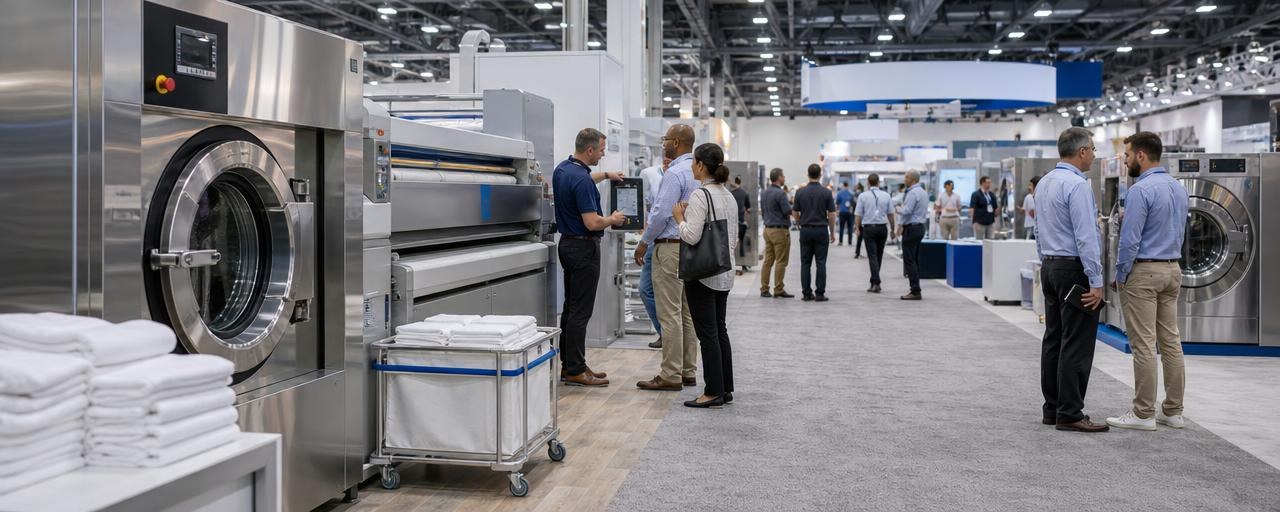
The Clean Show takes place from ١٥–١٨ July ٢٠٢٧ at the Las Vegas Convention Center, Las Vegas, Nevada, USA. Organised by Messe Frankfurt, it is a trade exhibition for the commercial laundering, dry-cleaning and textile-care supply chain. Its official categories span machinery and systems for textile applications, washing, cleaning, flooring and upholstery, drying and finishing; water technology and energy saving; cleaning products; uniform and facility services; logistics, information technology, operational materials, services and research.
The show brings professional equipment, technologies and services together. Operators can compare solutions, buyers can examine supplier options, and manufacturers can present products to the professionals who buy, specify or influence textile-care operations.
The Clean Show ٢٠٢٧ at a glance
| Item | Information |
| Event | The Clean Show |
| Edition | ٢٠٢٧ |
| Type | Business trade exhibition |
| Dates | ١٥–١٨ July ٢٠٢٧ |
| City and country | Las Vegas, United States |
| Venue | Las Vegas Convention Center |
| Organiser | Messe Frankfurt |
| Sectors | Commercial laundry, dry cleaning, textile-care machinery, products and services |
| Audiences | Laundry operators, drycleaners, institutional laundry managers, buyers, distributors, manufacturers and service providers |
| Latest published scale | Over ٣٨٠ exhibitors from ١٨ countries in ٢٠٢٥, organiser-reported; that edition was in Orlando |
The dates and venue are confirmed for ٢٠٢٧. The ٢٠٢٥ edition provides the latest published examples of scale and programme; its figures and activities are not promises for ٢٠٢٧.
Why The Clean Show matters
Compare equipment
Commercial laundry and dry-cleaning investment affects workflow, throughput, staff tasks and service quality. Compare configurations and discuss specifications with suppliers. Bring your load profile, available space, utilities, service needs and the process steps a new system must fit.
Connect products with operations
The show’s scope runs from washing and cleaning through drying, finishing, textile handling and facility services. An upgrade may also involve water, utilities, process products, software, logistics and maintenance support.
Use demonstrations and education
The ٢٠٢٥ edition included live equipment demonstrations, an education programme, the debut of the Innovation Awards and networking receptions. These are previous-edition examples; check the organiser’s current information for the ٢٠٢٧ programme.
Published scale
- Over ٣٨٠ exhibitors and participants from ١٨ countries were reported by the organiser for ٢٠٢٥.
- The ٢٠٢٥ show took place in Orlando. These historical figures are not projections for ٢٠٢٧.
Buyers can use a broad exhibitor group for structured comparison. Suppliers can present products and discuss market needs; no particular meeting or commercial result is guaranteed.
Exhibition sectors and product groups
The following groups translate official categories into practical areas to investigate. Examples are sector terminology, not a confirmed list of ٢٠٢٧ exhibitors.
Textile applications and laundry machinery
- Commercial washer-extractors and washing systems
- Industrial laundry machinery and accessories
- Textile application systems for professional care
- Equipment configurations matched to site capacity and workflow
Washing, cleaning and dry-cleaning systems
- Textile-washing equipment and process systems
- Dry-cleaning machinery and related systems
- Textile cleaning agents and process products
- Cleaning and disinfection systems
Drying, finishing and textile presentation
- Textile drying machinery
- Finishing equipment and accessories
- Systems for preparing textiles for return to customers or facilities
- Flooring and upholstery care machinery and systems
Water, utilities and energy saving
- Water technology for textile-care operations
- Utility systems and associated equipment
- Energy-saving technologies and operating solutions
- Systems to assess alongside machinery and throughput needs
Cleaning agents and operational materials
- Agents for textile cleaning and finishing
- Textile disinfection products and systems
- Operational materials for laundry and dry-cleaning services
- Accessories and supplies for textile-care processes
Uniform, facility services and textile logistics
- Uniform and facility-service solutions
- Textile logistics and material-flow systems
- Handling equipment and accessories
- Services and consultancy for textile-care operations
Information technology, training and research
- Information technology for laundry and textile services
- Training and education services
- Research, development and testing
- Associations, consultancy and capital-funding services listed in the official categories
Who should visit The Clean Show?
Commercial laundry and textile-service operators
Useful if you are evaluating equipment or service changes. Focus on:
- Washing, drying and finishing for your work mix
- Load sizes, throughput and workflow constraints
- Water, utility and energy-saving options
- Maintenance, spare-parts and operator-training questions
- Textile logistics and information technology
The official scope includes machinery, utilities, logistics, IT and operational materials. Bring your site requirements to make supplier conversations specific.
Drycleaners and textile-cleaning professionals
Useful if you are comparing cleaning equipment, process products or operational changes. Prioritise:
- Equipment options and operating requirements
- Cleaning, finishing and disinfection products
- Flooring and upholstery care where relevant to your services
- Safety, compliance and chemical-use questions
- Service, training and equipment-replacement implications
For regulated substances or workplace obligations, confirm current requirements with the relevant regulator and qualified advisers.
Institutional laundry and uniform-service managers
Useful if you manage textile flows for a healthcare, hospitality, facility or uniform-service operation. Consider:
- Capacity and workflow requirements for your textiles
- Movement and separation of soiled and clean textiles
- Cleaning, disinfection and finishing specifications
- Equipment, utility and material-flow questions for in-house processing
- Service-provider capabilities for further evaluation
The official categories include uniform and facility services, logistics, machinery and cleaning products. A trade-show comparison does not replace a technical or infection-control assessment.
Equipment buyers, distributors and technical decision-makers
Procurement managers, laundry engineers, facilities managers, distributors and service-company decision-makers can compare ranges, discuss specifications and identify suppliers for follow-up. Manufacturers and service providers can learn what buyers need to evaluate before a purchase or distribution decision.
Why visit The Clean Show?
- Build a supplier shortlist: identify companies in categories relevant to your operation.
- Compare systems: examine washing, cleaning, drying or finishing options against written requirements.
- Evaluate an upgrade: discuss space, capacity, utilities, workflow, support and maintenance.
- Review the wider process: consider logistics, water, energy, IT and operational materials together.
- Explore services: assess uniform, facility and textile-service solutions against your model.
- Learn and follow developments: check whether education and demonstrations are included in the ٢٠٢٧ programme; they featured in ٢٠٢٥.
Why exhibit at The Clean Show?
Manufacturers, equipment suppliers, product companies, service providers and technology businesses serving commercial laundry, dry cleaning or textile care can consider exhibiting. The ٢٠٢٥ edition reported over ٣٨٠ exhibitors from ١٨ countries; this is historical and organiser-reported, not a commitment about the ٢٠٢٧ floor.
- Present products to professionals who buy, specify or influence decisions.
- Demonstrate machinery and explain technical features.
- Discuss distribution, service coverage, training and customer requirements.
- Use conversations to identify product questions and follow-up needs.
Confirm participation terms, space, stand requirements, installation and utilities with the organiser. Separately check import, workplace, chemical and product-compliance requirements relevant to your business; exhibiting does not provide regulatory approval or guarantee sales.
What made the ٢٠٢٥ edition distinctive?
Organiser coverage described live equipment demonstrations, an education programme, networking receptions and the debut of the Innovation Awards. These previous-edition features placed product evaluation alongside learning and professional exchange; they are not a confirmed ٢٠٢٧ programme. Check current event information for upcoming sessions, special areas and award details.
What should you try to achieve?
If you operate a laundry
Shortlist equipment or service options that match a defined capacity, workflow or utility requirement. Record what suppliers need to prepare a proposal.
If you manage dry-cleaning or textile-care services
Compare systems and process products against your service mix. Note regulatory questions for authoritative follow-up.
If you buy or distribute equipment
Identify product lines that fit your portfolio. Compare service coverage, training, spare parts and terms after the show.
If you manage institutional textiles
Map the equipment, handling or service questions affecting your textile flow. Distinguish in-house from contracted requirements.
A useful visit ends with decisions, contacts and next actions—not an unprioritised collection of brochures.
How to prepare before The Clean Show
١. Define the decision
Write down what you need to solve: capacity, workflow, equipment replacement, service quality, resource use, textile handling or supplier choice. Separate immediate projects from general research.
٢. Build a target list
The organiser’s attendee information points visitors to the ٢٠٢٧ exhibitor listing. Review it, group relevant exhibitors by category and shortlist those matching your needs.
٣. Rank conversations
Mark companies A (essential), B (useful alternatives or partners) and C (if time allows). Prepare an introduction describing your operation and decision.
٤. Prepare technical questions
- What capacity and operating conditions is the equipment designed for?
- Which utilities, water connections or installation work are required?
- How does it fit upstream and downstream process steps?
- What maintenance, training and spare-parts support is available?
- Which products or consumables are required, and what compatibility should be checked?
- How are textiles moved and separated?
- What data or software functions support your operating model?
- Which product or workplace rules apply to the intended use?
٥. Plan registration and travel
Check current registration, access, show hours and travel information with the organiser. Its travel page identifies an event housing partner. Confirm terms directly before booking; visitor hours were not stated in the official pages reviewed.
٦. Set a follow-up method
Record each company, product, why it fits, open questions, contact and next action. This makes comparisons easier after the exhibition.
How to make the most of the exhibition
Start with categories tied to your project rather than attempting every stand. Record the model or system, process step, operating assumptions and information still needed. During a demonstration, note what you observed and what remains unanswered.
Use a comparison record: Company → Product → Operational fit → Specification to request → Contact → Next action. A laundry operator comparing finishing systems, for example, can note textile types, workflow, facility constraints and the data needed for a comparable proposal. Treat show-floor discussion as initial evaluation, not a substitute for site assessment, testing or a written offer.
Beyond the exhibition floor
The Clean Show ٢٠٢٥ featured education, live equipment demonstrations, the Innovation Awards and networking receptions. These previous-edition examples show a mix of product evaluation and professional learning, not the ٢٠٢٧ schedule. Check the current programme for sessions that answer a specific business or technical question.
Networking at The Clean Show
Be ready to explain your role, operation and product questions. Buyers can ask what specifications and site details are needed for a useful next discussion. Suppliers can record requirements and agree a realistic follow-up step rather than assuming interest will become a purchase.
The Clean Show visitor profile and business opportunities
| Visitor profile | Potential focus |
| Commercial laundry operators | Washing, drying, finishing, utilities and workflow |
| Drycleaners | Cleaning systems, process products and applicable requirements |
| Institutional laundry managers | Textile handling, capacity, cleaning and service models |
| Uniform and facility-service businesses | Service operations, logistics and materials |
| Equipment buyers | Supplier comparisons, specifications and support |
| Distributors and service providers | Product ranges, training and technical support |
| Manufacturers and technology companies | Product presentation to professional decision-makers |
These interests are interpretations of the official categories and audience description. Confirm product suitability and terms directly with suppliers.
Travelling to The Clean Show
The event identifies the Las Vegas Convention Center as its venue and provides visitor travel information. Check current arrival guidance, access, show hours and transport updates. The organiser’s housing information identifies a designated partner and warns that unauthorised third-party reservations are not guaranteed. Confirm arrangements with the provider.
Practical information for international visitors
| Item | Information |
| Venue | Las Vegas Convention Center, Las Vegas, Nevada, United States |
| Dates | ١٥–١٨ July ٢٠٢٧ |
| Accommodation | Event housing information is available through the organiser’s designated partner. |
| Registration and entry | Confirm current registration, access requirements and show hours with the organiser. |
International visitors should check travel-document requirements for their circumstances and plan accommodation, local transport and payments ahead. ilikevents can assist with visit planning, registration and travel arrangements.
One day or several days?
A focused visit
A shorter visit may suit a buyer with a defined project and a prepared exhibitor shortlist. Prioritise essential categories and appointments.
More time for cross-category research
Additional time may help if your plans span washing, finishing, utilities, logistics and software or several supplier comparisons. The show runs across four dates; choose a schedule based on your needs and the published programme.
For exhibitors
Plan for product discussions and follow-up notes. Confirm exhibitor access, installation and operating schedules with the organiser.
After The Clean Show
Sort contacts into three groups:
- A — Immediate project: request specifications, installation information, service terms or a proposal.
- B — Potential supplier: ask for missing details, distribution information or a follow-up discussion.
- C — Market intelligence: retain notes on technologies, service models and questions to investigate.
Compare solutions like for like. Align capacity assumptions, process steps, utilities, maintenance, training and support. Clarify compatibility, responsibilities, commercial terms and compliance requirements; assign an owner and date to each next action.
The Clean Show visitor checklist
Before
- ☐ Define the decision that justifies the visit.
- ☐ Review the ٢٠٢٧ exhibitor listing and prioritise suppliers.
- ☐ Prepare site, process and capacity information.
- ☐ Confirm registration, hours, travel and accommodation.
- ☐ Prepare questions about utilities, workflow, service and compatibility.
During
- ☐ Visit priority categories and keep comparison notes.
- ☐ Separate observed details from claims requiring written verification.
- ☐ Record contacts, open questions and next actions.
- ☐ Check the current programme for relevant education or demonstrations.
After
- ☐ Group contacts by project priority and request missing specifications.
- ☐ Compare solutions using the same assumptions.
- ☐ Check compliance and installation requirements with appropriate authorities and advisers.
- ☐ Assign an owner and date to each follow-up.
Is The Clean Show worth visiting?
The Clean Show is most relevant to professionals who operate, buy for, supply or support commercial laundry, dry cleaning and textile-care services. Its broad product scope supports cross-category sourcing and comparison. The ٢٠٢٥ demonstrations and education illustrate the potential mix of product viewing and professional learning. Value depends on clear requirements, supplier priorities and systematic follow-up; walking the floor without a plan is less likely to answer a purchasing or operational question.
Closing thought
Before travelling to Las Vegas, ask: Which textile-care decision can I make better by comparing equipment, products and service options in person? Discover. Compare. Ask. Evaluate. Follow up.
Commercial textile-care opportunities in the United States
Market size and demand
CDC healthcare infection-control guidance cites an estimate of ٥ billion pounds of laundry handled annually in healthcare settings. This estimate comes from the ٢٠٠٣ guideline and describes healthcare laundry volume—not current market value or the whole U.S. textile-care market. It identifies institutional linen processing as a specialised operating context for laundry equipment and services.
Market drivers and areas to investigate
- Institutional textile processing: healthcare facilities use in-house, cooperative and commercial laundry models. Operators and suppliers may investigate equipment, handling and service requirements; hygiene procedures and facility specifications are constraints.
- Dry-cleaning process change: EPA’s PCE rule affects dry-cleaning uses. The agency reports phaseout provisions, restrictions on newly acquired PCE machines and extensions to certain workplace compliance dates in July ٢٠٢٦. EPA also reports reconsideration activity; verify current requirements before investment decisions.
Regulations and market-entry conditions
EPA describes the December ٢٠٢٤ final PCE rule and later compliance-date changes. Requirements vary by equipment and use; workplace monitoring, exposure controls, training and protective equipment may apply. EPA also states that it began reconsidering the rule in ٢٠٢٥. Drycleaners and suppliers should check current EPA guidance and applicable state or local requirements before selecting or marketing systems.
What this may mean for exhibitors
Suppliers of institutional laundry systems, textile handling and dry-cleaning alternatives may find relevant questions to discuss with operators. Product claims, compatibility, compliance and service support need to be substantiated for each application; neither the historic healthcare volume estimate nor show attendance guarantees demand.
What this may mean for visitors
Visitors can compare equipment and services against their own institutional, commercial or dry-cleaning requirements. Buyers evaluating PCE-related changes should treat regulation as a pre-purchase research item and obtain current advice from authorities and qualified professionals.
Explore Event Opportunities
Use The Clean Show to compare textile-care technologies, identify suppliers relevant to your operation and shape a focused participation plan with professional support from ilikevents.
Get Expert Assistance from ilikevents to plan your visit or exhibition participation.
خدمات ilikevents برای این رویداد را ببینید
جهت کسب اطلاعات بیشتر و مشاهده وبسایت رسمی رویداد
اینجا کلیک نمایید.