Flame Main Conference: a guide to the gas and energy markets
21–22 April 2027 · Hotel Okura Amsterdam · Amsterdam, The Netherlands
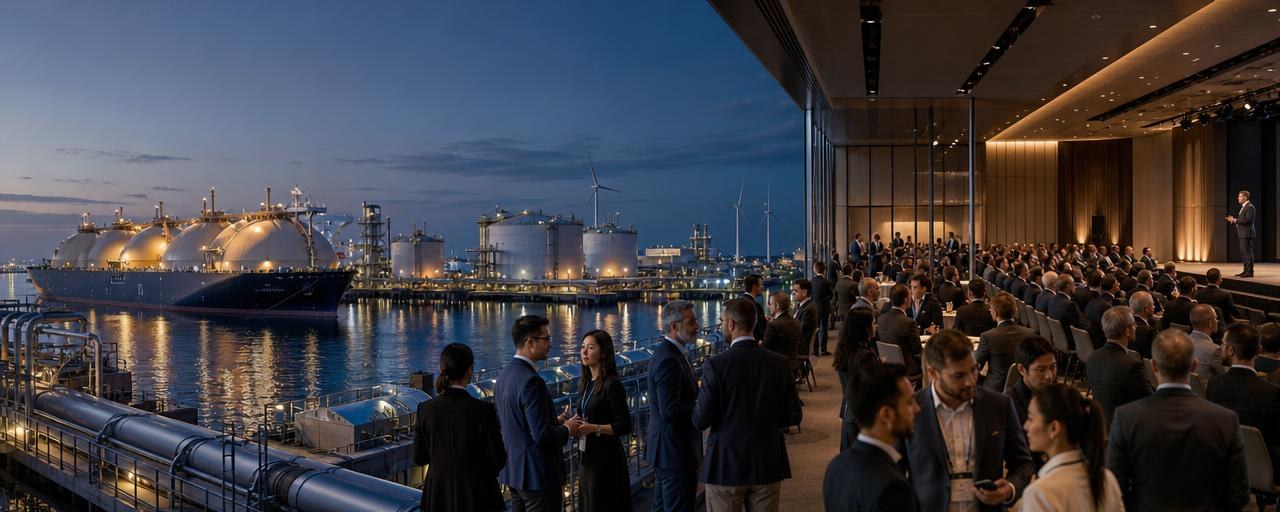
Flame Main Conference is Informa Connect’s two-day meeting for senior professionals working across natural gas, liquefied natural gas (LNG), trading, infrastructure and energy policy. It sits within the wider Flame calendar, but it is a distinct programme from the Energy Traders Summit on 20 April and RegatecX on 19–20 April. The main conference centres on European gas-market change, supply security, portfolio choices, infrastructure and the transition to lower-carbon energy. Its value is not simply hearing market commentary: it is a chance to test assumptions with people who buy, sell, transport, finance and regulate energy.
Flame Gas and Energy Conference Amsterdam at a glance
| Item | Information |
| Event | Flame Main Conference |
| Event format | International business conference |
| Dates | 21–22 April 2027 |
| Venue | Hotel Okura Amsterdam |
| City and country | Amsterdam, The Netherlands |
| Organiser | Informa Connect |
| Main subject | Natural gas, LNG, trading, infrastructure and energy-market transition |
| Audience | Energy executives, policymakers, traders, suppliers, investors and infrastructure leaders |
| Programme format | Presentations, debates, roundtables and networking |
The organiser has published the 2027 dates, venue and an agenda. Check its event information for current session details, access arrangements and ticket conditions before committing to travel.
Why Flame matters to energy professionals
Connect market signals to decisions
Gas and LNG businesses make decisions across a chain of changing supply routes, storage needs, contract structures, infrastructure capacity and policy. Flame’s focus on market dynamics gives participants a setting to compare how those forces affect sourcing, trading, investment and risk. The useful question is not only what has changed, but which assumptions in your portfolio or project should be revisited.
Compare perspectives across the value chain
Traders, infrastructure operators, suppliers, investors and public-sector participants encounter different parts of the same market. Hearing those perspectives together can help attendees identify where a price or supply shift becomes a commercial, operational or policy issue. The conference does not guarantee access to any particular organisation or decision-maker; use the programme and meeting opportunities to prioritise conversations that fit your work.
Explore the energy transition without losing sight of system needs
The conference addresses energy transition alongside the continuing importance of gas and LNG. That combination is relevant to professionals evaluating supply resilience, infrastructure utilisation, renewable gases and the changing relationship between gas and power. Treat transition themes as a basis for analysis, not as a substitute for testing project economics, policy status and technical requirements.
Conference themes and market questions at Flame
European gas supply and portfolio diversification
- How changing trade flows affect the resilience of a supply portfolio.
- How companies balance security, flexibility and commercial exposure.
- Which supply assumptions need to be stress-tested against market and geopolitical change.
- What a diversified portfolio means for buyers, sellers and infrastructure users.
LNG flows, shipping and global supply competition
- How LNG shipping and pipeline supply interact in regional markets.
- How buyers and sellers assess route vulnerability and changing availability.
- How benchmark choices and contract structures influence LNG pricing decisions.
- What import-terminal capacity can and cannot resolve for market participants.
Gas trading, pricing and liquidity
- How market participants interpret changing liquidity and price formation.
- How Henry Hub, TTF and JKM benchmarks feature in current LNG pricing discussions.
- How to examine price exposure alongside volume and delivery risk.
- How to compare trading assumptions with changing market conditions.
Storage, security of supply and seasonal risk
- How storage mandates and strategic reserves affect resilience and market efficiency.
- Who bears the cost of supply resilience and how that question shapes policy debate.
- How weather and seasonal demand can affect storage refill and supply planning.
- Which indicators can help distinguish a temporary disruption from a structural shift.
Gas infrastructure and cross-border capacity
- How pipeline routes, LNG terminals and transmission capacity shape regional flows.
- How capacity access, tariffs and network rules can influence commercial choices.
- How to assess infrastructure exposure alongside long-term supply commitments.
- Which changes to market rules may affect investment or route optionality.
Risk, contracts and portfolio management
- How price, volume, collateral, margin and credit exposures interact.
- How weather derivatives and other hedging approaches may address specific risks.
- How buyers and sellers assess the structure and risks of sale and purchase agreements.
- Which contractual assumptions should be reviewed when markets become more volatile.
Renewable gases and the changing energy system
- How gas infrastructure and market design may evolve alongside lower-carbon energy.
- How policymakers and companies consider energy security and decarbonisation together.
- Which renewable-gas or hydrogen developments are relevant to a participant’s strategy.
- What must be verified separately: project status, technical readiness and applicable policy.
Who should attend Flame Gas and Energy Conference Amsterdam?
Gas and LNG traders, portfolio managers and risk teams
Useful if you manage supply, market exposure or trading strategy. Prioritise discussion of price benchmarks, liquidity, volume risk, collateral, margin and contract structures. Bring a short list of the assumptions you want to compare, rather than treating every market forecast as directly applicable to your book.
Energy buyers, suppliers and procurement teams
Useful if your organisation buys or sells gas, LNG or energy-related services. Focus on supply diversification, delivery flexibility, contract risk and the consequences of infrastructure constraints. Prepare questions about volumes, delivery points, indexation, duration and operational flexibility that reflect your own requirements.
Pipeline, terminal and infrastructure leaders
Useful if you operate, finance, develop or use gas infrastructure. Track discussion of LNG capacity, cross-border flows, transmission rules and the role of infrastructure in supply security. Compare what participants say about market needs with the status, timing and commercial terms of specific projects.
Policymakers, regulators and market analysts
Useful if you assess energy security, market design, regulation or policy. Listen for how market participants describe the trade-offs between resilience, affordability, competition and transition objectives. Distinguish analytical opinions from decisions or rules already in force.
Investors, project developers and energy technology companies
Useful if you evaluate projects or provide services to gas and energy businesses. Use the conference to understand where market participants see uncertainty, infrastructure needs or changing technology requirements. Validate project economics, counterparties, regulatory conditions and delivery timelines independently before making investment decisions.
Relevant job roles include chief and senior energy executives, gas and LNG traders, portfolio and risk managers, procurement and commercial leads, policy specialists, market analysts, infrastructure operators, project developers and investment teams.
Why visit Flame Gas and Energy Conference Amsterdam?
- Test a supply strategy: compare how different participants assess diversification, security of supply and exposure to changing LNG and pipeline flows.
- Review pricing assumptions: identify which benchmarks, contracts and market signals matter to your decisions and what could change their relevance.
- Separate price risk from volume risk: use discussions about weather, hedging, collateral and margin to identify questions for your own risk process.
- Assess infrastructure dependencies: map the terminals, routes, storage and transmission arrangements on which a supply or investment decision depends.
- Understand regulatory effects: ask how current tariff and network arrangements affect capacity, costs and market behaviour without treating discussion as legal advice.
- Build a transition watchlist: identify renewable-gas, hydrogen and lower-carbon developments that merit further due diligence for your organisation.
- Make follow-up specific: leave with a short list of people, data, contract questions or project milestones to verify after the conference.
Why take part as a sponsor or participating company?
The organiser presents Flame as a meeting place for energy-company leaders and provides a sponsorship and exhibition route. Participation may suit companies seeking to explain a service, technology or market perspective to professionals working across oil, gas, LNG and energy. The event page lists companies from energy supply, trading and infrastructure among regular attendees, but this does not confirm that every listed company will attend the 2027 conference.
Before committing, define the audience you need to reach, the problem your offer addresses and the evidence you can share. Compare the organiser’s current sponsorship options, stand or meeting arrangements, audience profile and contractual terms. Ask how the format supports your goal: a targeted meeting, a market briefing, a demonstration or wider brand visibility. For companies entering the Dutch or wider European market, investigate distribution, service coverage, market rules and project qualification separately; participation does not guarantee meetings, leads or commercial results. ilikevents can help assess a sponsorship plan and coordinate registration with the organiser.
How to prepare before Flame
1. Set a decision objective
Write down the decision the conference should help you make: for example, whether to revisit an LNG sourcing assumption, compare risk approaches, assess a route dependency or identify which transition projects deserve further diligence. Keep the objective narrow enough to guide session and meeting choices.
2. Build a market-question list
Tailor questions to your role. Traders may focus on benchmark exposure, liquidity, volume and collateral. Buyers may ask about delivery flexibility, indexation and security of supply. Infrastructure teams may examine capacity use, tariffs and project timing. Investors may test demand, counterparties, policy status and downside scenarios.
3. Review the agenda and participants
Use the organiser’s current agenda and attendee information to select sessions and identify relevant contacts. Flame is part of a wider calendar that also lists RegatecX and the Energy Traders Summit as separate programmes; check the date and event label carefully when choosing sessions or passes.
4. Prioritise meetings
Classify possible conversations as A — essential to a live decision; B — useful for comparison or future planning; and C — exploratory if time allows. Request meetings through the organiser’s available channels where appropriate, and prepare a concise introduction that explains your role, market focus and specific question.
5. Prepare a practical information set
Bring the non-confidential details that help make a discussion useful: relevant delivery points, product or service requirements, target markets, timing, contract considerations and the next decision date. Do not disclose sensitive trading positions or confidential commercial information in open networking settings.
How to make the most of the conference
Use a consistent note format for each useful exchange: Person or organisation → market issue → evidence or perspective → relevance to your decision → next action. For example, record whether a discussion concerns an LNG route, a pricing benchmark, a network constraint or a policy proposal, and whether the information is a verified rule, a forecast or an individual view.
At sessions, note the assumptions behind a speaker’s conclusion: geography, period, price benchmark, contract type and scenario. In debates, distinguish a participant’s argument from an adopted policy. During networking, ask one focused follow-up question before moving to a new topic. Use private meeting rooms only when their availability and booking conditions have been confirmed with the organiser.
Networking and business conversations at Flame
The organiser describes networking breaks and lunches, a reception, roundtable discussions and private meeting rooms. These formats can support conversations beyond formal presentations, but their availability and access may depend on the pass or programme. Confirm current arrangements before planning around them.
Prepare a brief introduction and an explicit next step: exchange a public market source, schedule a technical follow-up, compare a contract question or identify a person responsible for a particular issue. For sensitive topics, agree what may be shared and what remains off the record. Follow up with a specific reference to the discussion, not a generic message to reconnect.
Flame visitor profile and business interests
| Professional profile | Potential focus at the conference |
| Gas and LNG traders | Market flows, pricing, liquidity and contract exposure |
| Portfolio and risk managers | Price, volume, weather, collateral and credit risk |
| Energy procurement teams | Supply diversification, delivery flexibility and contract terms |
| Gas and LNG suppliers | Buyer requirements, regional flows and commercial positioning |
| Pipeline and transmission operators | Capacity, network rules and cross-border infrastructure |
| LNG terminal and shipping professionals | Import capacity, route options and infrastructure needs |
| Policymakers and regulators | Security of supply, market design and transition policy |
| Investors and project developers | Project risk, market demand and infrastructure development |
This profile is a practical way to plan conversations, not a guarantee that any specific organisation or individual will attend.
Travelling to Flame at Hotel Okura Amsterdam
The organiser identifies Hotel Okura Amsterdam at Ferdinand Bolstraat 333, 1072 LH Amsterdam. Its visitor page names Amsterdam Airport Schiphol as the closest airport and gives public-transport approaches from Amsterdam Central, Zuid, Amstel and RAI stations. It describes tram 25 from Central Station, bus 65 from Zuid, tram 12 or bus 15 from Amstel, and a walk of about ten minutes from RAI. Routes and service conditions can change, so confirm current local transport information before departure.
The venue page also describes hotel parking, but spaces are chargeable and reservation is advised. Check the organiser’s latest visitor instructions and the venue directly for current access, accessibility and parking arrangements. Allow time for airport transfers and urban travel rather than scheduling a meeting immediately after arrival.
Practical information for international visitors
| Item | Verified information |
| Airport | Amsterdam Airport Schiphol is identified by the organiser as the closest airport to Hotel Okura. |
| Public transport | The organiser lists tram and bus connections from Central, Zuid and Amstel stations, and a walk from RAI station. |
| Venue address | Ferdinand Bolstraat 333, 1072 LH Amsterdam, The Netherlands. |
| Accommodation | The organiser provides venue-related accommodation information; confirm current availability and booking terms directly. |
Check entry and visa requirements for your nationality, travel documents, accommodation and payment arrangements before booking. These requirements vary by traveller and are not determined by conference registration. ilikevents can assist with visit planning, travel arrangements and registration support.
One day or two days at Flame?
One day
A one-day visit may suit attendees with a specific session, meeting or market question. Choose the priority in advance, allow time for follow-up conversations, and confirm the pass covers the sessions and networking you plan to use.
Both conference days
Two days may be more useful if your objectives span supply, trading, infrastructure and transition discussions, or if you need time for both scheduled sessions and meetings. Build a realistic agenda with gaps for conversations and notes rather than trying to attend every item.
Check the event’s current daily schedule and registration terms before deciding; session hours and access arrangements should not be assumed from the event dates alone.
After Flame: turn discussion into decisions
Within a few days, sort contacts and information into three groups: A — immediate action for a live project or decision; B — potential follow-up for a developing opportunity; and C — market intelligence to monitor. For each item, record the source, date, geography and whether it is a published fact, an estimate, a forecast or a personal view.
Request only the material needed for your next step: contract or capacity terms, route assumptions, technical specifications, project milestones, regulatory references or supporting data. Compare external perspectives with your organisation’s own market analysis before changing a position or investment plan. Assign an owner and a deadline to each follow-up so that useful conversations become reviewable work.
Flame conference checklist
Before
- Confirm your dates, registration pass and the exact Flame programme you intend to attend.
- Set one or two decisions that would make the visit worthwhile.
- Review the agenda and prioritise sessions, meetings and networking opportunities.
- Prepare role-specific questions about LNG supply, trading, contracts, infrastructure or policy.
- Check travel documents, entry requirements, accommodation and transport.
During
- Record the source, geography and time period behind market claims.
- Separate published policy from proposals, forecasts and individual opinions.
- Capture each useful conversation with a clear next action.
- Protect confidential trading, procurement and investment information.
After
- Prioritise contacts and follow-ups by decision relevance.
- Validate market claims against primary data and current regulation.
- Share a concise internal summary with assumptions and open questions.
- Track which discussions change a decision, project assessment or monitoring plan.
Is Flame Gas and Energy Conference Amsterdam worth attending?
Flame is most relevant to professionals whose work depends on European gas and LNG markets, energy trading, supply security, infrastructure or policy. Its value is strongest when you arrive with a concrete decision to examine and use the conference’s discussions to compare assumptions across the value chain. If you are seeking product demonstrations or a broad exhibition floor, confirm the format carefully: Flame Main Conference is presented as a conference, while the organiser lists separate events in the wider calendar. A focused plan, careful note-taking and timely follow-up will matter more than the number of sessions attended.
Closing question
What energy-market decision can you clarify by comparing your perspective with the people who trade, supply, transport, finance and regulate gas?
Listen. Compare. Question. Decide. Follow up.
Gas and energy opportunities in the Netherlands
Market size and demand
Statistics Netherlands recorded 30 billion cubic metres of natural-gas consumption in 2024, approximately unchanged from 2023. This is a consumption measure, not total energy-market value. CBS also reported that LNG imports fell by 8.2 billion cubic metres year on year, while 14.4 billion cubic metres of LNG came from the United States, equal to 68% of Dutch LNG imports. Separately, Gasunie says Gate terminal’s regasification capacity reached 20 billion cubic metres per year after its fourth tank expansion; terminal capacity is not the same as annual imports or demand.
- Natural-gas consumption: 30 billion cubic metres in 2024, Netherlands, CBS.
- LNG supply origin: 14.4 billion cubic metres from the United States in 2024, or 68% of Dutch LNG imports, CBS.
- Gate regasification capacity: 20 billion cubic metres per year after expansion, Gasunie; a terminal-capacity figure, not a consumption measure.
- Industrial gas consumption: 11.108 billion cubic metres in 2024, compared with 10.231 billion in 2023, CBS; this is industrial use, not total market demand.
Market drivers and commercial opportunities
Two documented forces are relevant to gas-sector participants: Dutch domestic production continued to fall after the Groningen field closed in April 2024, and the country relies on imported oil and gas. At the same time, government policy aims for sustainable energy by 2050 and identifies grid constraints and new energy infrastructure as current challenges. These conditions make supply resilience and transition infrastructure useful areas for investigation, not guaranteed commercial openings.
- LNG sourcing and portfolio flexibility: Dutch consumption and LNG imports show continuing participation in gas supply, while import volumes and source mix change. Suppliers, traders and buyers could examine delivery flexibility and portfolio exposure; price, contract, competition and route risks remain material.
- Terminal and transmission infrastructure: Gate’s capacity expansion and planned jetty development demonstrate ongoing infrastructure activity. Equipment and service providers may investigate future needs with terminal and network operators; project timelines, procurement routes and capacity commitments must be verified.
- Storage and seasonal resilience: gas storage, LNG delivery and network capacity affect security of supply. Market participants could compare storage, flexibility and seasonal-risk strategies; the economics depend on market conditions and regulated network terms.
- Industrial gas and transition planning: industrial gas use rose in 2024 while gas use for power generation declined, reflecting different demand patterns. Suppliers and industrial buyers could assess efficiency, flexibility and transition options for particular sites; the national figures do not establish demand for an individual product.
- Renewable gases and new infrastructure: the Dutch government identifies green gas, hydrogen pipelines and extensive electricity-grid expansion in its sustainable-energy transition. Technology firms and project developers may investigate relevant projects and partners; policy direction does not establish project approval, funding or customer demand.
Regulation and market access
The Netherlands Authority for Consumers and Markets sets the regulated tariffs that Gasunie Transport Services may charge users of the national gas transmission network. ACM’s 2026 decision describes an average tariff increase of about 50% for 2026 and notes different treatment for storage facilities and LNG network entry points. This is a current transmission-tariff framework, not a general statement about all Dutch energy-market licences or product requirements. Companies should confirm the current network terms and any sector-specific obligations that apply to their activity.
What this could mean for exhibitors and suppliers
For gas, LNG, infrastructure and energy-technology companies, the Dutch market offers a reason to investigate import capacity, transmission, storage and transition projects. Flame can provide a setting to compare market perspectives, but prospective suppliers should verify procurement timetables, technical requirements, counterparties and applicable network rules before investing in a market-entry plan.
What this could mean for visitors and buyers
Buyers, traders and investors could use the conference to test how Dutch consumption, LNG supply and infrastructure capacity fit their regional strategy. Compare sourcing, pricing, storage and transition assumptions, then validate them against current data and commercial terms. The Netherlands is one market within a connected European system; national indicators should not be treated as a forecast of a specific project’s profitability.
Explore Event Opportunities
Explore how Flame Gas and Energy Conference Amsterdam could help you compare energy-market perspectives, identify relevant suppliers or plan purposeful participation, with professional support from ilikevents.
Get Expert Assistance from ilikevents to plan your visit or conference participation.
See the ilikevents services for this event
For further information, please click
here .