Shanghai SNEC PV+ 2027
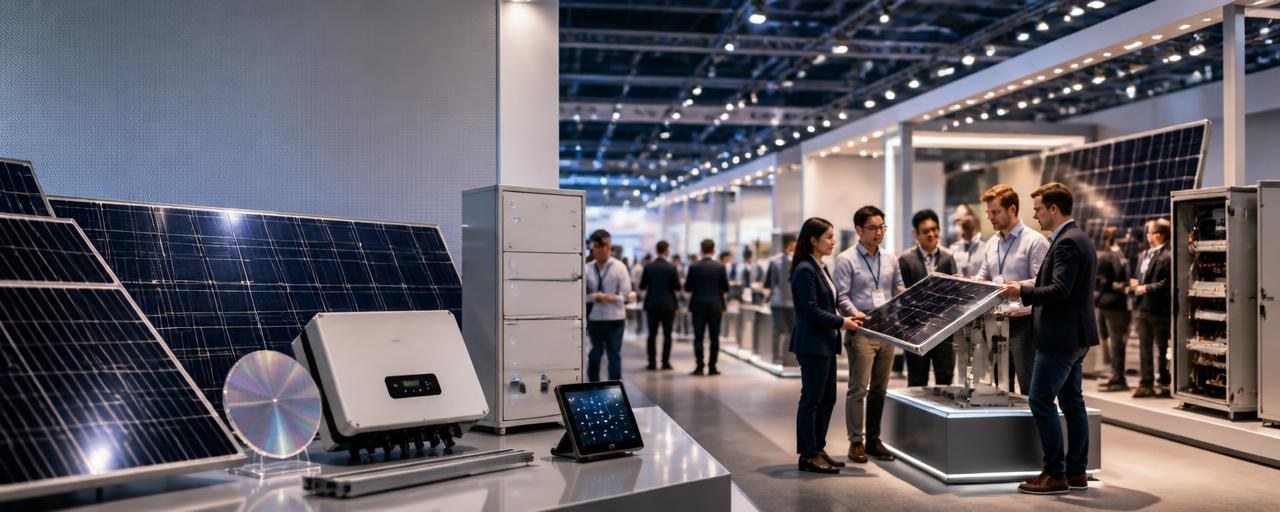
Shanghai SNEC PV+ is the 20th International Photovoltaic Power Generation and Smart Energy Conference and Exhibition. The exhibition is scheduled for 2–4 June 2027 at the National Exhibition and Convention Center (Shanghai), Qingpu District, Shanghai, China. The organiser lists visitor hours as 09:00–17:00 on 2 and 3 June and 09:00–14:00 on 4 June. The show covers the photovoltaic chain from manufacturing equipment and materials to cells, modules, system components and project integration, alongside smart-energy and storage themes. For professionals, the practical value is the chance to compare equipment and system options, investigate suppliers and relate product decisions to technical and commercial discussions.
Why Shanghai SNEC PV+ matters to the solar industry
Compare the PV supply chain in one setting
The official exhibits categories range from ingot, wafer, cell, module and thin-film production equipment through solar cells and modules, components, materials, finished solar products, system integration and project-control software. That breadth can help a visitor understand how an upstream manufacturing choice connects to a complete grid-connected or off-grid system. It also gives buyers a structured way to compare adjacent products rather than assessing a panel, inverter or installation component in isolation.
Connect product choices with market and engineering questions
The official event information presents the exhibition as a professional platform for industrial companies to showcase products and follow industry trends. It also describes conference themes that include government incentives, development trends, technical upgrading, financing and risk. These subjects make the event relevant not only to product sourcing but also to the questions that shape project selection, manufacturing investment and system design. Treat the conference themes as areas to investigate; check the current programme for specific sessions and speakers.
Use the scale as context, not as a forecast
- More than 3,000 exhibiting companies were reported in the organiser’s 2025 overview.
- 95 countries and regions were represented among exhibitors in that overview.
- The organiser reported over 500,000 visits; this is a visit count, not a verified count of unique people.
- The 2025 overview described an expected exhibition scale of over 360,000 m²; it is not a confirmed area for the 2027 edition.
The 2025 figures indicate the reported breadth of the previous event, not the number or floor plan promised for 2027. Plan around your own target categories and confirm the next edition’s exhibitor and hall information as the organiser releases it.
Who should visit Shanghai SNEC PV+?
PV manufacturers and production engineers
Useful if you are evaluating manufacturing equipment, materials or process technologies for solar ingots, wafers, cells, modules or thin-film panels. The official category list names turnkey production systems, cutting, cleaning, inspection, diffusion, coating and deposition equipment, printers, furnaces, testers, sorters, glass washing systems, tabbers, stringers and laminators.
- Compare equipment categories against the exact production step you need to improve.
- Ask suppliers which material formats, throughput assumptions and product specifications their systems support.
- Separate a promising demonstration from evidence of performance in your own production conditions.
- Record service, commissioning, training and spare-parts questions for follow-up.
Manufacturing and engineering audiences are an inferred fit from the organiser’s extensive production-equipment categories.
Project developers, EPC teams and PV system integrators
Useful if your work involves designing or delivering grid-connected or off-grid solar installations. The organiser lists PV system integrators, building-mounted systems, solar power plants, system controls, measurement and control products, and related project equipment.
- Bring a short outline of the application, site conditions and stage of your project.
- Compare component compatibility and control requirements across a prospective system.
- Ask how mounting, tracking, conversion, monitoring and storage components fit together.
- Note which technical documents or project references you need before a supplier can be shortlisted.
This audience is inferred from the official system-integration and project categories; the organiser’s public pages do not provide a separate visitor-role count.
Distributors, agents and equipment buyers
Useful if you source solar cells, modules, inverters, batteries, controllers, chargers, monitoring equipment, mounting systems or other products for a distribution portfolio. The organiser explicitly includes agents, dealers and distributors among the solar-cell and panel categories.
- Map each product group to a gap or replacement need in your current range.
- Compare warranty terms, certifications, delivery assumptions and minimum order conditions directly with suppliers.
- Distinguish products that suit your current customer base from those requiring a new technical or service capability.
- Record follow-up owners and the documents needed to compare quotations after the show.
Energy technology suppliers and manufacturers
Useful if you supply PV production machinery, solar materials, cells and modules, components, storage-related products, LED technologies, construction or safety equipment, or solar thermal systems. The exhibition provides an industry-specific setting to present products and discuss their use with professional visitors. Exhibitors should define the customer or channel they need to reach, rather than treating broad footfall as a commercial result.
- Choose a small number of product lines and applications to lead with.
- Prepare concise specifications and clear answers about integration, support and delivery.
- Qualify conversations by project stage, market, decision role and next technical question.
What can you find at Shanghai SNEC PV+?
Production equipment
The official list covers equipment for solar ingot or block production, wafer cutting and cleaning, inspection, cell processes such as diffusion and coating, screen printing, furnaces, testing and sorting, and module steps such as glass washing, tabbing, stringing and lamination. Thin-film production and associated research equipment are also named. Visitors can compare technologies by production stage and ask how equipment specifications fit their process, material and output requirements.
Solar cells, panels and materials
Exhibits include solar cells and PV modules, alongside silicon materials, ingots or blocks, wafers, glass and films. The official categories also include manufacturers, installers, agents, dealers, distributors and companies using OEM or ODM models. Buyers may use this breadth to distinguish component sourcing from finished-module sourcing and to identify which technical and commercial details need a closer comparison.
System components and project solutions
The listed component categories include batteries, chargers, controllers, converters, data loggers, inverters, monitors, mounting systems and trackers. The event also identifies PV system integrators and products for building-mounted systems, solar power plants, off-grid applications, measurement and control, project programmes and engineering software. Solar products include lighting, power systems, mobile chargers, water pumps and household applications. Solar thermal systems and related storage, heat-transfer and control products are also included.
Adjacent energy and electrical technologies
The organiser’s category list includes LED illumination, displays, digital signage, manufacturing and testing equipment, as well as power-plant construction machinery, maintenance tools and electrical safety products. These are relevant where they connect to your company’s product brief; they should not distract from the PV or energy-system priorities that brought you to the event.
What makes Shanghai SNEC PV+ distinctive?
Its published categories span both the manufacturing chain and the installed-system chain. A visitor can begin with materials or production equipment and continue into cells, modules, conversion, storage-related components, controls and system integration. This creates a useful opportunity to compare dependencies across product groups. The organiser’s broad technical conference themes add a knowledge and discussion dimension to the exhibition, while the published 2025 figures provide context for its reported international reach. These are reasons to prepare carefully, not guarantees that every supplier, solution or session will be relevant to an individual visitor.
What should you try to achieve at Shanghai SNEC PV+?
If you are a buyer or distributor
Set an objective such as: shortlist three suppliers for a defined product group and record the specification, warranty, delivery and compliance questions that must be resolved before quotation. The target is a comparable set of information, not a large stack of brochures.
If you are a manufacturer or engineer
Set an objective such as: compare two or three equipment approaches for one production step and identify the technical data needed for an internal review. Write down the process conditions or product specifications that make a supplier’s answer meaningful.
If you are a project developer or integrator
Set an objective such as: map possible components for one project application and identify compatibility, monitoring and support questions for the design team. Keep system-level requirements visible while comparing individual components.
If you are exhibiting
Set an objective such as: qualify conversations with a specific buyer, channel or project profile and agree a relevant technical follow-up. Define what makes a discussion worth continuing, and what information your team must capture to respond usefully.
How to prepare before Shanghai SNEC PV+
1. Define the decision you need to make
Write one primary objective and no more than two secondary ones. Examples include comparing module suppliers, evaluating a wafer or cell production step, identifying inverter and control options, reviewing battery or storage-related components, or surveying system integration approaches. Tie each objective to a project, portfolio gap or engineering question. If you cannot state what evidence would change your decision, narrow the visit plan before travelling.
2. Build a category-based target list
Use the organiser’s product categories to create a short list of companies or product groups once the current exhibitor information is available. Separate essential targets from useful alternatives and exploratory stops. The public information reviewed identifies categories but does not establish a complete 2027 exhibitor directory here; check the organiser’s current directory and hall plan before fixing appointments.
3. Prepare technical and commercial questions
For PV equipment, ask about supported materials and formats, line integration, controls, commissioning and service. For modules and materials, ask about specifications, test documentation, quality processes, warranty and supply terms. For inverters, batteries, controllers and monitoring products, ask about compatibility, operating conditions, data access, maintenance and system support. For project solutions, ask what design inputs are required, which components are included and what remains the integrator’s responsibility. Keep questions tied to your application; a generic product presentation is not a substitute for a project-specific answer.
- Which product specification or process stage does this solution address?
- What operating conditions, formats or system components does it support?
- Which test reports, certificates or technical documents can be reviewed?
- How does it connect with the equipment or control system already in use?
- What commissioning, training, service and spare-parts arrangements are available?
- What warranty, delivery, order-size and commercial terms should be compared?
- What information would the supplier need to prepare a meaningful quotation?
- Which issue remains unverified and needs a technical review after the exhibition?
4. Arrange meetings around the daily visitor hours
The published 2027 visitor schedule is 09:00–17:00 on 2 and 3 June, and 09:00–14:00 on 4 June. Confirm the current schedule before travel in case the organiser updates it. Book important conversations early where appointments are offered, allow time for technical discussions, and leave open blocks for discoveries in adjacent product categories. Do not assume every exhibitor or conference session will be available throughout the day.
5. Prepare a comparison record
Bring a consistent way to capture Company → Product → Application → Evidence → Open question → Next action. Note who provided each answer and what document or sample is needed. Separate information received from a supplier from your own interpretation. That distinction will make post-show review more reliable.
How to make the most of the exhibition floor
Start with your priority categories, not with an attempt to see everything. The organiser’s product range is broad, so group visits by production stage or system function. For example, a manufacturing team might follow materials, wafer or cell equipment, module equipment and testing; an integrator might follow modules, inverters, storage components, mounting, monitoring and control. These are planning sequences, not official hall routes.
At each stand, ask the same core questions before moving into a detailed discussion. Capture a concrete product or model reference, the application you discussed, any supporting documentation promised, and the person responsible for follow-up. If a supplier’s answer is not comparable because operating assumptions differ, record the difference rather than treating the products as equivalent.
Use short breaks to consolidate notes and revise priorities. Mark each conversation as a direct fit, a possible fit requiring evidence, or general market information. A focused set of well-documented conversations is more useful than collecting unclassified contacts. If a product is outside your current plan but appears relevant, note why it merits later review instead of changing the whole day’s route.
Plan your time realistically at Shanghai SNEC PV+
Before the doors open
Check your registration and entry arrangements, confirm the day’s appointments and review the latest organiser information. Prioritise the two or three conversations that would be hardest to replace with an email or catalogue review.
Morning and midday
Use the earlier part of the day for priority suppliers and technical discussions while keeping enough flexibility for a promising adjacent category. Take a brief pause to record specifications, unresolved questions and agreed next steps. The venue operator describes a large exhibition complex, so allow time to move between areas and follow the current hall plan rather than estimating routes from the number of exhibitors alone.
Afternoon and end of day
Use later blocks for follow-up questions, comparison visits and conference sessions that match your objectives. On 4 June the listed visitor hours end at 14:00, so schedule essential meetings earlier that day. Before leaving, review which documents are outstanding and identify the first follow-up action for each high-priority contact.
Beyond the Shanghai SNEC PV+ exhibition floor
SNEC PV+ combines an exhibition with a professional conference. The official event information describes conference coverage including government incentives, development trends, technical upgrading, financing and risk, with stated aims such as knowledge acquisition, trend awareness and skills development. These broad topics can help attendees connect product decisions with policy, technology and investment questions.
Use the current programme to choose sessions that answer a question you have already defined. Check the session title, format, language, speaker information and timing through the organiser before building your day around it. The pages reviewed establish broad subject areas but do not confirm a detailed session schedule for every conference track. Treat previous or general programme descriptions as context, not as a promise that a particular talk will run in 2027.
Networking at Shanghai SNEC PV+
Prepare a short introduction that says what you make, buy, integrate or evaluate, and what kind of technical or commercial discussion would be useful. For a supplier conversation, state the application, product category and decision stage. For a buyer conversation, explain the specification or portfolio need without sharing confidential project information unnecessarily.
Ask focused questions and listen for the evidence behind a claim. If you are comparing a technical solution, clarify the conditions under which its performance or compatibility statement applies. Before ending a useful conversation, agree the next step: a datasheet, test report, detailed quotation, technical meeting or follow-up contact. Record the person’s role and the subject discussed so your follow-up is specific rather than a generic thank-you.
For exhibitors, define which conversations match your target customer or channel and how the team will qualify them. A busy stand or a badge scan alone does not establish a commercial opportunity. For visitors, avoid asking for a full proposal when you have not yet shared the specifications needed to prepare one.
Travelling to Shanghai SNEC PV+
The venue is the National Exhibition and Convention Center in Shanghai’s Qingpu District. The venue operator states that the complex is about 1.5 km from Hongqiao Transportation Hub and is linked to Hongqiao Airport and Hongqiao Railway Station by the city metro. Confirm current transport and venue-entry arrangements with the venue and organiser before travelling; this guide does not assume a particular route, train, shuttle or entrance.
The venue operator describes a large complex containing indoor exhibition halls, outdoor areas, a commercial plaza, offices, a hotel and conference rooms, connected by an elevated exhibition boulevard. Check the current event hall plan and entry instructions before setting appointment times. Do not rely on a general map to estimate walking time between stands.
Where should you stay for Shanghai SNEC PV+?
Choose accommodation according to the balance between fair access, meetings elsewhere in Shanghai and time in the city. If your schedule is concentrated at the venue, compare options with your own transfer requirements and daily appointment times. If you have meetings away from the complex, consider whether those locations change the balance. The event information reviewed does not establish recommended hotels, negotiated rates or official accommodation arrangements, so confirm booking details independently and leave realistic time for travel.
One day or several days at Shanghai SNEC PV+?
The exhibition runs over three visitor days, with the final day ending earlier. A single day can suit a visitor with a narrow category focus and a prepared target list, but it leaves less room to compare adjacent products or attend sessions. Two days can support a more complete route: dedicate one block to priority suppliers and another to technical comparisons, conference sessions and follow-up visits. The full three-day schedule may suit visitors covering both manufacturing equipment and downstream system products, or teams dividing responsibilities across colleagues.
Choose days by decision value rather than by the aim of covering every stand. If you have only one day, plan around 2 or 3 June for the longer published hours and book essential conversations early. If you attend on 4 June, the listed visitor schedule ends at 14:00; avoid leaving critical meetings until the last afternoon.
When you have a PV project to evaluate
Bring a non-confidential project brief: application type, grid-connected or off-grid context, project stage, expected system function, relevant specifications and the decisions still open. For a manufacturing investment, note the production step, materials and formats under consideration, integration constraints, service requirements and decision timeline. For procurement, record the required product category, technical documents, commercial terms and internal approval steps.
Share only the information needed to make a supplier discussion useful. Ask which additional inputs are required for a technical review or quotation, and note when an answer depends on site conditions, testing or further engineering. The purpose of a fair conversation is to establish fit and the next evidence needed, not to treat an initial discussion as a complete design or purchasing recommendation.
After Shanghai SNEC PV+: where the work continues
Sort contacts by next action
Classify each discussion as A — immediate review, B — potential fit or C — market information. For A contacts, send the agreed project or product details and request the documents needed for evaluation. For B contacts, ask the one or two questions that determine whether a deeper conversation is worthwhile. Keep C contacts in a market-monitoring file rather than allowing them to obscure active purchasing work.
Compare evidence consistently
Put supplier information into a common comparison format: product and specification, application, supporting test or certification documents, compatibility assumptions, service and warranty information, delivery terms and unresolved risks. Distinguish written evidence from a verbal statement and from your own assessment. If product claims use different test conditions or system boundaries, resolve that difference before ranking options.
Close the loop
Send a concise follow-up that identifies the conversation, repeats the agreed action and gives a realistic response deadline. Share the relevant specification rather than asking for a broad catalogue. Assign an internal owner to each technical, procurement or partnership question and agree when the option will be accepted, rejected or revisited. This turns a broad event visit into a traceable decision process without assuming that any meeting guarantees a sale or partnership.
Who should consider exhibiting at Shanghai SNEC PV+?
The official product categories indicate a fit for companies supplying PV production equipment, silicon and other solar materials, cells and modules, system components, batteries and controls, mounting and tracking products, PV project integration, solar products, LED technologies, solar thermal systems, construction machinery, maintenance tools and electrical safety equipment.
Before committing resources, define the business result you want to investigate: product feedback, distributor discussions, technical partnerships, project-related conversations or market visibility. Match the stand message, demonstration and staff expertise to that objective. Prepare concise product specifications, application examples and a process for routing technical questions to the right colleague. The 2025 reported scale is useful context but does not guarantee a particular visitor mix or number of qualified prospects at the next edition.
Review the organiser’s current exhibitor information for stand options, rates, deadlines, construction rules and service requirements. Those commercial terms can change and should be confirmed directly. Set a post-show follow-up plan before the event begins so staff can document discussions consistently and respond promptly.
Shanghai SNEC PV+ visitor checklist
Before
- ☐ Define one primary sourcing, engineering or market-learning objective.
- ☐ Check the organiser’s latest visitor registration, programme, exhibitor directory and hall information.
- ☐ Prepare category-specific questions, technical requirements and appointment priorities.
- ☐ Confirm the daily hours, travel arrangements and venue-entry instructions.
During
- ☐ Record company, product, application, evidence, open question and next action.
- ☐ Compare like with like; note differences in specifications and operating assumptions.
- ☐ Keep time for planned conference sessions and follow-up conversations.
- ☐ Protect confidential project information and distinguish claims from verified documents.
After
- ☐ Sort contacts by priority and assign an internal owner.
- ☐ Request the agreed data sheets, test reports, quotations or technical meetings.
- ☐ Compare supplier evidence against the same requirements and record unresolved risks.
- ☐ Decide which opportunities merit further review, and close out the rest.
Is Shanghai SNEC PV+ worth visiting?
It is most relevant to professionals who need to compare photovoltaic manufacturing equipment, materials, modules, system components or integration approaches, or who want to connect those choices with broader smart-energy and conference topics. Its published range and previous-edition scale can justify planning a focused visit, especially for buyers, engineers, manufacturers, distributors and project teams. The value depends on preparation: define the decision, target the relevant product categories, collect comparable evidence and follow up. Walking the exhibition without a question or comparison plan is less likely to produce useful decisions.
Shanghai SNEC PV+ 2027 at a glance
| Item | Information |
|---|
| Event | Shanghai SNEC PV+ |
| Full name | 20th International Photovoltaic Power Generation and Smart Energy Conference and Exhibition |
| Exhibition dates | 2–4 June 2027 |
| Visitor hours | 2 June 09:00–17:00; 3 June 09:00–17:00; 4 June 09:00–14:00 |
| City and country | Shanghai, China |
| Venue | National Exhibition and Convention Center (Shanghai), Qingpu District |
| Organiser | The official SNEC PV+ event website presents the event and its visitor and exhibitor information; a named organising entity is not stated in the event details summarised here. |
| Main sectors | PV production equipment, cells and modules, solar materials, components, system integration, batteries and storage-related products, solar applications, LED and solar thermal technologies |
| Primary audiences | PV manufacturers and engineers, buyers and distributors, project developers, system integrators and energy technology suppliers |
| Latest published scale | 2025 organiser overview: more than 3,000 exhibiting companies, 95 countries and regions, over 500,000 visits, and an expected exhibition scale above 360,000 m² |
| 2027 programme | The event includes a professional conference; consult the organiser’s current programme for session-level details and updates. |
The 2027 exhibition dates, venue and daily visitor hours are published by the organiser. The 2025 scale figures are previous-edition context; the organiser’s stated area was an expectation, and the reported visits should not be read as unique people.
Make your Shanghai SNEC PV+ visit purposeful
Before you go, ask: Which product, supplier or technical decision can this event help me investigate? During the visit, compare evidence and record next steps. After it, turn the strongest discussions into focused technical and commercial follow-up. Define. Compare. Verify. Decide. Follow up.
Solar and renewable-energy opportunities in China
Market size and demand
China’s State Council information portal, reporting National Energy Administration data, said the country added more than 430 gigawatts of combined wind and solar power capacity in 2025, bringing total installed renewable capacity above 1,800 gigawatts. It also reported about 4 trillion kilowatt-hours of renewable electricity generation that year. These are national renewable-energy measures covering wind and solar together, not a PV-only market size, storage figure or forecast. They show the scale of renewable deployment in the market but do not establish demand for a particular product or supplier.
Market drivers and commercial opportunities
The documented 2025 additions and generation provide context for companies assessing PV equipment, modules, inverters, controls, monitoring and system-integration products. Manufacturers and exporters could use Shanghai SNEC PV+ to compare product requirements, investigate potential distribution or technical relationships and test whether their specifications match the needs they encounter. Project teams and buyers could compare solutions and identify the evidence needed to assess suitability for a particular application. These are possibilities to investigate, not assurances of access, sales or profitability. The government measure combines wind and solar, so it cannot be used to estimate demand for an individual PV segment.
Regulations and market-entry conditions
Industry-specific certification, import, ownership and market-entry rules were not established in the verified material used for this guide. Companies should confirm the current product standards, customs treatment, registration requirements and any project-specific conditions with the relevant Chinese authorities and qualified advisers before commercial commitments.
What this means for exhibitors
Exhibitors may use the event to assess how their PV products relate to a large national renewable-deployment context, identify technical questions from prospective channels and determine what documentation local partners require. They should validate product fit, certification and commercial terms independently; aggregate wind-and-solar data do not prove demand for an individual offer.
What this means for visitors
Visitors could use the exhibition to compare suppliers, system components and technical approaches relevant to their own projects, then use the official national deployment data as broad context rather than a purchasing forecast. A clear project specification and a checklist of required documents will make those comparisons more useful.
Discover Shanghai
Shanghai offers business visitors a chance to add a small amount of city exploration around exhibition commitments. The venue is in Qingpu District, within Shanghai; the central-city attractions below are in other districts, so allow for travel planning and confirm current access details separately.
The Bund
The official Shanghai tourism site lists the Bund in Huangpu District. It is a waterfront city stop that can be paired with a free evening or a separate visit outside the exhibition schedule.
Yu Garden
Yu Garden is listed in Huangpu District, with north and south entrances identified by the city tourism site. It offers a historic garden setting within the central city.
Shanghai Museum
The city tourism site lists Shanghai Museum at 201 Renmin Avenue in Huangpu District. Check the museum’s current visitor information before planning a visit.
Keep the trade-fair schedule as the priority and fit one or two city stops around confirmed meetings. The National Exhibition and Convention Center is in Qingpu District, while these attractions are in Huangpu District; check current transport and opening arrangements before setting an itinerary.
See the ilikevents services for this event
For further information, please click
here .