New Delhi Medical Fair India 2027: visitor guide
Medical Fair India – Delhi, 33rd edition is scheduled for 13–15 March 2027 in Halls 4 and 5 at Bharat Mandapam (Pragati Maidan), New Delhi, India. Messe Düsseldorf India Pvt. Ltd. organises the trade fair for hospitals, health centres, clinics and the wider medical and healthcare industry. The organiser lists daily opening from 10:00 to 18:00 on 13 and 14 March, and from 10:00 to 17:00 on 15 March. The event brings together medical technology, diagnostics, healthcare IT, hospital infrastructure, rehabilitation and manufacturing-related solutions. For buyers, practitioners and suppliers, the value lies in turning a broad display into focused comparisons, questions and follow-up priorities.
Why New Delhi Medical Fair India matters
Explore healthcare technology in context
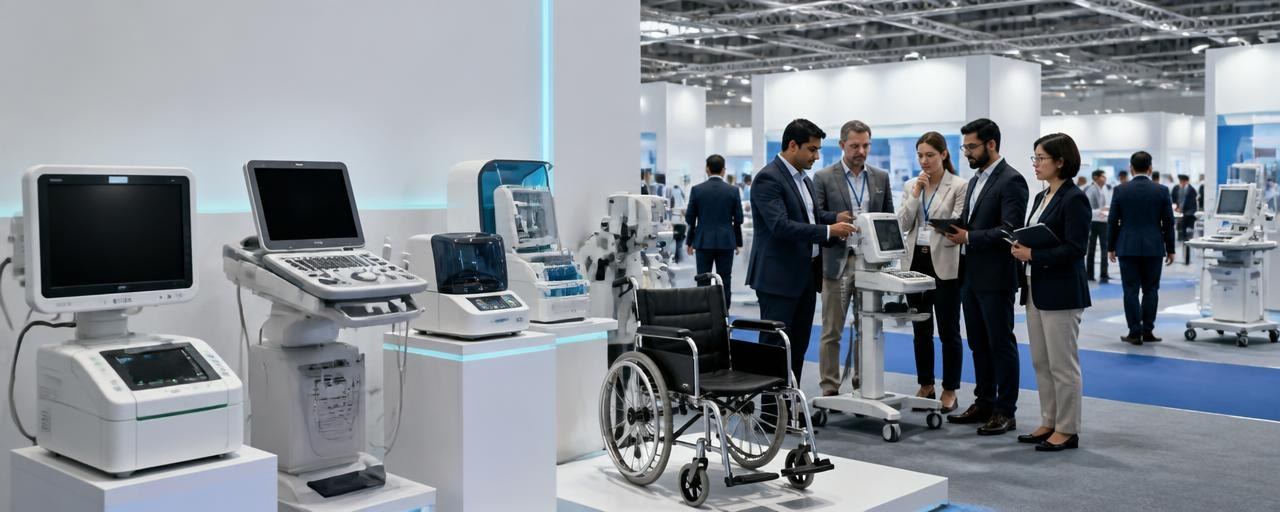
The fair covers equipment and services relevant to clinical care, diagnostic laboratories, hospital operations and medical-device manufacturing. This range lets visitors consider how a product category fits with the wider healthcare environment rather than viewing it in isolation.
Compare, question and qualify
For procurement teams, the exhibition can support early-stage comparison of product types and supplier conversations. Clinicians and laboratory professionals can identify technical questions to take back to their teams. Manufacturers and suppliers may use discussions to understand application requirements, but suitability, compliance, service and commercial terms must be assessed directly with each provider.
Learn from the previous edition's forums
The organiser's 2026 Delhi report describes conferences and knowledge platforms addressing healthcare delivery, diagnostics, digital health, nursing and procurement. These topics connect product discovery with operational and policy questions affecting healthcare organisations.
- 15,000 m² gross exhibition space was reported for the 2026 edition.
- 302 exhibitors and 18,279 visitors were reported in 2026.
- 450 conference delegates were reported in 2026.
- The organiser reported participation from 14 countries in 2026.
These are figures for the previous Delhi edition, not forecasts for 2027. They indicate a substantial setting for cross-sector browsing and focused evaluation.
Who should visit New Delhi Medical Fair India?
Your objectives will differ according to whether you are sourcing products, assessing clinical fit, supplying the sector or following industry development. Use the following audience-specific priorities to decide what deserves your time.
Hospital procurement and healthcare operations teams
Useful if you are assessing equipment or services for hospitals, clinics or diagnostic facilities. Prepare a short list of operational requirements, such as intended use, compatibility with existing workflows, maintenance and service expectations, training needs, procurement timing and documentation. Ask suppliers for the technical materials and evidence your organisation requires; the fair itself does not establish that a product is suitable or approved for a particular use.
Clinicians, nurses and laboratory professionals
The 2026 programme brought together doctors, surgeons, nurses, nursing students and healthcare professionals around patient safety, nursing leadership, diagnostics and healthcare delivery. If you attend in a clinical or laboratory role, prioritise products and sessions that address a defined workflow or care challenge. Record what needs clinical, technical, infection-control or laboratory review after the exhibition.
Medical-device, diagnostics and digital-health manufacturers
The event's reported exhibitor base, medical-device focus, ClinLab platform and digital-health content make it relevant to suppliers exploring healthcare-sector engagement. Define the products and use cases you want to present, identify the buyer or technical roles you need to understand, and prepare concise answers on specifications, support, manufacturing and applicable regulatory documentation. Do not assume that attendance guarantees distribution, investment or sales outcomes.
Policy, research and healthcare innovation professionals
The previous edition included policymakers, researchers, innovators and industry stakeholders, as well as discussion of supply-chain resilience, interoperability and future-ready hospitals. Visitors working on research, policy or innovation can use the event to compare perspectives across manufacturers, healthcare providers and professional forums, then verify any policy or market claims against authoritative sources.
What can you find at New Delhi Medical Fair India?
The organiser's descriptions and 2026 report identify several connected areas of the healthcare supply chain:
- Medical technology and devices: equipment and solutions for healthcare providers and clinical settings.
- Diagnostics and clinical laboratories: laboratory technology and in-vitro diagnostics, including the ClinLab India and DIAGNOSTICA focus.
- Healthcare IT and digital health: digital-health technologies and start-up activity, including the FTR4H platform.
- Hospital infrastructure and care delivery: systems and solutions associated with hospital operations and future-ready healthcare facilities.
- Rehabilitation and assistive technology: rehabilitation, orthopaedic and assistive-aid areas, including the Rehaindia focus.
- Medical manufacturing: raw materials, components, machinery, services and medtech manufacturing solutions.
Use these categories as a starting map, then check the organiser's current exhibitor information and programme before deciding which products or sessions to prioritise. The 2027 exhibitor list and detailed programme should be confirmed with the organiser as they are released.
What makes New Delhi Medical Fair India distinctive?
Its scope links healthcare delivery with devices, diagnostics, manufacturing and professional knowledge exchange.
At the 2026 Delhi edition, the organiser reported a Make in India Pavilion, the ClinLab India and DIAGNOSTICA in-vitro diagnostics pavilion, and a Rehaindia rehabilitation focus. Its report also describes the 10th International Voice of Healthcare Conference, the 7th ClinLab India Conference, the FTR4H digital-health technology pavilion and conference, and the launch of the Healthcare Leadership & Nursing Excellence Summit. Those are examples from the previous edition; they should not be treated as a confirmed 2027 programme. The combination is relevant to people who need to compare equipment alongside questions of diagnostics, healthcare operations, workforce and technology adoption.
What should you try to achieve during New Delhi Medical Fair India?
If you are a procurement professional
Leave with a shortlist of solutions that merit a documented technical and commercial review. For each product category, record the supplier, intended application, key specification, compatibility question, service model and the document you need next.
If you are a clinician, nurse or laboratory professional
Identify technologies or ideas that address a specific workflow or patient-safety question. Note the evidence, training and local evaluation your organisation would require before considering adoption.
If you are an exhibitor or supplier
Learn which user needs and operational constraints your offering must answer. Prepare concise product information and a follow-up plan, while treating any interest expressed at the fair as an early conversation rather than a confirmed business result.
If you work in research, policy or innovation
Compare how manufacturers, healthcare providers and professional forums frame a shared issue. Capture the source and context of claims so that you can verify them after the event.
How to prepare before New Delhi Medical Fair India
1. Define the decision you need to make
Turn a broad aim such as “see new medical technology” into a practical question: which device category needs evaluation, what laboratory or care workflow is changing, or what information is missing from a procurement review? A defined question helps you avoid spending equal time on unrelated displays.
2. Prepare a requirements sheet
For each product or service, note its intended use, user group, operating environment, compatibility requirements, service and training expectations, documentation needs and the next decision date. For diagnostics, add the test or workflow context and laboratory requirements your team needs to assess. Avoid sharing patient-identifiable information.
3. Check the organiser's current information
Before travelling, review the organiser's website for the 2027 exhibitor list, visitor registration, conference programme, hall information and arrival guidance. The available evidence confirms the event dates and venue, but does not establish all 2027 visitor arrangements or programme details.
4. Rank suppliers and topics
When the exhibitor directory becomes available, create three groups: A for essential suppliers or topics, B for relevant comparisons, and C for optional exploration. Group targets by product area so you can use the exhibition time efficiently. Treat a directory listing as a starting point, not an endorsement.
5. Prepare questions that make comparisons useful
- What intended use and user group is this product designed for?
- Which technical specifications determine fit with our current equipment or workflow?
- What validation, performance or quality documentation can the supplier provide?
- What installation, training, maintenance and service arrangements are available?
- For a diagnostic solution, what sample, test, laboratory or interoperability requirements apply?
- Which local registration, import or conformity requirements should we verify for this device?
- What are the expected supply, consumables and support arrangements, and what is still subject to confirmation?
- Who should receive our follow-up question, and what information can they provide?
How to make the most of the exhibition
Use a consistent record for each useful conversation: Supplier → product category → intended application → evidence or specification to review → open question → next action. This makes it easier to compare diagnostic, clinical and hospital solutions after the show, when several products may seem similar.
Separate general product information from claims that require verification. Record exact model or product names only when supplied by the exhibitor, and ask for formal documentation rather than relying on a verbal summary. For clinical or procurement decisions, include the relevant technical, regulatory, biomedical engineering, infection-control or laboratory colleagues in the follow-up process.
The event covers multiple areas, so allocate time according to your objective. If a conference or special platform is confirmed in the 2027 programme, compare its published theme with your priorities before adding it to your plan. The 2026 forums are useful examples of the event's previous content, not a promise of repeat sessions.
Plan your time realistically
The 2027 Delhi event is scheduled across three days. The organiser lists 10:00–18:00 opening on 13 and 14 March and 10:00–17:00 on 15 March. The available information does not confirm the final hall layout or the location of each exhibitor, so check the organiser's latest plan before making a detailed route.
- At the start of a day: confirm opening information and identify the highest-priority product areas or published sessions.
- During the main exhibition hours: protect time for planned supplier discussions and technical questions, leaving some time for relevant discoveries.
- Before leaving: review your notes, mark follow-ups and clarify who in your organisation should assess each item.
If you only have one day, focus on your A-priority suppliers and the most relevant professional content. Use additional time only when it enables meaningful comparison across categories or participation in a confirmed programme item.
Beyond the New Delhi Medical Fair India exhibition floor
The 2026 Delhi edition's reported programme included the 10th International Voice of Healthcare Conference, with topics such as future-ready hospitals, medical devices and advanced therapies, digital-health transformation and nursing leadership. The 7th ClinLab India Conference focused on diagnostic resilience and strengthening the in-vitro diagnostics supply chain. The Healthcare Leadership & Nursing Excellence Summit addressed patient safety, healthcare infrastructure and procurement ecosystems. FTR4H presented digital-health technology and start-up showcases around responsible AI. These previous-edition details provide context for the event's knowledge programme; check the organiser's 2027 announcements for what will actually take place.
Networking at New Delhi Medical Fair India
Make professional conversations specific. Introduce the organisation or clinical context you represent, explain the product or workflow question you are investigating, and ask the other person which technical information or colleague would be useful next. For procurement and clinical discussions, distinguish an exploratory conversation from a formal tender, clinical evaluation or purchasing process.
Before ending a useful exchange, agree on a clear next step: a technical document, a product demonstration arranged through the supplier, a contact for regulatory questions, or a follow-up conversation. Record the person's role and the context of the discussion, and obtain permission before sharing contact details onward.
Travelling to New Delhi Medical Fair India
The confirmed venue is Bharat Mandapam (Pragati Maidan), with Halls 4 and 5 identified for the Delhi edition. Confirm current entry arrangements, visitor registration, accessibility information, local transport guidance and any security or arrival instructions with the organiser and venue before travel. Do not rely on an older edition's arrangements without checking that they apply to 2027.
Where should you stay for New Delhi Medical Fair India?
Choose accommodation according to the balance of exhibition attendance, meetings and time in the city. If your plan centres on the fair, prioritise dependable access to the confirmed venue and enough flexibility for the organiser's published opening schedule. If you also have meetings elsewhere, compare their locations before choosing a base. Check current rates, cancellation conditions and transport options directly; no particular hotel or price is endorsed here.
One day or several days at New Delhi Medical Fair India?
- One day: may suit a visitor with a short, prioritised supplier list or a single conference objective. Focus on the confirmed areas most relevant to that objective.
- Two days: may allow more time to compare medical-device, diagnostics or hospital-related solutions and to return to suppliers with follow-up questions.
- Three days: may be useful for visitors with several product categories to assess or who want to combine exhibition time with programme sessions, if the 2027 programme supports that plan.
These are planning options rather than claims about required attendance. Choose the duration after the current directory and programme are available.
New Delhi Medical Fair India is particularly valuable if you have a project
A live procurement, laboratory or healthcare-improvement project gives product discussions a practical frame. Bring non-confidential requirements such as the intended application, operating environment, compatibility needs, user group, service expectations, implementation timing and the evidence your organisation requires. For diagnostic products, clarify the relevant testing workflow and technical requirements. For digital-health solutions, identify interoperability, data governance and integration questions for your technical team. Do not bring patient-identifiable information or treat exhibition material as a substitute for your organisation's formal evaluation.
After New Delhi Medical Fair India: where the real value starts
Within your organisation's normal process, sort notes into three groups:
- A — immediate review: products or information connected to a current clinical, laboratory or procurement need.
- B — further evaluation: potentially relevant options that require technical, regulatory, budget or stakeholder input.
- C — market intelligence: useful context on technologies, supplier approaches or topics to monitor.
For each A or B item, send a concise follow-up that states the application and the information required next. Request specifications, quality and regulatory documentation, compatibility details, service terms or a formal quotation where appropriate. Verify claims with your technical and regulatory teams, compare options against the same criteria, and record who owns the next decision.
Who should consider exhibiting at New Delhi Medical Fair India?
The organiser's reported categories and previous-edition content point to potential relevance for companies working in medical devices, diagnostic and laboratory technology, healthcare IT and digital health, hospital infrastructure, rehabilitation and assistive aids, and medical manufacturing. Manufacturers, technology developers and service providers should assess whether the event's healthcare audience aligns with their own product and market objectives.
Before exhibiting, define the audience you need to understand, the product evidence you can present, and the follow-up capacity available after the fair. Check current exhibitor terms, costs, stand options, deadlines and regulations directly with Messe Düsseldorf India; those commercial details are not verified here. Participation may support product visibility and conversations, but does not guarantee orders, distribution or investment.
New Delhi Medical Fair India visitor checklist
Before the visit
- ☐ Set a product, procurement, clinical or research objective.
- ☐ Check the organiser's current registration, exhibitor directory, programme and arrival information.
- ☐ Prepare comparable technical questions and a prioritised list of suppliers or topics.
- ☐ Confirm the 2027 venue entry and daily closing times before travel.
During the visit
- ☐ Record the product category, application, evidence requested and next action for each useful conversation.
- ☐ Distinguish product claims from documentation you still need to verify.
- ☐ Allow time for relevant forums only when listed in the confirmed 2027 programme.
- ☐ Avoid sharing confidential or patient-identifiable information.
After the visit
- ☐ Prioritise contacts by urgency and fit with a real organisational need.
- ☐ Request technical, regulatory, service or commercial information needed for evaluation.
- ☐ Share findings with clinical, procurement, laboratory or engineering colleagues as appropriate.
- ☐ Record decisions, unresolved questions and who owns each follow-up.
Is New Delhi Medical Fair India worth visiting?
The event is most relevant to healthcare procurement and operations teams, practitioners, diagnostic and laboratory professionals, medical-technology suppliers, and people working on healthcare policy or innovation. Its reported 2026 scale and cross-sector content provide a substantial setting for exploring products and professional issues. The practical return depends on preparation: visitors with clear requirements can compare more purposefully, while unstructured browsing may produce a large volume of material without resolving a decision. Review the organiser's 2027 visitor information and programme before committing to a specific itinerary.
New Delhi Medical Fair India 2027 at a glance
| Item | Information |
|---|
| Event | Medical Fair India – Delhi, 33rd edition |
| Dates | 13–15 March 2027 |
| City and country | New Delhi, India |
| Venue | Halls 4 and 5, Bharat Mandapam (Pragati Maidan) |
| Organiser | Messe Düsseldorf India Pvt. Ltd. |
| Main areas | Medical devices, diagnostics, healthcare IT and digital health, hospital infrastructure, rehabilitation and medical manufacturing |
| Relevant audiences | Healthcare procurement and operations, clinicians and nurses, medical-technology suppliers, policymakers and researchers |
| Latest published Delhi figures | In 2026: 302 exhibitors, 18,279 visitors, 15,000 m² gross space and 450 conference delegates |
| 2027 programme | Check the organiser's announcements; previous-edition programme details are not a confirmed 2027 schedule |
The date, venue and organiser are confirmed by the event website. Visitor arrangements, exhibitor listings and detailed programme information should be checked again as the 2027 edition approaches.
Make New Delhi Medical Fair India a purposeful visit
Choose the clinical, procurement, manufacturing or research question that matters most to you, then use the exhibition to compare relevant evidence and define follow-up. Explore. Compare. Verify. Follow up.
Medical-device and healthcare-technology opportunities in India
Market size and demand
IBEF describes India's medical-devices market as a forecast to grow from US?.2 billion in 2025 to US?.1 billion by 2030. These are market projections, not realised sales, and the broad market figure does not show demand for any single product category. The event organiser also cites the National Medical Devices Policy 2023, including a policy target of US? billion by 2030; that target should likewise be read as an ambition rather than a guaranteed outcome.
Market drivers and possible commercial areas
Healthcare demand and policy attention to the medical-device sector are relevant context for the fair's device, diagnostic, hospital and manufacturing categories. Companies could investigate whether their specific products fit healthcare-provider, laboratory or manufacturing requirements. The available market evidence does not establish segment-level demand or a supply gap.
- Medical devices and hospital technology: suppliers may assess potential fit with healthcare-provider needs and compare local distribution or service requirements. Product-level demand and competition need separate research.
- Diagnostics and laboratory solutions: companies may explore needs around laboratory workflows and in-vitro diagnostics; technical fit, procurement pathways and regulatory requirements require product-specific verification.
- Manufacturing inputs and digital health: component, equipment and digital-health providers may investigate possible links to domestic manufacturing and healthcare delivery. The broad forecast alone does not demonstrate a commercial opportunity for a particular offering.
Regulations and market-entry conditions
India's Central Drugs Standard Control Organization identifies medical devices as regulated under the Drugs and Cosmetics Act and Medical Devices Rules, 2027, and describes import licensing requirements for relevant devices. Manufacturers and importers should confirm the device classification, applicable registration or licence, standards and current requirements with CDSCO and qualified advisers before commercial activity. Requirements can depend on the product and route to market.
What this could mean for exhibitors
Exhibitors may use the event to test how their medical-device, diagnostic, hospital or manufacturing offer relates to healthcare-sector needs and to identify questions for local distribution, service and compliance research. The market forecast is broad, so decisions should be based on product-specific evidence rather than the headline projection.
What this could mean for visitors
Healthcare and laboratory visitors may compare technologies and ask suppliers for the specifications, documentation and support details needed for local evaluation. Procurement teams can use these conversations to frame subsequent technical and regulatory checks; attendance does not guarantee product approval or procurement access.
Discover New Delhi
New Delhi combines historic architectural sites with the modern capital's civic and cultural life. The event venue, Bharat Mandapam at Pragati Maidan, is in New Delhi itself, so visitors can plan city time around the exhibition without confusing a neighbouring municipality with the host city.
Humayun's Tomb
Delhi Tourism describes this 1570 garden-tomb as the first garden-tomb on the subcontinent, making it a notable example of the city's architectural heritage.
Qutb Minar
This early-thirteenth-century red-sandstone tower and archaeological complex offers a view of Delhi's historic architecture and layered heritage.
Red Fort
The seventeenth-century Mughal fort in Old Delhi is known for its red-sandstone walls and provides another perspective on the city's historic built environment.
Consider setting aside time for one or more sites around your fair commitments, and confirm current visitor information directly before making plans.
For further information, please click
here .