Automation Taipei 2027
4–7 August 2027 · Taipei Nangang Exhibition Center, Halls 1 and 2 · Taipei, Taiwan
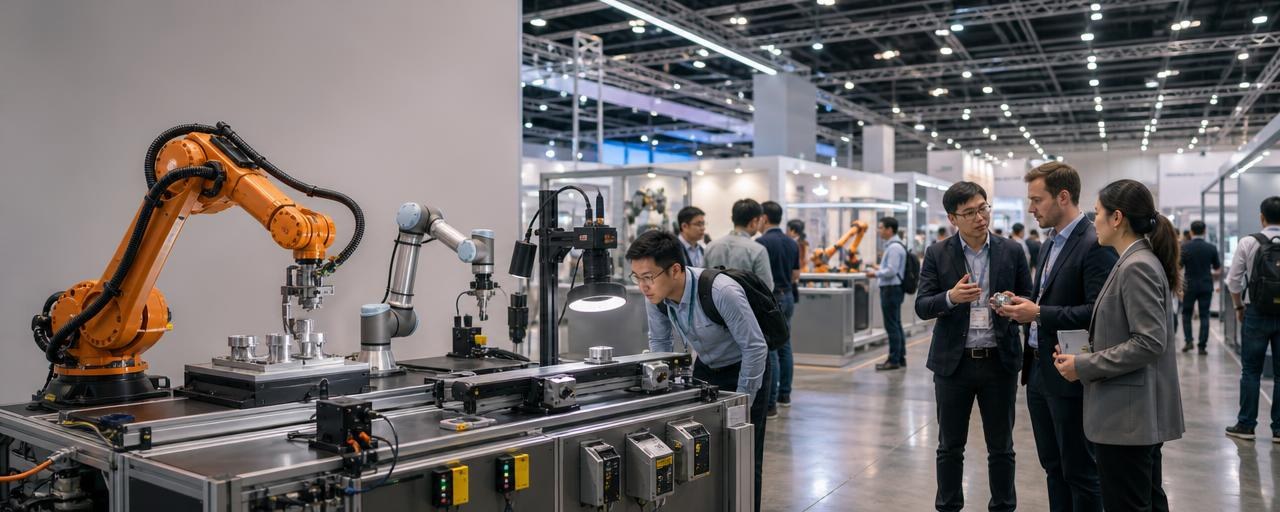
Automation Taipei is a professional trade exhibition for industrial automation and robotics. Its focus includes smart manufacturing and system integration, factory automation, robotics and related production technologies. The value for visitors is not simply seeing equipment: it is comparing approaches, asking suppliers application-specific questions and building a clearer view of what may fit a manufacturing requirement.
Automation Taipei at a glance
| Item | Information |
|---|
| Event | Automation Taipei 2027 |
| Event type | Business trade exhibition |
| Category | Industrial manufacturing and factory automation |
| Dates | 4–7 August 2027 |
| Opening hours | 10:00–17:00, 4–6 August; 10:00–16:00 on 7 August |
| City and country | Taipei, Taiwan |
| Venue | Taipei Nangang Exhibition Center, Halls 1 and 2 |
| Main sectors | Industrial automation, robotics, smart manufacturing and system integration, factory automation, machine vision and related equipment |
| Primary audiences | Manufacturing buyers, engineers, system integrators, automation suppliers and industrial decision-makers |
| Latest published scale | For 2025, the German Trade Office Taipei listing reported 842 exhibitors and 314,756 visitors |
The 2027 dates, venue and visitor hours are listed on the event’s official pages. The next edition’s detailed programme and exhibitor information should be checked with the organiser as they are released.
Why Automation Taipei matters to manufacturing
Evaluate technologies as a connected system
Automation projects rarely depend on one device alone. Robotics, controls, sensors, motion components, inspection and software need to work together in a defined process. A multi-sector exhibition can help engineering and procurement teams compare these elements in one visit and identify the questions that matter before specifying equipment.
Compare suppliers against real production needs
Buyers can use conversations with exhibitors to test practical fit: throughput, accuracy, integration with installed equipment, operating environment, commissioning, training, maintenance and spare-parts support. These details are more useful than a product demonstration viewed without an application in mind.
Follow developments in smart manufacturing
The official event description highlights smart-manufacturing solutions, including factory equipment for data analysis, autonomous-learning robots and AI-related applications. Visitors can use these themes to frame discussions about where sensing, analysis and automation may address a production constraint, while validating each product’s capabilities directly with its supplier.
The German Trade Office Taipei’s listing for the 2025 edition reports 842 exhibitors and 314,756 visitors. These are reported event figures, not independently audited attendance; they indicate a substantial exhibition environment in which advance prioritisation can make a visit more purposeful.
Exhibition sectors and product groups at Automation Taipei
The following groups translate the event’s industrial automation and smart-manufacturing focus into practical areas to investigate. Product lines are representative of each sector; confirm specific exhibitors and products in the current directory.
1. Industrial robots and robotic applications
- Articulated industrial robot arms
- Collaborative robots and work-cell applications
- Robot end-effectors, grippers and tooling
- Robot controllers and programming interfaces
- Robotic handling, assembly and material movement
2. Smart manufacturing and system integration
- Integrated automation cells and production systems
- Manufacturing data collection and analysis equipment
- Industrial software and connected production tools
- System integration and application engineering
- Interfaces linking machines, controls and production information
3. Factory automation equipment
- Automated assembly and material-handling equipment
- Conveyors and production-line components
- Machine control and operator interfaces
- Factory monitoring and process-control equipment
- Automation equipment for repetitive manufacturing tasks
4. Machine vision and inspection
- Industrial cameras and imaging components
- Vision systems for inspection and measurement
- Optics, lighting and image-acquisition components
- Automated product and process inspection
- Vision software and integration with production equipment
5. Motion control and precision components
- Servo motors, drives and motion controllers
- Linear guides, actuators and positioning systems
- Motors, reducers and transmission components
- Precision stages and motion modules
- Control components for coordinated machine movement
6. Sensors, measurement and industrial connectivity
- Position, proximity and process sensors
- Measurement and test equipment for production
- Industrial communication and network components
- Data acquisition and machine-status monitoring
- Components supporting equipment integration and diagnostics
Who should visit Automation Taipei?
Manufacturers and plant operators
Useful if you are assessing a production challenge, modernising a line or reviewing equipment options. Prioritise:
- Automation that addresses a specific bottleneck or repetitive task
- Robotic handling, assembly or material movement suited to your process
- Machine-vision inspection and measurement options
- Compatibility with installed controls, machines and factory networks
- Commissioning, operator training, maintenance and service support
Relevant roles include plant managers, production managers, manufacturing engineers, maintenance leaders and technical directors.
Industrial buyers and procurement teams
Useful if you are comparing suppliers or preparing a purchase decision. Focus on:
- Technical specifications against a written requirement
- Total system scope, including integration and commissioning
- Delivery, installation and support arrangements
- Spare-parts availability and service coverage
- Evidence needed for internal technical and financial approval
Relevant roles include procurement managers, sourcing specialists, project buyers and operations decision-makers.
Automation engineers and system integrators
Useful if you design, specify or integrate industrial systems. Compare:
- Robot and motion-control architectures for defined applications
- Interfaces between sensors, cameras, controllers and machines
- Integration requirements, programming tools and diagnostics
- Vision-system performance under actual line conditions
- Supplier engineering support and commissioning responsibilities
Relevant roles include controls engineers, robotics engineers, machine builders, automation consultants and system-integration teams.
Automation, robotics and component suppliers
Useful if you are evaluating a route to industrial customers, technical partners or distributors. Prepare:
- A concise explanation of the applications your products address
- Technical documentation and compatibility information
- Service, training and spare-parts plans for the target market
- A clear profile of the customer and production process you serve
- Questions that help qualify prospective partners and applications
Relevant roles include export managers, product managers, business-development teams and distributor representatives.
Why visit Automation Taipei?
- Compare automation approaches: assess robotics, controls, sensing and integration options against a real production requirement.
- Build a supplier shortlist: record which companies can address your application and what evidence or quotation you need next.
- Review inspection options: compare machine-vision and measurement approaches for a defined quality or process-control task.
- Evaluate integration scope: clarify interfaces, commissioning responsibilities, training and support before considering a system investment.
- Explore smart-manufacturing applications: ask how data collection, analysis and AI-related tools are used, what inputs they require and how performance is measured.
- Understand the supplier landscape: compare product specialisations and service models across the automation value chain.
Why exhibit at Automation Taipei?
Automation and robotics suppliers, system integrators, machine-vision providers, motion-control companies and industrial-component manufacturers may consider the exhibition when seeking to present solutions to manufacturing professionals. Its 2025 visitor and exhibitor totals, as reported by the German Trade Office Taipei, suggest a sizeable audience; they do not guarantee access to buyers or commercial results.
Exhibitors can use participation to demonstrate a clearly defined application, explain system compatibility and discuss the service needed to support equipment after installation. Prepare a target-customer profile, technical materials and a follow-up process before committing resources. International companies should assess local distribution, technical support, spare-parts provision, language needs and product-specific import or conformity requirements. Confirm the applicable rules for each product and tariff classification before shipment or market entry.
What should you try to achieve at Automation Taipei?
A visit becomes more useful when it ends with a decision or a next action. Set an objective that can be evaluated after the show.
If you manage a production facility
Identify the two or three automation approaches worth testing against a named production bottleneck.
If you are a procurement professional
Build a comparable shortlist with specifications, integration scope, support requirements and a named follow-up contact.
If you are an engineer or system integrator
Clarify interfaces and technical constraints for one system concept, then list the information still needed to validate it.
If you exhibit
Qualify relevant applications and potential channel partners, then agree a specific technical or commercial follow-up where appropriate.
How to prepare before Automation Taipei
- Define the production question.
Write down the process, quality issue, labour-intensive task or capacity constraint you want to investigate. Include target output, workpiece characteristics, environment and any safety or compliance conditions that matter.
- Map the system, not just the product.
List the machines, controls, sensors, networks and software that a proposed solution would need to connect with. Bring non-confidential specifications or interface requirements that help suppliers assess fit.
- Prioritise companies.
Use the organiser’s exhibitor information when available. Sort targets into essential, useful and explore-if-time groups, then identify the questions each conversation should answer.
- Prepare technical questions.
Ask about cycle time, accuracy, payload, repeatability, environment, integration interfaces, commissioning, training, maintenance, spare parts, safety documentation and service coverage—only where relevant to the product under review.
- Set decision criteria.
Agree internally how you will compare options: technical fit, integration effort, support, lead time, operating requirements and total project scope. Avoid comparing quotations that cover different deliverables.
- Plan the visit.
Check the organiser’s current visitor information, registration details, hall arrangements and daily schedule before travelling. The official pages list public opening hours as 10:00–17:00 from 4–6 August and 10:00–16:00 on 7 August.
How to make the most of the exhibition
Do not collect brochures without recording why each supplier matters. For each relevant conversation, capture:
- Company and product: what equipment or system is being discussed?
- Application: which process or requirement could it address?
- Technical fit: what specifications, interfaces or tests remain to be checked?
- Delivery and support: who handles integration, commissioning, training and service?
- Next action: what document, demonstration, quotation or technical meeting should follow?
For robotics, record the task, payload, reach, cycle-time expectation and end-effector needs. For machine vision, note the inspection target, speed, lighting conditions and acceptable error rate. For system integration, distinguish the equipment price from programming, installation and commissioning scope.
Plan your time realistically
The exhibition runs across Halls 1 and 2 over four days. Build a route around your priority applications rather than trying to inspect every stand.
- Before arrival: mark essential exhibitors and group them by technology or project requirement.
- First part of the visit: meet priority suppliers while you have time to discuss technical questions in depth.
- Middle of the visit: compare related solutions, revisit gaps in your notes and inspect adjacent product categories that affect integration.
- Final part: return to the strongest prospects, confirm follow-up actions and organise the information gathered.
- When choosing days: the official schedule closes at 16:00 on the final day and 17:00 on the preceding public days; allow time for travel between halls and for substantive conversations.
A multi-day visit may be useful if your brief spans robotics, machine vision, controls and integration. A focused one-day visit can work when your target list is short and meetings are planned in advance.
Automation Taipei visitor profile and business opportunities
| Visitor profile | Main interests |
|---|
| Plant and production managers | Automation options for throughput, repeatability and production constraints |
| Manufacturing engineers | Robotics, controls, machine vision and system integration |
| Procurement teams | Supplier comparison, specifications, project scope and support |
| Controls and robotics engineers | Interfaces, motion control, programming and application fit |
| System integrators and machine builders | Components, compatible systems and supplier engineering support |
| Industrial distributors | Product ranges, service requirements and potential channel fit |
| Automation suppliers | Customer applications, technical partners and market positioning |
After Automation Taipei: turn research into decisions
Within a few days, organise contacts by urgency and relevance. For priority suppliers, send the application details they need to assess fit and request comparable information: specifications, system boundaries, delivery assumptions, commissioning responsibilities, training, maintenance and service coverage.
Separate product interest from a validated project. Before purchase, confirm performance under the intended operating conditions, compatibility with existing equipment, safety obligations, local support and the commercial terms. For a potential distributor or integration partner, define target applications, territory, technical responsibilities and after-sales expectations before discussing a formal arrangement.
Automation Taipei visitor checklist
Before
- ☐ Write down the production problem and measurable requirement.
- ☐ Identify priority suppliers and prepare technical questions.
- ☐ Check current registration, hall and travel information with the organiser.
- ☐ Prepare a comparable evaluation template for products and system scope.
During
- ☐ Record the application, technical fit, support model and next step for each useful conversation.
- ☐ Compare related systems rather than isolated components alone.
- ☐ Confirm who is responsible for integration, commissioning and service.
After
- ☐ Follow up promptly with the specifications needed for a technical assessment.
- ☐ Compare suppliers on equivalent scope and documented requirements.
- ☐ Validate import, conformity and support conditions before committing.
Is Automation Taipei worth visiting?
Automation Taipei is most relevant to professionals with a defined manufacturing, robotics or automation objective: sourcing equipment, comparing system approaches, evaluating inspection or control technologies, or researching suppliers and partners. Its broad automation scope can support cross-functional research, but the exhibition is more valuable when visitors arrive with application details and a clear way to evaluate what they find. A structured shortlist and disciplined follow-up turn a busy show floor into useful technical and commercial intelligence.
Closing question
What manufacturing problem do you want to solve, and which automation technologies could help you evaluate a better approach? Define. Compare. Validate. Follow up.
Industrial automation opportunities in Taiwan
Market size and demand indicators
Taiwan’s machinery industry recorded exports of US?.75 billion in 2025, up 7.0% year on year, according to figures reported by Taiwan’s Ministry of Finance and carried by the Overseas Community Affairs Council. This is a broad machinery-export indicator, not the size of Taiwan’s industrial-automation market. The same report linked machinery export performance to semiconductor companies purchasing equipment to expand capacity, indicating a manufacturing-investment driver relevant to suppliers of automation and production systems.
- Machinery exports: US?.75 billion in 2025, up 7.0% year on year; broad machinery-industry exports, not automation equipment alone.
- Semiconductor equipment demand: the report described semiconductor firms buying equipment to expand capacity; this is a demand driver, not a quantified automation-market value.
Commercial areas to investigate
- Factory automation and system integration: manufacturers and integrators may assess systems against semiconductor and wider industrial expansion needs; project specifications, installed systems and service capability must be validated.
- Robotics and motion technologies: suppliers may investigate applications in production and material handling; the broad machinery export figure does not establish robot demand or buyer budgets.
- Machine vision and inspection: manufacturers may compare inspection approaches for process and quality requirements; segment-level demand and application fit need to be confirmed directly.
Market-entry conditions
A U.S. Department of Commerce country guide summarising Taiwan’s Foreign Trade Act says most commodities may be imported freely and import permits are generally not required, while some products are restricted or require permits or approvals. Requirements depend on the product and its classification; exporters should verify the current rules and any applicable conformity obligations for each item before shipment.
What this means for exhibitors and visitors
Exhibitors may use the event to test how their automation products fit specific manufacturing applications and to investigate local distribution, integration and after-sales support. Visitors may compare suppliers against equipment requirements and assess Taiwan’s industrial supply landscape. The available machinery export figure is broad, so neither market size nor product-level demand should be inferred from it alone.
Explore Event Opportunities
Use Automation Taipei to compare industrial technologies, investigate supplier fit and build a focused participation plan with professional support from ilikevents.
Get Expert Assistance from ilikevents to plan a visit or exhibition participation.
See the ilikevents services for this event
For further information, please click
here .