IAA TRANSPORTATION 2028
19–24 September 2028 · Deutsche Messe exhibition grounds (Hannover Messe), Hannover, Germany
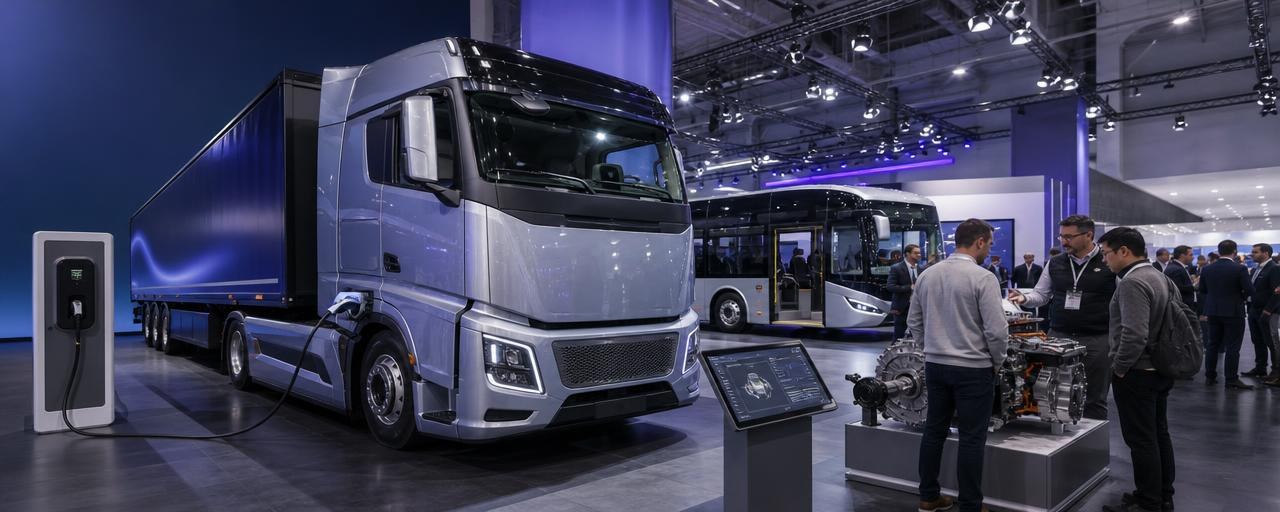
IAA TRANSPORTATION is an international business event for commercial vehicles, transport and logistics. It brings together vehicle and bus manufacturers, body and trailer makers, suppliers, technology and service companies, fleet and logistics operators, and start-ups. Its scope extends beyond vehicles to powertrains, charging and refuelling, connected transport, fleet systems and digital logistics. The 2028 visitor hours and detailed programme have not yet been published; the figures and formats below from 2026 describe the previous edition, not a forecast.
IAA TRANSPORTATION 2028 at a glance
| Item | Information |
|---|
| Edition | 2028 |
| Type and category | Business trade fair · Traffic, Transportation & Logistics |
| Dates | 19–24 September 2028 |
| Opening hours | Not yet published for 2028 |
| City, country and venue | Hannover, Germany · Deutsche Messe exhibition grounds (Hannover Messe) |
| Organiser | German Association of the Automotive Industry (VDA) |
| Main sectors | Commercial vehicles, buses, bodies and trailers, components, powertrains, transport technology, logistics and fleet systems |
| Latest published scale | 2026 organiser-reported: 1,589 exhibitors from 46 countries and more than 140,000 visitors |
Why IAA TRANSPORTATION matters
Evaluate the whole operating system
A commercial vehicle is part of a working system: duty cycle, body or trailer, energy supply, charging or refuelling, software, service and operating conditions all affect fit. IAA TRANSPORTATION brings vehicle exhibits and transport technologies into one professional setting, helping visitors compare options and identify technical questions for follow-up.
Connect freight operations with technology
The organiser’s themes include electric, hybrid, battery and fuel-cell powertrains; biofuels and synthetic fuels; connected and autonomous vehicles; software-based logistics; intelligent fleet solutions; urban mobility; and charging infrastructure. This makes the event relevant to equipment decisions and the systems that support vehicle use.
Use published scale as context
- 1,589 exhibitors from 46 countries were reported for 2026.
- More than 140,000 visitors attended, including more than 113,000 industry professionals on weekdays.
- 40% of trade visitors were international; 77% said they influenced company purchasing or procurement decisions.
These are organiser-reported 2026 figures, not independently audited attendance or a forecast for 2028. They indicate a broad professional audience; a target list and clear technical questions can help visitors use their time well.
Exhibition sectors and product groups at IAA TRANSPORTATION
Commercial vehicles and buses
- Heavy-duty trucks and road-freight vehicles
- Light and medium commercial vehicles
- Urban and intercity buses
- Battery-electric and alternative-powertrain vehicles
Vehicle bodies, trailers and equipment
- Commercial vehicle bodies and conversions
- Freight trailers and semi-trailers
- Chassis, axles and running gear
- Load-handling and cargo transport systems
Components and vehicle systems
- Commercial-vehicle components and assemblies
- Braking, steering and safety systems
- Power electronics and energy management
- Diagnostics, maintenance and service technology
Powertrains, energy and charging
- Battery-electric and hybrid drivetrains
- Fuel-cell and hydrogen-related vehicle technology
- Biofuels, synthetic fuels and combustion technologies
- Charging systems and energy management
Connected transport, fleet and logistics
- Fleet management and telematics
- Connected vehicle and communication systems
- Logistics planning and transport software
- Driver-assistance and automated-driving technology
Micromobility and new transport concepts
- Cargo bikes and small vehicles
- Last-mile delivery concepts
- Urban fleet and mobility systems
- Start-up products and specialist services
These groups reflect the organiser’s published scope; they are not a confirmed 2028 exhibitor list.
Who should visit IAA TRANSPORTATION?
Freight, logistics and fleet operators
Useful if you are evaluating vehicles for defined routes, payloads or utilisation; considering powertrain or energy choices; or reviewing fleet and logistics systems. Bring representative duty cycles, route types, payload ranges and replacement timing.
Vehicle manufacturers, body builders and component suppliers
Useful if you are reviewing systems, components, bodies, trailers or engineering technologies; identifying application requirements; or assessing supply relationships. Prepare interface details, specifications and service requirements.
Transport technology and infrastructure providers
Useful if you work with charging, energy, connected vehicles, fleet systems or logistics software. Be ready to explain compatibility, data and implementation needs, support and the evidence behind performance claims.
Transport start-ups and service companies
Useful if you are validating a commercial transport use case, seeking feedback or exploring technology and channel relationships. A start-up area and networking formats featured in 2026; 2028 formats and terms are not yet confirmed.
Relevant roles: fleet directors, transport and logistics managers, procurement teams, vehicle engineers, product managers, operations leaders, energy specialists, telematics teams, body and trailer designers, service managers, importers and distributors.
Why visit IAA TRANSPORTATION?
- Compare vehicle concepts against route, payload, utilisation, energy and service requirements.
- Evaluate powertrain choices in the context of your operation rather than headline claims alone.
- Review bodies, trailers and components for compatibility, payload, safety and maintenance needs.
- Assess fleet and logistics technology against existing processes, systems and data requirements.
- Experience technologies directly where the confirmed 2028 programme permits; 84 vehicles were available for test drives in 2026, but this is not confirmed for 2028.
- Identify suppliers and partners for further evaluation using a prepared list of priority companies.
- Leave with decisions and next steps rather than only brochures and contacts.
Why exhibit at IAA TRANSPORTATION?
Commercial-vehicle and bus makers, body and trailer builders, component suppliers, energy and charging companies, logistics-software providers, fleet-service businesses and relevant start-ups may consider exhibiting when the audience and sector mix fit. The organiser reported 1,589 exhibitors from 46 countries in 2026; this does not guarantee a particular audience or commercial result in 2028.
Exhibitors may use participation to present products, explain applications, assess market feedback and identify distribution or service relationships. Value depends on product-market fit, target visitors, stand planning and follow-up. Prepare technical and lifecycle information, service and spare-parts arrangements, and clear participation objectives. International companies should assess applicable EU vehicle approval and emissions requirements, import arrangements, local representation and after-sales obligations with qualified advisers. Exhibiting does not itself establish market approval or guarantee buyers.
What makes IAA TRANSPORTATION distinctive?
It connects commercial vehicles with the operating systems around them. The official scope spans vehicles, buses, bodies and trailers, suppliers, transport services, micromobility, start-ups, powertrains, charging, fleet systems and transport software.
In 2026, 84 vehicles from 17 exhibitors were available for test drives, 8,500 test drives took place, and the organiser reported more than 150 world premieres and new products. These are previous-edition examples, not promised 2028 features.
IAA TRANSPORTATION is separate from IAA MOBILITY: this event focuses on commercial vehicles, transport and logistics; IAA MOBILITY is a different VDA event.
What should you try to achieve at IAA TRANSPORTATION?
If you manage a fleet
Example objective: shortlist three vehicle or fleet-system options for one defined operating requirement. Record duty cycle, payload, energy plan, service needs and questions to confirm.
If you buy vehicles, components or services
Example objective: compare suppliers against the same technical and commercial criteria. Note specifications, compatibility, support and the next information required.
If you supply transport technology
Example objective: identify the user problem, integration requirement and decision-maker for one application. Separate a promising conversation from a validated project and agree a practical next step.
How to prepare before IAA TRANSPORTATION
1. Define the decision
Write down whether you are addressing vehicle replacement, body configuration, powertrain, charging, fleet software, component sourcing or a service relationship. Bring the operating context needed to assess fit.
2. Build a target list
When the organiser publishes the 2028 directory and programme, identify relevant exhibitors, sessions and formats. The 2026 event had an exhibitor directory; do not assume those listings apply to 2028. Prioritise companies as A — essential, B — useful and C — explore if time allows.
3. Ask comparable questions
- Which vehicle classes, payloads and operating patterns is the solution designed for?
- What range, energy use or performance data apply to the stated conditions?
- Which charging, refuelling or depot requirements does it assume?
- How does it integrate with vehicle platforms, bodies, trailers and fleet systems?
- What are the maintenance, warranty, spare-parts and service arrangements?
- Which safety, approval, emissions or data requirements apply?
- What is confirmed, what is in development, and what evidence is available?
4. Plan meetings and logistics
Request meetings with priority suppliers and leave time for discovery. Check registration, opening hours and travel arrangements before booking. ilikevents can help with visit planning, registration and travel arrangements; exhibitors can request help assessing participation planning, stand selection and local market research.
How to make the most of the exhibition
Use one record for each priority discussion: Company → Product or system → Operating fit → Evidence → Open question → Next action. Compare vehicle and charging offers against route, payload and energy assumptions; headline claims are not comparable when test conditions differ.
For vehicles, consider body or trailer, payload, energy supply, service and digital integration. For software, ask what data it needs and how it fits current workflows. Use the 2028 directory, floor plan and programme only when published; 2026 tools and formats may change.
Plan your time realistically
The six-day event spans several professional sectors. One focused day may suit a narrow purchasing question and short exhibitor list. Two days may help compare multiple vehicle or technology areas. Three or more days may suit broad sourcing, several business units, international meetings or exhibiting. These are planning approaches, not official requirements; confirm the 2028 programme, hours and floor plan.
Beyond the exhibition floor
In 2026, formats included the IAA Conference, IAA Experience, IAA Startup Area, IAA Networking Tours and test drives. They show how previous editions combined exhibits, discussion and practical experience. The 2028 programme has not yet been published. Check participation rules and availability once sessions or demonstrations are announced.
Networking at IAA TRANSPORTATION
Make introductions specific: explain your organisation’s role, vehicle or technology interests and the question you want to resolve. Buyers should describe requirements clearly; exhibitors should state the application and evidence behind their offer. Record each contact’s role, product fit, issue to verify and agreed next step.
IAA TRANSPORTATION visitor profile and business opportunities
| Visitor profile | Main interests |
|---|
| Freight and logistics operators | Commercial vehicles, fleet systems and logistics software |
| Fleet owners and managers | Vehicle fit, powertrains, energy and service planning |
| Vehicle manufacturers | Components, systems and engineering technologies |
| Body and trailer builders | Platforms, running gear and freight applications |
| Procurement teams | Supplier comparison, specifications and support |
| Transport technology providers | Vehicle integration, fleet and charging requirements |
| Start-ups and service companies | Applications, product feedback and business relationships |
This is a guide to the event’s scope and relevant professional interests, not a confirmed 2028 attendee list.
Travelling to IAA TRANSPORTATION
The organiser’s 2026 arrival guide described rail access via Hannover Central Station and Hannover Messe/Laatzen station, with light-rail connections to the exhibition grounds. The guide noted construction-related changes for 2026; do not assume the same services or disruption applies in 2028. Check current organiser information and rail timetables before travel.
Practical information for international visitors
| Item | Information |
|---|
| City and country | Hannover, Germany |
| Venue | Deutsche Messe exhibition grounds (Hannover Messe) |
| Dates | 19–24 September 2028 |
| Visitor hours | Not yet published for 2028 |
| Rail reference | 2026 organiser guide listed Hannover Central Station and Hannover Messe/Laatzen; confirm 2028 services |
Confirm registration, entry requirements, accommodation, transport and payment arrangements before travel. Visa requirements depend on nationality. ilikevents can help with visit planning, travel arrangements and registration assistance.
After IAA TRANSPORTATION: where the value starts
Sort conversations while details are fresh: A for immediate action, B for a defined next discussion and C for market or technology intelligence. Request information that moves a decision forward: technical specifications, compatibility, service coverage, approval documentation, pricing or delivery terms where available.
Compare proposals on equivalent operating assumptions. For partnerships, confirm responsibilities, support, terms and decision owners. Share a concise recap with colleagues: the problem, options reviewed, evidence gathered, unresolved risks and proposed next step.
Is IAA TRANSPORTATION worth visiting?
The event is most relevant to professionals in commercial vehicles, road freight, fleet operations, logistics, vehicle systems and transport technology. It can be valuable when you arrive with a defined application or sourcing question and use exhibits and discussions to compare options. Visitors with general mobility interests may also find relevant areas, but the event’s centre is commercial transport rather than a general passenger-car show. Walking the halls without priorities can make a large event harder to turn into useful decisions.
Closing thought
Ask yourself: What transport or fleet decision can I make better by comparing the right solutions in person? Define the question, gather evidence and leave with a next step. Discover. Compare. Evaluate. Decide. Follow up.
Transport and logistics opportunities in Germany
Market size and demand
Destatis reports provisional 2025 road-goods volume of 3.338 billion tonnes carried in Germany by German and foreign lorries, with road freight performance of 470.5 billion tonne-kilometres. These indicate transport activity, not commercial-vehicle market revenue or demand for a particular product segment.
Market indicators
- Road goods carried: 3.338 billion tonnes in 2025, provisional; volume transported by German and foreign lorries.
- Road freight performance: 470.5 billion tonne-kilometres in 2025, provisional; transport work, not vehicle sales.
Drivers and commercial opportunities
Road-freight activity is relevant context for a fair covering commercial vehicles and logistics. The event’s official scope includes alternative powertrains, charging infrastructure, connected vehicles and fleet systems; EU Regulation 2024/1610 sets CO₂ emission standards for new heavy-duty vehicles. These facts support investigation, not an assumption of demand or profitability in a segment.
- Vehicle and powertrain evaluation: compare options against route, payload, energy and service needs; fit depends on duty cycle.
- Charging and energy systems: assess depot and high-power requirements; grid capacity, energy supply, site design and project economics remain constraints.
- Fleet and logistics technology: evaluate connected systems and software against workflows and data requirements; implementation is project-specific.
- Bodies, trailers and components: investigate systems suited to freight operations; compatibility, payload, maintenance and approval need checking.
Regulations and market-entry conditions
EU Regulation 2024/1610 establishes CO₂ emission performance standards for new heavy-duty vehicles. Manufacturers should assess provisions by vehicle class, role and intended market, alongside applicable EU type-approval and safety requirements. Exhibition attendance does not establish compliance or market access.
What this means for exhibitors
Exhibitors may test whether their vehicle, component, infrastructure or software offer addresses a defined transport application. A market-entry plan should cover technical fit, applicable requirements, local support, service and parts, and energy constraints. Freight indicators do not guarantee buyers or sales.
What this means for visitors
Visitors could compare solutions against fleet and logistics requirements, then investigate technical, service and regulatory questions with suppliers. Use the fair to build a shortlist; validate costs, approvals, infrastructure and performance separately.
Explore Event Opportunities
Explore how IAA TRANSPORTATION can help your organisation compare commercial-vehicle technologies, identify relevant suppliers and plan purposeful participation in transport and logistics.
Get Expert Assistance from ilikevents to plan your visit or exhibition participation.
See the ilikevents services for this event
For further information, please click
here .