IFAT Munich 2028: environmental technology in practice
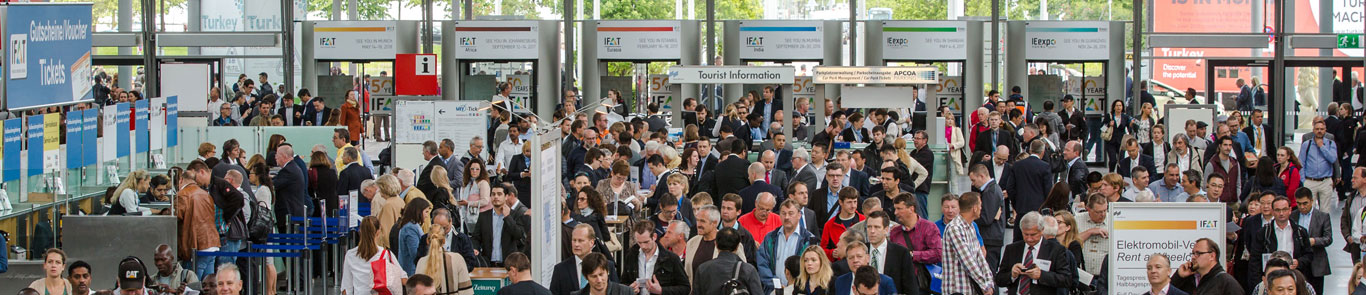
IFAT Munich is an international trade fair for environmental technologies, with a focus on water, recycling and circularity. The next edition is scheduled for 29 May–1 June 2028 at Messe München Exhibition Center in Munich, Germany. The event brings together solutions for municipal and industrial challenges, alongside representatives from business, science and public life. Its value is not limited to viewing equipment: visitors can use product displays, practical demonstrations and the event programme to compare approaches and frame the questions they need to resolve in their own operations.
Why IFAT Munich matters
Connect related environmental systems
Water supply, wastewater, waste and resource recovery are often treated as separate technical responsibilities. IFAT Munich covers these connected fields alongside circularity and municipal technology, giving professionals a setting to examine how equipment and services address different stages of infrastructure and material flows. Visitors can move from a water-treatment question to a recycling or resource-recovery question without losing sight of the operational context.
Compare practical applications
The organiser describes IFAT Munich as an application-oriented platform, with exhibits in action, live demonstrations, Spotlight Areas and guided Solution Tours. That practical emphasis can help visitors assess how a system is used, what operating conditions matter and which technical questions to take into a supplier conversation. Demonstrations are a starting point for evaluation, not a substitute for project-specific testing or due diligence.
Use the scale to organise research
At the 2026 edition, the organiser reported around 3,400 exhibitors, approximately 142,000 visitors and 300,000 square metres of exhibition space. These are 2026 figures, not promises about the next edition. They indicate a broad range of material to navigate, so a clear shortlist and a defined set of questions can make a visit more useful than trying to see everything.
Who should visit IFAT Munich?
Municipal utilities and public authorities
Teams responsible for drinking-water supply, wastewater services, waste management or municipal technology can use the event to investigate approaches relevant to public infrastructure. Focus on the performance conditions your service must meet, the constraints of existing assets and the outcomes a project needs to deliver. Compare options against those needs rather than relying on a product category or demonstration alone.
- List the service or infrastructure problem that needs attention.
- Bring non-sensitive operating requirements, such as capacity range, site constraints and integration needs.
- Ask suppliers how a solution is operated, maintained and adapted to local conditions.
- Record which claims need independent technical, procurement or regulatory review.
Industrial water and environmental operators
Industrial users can explore water, wastewater, recycling and resource-recovery technologies in relation to their own processes. A useful visit starts with the operational issue: water quality, process continuity, waste handling, energy use or opportunities to recover materials. Explain the application clearly, then ask what evidence is available for performance under comparable conditions.
- Prepare a concise process description and the problem a proposed system must solve.
- Ask about feed conditions, output quality, throughput, maintenance and integration requirements where relevant.
- Compare the operating assumptions behind different proposals, not only their headline features.
- Identify what information would be required for a site assessment or technical follow-up.
Buyers, procurement teams and project owners
Procurement professionals and project owners can use the breadth of exhibitors to build or refine a supplier shortlist. IFAT Munich covers multiple technologies that may address related needs, but suitability depends on the specification, application and procurement route. Use conversations to establish whether a supplier's solution merits a more detailed review, then document unanswered questions and required evidence.
- Separate essential requirements from preferences before comparing products.
- Ask for comparable technical information, service scope and project references relevant to your application.
- Clarify what is included in a system and which interfaces or supporting services are required.
- Record next steps and evaluation criteria instead of relying on memory after the visit.
Manufacturers, technology suppliers and distributors
Companies developing or supplying environmental technologies can assess how their products relate to municipal and industrial needs across water, wastewater, recycling and circularity. Exhibitors and prospective exhibitors can use the event to present solutions, gather informed industry feedback and consider potential commercial relationships. The presence of an audience or a conversation does not guarantee a sales lead or partnership; define the market question you want to test.
- Choose the product applications and buyer problems that best represent your offer.
- Prepare clear technical evidence and a concise explanation of operating conditions.
- Use conversations to learn how users specify, procure, install and support relevant solutions.
- Agree a specific follow-up action only when there is a genuine mutual reason to continue.
Researchers and professionals working across policy and industry
The organiser positions the event as a meeting place for representatives from politics, business and science. Researchers, technical advisers and policy professionals may find value in comparing how companies and users frame current environmental challenges, including circular economy, climate-resilient water management and municipal technology. Separate observed product capability from broader claims about sector-wide impact.
What can you find at IFAT Munich?
Water and wastewater
The event's stated scope includes drinking-water supply, water and wastewater treatment and related infrastructure. Visitors can use this coverage to explore systems for water handling, treatment and service delivery. Technical discussions are more productive when you can describe the water source or process, relevant quality requirements, operating context and constraints that a solution must address.
Waste, recycling and circularity
IFAT Munich covers waste and raw-materials management, recycling and circularity. The organiser's 2028 information highlights material-flow management and circular-economy challenges. Relevant discussions may concern how materials are collected, sorted, processed or returned to use; the exact fit depends on the product and the operation. Ask suppliers to explain input assumptions, output specifications and the steps needed to integrate a process.
Municipal and cross-sector technologies
Municipal technology, climate resilience and digitalisation are also identified as event topics. The organiser lists pollutant management, sustainable road construction and minerals among the wider solution areas available to visitors. Treat these as related but distinct specialisms: decide which are central to your work and which are useful for broader market scanning.
Spotlight Areas, tours and demonstrations
Current IFAT Munich information describes Spotlight Areas, guided Solution Tours and live demonstrations as ways to explore applications. The listed themes include textile recycling, hydrogen in the circular economy and digitalisation of water management. Use the 2028 programme as it is released to confirm which subjects, demonstrations and tours are scheduled, and whether they fit your objectives.
What makes IFAT Munich distinctive?
IFAT Munich combines environmental-technology categories that connect water systems, material flows and municipal or industrial operations. The organiser's current information presents the event as an application-focused platform, not only a static product display: exhibits can be seen in action, while tours and demonstrations are intended to help visitors examine practical uses. This makes it relevant to people who need to compare solutions against a real operating question.
The event's breadth is also a reason to plan carefully. A municipal water operator, a recycling-plant manager and a technology distributor may all attend for different reasons, and not every exhibitor or programme item will be relevant to each visitor. The strongest visit is likely to be one where the participant chooses a clear technical or commercial question, identifies the relevant product groups and follows up on the evidence needed for a decision.
What should you try to achieve at IFAT Munich?
If you manage municipal water or wastewater services
Set an objective such as: Identify the treatment, monitoring or infrastructure approaches that merit a technical review for one defined service challenge. Bring the operating conditions and constraints you can share, and record the evidence needed before a procurement or engineering decision.
If you operate an industrial process
Set an objective such as: Compare several approaches to one water, wastewater or resource-recovery problem against the same operating requirements. Capture input assumptions, performance questions, maintenance implications and the information required for a site-specific assessment.
If you buy or distribute technology
Set an objective such as: Build a shortlist of suppliers whose products match a named application and a defined set of requirements. Record product scope, support expectations, evidence gaps and a next action for each relevant conversation.
If you develop or supply solutions
Set an objective such as: Test whether a specific product explanation answers the questions users raise about application, performance and integration. Note recurring needs and follow-up requests; do not treat informal interest as a confirmed order or market demand.
How to prepare before IFAT Munich
1. Define the decision behind your visit
Write down the project, service issue or market question that makes the visit worthwhile. Identify who will use the information and what kind of decision it may inform. A focused question such as “Which treatment options can address this water-quality requirement within our existing process?” is more useful than a general aim to see what is new.
2. Turn the question into a short technical brief
Prepare a one-page summary of the application. Depending on your role, this could cover the process stage, material or water characteristics, capacity range, site constraints, integration needs, service expectations and project timing. Keep confidential information out of casual conversations and use ranges or non-sensitive descriptions when appropriate.
3. Build a target list from official event tools
The organiser's website provides an exhibitor directory and hall-plan tools. Use them to identify companies and product categories relevant to your objective, then check the organiser's current information before travelling. Group targets into essential, useful and exploratory priorities. The next edition's details may change; confirm current listings and programme information rather than relying on an earlier edition's material.
4. Prepare supplier questions
- Which application and operating conditions is this system designed for?
- What inputs, outputs and performance measures should be compared?
- What interfaces, utilities or supporting equipment are required?
- How are installation, commissioning, maintenance and operator training handled?
- What evidence is available from comparable applications, and what are its limits?
- Which requirements depend on local standards, permits or procurement rules?
- What information would the supplier need for a responsible next-stage assessment?
5. Set a realistic visit plan
Prioritise the companies, sectors and programme subjects connected to your question. Leave time for detailed technical discussions and for recording findings. Check the latest event dates, ticket and visitor information, programme and access guidance through the organiser before making final arrangements; do not assume that details from 2026 carry over to 2028.
How to use the exhibition floor
Move through the event with a comparison method rather than collecting brochures indiscriminately. For each relevant solution, record:
- Company and product: who supplies it and what part of the process it addresses.
- Application: the operating conditions and user problem for which it is intended.
- Evidence: what was demonstrated or documented, and what remains to be verified.
- Fit: how it compares with your requirements, existing systems and constraints.
- Next action: a specific document, technical discussion or assessment to request.
When viewing a live demonstration, note what the demonstration does and does not show. Ask whether the conditions are representative of your use case, what assumptions are built into the setup and which results can be checked independently. A demonstration can help you understand operation; it is not by itself proof of long-term performance, total cost or compliance.
For a water or wastewater system, keep the application, input quality, output requirement and integration points together in your notes. For recycling and material-recovery equipment, record the material stream, sorting or processing step, output specification and operational dependencies. For municipal technology, distinguish the needs of the service owner from those of the contractor or equipment supplier.
Plan your time at IFAT Munich
The organiser reported 300,000 square metres of exhibition space for the 2026 edition. That past-edition figure underlines why a selective plan matters; it is not a confirmed floor-area figure for 2028. Divide your visit into priority groups rather than trying to cover every product category.
- Priority A: appointments, products and programme items directly linked to your main decision.
- Priority B: adjacent technologies that may affect system integration, operation or procurement.
- Priority C: broader market scanning, emerging topics and exploratory conversations if time permits.
At the end of each block, review your notes and identify unresolved questions. Adjust the next block if a demonstration or discussion reveals that another category is more relevant. Use the organiser's current hall plan and programme information for navigation and scheduling; confirm the 2028 details when published.
Programme and live demonstrations at IFAT Munich
The organiser's 2028 information identifies climate-adapted water management, energy-efficient wastewater treatment, circular economy, material-flow management, municipal technology and waste management among the topics of interest. It also describes Spotlight Areas on textile recycling, hydrogen in the circular economy and digitalisation of water management, as well as demonstrations and guided Solution Tours. These items provide a framework for choosing what to investigate, but check the current programme for exact sessions, times and availability.
For a technical visit, select programme items that answer a question from your project brief. Before attending, note the claim or process you want to understand. Afterwards, write down what was shown, what evidence was provided and which questions remain open. Previous programme themes should not be mistaken for a promise that every session or feature will appear in the same form in 2028.
Make professional conversations useful
Open a discussion with your application and the decision you are trying to make. A short introduction can include your role, the kind of service or process you support, the relevant product area and the information you need next. This helps the other person respond to a specific need rather than deliver a generic product overview.
During a conversation, distinguish product capability from project fit. Ask for comparable specifications, operating assumptions and service requirements. If you are a supplier, find out how the prospective user defines the problem, what constraints affect adoption and what evidence they need. If a conversation is promising, agree a realistic next step, such as exchanging technical material or arranging a further discussion; neither party should assume a commercial result.
Travel planning for IFAT Munich
The verified venue is Messe München Exhibition Center in Munich. The official event website provides visitor-planning and travel-information sections; consult the current guidance for 2028 before booking transport or planning arrival. Confirm the event's opening hours, the correct entrance, ticket conditions and any venue access instructions directly with the organiser. The 2026 hours carried in older event records are not confirmed for 2028.
If your visit includes technical meetings, allow enough time to reach the relevant area and to keep scheduled discussions realistic. Check the current hall plan and the venue's visitor information close to travel. Do not assume that transport arrangements or access details from a previous edition remain unchanged.
One day or several at IFAT Munich?
IFAT Munich is scheduled across four calendar days in 2028. How long to attend depends on the number of decisions, sectors and demonstrations that matter to you; the event dates alone do not determine an ideal visit length.
A focused day
A single day may suit visitors with one tightly defined application, a short target list and a small number of priority discussions. Choose those meetings and demonstrations first, allow travel and navigation time, and keep exploratory visits secondary.
More than one day
Additional time may help when your work spans water, wastewater, recycling or municipal technology, or when you need to combine supplier conversations with programme sessions. Use separate time blocks for priority applications, adjacent technologies and follow-up discussions. Review what you learned each day and refine the next day's priorities.
Choose by decision, not by habit
Before confirming a longer visit, identify the extra questions each additional day would answer. A longer stay is useful when it supports distinct technical comparisons, programme interests or meetings; it is not automatically more valuable if the priorities are unclear.
Bring a real project question
Visitors with an active project can make discussions more specific by preparing the information that a supplier or technical expert would need to understand the application. Depending on the project, that may include a process outline, capacity range, required water or material outputs, existing equipment interfaces, site limitations, target schedule and evaluation criteria. Share only information you are authorised to disclose.
For water and wastewater projects, define the issue in terms of source or process conditions, treatment objective and operating constraints. For recycling and resource-recovery projects, describe the material stream and the output that would be useful. For municipal services, clarify the user need, service context and procurement stage. Ask what additional evidence would be needed to determine feasibility; an exhibition conversation is an initial screening, not an engineering approval.
After IFAT Munich: turn notes into decisions
Review your notes soon after the visit while the discussions are still clear. Sort contacts and findings into three groups:
- Immediate: a clearly relevant follow-up that supports an active project or decision.
- Potential: a solution or supplier worth assessing after a specific evidence gap is addressed.
- Market intelligence: an insight about products, technical approaches or industry questions to retain for future planning.
For each immediate or potential item, record the application, the evidence received, unresolved questions and the agreed next step. Request technical documentation or a further discussion where appropriate. Compare proposals against the same requirements and include installation, operation, maintenance and system integration in the assessment. Avoid treating a promising conversation as proof of suitability or a completed business opportunity.
Who should consider exhibiting at IFAT Munich?
The event's published scope covers environmental technologies for water, wastewater, recycling, circularity and related municipal or industrial applications. It may be relevant to manufacturers, technology developers, equipment suppliers and service providers whose solutions address those areas. The organiser describes the 2028 edition as expecting around 3,400 exhibitors from around 60 countries and regions; this is an approximate advance figure, not a final attendance result.
Prospective exhibitors should define what they want the stand to achieve: demonstrate a system, explain an application, meet a particular type of user or test how the market understands a product. Choose evidence and demonstrations that support that objective, and prepare a clear way to qualify inquiries. Check the organiser's current exhibiting information for application terms, deadlines, stand options and services; these details are not assumed here.
IFAT Munich visitor checklist
Before the event
- ☐ Define the operational, technical or commercial question behind the visit.
- ☐ Review the current exhibitor directory, hall plan and programme.
- ☐ Prioritise companies and sessions; prepare role-specific questions.
- ☐ Confirm the 2028 opening hours, tickets, access arrangements and travel guidance.
During the event
- ☐ Record products, applications, evidence, fit and next actions consistently.
- ☐ Compare solutions using the same requirements and operating assumptions.
- ☐ Note what a demonstration proves and what it leaves unresolved.
- ☐ Capture follow-up commitments and the information needed to continue.
After the event
- ☐ Sort contacts by relevance and urgency.
- ☐ Request promised technical information and clarify open questions.
- ☐ Compare alternatives before starting procurement or project decisions.
- ☐ Share useful findings with the people responsible for implementation or approval.
Is IFAT Munich worth visiting?
IFAT Munich is most relevant to professionals whose work touches water, wastewater, recycling, circularity or municipal environmental technology and who have a concrete question to investigate. The range of categories, demonstrations and programme topics can support comparison and learning across related systems. Its scale also makes preparation important: visitors who choose relevant suppliers, define evidence needs and reserve time for follow-up are better placed to turn a broad event into useful decisions. A visit is less likely to help when the objective is simply to see everything without a defined application or priority.
IFAT Munich 2028 at a glance
| Item | Information |
|---|
| Event | IFAT Munich |
| Full name | IFAT Munich – Solutions for Water, Recycling and Circularity |
| Dates | 29 May–1 June 2028 |
| City and country | Munich, Germany |
| Venue | Messe München Exhibition Center |
| Organiser | Messe München GmbH |
| Main industries | Water, wastewater, recycling, circularity and environmental technologies |
| Main audiences | Municipal and industrial users, public authorities, buyers, technology suppliers, researchers and industry professionals |
| Latest published scale | In 2026, the organiser reported around 3,400 exhibitors, approximately 142,000 visitors and 300,000 square metres of exhibition space |
| 2028 exhibitor expectation | The organiser's advance information says around 3,400 exhibitors from around 60 countries and regions are expected |
| Programme | Current event information identifies Spotlight Areas, live demonstrations and Solution Tours; check the organiser's latest programme for details |
Make your IFAT Munich visit purposeful
Choose the question that matters most to your service, process or product, then use IFAT Munich to compare relevant approaches and gather evidence for the next decision. Discover. Compare. Ask. Evaluate. Follow up.
See the ilikevents services for this event
For further information, please click
here .