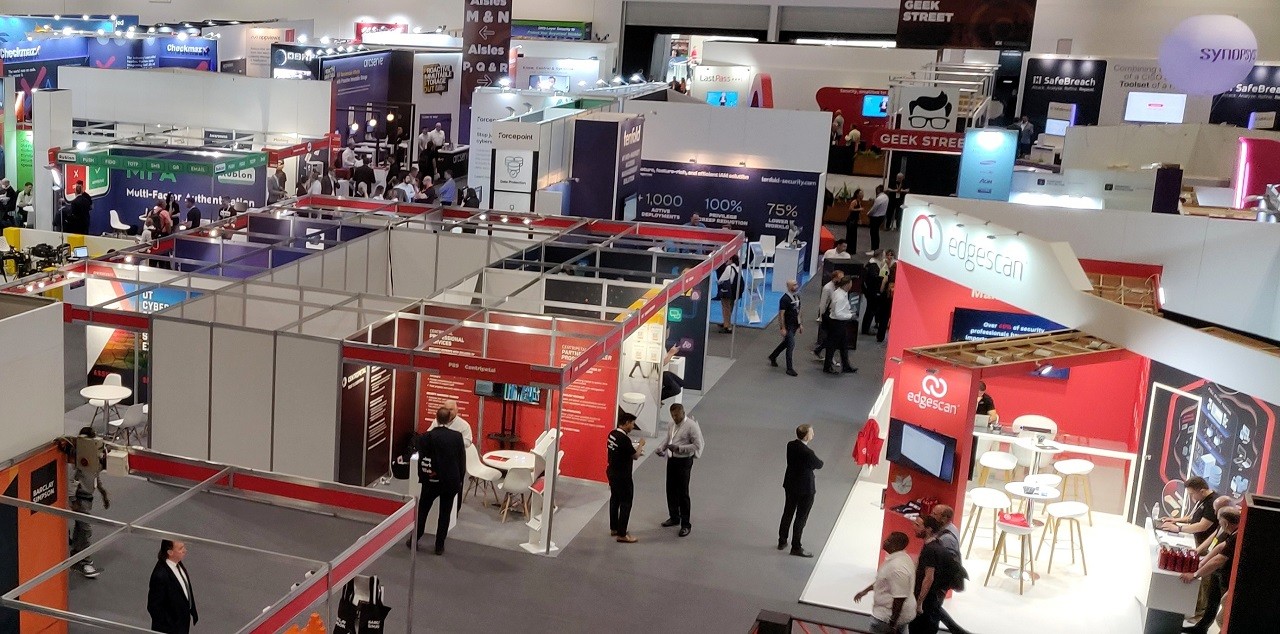
London Infosecurity Europe 2027: cybersecurity in practice
Infosecurity Europe is an international business exhibition for the information-security community. The next edition is listed for 8–10 June 2027 at ExCeL London, One Western Gateway, Royal Victoria Dock, London E16 1XL, United Kingdom. The event brings cybersecurity providers together with security leaders, technical practitioners and other professionals who assess products, share expertise and consider how organisations can respond to digital risk. RX identifies the event as part of its portfolio.
The 2027 dates and venue are displayed on the official event site. Its programme page currently presents the 2026 programme, so the detailed 2027 agenda, exhibitor directory and attendee arrangements should be checked again when the organiser publishes them. The information below uses confirmed 2027 logistics and clearly labelled 2026 examples rather than treating previous-edition features as promises for the next show.
Why London Infosecurity Europe matters
Compare security approaches
Cybersecurity decisions span software, services, people and operational processes. A trade exhibition gives security teams a concentrated setting to compare product approaches and ask providers how their tools address a defined requirement. The 2026 directory covered application, cloud, data, endpoint and AI-related security, alongside security automation and other categories. Use those categories as a starting map, not as a substitute for checking product fit, integration, evidence and support.
Connect technical detail with risk decisions
The event combines an exhibition with conference content and specialist learning. This mix can help a technical practitioner connect a product question with a wider issue such as incident response, governance, emerging threats or security leadership. Senior decision-makers can use those perspectives to test priorities with peers and suppliers; technical teams can bring implementation questions back to their own architecture and controls.
Understand the scale without assuming a visitor total
The official 2026 exhibitor directory listed 326 exhibitors. This is a previous-edition exhibitor count, not a forecast for 2027. No verified visitor-attendance total or exhibition-area figure was found in the pages reviewed. The directory's category counts are tags and can overlap; they should not be added together to estimate the total number of companies.
Who should visit London Infosecurity Europe?
The most useful visit depends on the decisions you need to make. Set a clear purpose before choosing sessions or spending time on the exhibition floor.
Chief information security officers and security leaders
Useful if you are setting security priorities, reviewing risk or evaluating how people, processes and technology fit together. The event's conference and leadership-oriented content can help you compare strategic perspectives, while conversations with providers may help frame questions about governance, threat detection, incident response and the practical limits of a proposed solution.
- Bring the business risks or control gaps that are driving your current priorities.
- Compare a small number of approaches against your existing environment, not only against a supplier's feature list.
- Use peer discussions to identify questions for your internal teams and suppliers after the event.
Cybersecurity practitioners and technical architects
Useful if you assess, deploy or operate security controls. The 2026 programme included technical subjects such as AI security, threat detection, incident response and post-quantum cryptography, while the 2026 exhibitor directory covered application, cloud, data, endpoint and DevSecOps security. Those are previous-edition examples; check the 2027 agenda before planning around a particular session.
- Write down the systems, workloads and operating constraints relevant to your role.
- Ask providers how a solution is deployed, monitored and integrated, and what evidence supports its claims.
- Separate introductory learning from the deeper technical detail your team still needs to verify.
Technology buyers and procurement teams
Useful if you are researching suppliers, comparing product categories or preparing a future evaluation. The exhibitor directory can help you identify companies by product area and provider type. Treat an exhibition conversation as an initial screen: confirm technical requirements, data handling, service levels, implementation effort, commercial terms and procurement conditions through your normal evaluation process.
- Prepare a shortlist of requirements and distinguish must-haves from useful extras.
- Record the product, the problem it addresses, evidence requested and the next evaluation step.
- Ask who the solution is designed for and which environments or use cases are outside its scope.
Cybersecurity vendors, service providers and start-ups
Useful if you want to present a product or service to a professional security audience, investigate channel relationships or understand competing approaches. The 2026 directory classified exhibitors as vendors, distributors, managed security service providers, integrators and other providers. Its previous-edition startup and innovation zones also highlighted newer companies; confirm the 2027 format and exhibitor opportunities directly with the organiser.
- Define the audience and business objective for your participation before committing resources.
- Prepare a concise explanation of the problem addressed, the intended user and the evidence behind your claims.
- Plan how to qualify conversations and follow them up without assuming that a meeting guarantees a lead or sale.
What can you find at London Infosecurity Europe?
The official 2026 directory grouped exhibitors by product categories. The counts below are directory category counts for 2026; a company may appear in more than one category, so the figures are not mutually exclusive.
Application, cloud and data security
- Application Security: 79 directory listings in 2026.
- Cloud Security: 52 listings.
- Data Security and Privacy: 65 listings.
These areas are relevant to teams reviewing how software, hosted services and sensitive information are protected. Buyers may compare where controls operate, how they connect with existing identity and monitoring systems, what data they process and how incidents are handled.
AI, endpoint and security automation
- Artificial Intelligence in Cybersecurity: 59 listings.
- Endpoint Security: 49 listings.
- DevSecOps and Security Automation: 26 listings.
The official event site also highlighted agentic AI, threat intelligence and zero-trust approaches in its 2027-facing overview. These labels point to subjects to investigate, not a guarantee that every solution or session will be present in 2027. Ask how a product is tested, what its limits are and how its outputs fit a human-led security process.
Services and provider types
The 2026 directory identified vendors, distributors, managed security service providers and integrators. That mix can help visitors distinguish a product manufacturer from a service or channel partner. When comparing companies, clarify whether they sell software, provide managed monitoring, implement systems, distribute products or combine several roles.
What makes London Infosecurity Europe distinctive?
It puts technology discovery, professional learning and industry discussion in one cybersecurity-focused setting. The official site describes an exhibition alongside conference stages, hands-on SANS Institute workshops, networking and dedicated programmes. In 2026, its published content included the OWASP GenAI Security Summit, a FAIR Institute Europe Summit, Women in Cybersecurity, peer-led Table Talks and a Cyber Startup Programme. These are examples from the 2026 edition only; the 2027 programme has not been confirmed in the pages reviewed.
The 2026 directory also showed a Discovery Zone, Cyber Startups and Cyber Innovation areas, plus new-exhibitor listings. For a visitor, this can make it easier to include newer suppliers in a comparison rather than focusing only on familiar names. For an exhibitor, it provides context for how the event presents different provider groups; it does not establish a guaranteed level of attention or commercial return.
What should you try to achieve during your visit?
If you are a security leader
Leave with a ranked set of questions for your next security review. Identify the risks or operational problems behind each question, then note which ideas require internal discussion and which might merit a supplier evaluation. Conference insights can inform your thinking, but keep strategic opinion distinct from evidence about a particular product.
If you are a technical practitioner
Compare a small number of approaches against one real deployment constraint. For example, focus on integration with an existing cloud, endpoint or application-security workflow. Ask what telemetry, access, tuning and ongoing maintenance are required, and capture what you need to test in your own environment.
If you are a buyer
Build a shortlist with a reason for every name. Record the product category, target use case, differentiator to verify, evidence requested and next action. This is more useful than collecting a large number of brochures without a decision path.
If you are exhibiting
Define a measurable participation objective before the show. It might be to test a product message with a defined professional audience, learn which requirements recur in conversations or identify potential channel partners. Set a follow-up process and realistic capacity for responding after the exhibition.
How to prepare before London Infosecurity Europe
1. Set your decision questions
Choose one or two outcomes that matter to your role. A security leader may be assessing governance or incident readiness; an architect may be comparing integration approaches; a buyer may be mapping suppliers in a defined category. Write the questions down and use them to decide which stands or sessions deserve priority.
2. Check what is confirmed for 2027
The organiser's site lists the dates and venue, but its programme page currently displays the 2026 agenda and its exhibitor directory is labelled 2026. Recheck the official site for the 2027 conference programme, exhibitor list, registration details and any changes to visitor arrangements. Do not book a trip or make a purchasing decision based on a previous edition's session or zone.
3. Build a target list when the new directory appears
The 2026 product directory can help you understand the event's categories and identify the kinds of providers represented previously. When the 2027 directory is available, filter it around your requirement. Mark companies A for essential, B for useful and C for exploratory, then allow time for conversations and sessions rather than trying to visit every stand.
4. Prepare questions that reveal practical fit
- Which systems, workloads or user groups does the solution protect?
- What data does it collect, where is it processed and how long is it retained?
- How does it integrate with the security tools and identity controls already in place?
- What configuration, tuning and operational skills are required?
- How are detection quality, false positives and response outcomes measured?
- What happens during an incident, including escalation and service continuity?
- Which independent assurance, test results or customer references can be reviewed?
- What implementation, support and renewal conditions should a buyer evaluate?
5. Confirm registration and access details
The official site currently invites visitors to register interest for the next edition. It does not state final 2027 attendance fees or registration terms in the pages reviewed. Check the latest organiser information before travelling, and confirm any identity, admission or accessibility requirements that apply to you.
How to make the most of the exhibition
Use a consistent record for each useful conversation: Company → product or service → problem addressed → evidence to verify → contact → next action. A short, comparable note is easier to evaluate later than a stack of unlabelled material.
For a security product, record the deployment model, dependencies, data access, integration points and operational workload. For a managed service, note service scope, escalation arrangements, reporting and responsibilities between provider and customer. For a training session, capture the question it helped clarify and what your team should explore next.
Use the official exhibitor and product directory when the relevant edition is published, and check the latest floorplan and session schedule. The 2026 directory and floorplan are useful orientation for that edition, not a confirmed map of the 2027 show. Leave room in your plan to compare unexpected solutions, but keep your core priorities visible.
Plan your time realistically
Infosecurity Europe is scheduled across three days. Whether you need one day or more depends on how many product categories, meetings and learning sessions are relevant to you. A focused plan can be more valuable than trying to cover the entire show.
Before the event
Choose essential sessions and providers once the current programme and directory are available. Group your priorities by topic and note any timing conflicts. If a meeting is important, check whether the organiser offers a current meeting tool or exhibitor contact route; do not assume that a previous-edition service is available again.
During each day
Reserve time for planned conversations, sessions and breaks. After a technical discussion, take a short note while the details are fresh. If a session changes your priorities, adjust the remainder of the day rather than continuing with an outdated list.
At the end of the day
Review which questions were answered, which evidence is still missing and who needs to be involved in follow-up. Prioritise the next action while contacts and product details are clear.
Beyond the London Infosecurity Europe exhibition floor
Infosecurity Europe's conference and specialist programme can complement time with exhibitors. The official 2026 site included conference sessions on emerging threats, AI and cybersecurity, risk, geopolitics, quantum readiness and human capability, as well as SANS Institute workshops. It also listed specialist events and peer discussions. These are previous-edition examples, not confirmed 2027 content.
When the 2027 agenda is published, compare session descriptions with your role and current questions. Check the intended audience, format and any participation requirements. If a session is designed for senior leaders or is invitation-only, confirm eligibility rather than assuming access. Use technical workshops for questions that benefit from practical learning, and use strategic sessions to frame—not replace—your own risk analysis.
Networking with a purpose
Useful industry conversations start with a specific question. Introduce your role and the problem you are investigating, then ask the other person what they can substantiate about a product, service or market issue. For an initial supplier discussion, agree what information would help you evaluate fit and who should take the next step.
For peer conversations, compare approaches without sharing sensitive incident details or confidential architecture. For an exhibitor conversation, distinguish a product demonstration from independent validation. Record permission and context for follow-up, and send a concise message that refers to the question discussed rather than a generic request to connect.
Travelling to London Infosecurity Europe
The official venue information identifies ExCeL London at One Western Gateway, Royal Victoria Dock, London E16 1XL. Its travel page describes public transport via the Jubilee line to Canning Town and a Beckton-bound Docklands Light Railway service to ExCeL; it also refers to Elizabeth line connections. London City Airport is identified as the closest airport. These are general venue directions, and you should recheck current service information and event-specific arrangements before travelling.
The venue page lists on-site parking and a flat parking tariff, but these details can change. Check the current ExCeL and event guidance for parking availability, fees, accessibility, entrances and any event-specific travel advice. Allow time for transfers and security procedures appropriate to your own itinerary.
Published daily hours
The official venue page currently lists opening hours of 09:30–17:30 on Tuesday and Wednesday and 09:30–16:00 on Thursday. Confirm the 2027 daily schedule before making travel plans, as the organiser may update it.
Where should you stay?
Choose accommodation around your actual schedule and meeting locations. If your plan is mainly the exhibition, compare the value of staying close to the venue with the time and cost of travelling from elsewhere. If you have meetings away from ExCeL, map those separately rather than assuming the event venue is convenient for every appointment. The organiser's venue page refers visitors to its accommodation partner, but you should compare current terms and suitability independently.
One day or several days at London Infosecurity Europe?
Use the published 2027 agenda and exhibitor directory to decide. One day may suit a visitor with a narrow supplier shortlist or a few priority sessions. More than one day may be useful if your work spans several product areas, technical learning and leadership discussions. Exhibitors may need time for both scheduled conversations and follow-up within the event. These are planning considerations, not a claim that every attendee needs the full three days.
Bring a live security project
If you are evaluating a current project, prepare a non-sensitive summary of the use case, required outcomes, affected systems, constraints and decision timeline. Avoid sharing confidential diagrams, credentials, incident details or personal data on a stand. Ask what technical documentation, assurance evidence or controlled evaluation could be reviewed after the event. A product demonstration can help clarify questions, but fit and effectiveness still need validation in your own operating context.
After London Infosecurity Europe: turn notes into decisions
Within a few days, sort contacts into immediate, potential and market-intelligence follow-up. For each supplier, send the specific request agreed during the conversation: technical documentation, deployment details, assurance evidence, service scope or a suitable next meeting. Compare responses against the same requirements so that an engaging demonstration does not outweigh a missing capability or unresolved risk.
For conference learning, share the most relevant insight with the colleagues who own the issue and identify what should be tested or reviewed. For a purchasing project, involve security, IT, legal, privacy and procurement teams as appropriate. Keep a record of unresolved questions and close the loop with contacts whose products or services are not a fit.
Who should consider exhibiting?
The 2026 directory included cybersecurity vendors, distributors, managed security service providers, integrators and other providers. Companies whose products or services address information security may consider whether the professional audience and the next edition's format align with their objectives. Confirm the 2027 exhibitor proposition, costs, available stand options, deadlines and audience data with the organiser; those details are not established here.
Set an objective before deciding to exhibit. It could be to explain a technical capability, learn which requirements buyers prioritise or assess interest in a defined service. Plan staffing, demonstrations, lead-handling and post-show follow-up around that objective. No exhibition guarantees leads, sales, partnerships or a particular return on investment.
London Infosecurity Europe visitor checklist
Before
- ☐ Confirm the 2027 dates, admission details and venue arrangements with the organiser.
- ☐ Check the current programme, directory and floorplan when available.
- ☐ Set a small number of security or procurement objectives.
- ☐ Prepare technical questions and a non-sensitive project summary.
- ☐ Arrange priority meetings and verify travel and accommodation details.
During
- ☐ Compare solutions against the same requirements and evidence questions.
- ☐ Record the company, use case, evidence needed and next action.
- ☐ Check the schedule before moving between sessions and the exhibition.
- ☐ Protect confidential organisational and personal information.
- ☐ Review notes at the end of each day and reprioritise if necessary.
After
- ☐ Follow up promptly with specific requests and agreed next steps.
- ☐ Share relevant learning with the team responsible for the issue.
- ☐ Evaluate suppliers through normal technical, security and procurement checks.
- ☐ Record decisions, open questions and reasons for excluding options.
Is London Infosecurity Europe worth visiting?
It is most relevant to people who work with cybersecurity products, services, implementation, risk or purchasing and who arrive with questions they want to investigate. The combination of an exhibitor directory, conference content and specialist programmes can support both supplier comparison and professional learning. The 2026 directory's 326 exhibitors indicate a substantial range of providers, although the 2027 list and programme still need confirmation. A planned visit is more likely to be useful when you select priorities, compare evidence consistently and follow up on unanswered questions.
London Infosecurity Europe 2027 at a glance
| Item | Information |
|---|
| Event | Infosecurity Europe |
| Dates | 8–10 June 2027 |
| City and country | London, United Kingdom |
| Venue | ExCeL London, One Western Gateway, Royal Victoria Dock, London E16 1XL |
| Organiser | RX (Reed Exhibitions Limited) |
| Main subject | Cybersecurity and information security |
| Latest published exhibitor count | 326 exhibitors in the official 2026 directory |
| 2027 programme | Not yet published on the official programme page reviewed; that page currently displays the 2026 programme. |
| 2027 exhibitor list and registration terms | Not confirmed in the pages reviewed; the official site currently invites visitors to register interest. |
Use the latest organiser information to confirm details that may change before the 2027 edition.
Make your London Infosecurity Europe visit count
What security decision, supplier question or professional skill do you want to move forward? Start with that objective, choose the relevant sessions and providers when the 2027 information is released, and leave with clear evidence requests and follow-up actions. Discover. Compare. Learn. Decide. Follow up.
Cybersecurity opportunities in the United Kingdom
Market size and demand
The Department for Science, Innovation and Technology's 2026 Cyber Security Sectoral Analysis estimates annual UK cyber-security sector revenue at £14.7 billion in the most recent financial year covered by the report, with estimated gross value added of about £9.1 billion and approximately 69,600 full-time-equivalent roles. The study identified an estimated 2,603 active firms. These figures describe the domestic cyber-security supplier sector, not a guaranteed addressable market for any one product or company.
Market drivers and commercial opportunities
The same analysis records 967 UK public-sector cyber-security contracts awarded in 2025, with a combined value of £1.507 billion; the reported contract value was 62% higher than in 2024. It also estimates UK cyber-security exports at approximately £8.6 billion in 2024, with Europe the largest regional export destination. The report identifies regulation and supply-chain requirements as adoption drivers, particularly for critical national infrastructure, while noting that cost and limited awareness constrain adoption among smaller organisations.
- Public-sector supply: providers may investigate relevant tender opportunities and qualification routes. The contract total indicates reported procurement activity, not open eligibility or likely awards; competition, procurement criteria and security requirements need individual review.
- AI, cloud and application security: suppliers represented in these product areas may assess whether their capabilities fit documented UK demand and the event's product categories. A large, active supplier base also means buyers should expect to compare alternatives carefully.
- Export and channel relationships: the reported export activity may make UK-based providers and potential distribution or integration relationships relevant to international firms. Market fit, partner due diligence and cross-border requirements remain company-specific.
Regulations and market-entry conditions
The UK government introduced a Cyber Security and Resilience Bill to Parliament in November 2025 and describes it as proposing reforms to and additions to the existing Network and Information Systems Regulations 2027. The current parliamentary status and final obligations were not verified in the sources reviewed for this page. Companies considering products or services for regulated operators should check current legislation, procurement conditions and any sector-specific requirements before making market-entry decisions.
What this means for exhibitors
For exhibitors, the combination of a sizeable domestic supplier sector, reported public procurement and cyber-security exports may justify investigating UK customer segments, procurement routes or potential channel partners. The event can help providers compare how their offer is presented alongside other security products, but it does not guarantee access to buyers or contracts. Validate market demand, competition, qualification requirements and the cost of serving each target segment.
What this means for visitors
For visitors, the UK figures provide context for evaluating suppliers in a developed and competitive cyber-security ecosystem. Use the event to compare product categories, ask about implementation and assurance, and identify vendors or service providers for further assessment. Procurement totals and sector revenue are market indicators, not proof that a particular solution is suitable or that public-sector opportunities are available to every buyer.
See the ilikevents services for this event
For further information, please click
here .