Music China 2027: a musical-instrument sourcing and industry guide
Music China takes place from 14–17 October 2027 at Shanghai New International Expo Centre (SNIEC), Shanghai, China. It is an international trade fair for musical instruments and related products, spanning traditional Chinese instruments, acoustic and electric instruments, orchestral and classical ranges, electronic equipment, music-related computer hardware and software, accessories and services. Retailers, dealers, distributors, agents, manufacturers, musicians and music educators can use the event to compare products, understand the offer and set clear goals for sourcing, learning or exhibiting.
Music China 2027 at a glance
| Item | Information |
|---|
| Event | Music China |
| Edition | 2027 edition; ordinal edition number not stated in reviewed official material |
| Type | International musical-instrument trade fair |
| Dates | 14–17 October 2027 |
| Visitor hours | 09:30–17:00, 14–16 October; 09:30–15:30, 17 October |
| City and country | Shanghai, China |
| Venue | Shanghai New International Expo Centre (SNIEC) |
| Organiser | Messe Frankfurt (HK) Ltd |
| Main sectors | Musical instruments, music technology, accessories, publishing and related services |
| Main audiences | Musicians, retailers, dealers, distributors, agents, manufacturers, educators and public visitors on the final two days |
| Latest published visitor and exhibitor figures | 114,022 visitors and 1,576 exhibitors in 2026; organiser-reported |
| Admission | Free; real-identity visitor authentication required |
The organiser has published the 2027 dates, venue, visitor hours and admission information. The 2026 figures are the latest published scale data found; detailed 2027 programme and exhibitor information may be updated closer to the fair.
Why Music China matters to the musical-instrument industry
Compare a broad instrument range
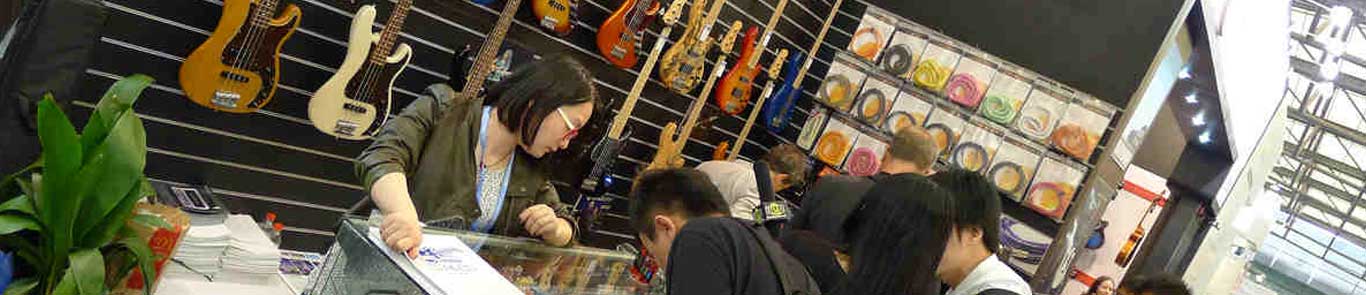
Music China brings product families together across traditional Chinese instruments, western orchestral and classical instruments, acoustic and electric guitars and basses, percussion, keyboards, electronic equipment and music-related software. Trade visitors can compare categories and suppliers in one professional setting rather than relying on separate product searches.
Make sourcing more deliberate
Retailers, dealers and distributors can arrive with a defined assortment gap, customer segment or price-quality requirement, then assess product fit and supplier capabilities. Manufacturers and brands can present their ranges and explore business relationships. The event provides a place for these conversations; it does not guarantee a commercial result.
Connect products with music practice and learning
The official event information describes educational and networking events alongside live music activities. These strands can help professionals consider how instruments, accessories and technology serve performers, learners, teachers and music businesses.
- 1,576 exhibitors in 2026: organiser-reported brands and suppliers.
- 114,022 visitors in 2026: organiser-reported attendance.
- 120,000 m² exhibition space: stated on the official facts page; no separate year is attached to this figure.
These figures indicate a large sourcing environment, not a guarantee of visitor composition or access to a particular buyer.
Exhibition sectors and product groups at Music China
Traditional Chinese instruments
- Plucked string instruments, including guzheng-type zithers
- Traditional bowed and string instruments
- Chinese wind instruments
- Traditional percussion
Guitars and basses
- Acoustic guitars
- Electric guitars
- Acoustic and electric basses
- Strings, cases and performance accessories
Orchestral strings and classical instruments
- Violins and bowed string instruments
- Cellos and double basses
- String-instrument bows and fittings
- Classical instrument accessories
Brass and woodwind
- Trumpets and other brass instruments
- Trombones and low brass
- Flutes and clarinets
- Saxophones and other woodwind instruments
Percussion
- Drum kits and acoustic drums
- Hand percussion
- Orchestral percussion
- Electronic percussion products
Pianos, keyboards and electronic instruments
- Pianos and digital pianos
- Electronic keyboards and synthesizers
- Electronic and electric instruments
- Music-production and performance equipment
Accessories, publishing and music-related technology
- Instrument accessories and furniture
- Sheet music and music publishing
- Music-related computer hardware and software
- Music-industry services, associations and media
These groups organise product categories described by the official event information; check the latest exhibitor catalogue and hall plan when planning a specific search.
Who should visit Music China?
Music retailers and specialist shops
Useful if you are reviewing an assortment, seeking suppliers or comparing instruments for different customer segments. Prioritise product features, fit with your customer base, warranties, service and delivery information.
Importers, dealers, distributors and agents
The organiser names these groups among its visitors. A defined territory and channel profile can help you assess product ranges, distribution arrangements, availability and after-sales support. Verify import and commercial requirements independently.
Instrument manufacturers and music-technology businesses
Useful if you are presenting instruments, components, electronic equipment or related products, or evaluating suppliers and business contacts. Bring product specifications, target-market information and a clear partner profile; use conversations to identify questions and next steps.
Musicians, music teachers and education organisations
The broad instrument range and educational programming can be relevant if you select, teach or use musical instruments. Focus on the products and learning needs that matter to your work, and check the published programme for relevant activities.
Public visitors aged 18 or over
The official visitor information opens the final two days to trade buyers and the public. Visitors must be at least 18 and complete real-identity authentication.
Relevant roles include purchasing and category managers, shop owners, import managers, distributors, sales agents, product managers, instrument makers, music teachers, school administrators, performers and technical specialists.
Why visit Music China?
- Find suppliers for a defined assortment need. Identify relevant makers and distributors across instruments, accessories and music technology.
- Compare alternatives side by side. Assess specifications, construction, finish and support rather than relying only on catalogue descriptions.
- Evaluate products for a specific customer group. Consider suitability for professional use, education, retail or a defined performance application.
- Explore distribution relationships. Retailers, dealers and agents can discuss product ranges and channel fit with companies they identify.
- Follow industry knowledge and activity. Review the educational and networking programme and live activities when the current schedule is available.
- Build a better-informed shortlist. Compare responses after the fair before committing to a purchase or partnership.
Why exhibit at Music China?
Instrument makers, brands, suppliers and music-related businesses may consider exhibiting if they want to present products to an audience that includes musicians, retailers, dealers, distributors and agents from China and overseas. The organiser provides booth applications and participation information for 2027.
- Present instruments, accessories or music technology to professional visitors.
- Demonstrate product details and answer questions directly.
- Explore potential distribution, retail or business relationships.
- Compare requirements and questions raised by different visitor types.
- Use exhibitor search and appointment tools where available to prepare focused conversations.
Confirm participation terms, stand availability, fees, logistics and payment conditions with the organiser. For a China market-entry plan, assess product classification, importer responsibilities, customs documents, product-specific permissions and after-sales arrangements with qualified local advisers. Participation alone does not establish market access or sales.
What makes Music China distinctive?
Its documented breadth is the defining feature: traditional Chinese instruments appear alongside guitars, orchestral instruments, percussion, keyboards, electronic products and music-related technology. The organiser also describes a mix of business networking, education and live music activities. This makes the fair relevant to sourcing as well as to professionals considering how instruments reach retailers, performers and learners.
Set a useful objective for Music China
If you are a retailer or dealer
Shortlist relevant instrument suppliers and compare each against my assortment, service and delivery requirements.
If you are an importer or distributor
Identify product ranges that fit my channels and clarify which commercial and support questions need follow-up.
If you are a manufacturer or brand
Present priority products to relevant buyers and record specific next steps for potential distribution or business discussions.
If you are an educator or musician
Compare a focused group of instruments or learning resources against my practical needs.
A purposeful visit should produce decisions, useful contacts and follow-up actions—not just a larger collection of brochures.
How to prepare before Music China
- Define your reason for attending. Choose sourcing, product comparison, distribution, music education or professional learning. Write down the decision you want to make.
- Build a target list. Use the official exhibitor and product search or Music China Connect+ to identify relevant companies and products. The organiser describes exhibitor and buyer searches, business matching and appointment-making.
- Prioritise conversations. Mark companies A (must meet), B (useful) and C (explore if time allows). Request appointments where available.
- Prepare product-specific questions. For instruments, compare materials, construction, setup, sound, accessories and intended use. For electronic products, ask about compatibility, software support and service. For retail or distribution, clarify minimum orders, lead times, territory and warranty.
- Bring your requirements. Prepare a concise profile of your business or project, customer, product specifications and purchasing or distribution criteria.
- Check admission and identity registration. Admission is free according to the official visitor page; identity authentication is required, and the first two days are trade-only.
- Confirm practical details. Recheck opening hours, hall plan, exhibitor catalogue and programme before travelling, as event information may be updated.
ilikevents can help coordinate visit planning, registration, travel and business meetings.
How to make the most of Music China
Use the official hall plan and catalogue to group target companies by product category. Keep a short record for each conversation:
Company → Product → Why it fits → Specification to check → Contact → Next action
- Compare like with like: record the model, configuration and accessories discussed.
- Distinguish standard features from optional extras or custom specifications.
- Record after-sales, warranty, spare-parts and service information separately from product claims.
- For distribution, note territory, channel, exclusivity and commercial terms that require formal confirmation.
- Use appointments for priority contacts and leave time to explore adjacent categories.
- For learning or performance interests, check the programme and reserve time for relevant sessions or live activities.
Music China Connect+ is described as supporting exhibitor and buyer search, business matching and appointments. Confirm which functions are active for 2027 before relying on them.
Plan your time realistically
One day
Best suited to a narrow objective and prepared shortlist. Prioritise meetings and one or two product categories, then review your notes before leaving.
Two days
Can allow a trade visitor to separate core sourcing meetings from broader product comparison or programme sessions. Use one day for priority suppliers and another for follow-up questions and adjacent categories.
Three or four days
May suit visitors comparing several instrument families, arranging multiple business meetings or combining trade days with public activities. The fair runs four days; the final day has shorter visitor hours. Check the latest hall plan and programme before planning.
Beyond the Music China exhibition floor
The organiser describes educational and networking events, industry forums, workshops and music live shows and activities. These can connect product sourcing with industry discussion, music education and performance. The detailed programme may be updated; check the 2027 schedule before planning around a particular session.
Networking at Music China
Be ready to explain the product categories you handle, your customer or market, technical requirements and the relationship you are exploring. Ask suppliers to clarify specifications, availability, warranty and service. Educators and musicians can explain the learner, ensemble or use case behind their product comparison.
Before ending a conversation, agree what information should be exchanged and who will take the next step. Record the context while it is fresh; a contact name without a product or follow-up note is difficult to evaluate later.
Music China visitor profile and business opportunities
| Visitor profile | Potential focus at the fair |
|---|
| Music retailers and specialist shops | Instrument ranges, accessories, assortment planning, supplier support and customer fit |
| Dealers and distributors | Product portfolios, distribution possibilities, service needs and channel fit |
| Importers and agents | Supplier comparison, product documentation and commercial terms requiring follow-up |
| Manufacturers and brands | Product presentation, supplier discussions and potential business relationships |
| Musicians and performers | Instrument features, practical use and relevant live activities |
| Music teachers and education organisations | Instruments and resources relevant to teaching and learning |
| Public visitors aged 18 or over | Exploring instruments and public activities on the final two days |
Travelling to Music China
Shanghai New International Expo Centre is in Shanghai’s Pudong business district. The organiser’s arrival information places Pudong International Airport about 50 minutes from the fairground and identifies Longyang Road as a public bus and metro interchange; it estimates a ten-minute walk from the station. Travel times vary, so confirm current routes and conditions before departure.
Practical information for international visitors
| Item | Information |
|---|
| Venue | Shanghai New International Expo Centre (SNIEC), Pudong, Shanghai |
| Airport access | Pudong International Airport; organiser estimate of about 50 minutes to the fairground |
| Public transport | Longyang Road bus and metro interchange; about a ten-minute walk according to the organiser |
| Visitor authentication | Real-identity authentication is required for entry |
| Visa and entry | Requirements depend on nationality and current government policy; check with the relevant Chinese embassy or consulate |
Plan travel documents, accommodation and local transport in advance, and verify entry and fairground requirements for your circumstances. ilikevents can assist with visit planning, registration support and travel arrangements.
One day or several days at Music China?
A single day can work when your target list is short and meetings are concentrated. Allow more time to compare several instrument groups, speak with suppliers or attend educational and networking activities. The first two days are trade-only; the final two days are open to trade buyers and the public. Opening times are shorter on 17 October. Choose days according to eligibility and priorities, and confirm admission information before travelling.
After Music China: where the value continues
Sort notes promptly and classify contacts:
- A — Immediate: a product or supplier matches a current requirement; request missing specifications, quotation, terms or samples.
- B — Potential: the fit is plausible but needs more information; confirm service, availability, compliance or channel details.
- C — Market intelligence: useful for future assortment, technology or supplier decisions, but not an immediate purchase.
Compare offers against the same requirements. Verify specifications, warranty, spare parts, order quantities, lead times, payment terms and importer responsibilities before committing. Share next actions with colleagues and set a follow-up date.
Music China visitor checklist
Before
- ☐ Choose a sourcing, comparison, education or business objective.
- ☐ Search the official exhibitor catalogue and prioritise target companies.
- ☐ Request meetings where available and prepare product-specific questions.
- ☐ Check admission, identity authentication, hours, travel documents and transport.
During
- ☐ Use the latest hall plan and group visits by category or location.
- ☐ Record product details, support terms, contacts and follow-up actions.
- ☐ Attend programme sessions and activities that serve your objective.
- ☐ Confirm commercial details in writing after the fair.
After
- ☐ Sort contacts into immediate, potential and market-intelligence groups.
- ☐ Compare suppliers against consistent technical and commercial requirements.
- ☐ Follow up with precise requests for specifications, quotations or distribution information.
- ☐ Share findings and decisions with colleagues involved in purchasing or product selection.
Is Music China worth visiting?
Music China is most useful for people working with musical instruments, related technology, retail, distribution, music education or performance who arrive with a defined objective. Its wide product scope, 2026 organiser-reported attendance and exhibitor figures, and described education and live activities give visitors several ways to focus their time. A prepared buyer can compare products and suppliers; an exhibitor can present a range and explore business discussions; musicians and educators can focus on instruments and learning interests. Walking the halls without a shortlist or follow-up plan is less likely to produce decisions you can use.
Make your Music China visit count
What do you want to compare, source, learn or decide that you cannot resolve through product searches alone? Set that goal before you arrive, capture the evidence and questions you need, and follow up on contacts that genuinely fit. Discover. Compare. Meet. Decide. Follow up.
Musical instrument trade opportunities in China
Market size and demand
China exported approximately US?.28 billion in musical instruments in 2024, according to the Observatory of Economic Complexity’s trade data. This is an export-trade indicator for the broad musical-instrument category, not a measure of domestic retail demand or the addressable market for an individual product. China Customs’ March 2024 table separately records US?.123 million in exports and US?.557 million in imports of HS 92 musical instruments, parts and accessories during January–March 2024; these are partial-year customs flows, not a full-year market size.
Commercial opportunities and conditions
- Supplier and component assessment: China’s recorded instrument exports indicate an established manufacturing and export base. Buyers may use Music China to assess suppliers and product fit; verify quality, capacity, intellectual property, service and commercial terms independently.
- International brand and distributor exploration: retailers, agents and distributors may compare product ranges represented at the fair and investigate channel fit. Attendance or exhibition does not assure a distributor or sale.
- Product-specific import planning: importers should confirm tariff classification, customs paperwork and any product-specific licence, inspection or safety requirements with qualified local customs and regulatory advisers. Requirements depend on the product and destination process.
For exhibitors, trade figures provide context for assessing China as a manufacturing and export ecosystem, while the event offers a setting to present products and discuss potential relationships. For visitors, focused comparison of instruments, suppliers and support terms can inform sourcing decisions. Trade data does not establish demand for a particular brand, product segment or event participant.
Explore Event Opportunities
Explore how Music China can support your musical-instrument sourcing, product comparison or exhibition participation plans, and identify practical next steps with ilikevents.
Get Expert Assistance from ilikevents to plan your visit or exhibition participation.
See the ilikevents services for this event
For further information, please click
here .