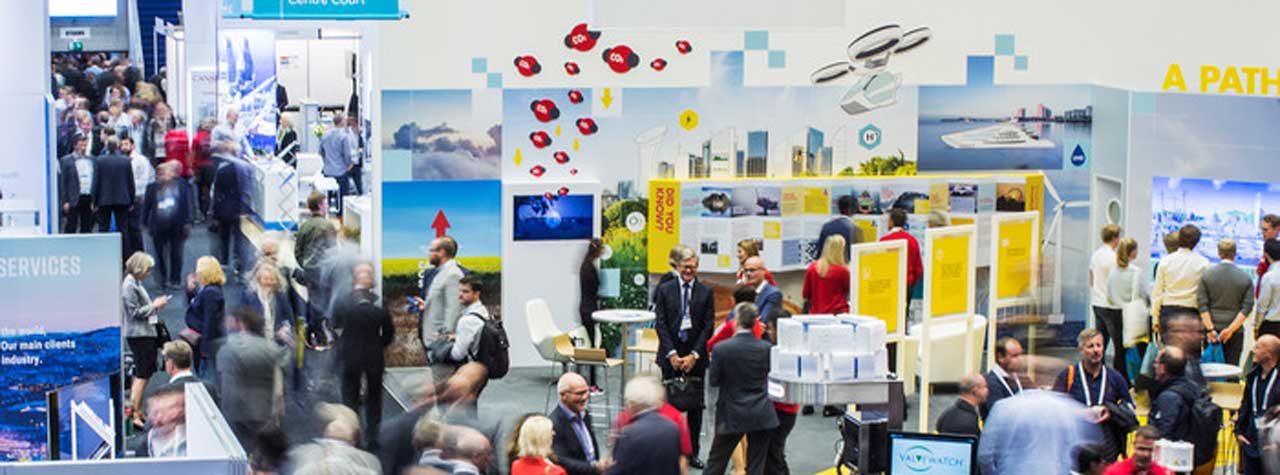
ONS 2028: the global energy forum and exhibition
ONS is a global energy meeting place combining an exhibition with conference and summit activity. The organiser has announced 28–31 August 2028 in Stavanger, Norway. The official visitor information identifies Stavanger Forum, Gunnar Warebergsgate 13, as the ONS venue. The event brings together energy companies, suppliers, policy makers, researchers and the wider public to consider energy security, geopolitics, technology and climate questions. It is more than a product display: the exhibition, professional discussions and public-facing activity create different ways to explore the energy system and its possible futures.
Why ONS matters to the energy industry
See the supply chain in one place
ONS covers a broad energy community. The organiser describes the 2026 exhibition as including operators, suppliers, oil and gas companies, renewables and net-zero solutions. For a buyer or technical team, this makes the event useful for comparing technologies and services across conventional and lower-emission energy activity. A useful visit starts with a specific question—such as which suppliers can meet a project requirement—rather than an attempt to see every stand.
Connect technical decisions with wider debate
The 2026 event combined an exhibition with a Strategic Conference, summit discussions and technical sessions. Its official positioning identified geopolitics, energy security and climate issues as part of the forum’s scope. These formats can help participants place equipment and project decisions in a broader policy, market and technical context. The 2028 programme has not been published in the current event information, so use the 2026 programme as an example of previous activity rather than a promise of what will return.
Understand the scale and international reach
ONS reported 69,374 visitors from 92 nations and more than 1,000 exhibitors in 2026. The same edition included 50 top leaders, thought leaders and government representatives at the ONS Summit, and 1,424 speakers across the event programme. These figures describe the 2026 edition, not a forecast for 2028. The large mix of professional roles means visitors should prioritise their target companies and sessions before arriving.
Who should visit ONS?
Energy-company executives and strategy teams
ONS is relevant if you track energy security, investment priorities, supply-chain partnerships or the balance between established and emerging energy systems. Use the event to hear how industry, government and research participants frame shared challenges, then identify which discussions merit follow-up inside your organisation. The 2026 organiser description says participants came from across the energy industry, politics, academia and wider society.
Operators, engineering and procurement teams
Useful if you source equipment, engineering, maintenance or specialist services for an energy asset or project. Prioritise exhibitors by technical scope and project stage. Ask about operating conditions, performance evidence, integration, installation, maintenance and service coverage. The 2026 exhibition mix included operators, suppliers, oil and gas, renewables and net-zero solutions; check the 2028 exhibitor directory when it becomes available rather than assuming the same companies will return.
Energy technology suppliers and service companies
ONS may suit companies seeking to present technologies, services or project expertise to an international energy audience. Set a clear target group—operators, engineering contractors, procurement teams, investors or public-sector stakeholders—and decide what evidence or demonstration will make a conversation useful. The organiser’s 2026 facts reported more than 1,000 exhibitors, but participation does not guarantee a lead, contract or access to a decision maker.
Policy makers, researchers and academics
Useful if your work concerns energy security, energy policy, climate, technology or the social consequences of energy choices. The conference and summit formats have brought industry leaders, government representatives and academic participants into discussion. Check the 2028 agenda when it is released and select sessions where the question, evidence and relevant stakeholders align with your work.
Students and early-career professionals
The 2026 edition included ONS Young, with 7,665 participants from lower secondary school to university, apprentices and young professionals. That is a previous-edition figure, not a confirmed 2028 programme or attendance target. Students and early-career attendees can use the published programme to identify technical and career topics, then prepare concise questions for speakers and exhibitors.
What can you find at ONS?
Oil, gas and offshore energy
- Operators and suppliers serving the oil and gas industry
- Offshore energy systems and services
- Engineering, construction and technical expertise
- Equipment and services connected with energy operations
Renewables and net-zero solutions
- Renewable energy companies and technologies
- Solutions presented by the organiser within its net-zero grouping
- Technology and service providers working across energy systems
Knowledge, policy and discussion
- Strategic Conference and summit activity in the 2026 edition
- Technical sessions and industry discussion
- ONS Young activity in the 2026 programme
- ONS+ public-facing evening activity during the 2026 edition
The categories above are drawn from the organiser’s description of the 2026 event and broad event positioning. Check the official 2028 exhibitor list and programme for confirmed companies, products and sessions.
What makes ONS different?
ONS brings an energy exhibition together with policy, technical and public discussion. The 2026 edition included an exhibition of more than 1,000 companies, a summit with 50 senior leaders and government representatives, conference activity and an ONS Young programme. The organiser reported attendees from 92 nations. This mix can help visitors connect a supplier conversation with broader sector questions, but the value depends on choosing the people and topics relevant to a defined objective. Previous-edition programmes are examples, not confirmation of the next programme.
Decide what you want to achieve
If you are an operator or procurement professional
Set an objective such as: identify a shortlist of suppliers for a defined project need and document the evidence required for technical review. Bring an outline of the operating environment, delivery stage and critical performance requirements. Separate a promising introductory conversation from a qualified supplier evaluation.
If you are a technology or service provider
Set an objective such as: test the relevance of one product or service with the audience most likely to evaluate it and capture the next technical or commercial question. Prepare a concise explanation of application, performance evidence, deployment requirements and support. Track the role and project context of each contact rather than counting conversations alone.
If you are a policy maker or researcher
Set an objective such as: compare how industry and public-sector participants frame one energy-security, climate or technology issue. Select sessions by subject and evidence, record the assumptions behind different positions, and note which questions require independent follow-up.
How to prepare before ONS
1. Define your question and audience
Choose a practical objective: supplier discovery, technical evaluation, market intelligence, policy discussion or professional learning. Make the question narrow enough to guide your choice of exhibitors and sessions. For example, specify the asset, process or energy-system decision involved rather than writing “learn about the energy transition.”
2. Use the exhibitor directory and programme when available
The 2026 ONS app offered an exhibitor list, venue map, conference programme, personal agenda, opening hours, transport information and ticket access. Treat this as a previous-edition toolset; confirm whether equivalent tools are available for 2028. When the organiser publishes the 2028 directory, save priority companies and mark the sessions that answer your objective.
3. Rank conversations by value
Put companies into three groups: A—must discuss for an active project; B—useful alternative or potential partner; C—explore if time allows. Keep the list realistic. If a supplier is an A priority, identify the technical person or product information you need, and request a meeting through the channel provided by the organiser if that option is available.
4. Prepare energy-specific questions
- Which operating environment and project stage is this solution designed for?
- What performance data, test conditions or operating references can be shared?
- How does the solution integrate with existing assets, control systems or service arrangements?
- What are the installation, commissioning and maintenance requirements?
- Which standards, certifications or regulatory requirements apply to the target application?
- What are the expected service, training and spare-parts arrangements?
- For lower-emission or new-energy solutions, what system interfaces or infrastructure dependencies matter?
- What should the next technical or commercial evaluation step include?
5. Plan around confirmed 2028 information
ONS has announced the dates and Stavanger location. Confirm the final venue, ticket categories, programme, exhibitor list, accommodation guidance and travel arrangements with the organiser as the 2028 information is released. The 2026 visitor page described specific ticket, transport and app arrangements; do not assume that those details automatically carry over to the next edition.
How to make the most of the exhibition
A large energy exhibition can reward focused comparison. Use one note for each supplier: company → product or service → application → evidence → project fit → next action. Record whether the conversation concerns an operating asset, project development, supply-chain service, technology evaluation or general market intelligence. Ask for material that supports the next decision, such as specifications, performance results, integration details, project references or service conditions.
Where a stand conversation raises a broader issue, note the question and look for a relevant conference or summit discussion. Conversely, use conference insights to sharpen follow-up questions for companies. This two-way approach helps connect strategic debate with practical project choices without assuming that every session is a product pitch or every exhibitor addresses every topic.
Beyond the exhibition floor
The 2026 programme included a Strategic Conference, ONS Summit, technical sessions and ONS Young. Organiser facts describe the 2026 event as addressing geopolitics, energy security and climate issues. It also reported 1,424 speakers. Those facts show the scale and variety of the previous edition; they do not establish the contents of the 2028 programme. Once the new schedule is published, compare session descriptions with your role and objective, and allow time for both discussion and follow-up conversations.
ONS+ was described in 2026 as a free public evening programme in downtown Stavanger, with debates, discussions and networking. Treat this as a past-edition feature and verify whether, and in what form, it returns in 2028. Do not plan a ticketed or public activity around an old programme listing without checking the current schedule.
Plan your time across four days
The announced 2028 dates span four calendar days. A focused visit might use one day for priority suppliers or conference sessions, while a broader sourcing or policy objective could justify more time. Consider separating the programme into themes: one period for strategic sessions, one for supplier comparison, one for follow-up discussions and one for any specialist audience activity. Use the final published timetable rather than assuming that the 2026 opening hours or session sequence will repeat.
One day
Choose a single priority—such as supplier evaluation or a policy question—and make a compact A-list. Leave time to record evidence and immediate next actions rather than scheduling every minute.
Two days
Use the first day for the most relevant exhibition and conference content, then revisit unresolved technical questions and meet secondary suppliers on the second day.
Three or four days
A longer visit may suit participants with several workstreams or responsibilities across the exhibition, conference and summit. Group sessions and meetings by theme and keep a daily review period so new information can change the next day’s priorities.
Networking with a purpose
Prepare a short introduction that explains your role, target application and current question. For buyers, be clear about project timing and the evidence needed for evaluation. For suppliers, describe the product’s intended use and the kind of operator, contractor or partner conversation sought. For policy and research participants, state the issue and the evidence or perspective you are looking for.
After a useful exchange, agree on a concrete next step: a technical note, an introduction to a specialist, a meeting after the event or a public document to review. A contact list alone is not a result; the next action should be appropriate to the stage of the relationship and the decision involved.
Travelling to ONS
The official ONS visitor information for 2026 described the venue as Stavanger Forum and listed a direct airport bus, local green buses, shuttle services and several badge-pickup points. It also said that ONS badge holders could use local buses without charge during that edition. These are 2026 arrangements only. Check the official 2028 visitor guide for current public transport, shuttle, airport, entrance and badge information before booking or travelling.
The same visitor page reported the venue close to Stavanger city centre. Use the final event travel guidance to plan how to reach the venue and to confirm any event-specific transport conditions; do not rely on previous-edition schedules.
Where should you stay?
ONS’s 2026 visitor page said accommodation availability in the greater Stavanger area was limited during the event and that a limited number of rooms were reserved for exhibitors. This is a reason to check the 2028 accommodation information early, not a guarantee about room supply or hotel terms for that edition. Compare lodging choices against your meeting schedule, venue access and planned evening activities, and check cancellation terms directly with providers.
Bring a live project to ONS
Participants with an active energy project can make supplier discussions more concrete by bringing a concise brief: asset or project type, operating environment, technical need, delivery stage, interface requirements, relevant standards, service expectations and decision timeline. Share only the information appropriate for an initial discussion. A clear brief helps a supplier explain what evidence or specialist contact would be needed next.
After ONS: where the value continues
Within a few days, sort contacts into A (active project or immediate technical review), B (potential partnership or future sourcing) and C (market intelligence). For each A contact, send a follow-up that records the project context and asks for the missing evidence. For B contacts, set a reasonable follow-up date and explain what would make the relationship relevant. For C contacts, capture the insight and source so it can inform internal planning without implying a commercial opportunity.
Compare suppliers against the same criteria: application fit, evidence, integration, maintenance, service and relevant commercial terms. Invite technical colleagues into the review where needed. Close the loop with a named owner for each next action, and record why an option was rejected as well as why it remains under consideration.
Who should consider exhibiting at ONS?
ONS may be relevant to energy operators, oil and gas companies, suppliers, engineering and service businesses, renewable-energy participants and providers of net-zero solutions. The 2026 exhibition included more than 1,000 exhibitors and a mix of operators, suppliers, oil and gas, renewables and net-zero solutions. A prospective exhibitor should define the audience and objective first: product evaluation, technical discussion, partner exploration, visibility with a specific segment or recruitment. Then plan the stand demonstration, specialist staffing and follow-up process around that objective. Check 2028 exhibitor terms and audience information directly with the organiser.
ONS visitor checklist
Before
- ☐ Choose a clear business, policy or learning objective.
- ☐ Check the 2028 programme, exhibitor directory, ticket information and visitor arrangements when released.
- ☐ Identify A, B and C exhibitors or sessions and prepare energy-specific questions.
- ☐ Prepare a concise project brief and meeting introduction.
- ☐ Confirm venue, transport, accommodation and badge arrangements for the 2028 edition.
During
- ☐ Record the application, evidence, integration questions and next action for each useful supplier discussion.
- ☐ Connect conference insights to the technical and commercial decisions they affect.
- ☐ Review priorities at the end of each day and adjust the next day’s schedule.
After
- ☐ Rank contacts by urgency and fit.
- ☐ Request the evidence needed for technical, procurement or policy review.
- ☐ Assign follow-up owners and dates and share relevant learning with colleagues.
Is ONS worth visiting?
ONS is most useful for participants who need to compare energy suppliers or technologies, engage with industry and policy debate, or understand how different parts of the energy system frame shared questions. Its 2026 scale—69,374 visitors from 92 nations and more than 1,000 exhibitors—shows a large international platform, while the 2028 programme details remain to be confirmed. Visitors will get more from the event by selecting a clear objective, comparing evidence consistently and following up with specific requests.
ONS 2028 at a glance
| Item | Information |
|---|
| Event | ONS |
| Dates | 28–31 August 2028 |
| City and country | Stavanger, Norway |
| Venue | Stavanger Forum, Gunnar Warebergsgate 13, 4021 Stavanger |
| Organiser | ONS Foundation |
| Main sectors | Oil and gas, offshore energy, renewables and net-zero solutions |
| Main audiences | Energy companies, suppliers, public-sector and policy participants, researchers and early-career professionals |
| Latest published scale | 69,374 visitors from 92 nations and more than 1,000 exhibitors in 2026 |
| 2028 programme | Check official updates as the programme is released |
Dates and location have been announced. Use the organiser’s latest information to confirm the full programme, access and participation arrangements for 2028.
Make your time at ONS count
Ask: Which energy decision, relationship or question will I move forward by taking part? Focus. Compare. Discuss. Document. Follow up.
Energy opportunities in Norway
Market context
Norwegianpetroleum.no, the official Norwegian petroleum facts site, reports that Norway produced 239.2 million standard cubic metres of oil equivalents of marketable petroleum in 2025. That figure describes national production, not a forecast for individual companies or a measure of future event demand. ONS itself covers a wider energy community, including oil and gas, renewables and net-zero solutions.
Opportunities for exhibitors
- Suppliers may use ONS to explore conversations with operators, engineering firms and service companies active in Norway’s energy ecosystem, while testing whether their capabilities fit a specific project or operational need.
- Providers working across conventional and lower-emission energy systems may look for relevant technical or partnership discussions, subject to their products, qualifications and customer requirements.
Opportunities for visitors
- Buyers and engineers could compare equipment and services against the needs of energy operations and projects, asking for evidence, integration details and support conditions.
- Policy and research participants may use the forum to hear how industry participants discuss production, security and transition questions; the production figure alone does not resolve those policy choices.
Norway may be relevant to energy companies because official data records substantial petroleum production and ONS convenes a broad energy audience. Whether the market fits depends on the participant’s technology, customer base, project stage and regulatory and commercial requirements.
Discover Stavanger
Stavanger combines an active energy identity with a historic waterfront and museums. Stavanger Forum is the event venue; the attractions below are in the city itself, so visitors can keep business meetings and city visits distinct in their schedule.
Norwegian Petroleum Museum
The museum presents oil facts and industrial heritage and explores energy history. It offers a city-based way to understand how petroleum activity has shaped Norway’s energy story.
Old Stavanger
Fjord Norway describes Gamle Stavanger as a protected historic neighbourhood of 173 white-painted wooden houses from the 18th and 19th centuries. Its streets and preserved buildings offer a different view of the city’s history.
Stavanger Maritime Museum
Located in preserved merchant buildings, the museum’s exhibitions cover maritime history, craftsmanship, trade and the development of Stavanger. It is another city-centre cultural stop identified by the regional tourism source.
Consider fitting one or two of these visits around the event programme rather than trying to combine every attraction with a full day at the venue. Confirm current visitor information before setting plans.
For further information, please click
here .