London Futurebuild 2027: event overview
Futurebuild 2027 takes place 11–13 May 2027 at ExCeL London, London, United Kingdom, in halls N1, N3 and N4. Organised by Media 10, it brings together built-environment professionals around sustainable construction, products, knowledge and industry collaboration. It is co-located with UK Construction Week London and The Stone & Surfaces Show. The event site offers a register-interest form; full visitor-registration details and the detailed 2027 programme were not published on the pages reviewed.
Published daily hours are 10:00–17:00 on Tuesday 11 and Wednesday 12 May, and 10:00–16:00 on Thursday 13 May. Check the organiser's current information before planning around the final day.
Why London Futurebuild matters
Discover materials and building systems
The event focuses on solutions for the built environment, including materials, energy, retrofit and digital innovation. For specifiers and project teams, seeing product examples together can turn broad requirements such as lower-carbon design or improved building performance into focused technical questions.
Connect ideas with practical decisions
Futurebuild combines an exhibition with a knowledge programme. This suits people who need product awareness and context about the policy, design and delivery challenges behind construction decisions. Treat the show as a place to investigate options, not as proof that a product will suit a particular project.
Published programme figures
The detailed 2026 programme page described a CPD-accredited three-day programme with two conference arenas, three seminar stages, more than 550 expert speakers and content curated with more than 90 partners. These figures describe the 2026 programme, not a guaranteed 2027 schedule. A clearly scoped standalone attendance and exhibitor total for Futurebuild's latest edition was not established.
Who should visit London Futurebuild?
Architects, engineers and specifiers
Useful if you are assessing products for a design, specification or refurbishment project. Prioritise materials, envelope systems, insulation and energy-related solutions that match your brief.
- Compare product types and suppliers' performance evidence.
- Ask how materials and systems integrate with the wider design.
- Record constraints, compatibility questions and documents needed for review.
Contractors, developers and housebuilders
Focus on whether solutions meet project specifications, installation requirements and delivery conditions rather than relying on broad sustainability claims.
- Compare system interfaces, installation needs and technical information.
- Discuss retrofit and low-carbon options against the projects you handle.
- Capture availability, lead-time, maintenance and compliance questions.
Local authorities, housing associations and policymakers
The published programme themes include retrofit, climate action and placemaking; the organiser identifies local authorities and policy professionals as audiences.
- Assess approaches against local building and housing priorities.
- Compare practical requirements of fabric upgrades, clean heat and related systems.
- Separate product interest from procurement, funding and delivery checks.
Sustainability, retrofit and energy specialists
Connect building interventions with performance questions. Published topics include retrofit, energy, materials, climate action and digital innovation.
- Compare how products address a defined building-performance challenge.
- Ask what evidence supports energy, carbon or durability claims.
- Track dependencies between fabric measures, heating and building controls.
Manufacturers and solution providers
If you supply construction products, retrofit solutions, materials, energy technologies or digital tools, prepare to explain a specific application to built-environment professionals.
- Bring technical information for architects, contractors, developers and public-sector teams.
- Explain the problem your product addresses and the evidence behind it.
- Use conversations to identify follow-up questions, not assume a sale.
What can you find at London Futurebuild?
Materials and building products
The official programme includes materials and buildings as central topics. Compare material types, building-envelope approaches and product information relevant to your project. Ask for technical documents, application limits and verification before specifying.
Retrofit and building performance
Retrofit is a prominent theme, including a dedicated National Retrofit Conference in the 2026 programme. It is relevant to teams assessing existing buildings and housing upgrades. The detailed 2027 schedule should be checked when published.
Energy and clean heat
The 2026 Energy Stage covered cleaner and smarter energy systems, including decentralised generation, storage, heat networks and low-carbon technologies. Use these past-edition topics to frame questions about building systems and project requirements.
Digital innovation and placemaking
Digital innovation and placemaking appeared among published programme themes. They extend the discussion beyond products to design, planning and how places function. Confirm 2027 sessions and exhibitors before making a detailed schedule.
What makes London Futurebuild different?
Its value lies in connecting a product exhibition with built-environment knowledge and a broad professional supply chain.
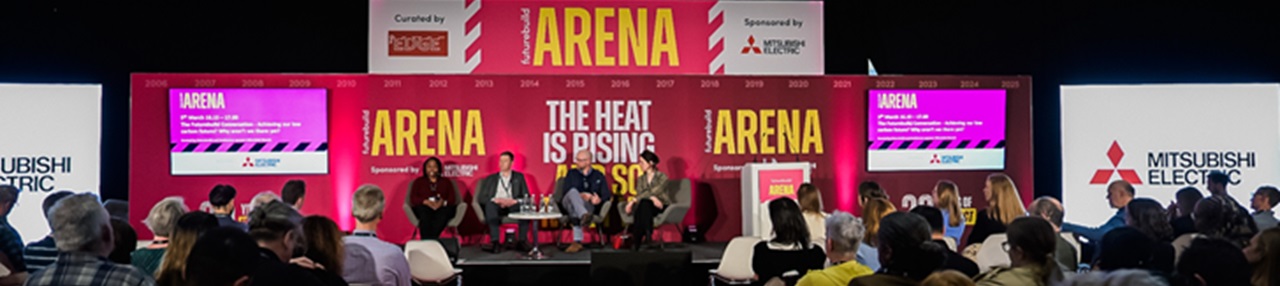
The 2026 programme included the Futurebuild Arena, National Retrofit Conference, Buildings and Materials, Energy and Placemaking stages. Topics included resilience, regenerative design, reuse, retrofit, climate action, materials and energy. These are examples from 2026, not a promise for 2027. Futurebuild is also co-located with UK Construction Week London and The Stone & Surfaces Show; check which parts of the combined event match your goals.
Set a clear objective for London Futurebuild
If you specify or design buildings
Objective: shortlist materials or systems for technical review on one live project. Note the application, evidence, compatibility questions and who must approve the next step.
If you deliver or develop projects
Objective: compare construction or retrofit approaches against delivery requirements. Record installation constraints, interfaces, supply information and follow-up documents.
If you represent a local authority or housing organisation
Objective: identify approaches for an internal feasibility or procurement discussion. Capture the building type, delivery dependencies and evidence needed to assess fit.
If you exhibit
Objective: explain one defined product application to the professional groups who will assess it. Prepare evidence and a follow-up plan; treat conversations as market learning, not guaranteed leads.
How to prepare before London Futurebuild
1. Choose a project question
Define what you need to decide: a material specification, envelope detail, retrofit measure, clean-heat option, energy system or digital approach.
2. Build a focused target list
Check visitor-registration status, exhibitor information and the 2027 programme as the organiser releases them. A searchable 2027 exhibitor directory or event app was not confirmed. Prioritise targets as essential, useful and optional.
3. Prepare technical questions
- Which building types and applications is the product designed for?
- What performance data, test evidence or documentation can be reviewed?
- How does it connect with adjacent materials, services or systems?
- What installation conditions or specialist skills are required?
- What maintenance, replacement or end-of-life considerations apply?
- Which supply, delivery or procurement conditions need confirming?
- For retrofit, how does the solution interact with the existing building fabric?
4. Plan around the daily hours
The event runs for three days, with the final day closing earlier than the first two. Check the current schedule before making commitments and leave time for product conversations as well as sessions.
How to make the most of the exhibition
Use a consistent record for each conversation: Company → product or idea → project relevance → evidence needed → contact → next action. For a building-envelope product, note the intended application, performance information to request, system interfaces and who should review it. This makes later comparison more reliable than relying on memory.
After each session or stand visit, classify what you learned: a product to investigate, a technical question, a policy insight or a contact to follow up. Check for updated 2027 visitor tools closer to the event.
Beyond the London Futurebuild exhibition floor
The 2026 knowledge programme combined conference arenas and seminar stages. Named strands included the Futurebuild Arena, National Retrofit Conference, Buildings and Materials, Energy and Placemaking. Topics included resilience, reuse, regenerative design, decarbonisation, housing, infrastructure, retrofit, materials and low-carbon technologies. These details show the previous edition's breadth; they are not a promise for 2027.
When the 2027 schedule is available, shortlist sessions by the decision they can help you make. The 2026 programme was described as CPD-accredited; confirm 2027 details with the organiser.
Getting to ExCeL London
Futurebuild 2027 is listed for halls N1, N3 and N4. ExCeL's official visitor guidance identifies Custom House, served by the Elizabeth line and DLR, as nearest the West Entrance; Prince Regent DLR station is nearest the East Entrance. Check final hall information and current access guidance, as the best entrance depends on your route.
One day or all three?
One day
A focused day may suit visitors with a defined product category, a small number of meetings or a short list of sessions. Plan around the most important priorities.
Two days
Two days may help if you need both technical conversations and a broader review of materials, retrofit, energy or sessions. Use the second day to revisit suppliers or resolve questions.
Three days
Consider all three days when your role spans several themes or you need time to compare options, attend sessions and follow up. The final day has shorter published hours.
After London Futurebuild: turn notes into decisions
Group notes into immediate technical follow-up, potential project options and market intelligence. Request missing specifications, test information, installation guidance or supply details. Compare alternatives against the same criteria and involve relevant design, engineering, procurement or delivery colleagues.
For public-sector or housing programmes, distinguish product interest from a formal procurement or funding route. Manufacturers can follow up with the technical material discussed and record what the conversation revealed about user needs.
Who should consider exhibiting at London Futurebuild?
The organiser invites manufacturers and suppliers with built-environment solutions connected with sustainability, materials, retrofit, energy and digital development. The event may suit companies explaining applications to architects, specifiers, contractors, developers and public-sector professionals.
Before enquiring, define the audience you need to reach, the evidence you can show and how you will follow up. Ask the organiser for visitor-profile information, stand options, costs, deadlines and participation terms; these were not established in the pages reviewed. Exhibiting does not guarantee leads, sales or contracts.
London Futurebuild visitor checklist
Before
- ☐ Confirm registration status, dates and hours.
- ☐ Select a project objective and product categories.
- ☐ Review 2027 programme and exhibitor information when published.
- ☐ Prepare technical questions and follow-up contacts.
- ☐ Check hall and venue access information.
During
- ☐ Record applications, evidence and next actions.
- ☐ Compare alternatives against common criteria.
- ☐ Separate confirmed information from claims needing verification.
- ☐ Balance exhibition visits with relevant sessions.
After
- ☐ Request promised specifications or evidence.
- ☐ Share findings with design, procurement or delivery colleagues.
- ☐ Evaluate products against project constraints before committing.
- ☐ Follow up with a specific question and agreed next step.
Is London Futurebuild worth visiting?
London Futurebuild is most relevant to professionals working with construction products, building design and delivery, retrofit, energy or sustainable places. Its exhibition and knowledge content can support comparison and industry learning, especially when you arrive with a project question. The 2026 programme provides context, but the 2027 schedule and visitor-registration details should be checked as released. A focused shortlist is more useful than an unstructured tour.
London Futurebuild 2027 at a glance
| Item | Information |
|---|
| Dates | 11–13 May 2027 |
| Daily hours | 10:00–17:00 on 11–12 May; 10:00–16:00 on 13 May |
| Venue | ExCeL London, halls N1, N3 and N4 |
| City and country | London, United Kingdom |
| Organiser | Media 10 |
| Main themes | Sustainable construction, retrofit, materials, energy, digital innovation, climate action and placemaking |
| Main audiences | Architects, engineers, specifiers, contractors, developers, local authorities, sustainability and retrofit professionals |
| Latest detailed programme reviewed | 2026: two conference arenas, three seminar stages, 550+ speakers and 90+ content partners; previous-edition figures |
| 2027 programme and registration | Detailed programme and visitor-registration information were not published on pages reviewed; a register-interest form is available |
Make your London Futurebuild visit purposeful
Choose the building challenge you want to address, then use updated organiser information to plan sessions and supplier conversations. If comparing events for a project or professional goal, use ilikevents to review this event's focus alongside other options.
Sustainable construction opportunities in the United Kingdom
Market demand and current conditions
The UK government's Warm Homes Plan, updated in March 2026, commits £15 billion of public investment and aims to upgrade up to five million homes by 2030. It identifies insulation, solar panels, batteries and heat pumps among the technologies involved. This is a policy target, not a guarantee of supplier orders. Separately, the Office for National Statistics estimated construction output in Great Britain fell by 1.0% in the three months to August 2026, showing near-term conditions can be uneven.
Drivers and commercial opportunities
Home upgrades, energy efficiency and clean heat are documented policy drivers. Suppliers of insulation, building-envelope products, heat pumps, solar, storage and related systems could investigate where their products fit delivery programmes and existing-building needs. Barriers include procurement routes, eligibility, project suitability and substantiating performance; the policy target does not establish an open market.
The 2026 construction-products White Paper gave a central estimate that around 37% of the UK construction-products market was regulated under the existing regime and consulted on proposed reforms, including broader safety requirements. The consultation closed on 20 May 2026; the proposals should not be treated as rules already in force. Manufacturers and specifiers may want to follow final policy and verify product-specific requirements.
What this could mean for exhibitors
Exhibitors in retrofit, building fabric, energy and construction products could assess how their products address documented needs and what evidence buyers expect. Participants still need to assess procurement access, compliance, competition and project economics.
What this could mean for visitors
Visitors may compare retrofit and building-system options, request performance documentation and identify questions for project or procurement teams. Policy ambition and recent output weakness make careful evaluation more useful than assuming a target translates into demand for every product category.
See the ilikevents services for this event
For further information, please click
here .