ees Europe Energy Storage Munich 2027
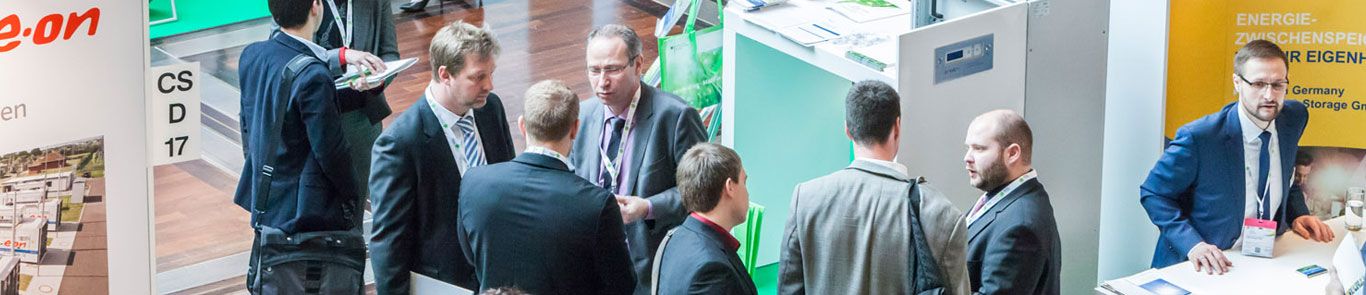
ees Europe takes place from 8–10 June 2027 at Messe München, Munich, Germany. The exhibition focuses on batteries and energy storage systems, including stationary storage, battery components and production technologies, and hydrogen-related storage solutions. It is part of The smarter E Europe, a group of exhibitions for the energy industry. The event brings together manufacturers, distributors, project developers, systems integrators, professional users and suppliers. For visitors, the practical opportunity is to examine technologies against a real project or sourcing need; for exhibitors, it is a specialist setting in which to explain product fit across the storage value chain.
ees Europe 2027 at a glance
| Item | Information |
|---|
| Event | ees Europe Energy Storage Munich |
| Official event name | ees Europe |
| Event type | Business exhibition |
| Main subject | Batteries and energy storage systems |
| Dates | 8–10 June 2027 |
| Opening hours | Tuesday and Wednesday, 09:00–18:00; Thursday, 09:00–17:00 |
| City and country | Munich, Germany |
| Venue | Messe München, halls B1, B2 and C1–C3 |
| Related event dates | The smarter E Europe Conference is listed for 7–8 June 2027 at ICM München |
| Exhibitor scale | 600 exhibitors expected for ees Europe in 2027, as stated in the organiser’s quick facts |
| Main visitor groups | Manufacturers, distributors, project developers, systems integrators, professional users and suppliers |
The organiser’s quick facts also give projected totals for the wider The smarter E Europe event. Those overall figures are not specific to ees Europe and are not used here as its attendance statistics. The 2027 ticket shop is expected to become available from February 2027; check the organiser’s site for current visitor information.
Why ees Europe matters to energy storage professionals
Assess storage as a system
Battery cells are only one part of a storage project. The official product scope also includes stationary systems, power electronics, battery management, temperature control, testing and safety, engineering and project development. Visitors can use that breadth to consider how components and services fit together, rather than judging a system by a single product specification.
Connect products to applications
The exhibition segments distinguish storage for residential buildings, commercial and industrial sites, utilities and grid operators, as well as uninterruptible power supply systems. That structure helps buyers and technical teams sort solutions by application and prepare more relevant questions about operating conditions, integration and service requirements.
Explore adjacent hydrogen technologies
Hydrogen and power-to-gas are included alongside batteries: the official segments list fuel cells, electrolysers, hydrogen storage and infrastructure, gas safety and monitoring, and hydrogen production equipment. This makes the event useful to professionals evaluating storage approaches across more than one technology pathway.
Scale note: 600 ees Europe exhibitors are expected in 2027; this is an organiser projection, not a completed-edition result. A public 2026 post-show report is available through a form, but no historical event statistics are used on this page.
Exhibition sectors and product groups at ees Europe
Battery and energy storage technologies
- Lithium-based battery technologies
- Lead-based batteries
- Redox-flow batteries
- Other battery technologies and storage methods
- Ultra-capacitors and capacitors
- Battery recycling and second-use applications
Stationary energy storage systems
- Residential stationary storage systems
- Commercial and industrial energy storage
- Storage systems for utilities and grid operators
- Uninterruptible power supply systems
- Energy-storage systems for mobile applications
- Project development and EPC services for storage systems
Battery-system components and accessories
- Battery management systems
- Power electronics for storage systems
- Thermal and cooling management
- Battery testing, inspection and safety systems
- Battery housings, contacts, wiring and insulation
- Battery chargers
Battery production technology and plant equipment
- Battery materials
- Cell-production machinery
- Module-production and assembly equipment
- Battery-module production and system installation
- Automation technology for battery production
Hydrogen, power-to-gas and fuel-cell technologies
- Hydrogen and power-to-gas solutions
- Fuel cells and electrolysers
- Hydrogen storage and infrastructure components
- Gas safety, monitoring and testing
- Hydrogen production equipment and materials
Engineering, research and enabling services
- Engineering and consulting services
- Research and development
- Testing institutes and certification
- Training and further education
- Financial services, subsidies and insurance
- Public authorities, state initiatives and trade media
These groups follow the organiser’s published exhibition segments. They describe the event’s product scope, not a promise that every category will have a particular exhibitor or product on display.
Who should visit ees Europe Energy Storage Munich?
Utilities, grid operators and energy project developers
Useful if you are assessing storage for grid services, renewable-energy integration or a defined project pipeline. Focus on the system architecture and on the interfaces between batteries, power electronics, controls, project development and grid requirements.
- Grid operators and utility teams
- Renewable-energy and storage project developers
- Investors and project-finance professionals evaluating storage assets
- Engineering, procurement and construction specialists
The official event description names project developers and professional users, and the segment list specifically identifies systems for utilities and grid operators.
Commercial and industrial energy users
Useful if your organisation is evaluating stationary storage for a commercial or industrial site, a renewable-energy installation, or continuity of power supply. Compare the application categories and prepare questions about load profile, integration, safety, maintenance and the technical evidence you need from suppliers.
- Industrial and commercial energy managers
- Facility and operations managers
- Electrical and energy engineers
- Procurement teams responsible for energy systems
The organiser lists commercial and industrial stationary storage, residential systems and UPS products as distinct segments; the fit for any specific site depends on its requirements.
Battery manufacturers, suppliers and system integrators
Useful if you source components, build systems, supply equipment or integrate storage into customer projects. The range from cells and modules to management systems, power electronics, testing, safety and production automation supports focused supplier and partner research.
- Battery-cell and battery-system manufacturers
- Component, power-electronics and equipment suppliers
- Distributors and importers
- System integrators and engineering consultants
- Battery-production machinery and automation companies
Manufacturers, distributors, systems integrators and suppliers are among the professional groups named in the official event description.
Why visit ees Europe?
- Compare storage technologies: examine lithium-based, lead-based, redox-flow and other battery approaches alongside capacitors and hydrogen-related systems.
- Match systems to applications: distinguish residential, commercial and industrial, utility-scale, grid-operator and UPS categories before shortlisting solutions.
- Trace the component chain: review battery management, thermal control, power electronics, chargers, housings, wiring and safety-related equipment relevant to a system specification.
- Evaluate production equipment: explore materials, cell and module machinery, assembly and automation if you are planning or upgrading battery manufacturing.
- Investigate hydrogen options: compare the event’s listed hydrogen storage, electrolyser, fuel-cell and power-to-gas categories with your own technology priorities.
- Identify technical questions: use the official product categories to prepare discussions about testing, certification, safety, integration and lifecycle support.
- Build a supplier shortlist: use the organiser’s 2027 exhibitor list and event app when available to prioritise companies by product fit rather than browsing without a plan.
Why exhibit at ees Europe?
Battery and storage manufacturers, component suppliers, production-equipment companies, hydrogen technology providers, engineering firms, testing bodies and system integrators may find the event relevant when they need to explain a specific product or service to a professional energy audience. The organiser expects 600 exhibitors at ees Europe in 2027; this is a forecast, not a verified attendance figure.
Exhibiting can support several practical objectives:
- Present a product within its place in the battery and storage-system chain.
- Discuss applications with project developers, integrators, distributors and professional users.
- Compare market feedback across stationary storage, components, production technology and hydrogen-related categories.
- Explore potential distributor or integration relationships, subject to fit and follow-up.
- Explain product evidence, safety documentation, operating parameters and service arrangements directly to interested professionals.
Before committing, define target customer types, required technical demonstrations, stand objectives and follow-up capacity. International exhibitors should separately assess German and EU product conformity, import, grid-connection and project-specific requirements; this page does not substitute for product-specific regulatory advice. ilikevents can assist with participation planning and organiser coordination.
What makes ees Europe different?
Its published scope puts battery storage systems, their production chain and hydrogen-related storage technologies in one specialist exhibition.
The official segments range from cell and battery technologies to stationary systems, management and power electronics, safety and testing, production equipment, fuel cells and electrolysers. The event is part of The smarter E Europe, whose parallel exhibition programme also addresses other areas of the energy industry. For storage professionals, this offers a way to investigate related technologies while keeping a focused plan for the ees Europe halls and categories.
What should you try to achieve?
If you are a utility or project developer
Set a concrete objective such as: Shortlist storage-system suppliers for one project and record the grid, control, safety and service questions that need technical follow-up.
If you are an industrial energy user
Set a concrete objective such as: Identify which storage applications and system categories merit a site-specific feasibility assessment.
If you are a manufacturer, supplier or integrator
Set a concrete objective such as: Map the component, equipment or distribution partners needed to complete a target customer offer.
A useful visit ends with decisions, documented technical questions and follow-up tasks, not just a collection of brochures.
How to prepare before ees Europe
1. Define the application or commercial question
Write down whether you are evaluating a grid, renewable, commercial-industrial, residential, UPS or manufacturing application. Note the project stage, power and energy requirements, operating profile, site constraints and target decision date where those are already known.
2. Build a targeted company list
Use the official exhibitor list for 2027 when planning access is available. Filter by product category and create a shortlist of suppliers or partners that match your application. The organiser’s quick facts say the 2027 ticket shop is expected from February; check the official site for updates to visitor tools and access arrangements.
3. Prioritise meetings and demonstrations
Classify companies as A – essential to the project, B – useful for comparison, or C – exploratory. For each A company, define the question you need answered and the evidence you will request. If you are exhibiting, distinguish customer meetings, distributor discussions and technical demonstrations.
4. Prepare storage-specific questions
- Which application and operating profile is the system designed for?
- What are the rated power, energy capacity and usable operating range?
- How are the battery management and thermal-control functions implemented?
- What testing, safety and certification documentation is available for the relevant market?
- How does the system interface with inverters, energy-management software and grid controls?
- What are the commissioning, service, warranty and replacement arrangements?
- Which cell, module or production components are included, and which are sourced separately?
- For hydrogen systems, what output, storage and safety parameters should be compared?
- What project assumptions, grid requirements or site data are needed to assess fit?
- What is the next technical or commercial step after the discussion?
These questions are a preparation aid, not a statement that every exhibitor offers every system type. Bring only the project data you can share and record any confidentiality limits before discussing a live project.
How to make the most of the exhibition
Use a consistent note for every stand: Company → product or service → application → evidence requested → relevance → next action. For example, a grid-storage developer could record the system category, the available power-electronics and control interfaces, safety documentation to review, and the technical data needed for a follow-up evaluation.
Keep product discovery separate from qualification. A catalogue entry or demonstration can help identify a potential fit, but it does not replace engineering review, market-specific conformity checks, grid studies or commercial due diligence. Reserve time to revisit the suppliers whose answers most closely match your requirements.
Plan your time realistically
The exhibition runs for three days across halls B1, B2 and C1–C3. Start by grouping target companies by product family and hall location in the official event information when the detailed plan is available. Allow time for scheduled conversations, technical comparisons and note-taking instead of attempting to cover every stand.
Morning
Use the first part of the day for priority meetings and the categories most central to your project, such as stationary systems, cell and module technologies or battery-production equipment.
Midday
Compare adjacent components and services: battery management, thermal control, power electronics, testing, certification and engineering support. Record unresolved technical questions while the context is fresh.
Afternoon
Review alternative technologies and related hydrogen or power-to-gas categories if they are relevant to your objectives. Revisit shortlisted suppliers and agree a specific follow-up action.
Official hours are 09:00–18:00 on Tuesday and Wednesday, and 09:00–17:00 on Thursday. The 2027 programme and detailed daily schedule should be checked when the organiser publishes them.
Beyond the exhibition floor
The official event website points visitors to the ees Europe Conference and to the wider The smarter E Europe programme. The conference dates are listed as 7–8 June 2027 at ICM München, while the exhibition is listed for 8–10 June at Messe München. Treat the conference as a separate schedule and venue when planning travel or registration, and check the organiser’s current programme for session details. The next edition’s detailed programme is not yet established in the information used for this guide.
Networking at ees Europe
Make each conversation specific. A short introduction should explain the application you work on, the storage category you are assessing and the stage of your decision. Ask technical suppliers for the system boundary, performance assumptions, interfaces, testing evidence and service model. If you are looking for distribution or integration relationships, be ready to explain your target segment, local capability and the customer requirements you can support.
Before ending a useful discussion, agree what information should be exchanged and who will take the next step. Record a contact only when there is a clear reason to follow up, and separate immediate project needs from general market research.
ees Europe visitor profile and business opportunities
| Visitor profile | Main interests |
|---|
| Utilities and grid operators | Stationary storage systems, power electronics, controls, safety and grid applications |
| Energy project developers | System suppliers, project development and EPC services, technical and commercial fit |
| Commercial and industrial energy users | Stationary storage, energy-management interfaces, thermal control and operational requirements |
| Battery manufacturers | Cells, materials, modules, production machinery and automation |
| Distributors and importers | Battery systems, components, chargers and supplier portfolios |
| Systems integrators and engineering firms | Battery management, power conversion, testing, safety and system interfaces |
| Hydrogen technology professionals | Electrolysers, fuel cells, hydrogen storage, infrastructure and monitoring |
Travelling to ees Europe
Messe München’s travel information says the venue is connected directly to the Messestadt West and Messestadt Ost stations on the U2 line. From Munich Central Station, the journey to the exhibition centre takes about 20 minutes without a change. The venue is 42 kilometres south of Munich Airport; the venue’s travel page lists shuttle buses, public transport and taxis as ways to reach the site. Check current routes, ticket conditions and event-specific transport arrangements before travelling.
For road access, Messe München is beside the A94, with the venue information directing visitors to the Feldkirchen-West or München-Riem exits. The event site lists halls B1, B2 and C1–C3; use the 2027 event plan for current entrances and parking details. ilikevents can help visitors plan an exhibition visit and coordinate local transportation.
Practical information for international visitors
| Item | Information |
|---|
| Airport | Munich Airport, 42 kilometres south of Messe München |
| Public transport | U2 subway line to Messestadt West or Messestadt Ost; about 20 minutes from Munich Central Station to the exhibition centre without a change |
| Venue access | Messe München, halls B1, B2 and C1–C3 for ees Europe, according to the 2027 quick facts |
Confirm visitor registration, entry requirements, travel connections and event-specific transport information before departure. Visa requirements depend on nationality. ilikevents can assist with visit planning, travel arrangements and registration support.
One day or several days?
One day
A single day may suit visitors with a narrow objective and a short list of priority suppliers. Focus on one or two relevant product groups, arrange key conversations in advance where possible, and leave time to document technical questions.
Two days
Two days can allow a more considered comparison across systems and components: one day for core storage technologies and applications, and another for components, production equipment, hydrogen categories or follow-up meetings.
Three days
Use the full exhibition period if your work spans several product groups, you are evaluating a substantial project, or you need time for supplier meetings and technical review. The value comes from a disciplined shortlist, not simply spending longer on the show floor.
ees Europe is particularly valuable if you have a project
Bring a concise project brief that describes the application, approximate power and energy needs, site or grid context, operating profile, integration requirements and decision stage. For manufacturing projects, include the target production process, cell or module requirements, automation scope and quality or safety evidence needed. For industrial sites, clarify the energy-management objectives and the technical constraints that a supplier must address.
Do not disclose commercially sensitive information unless you have a suitable basis to do so. Use early conversations to identify what data a supplier needs for a meaningful assessment, then conduct detailed engineering, conformity and financial evaluation through the appropriate project process.
After ees Europe: where the real value starts
Sort contacts into three groups: A – immediate project or sourcing relevance; B – potential supplier, integrator or distribution fit; C – general market intelligence. Follow up with a concise reference to the application discussed and request only the material needed for the next decision: product specifications, test and safety documentation, system interfaces, warranty terms, service arrangements, project references where available, or a technical meeting.
Compare suppliers against the same requirements. Record assumptions and open questions, check whether figures refer to power or energy capacity, and distinguish a component specification from the performance of a complete system. For production equipment, compare throughput, process scope, automation interfaces and service support. For hydrogen technologies, confirm system boundaries and safety conditions before comparing commercial proposals.
ees Europe visitor checklist
Before the exhibition
- ☐ Define the application or business question you want to resolve.
- ☐ Check visitor registration and the latest organiser information.
- ☐ Build a supplier shortlist from the official exhibitor list when available.
- ☐ Prepare technical questions and project information you are able to share.
- ☐ Check travel, transport and conference arrangements separately.
During the exhibition
- ☐ Record the company, product, application and evidence requested.
- ☐ Compare system claims on the same technical basis.
- ☐ Note safety, testing, certification, interface and service questions.
- ☐ Agree a clear next step with relevant suppliers or partners.
After the exhibition
- ☐ Prioritise contacts by project relevance and decision timing.
- ☐ Request missing specifications and documentation.
- ☐ Review integration, conformity, grid and commercial requirements.
- ☐ Assign an owner and due date to each follow-up action.
Is ees Europe worth visiting?
ees Europe is most useful to professionals working with batteries, stationary energy storage, system components, battery production or hydrogen-related storage technologies. The strongest return comes when you arrive with a defined project, sourcing or market question and use the published product categories to focus your comparisons. A broad technology scope can reward a planned visit; walking the halls without priorities is less likely to produce decisions you can act on.
Closing: make storage comparisons actionable
Ask yourself: What technical or commercial decision can I move forward by comparing storage solutions and suppliers in person? Arrive with a project question, leave with a shortlist and a documented next step. Explore. Compare. Evaluate. Follow up.
Energy storage opportunities in Germany
Market size and demand
Germany installed 842 MW of grid-scale battery energy storage capacity in 2025, nearly double the 450 MW installed in 2024, according to a July 2026 market report from the U.S. International Trade Administration. The same report says total energy capacity reached 3.5 GWh after increasing by 1.6 GWh in 2025. These are grid-scale and battery-storage indicators, not the value of the entire German energy market.
- New grid-scale BESS power capacity: 842 MW installed in Germany in 2025, compared with 450 MW in 2024; U.S. International Trade Administration market report, published July 2026.
- Total battery-storage energy capacity: 3.5 GWh in 2025 after a 1.6 GWh increase; Germany; U.S. International Trade Administration, July 2026.
- Commercial and industrial storage capacity: the ITA report describes an approximately 47% increase in industrial-scale capacity in 2025; this is a segment indicator, not total national storage growth.
Market drivers and commercial opportunities
The ITA report links storage deployment to Germany’s expanding renewable generation, mismatches between electricity production and demand, and the need for grid flexibility. It also describes growth in large-scale storage and investment in commercial and industrial systems. That context is relevant to ees Europe’s published categories of utility and grid storage, commercial and industrial systems, power electronics, controls, battery management and system integration.
- Grid-scale battery systems: the 2025 installation figure gives developers, equipment makers and integrators a reason to assess project and supplier fit; grid connection queues and multi-year approval timelines are identified as material risks in the ITA report.
- Commercial and industrial storage: companies may investigate systems for energy management, resilience and on-site renewable integration; each site’s load profile, connection conditions and business case need assessment.
- Power electronics, controls and optimisation software: the report identifies demand for control systems and optimisation associated with renewable-plus-storage projects and electricity-market activity; integration and project-specific requirements remain important.
- Battery components and production technology: suppliers may assess opportunities around cells, modules, management systems, safety, testing and automation, while verifying customer qualification, technical compatibility and service expectations.
Regulations and market-entry conditions
The ITA’s July 2026 market brief reports that battery-storage projects commissioned before August 2029 may qualify for full or partial grid-fee exemptions under Germany’s Energy Industry Act and Electricity Grid Charges Ordinance. Eligibility depends on the project and the applicable legal provisions; companies should verify current requirements with qualified German advisers before relying on an exemption. The report also flags uncertainty around grid-fee arrangements beyond 2029 and continuing grid-connection delays.
What this means for exhibitors
Storage manufacturers, power-electronics suppliers, controls providers and project services companies could use Germany’s documented deployment indicators to prioritise customer segments and prepare technical discussions. The indicators do not establish demand for a particular product or guarantee a buyer, contract or return. Exhibitors should be ready to explain application fit, safety evidence, grid and system interfaces, service capability and project assumptions.
What this means for visitors
Visitors may compare systems and suppliers against grid, renewable, commercial or industrial requirements, then check technical evidence and project economics independently. Germany’s reported expansion offers context for evaluating the market, while grid connection, regulatory changes and project-specific requirements remain important due-diligence topics.
Explore Event Opportunities
Use ees Europe to identify relevant storage technologies, suppliers and potential project or distribution partners. ilikevents can help you plan a focused visit or assess exhibition participation for your energy-storage business.
Get Expert Assistance from ilikevents to plan your next step.
See the ilikevents services for this event
For further information, please click
here .