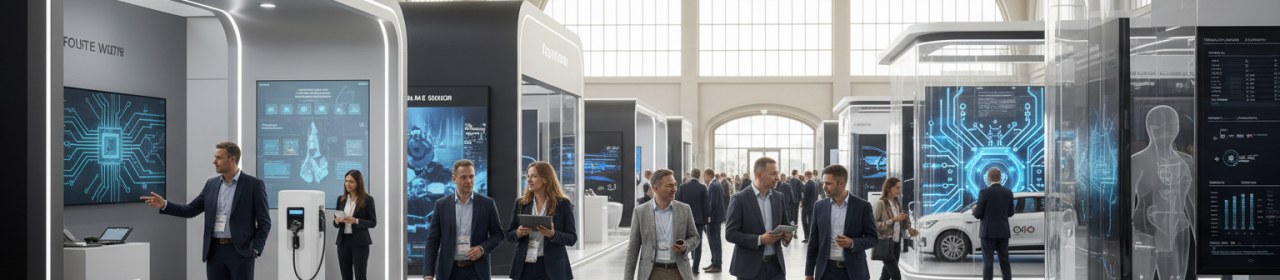
CES 2027: consumer technology in practice
6–9 January 2027 in Las Vegas, Nevada, USA. CES is owned and produced by the Consumer Technology Association (CTA). It brings technology businesses, start-ups, decision-makers, media and industry advocates together across 12 official venues grouped into the LVCC, Venetian and C Space campuses. CES is a broad view of how technology is being developed, applied and commercialised across consumer and enterprise markets. Use it to investigate specific questions, compare approaches and decide what merits further review.
Why CES matters to the technology ecosystem
See technology across connected sectors
CES covers technology that crosses traditional industry boundaries. Official 2026 coverage included artificial intelligence, accessibility, digital health, energy, enterprise, mobility, robotics, wearables, smart home, content and entertainment. This breadth helps visitors notice where an innovation in one field may affect another. Treat cross-sector connections as leads for investigation, not proof that every product is ready for deployment.
Compare ideas with products and demonstrations
The organiser positions CES around product launches, exhibits, immersive activations and demonstrations. Visitors can compare the problem each product addresses, its intended user, system fit and the evidence behind its claims. A demonstration shows an intended use; it does not replace testing, procurement review, regulatory checks or an assessment of support.
Use the previous edition’s scale as context
For CES 2026, the organiser reported more than 4,100 exhibitors, including around 1,200 start-ups, across more than 2.6 million net square feet. Its post-event release reported over 148,000 attendees and more than 400 conference sessions with over 1,300 speakers. A subsequent official attendance audit recorded 148,392 participants. These figures describe 2026, not a guarantee of 2027 scale or access to particular people.
Who should visit CES?
Technology and product leaders
Relevant if you set product direction, assess technology partnerships or decide where to invest development effort. Compare how companies address a common user or business problem, and distinguish an established product from a concept or announcement.
- Compare approaches to a defined customer need.
- Identify technologies that may complement a roadmap.
- Ask about interoperability, security, privacy, support and deployment.
Retailers, distributors and business buyers
Buyers can explore products and platforms, then assess fit with customer segments, existing ranges and service capabilities. Look beyond novelty: ask about availability, support, compatibility and product lifecycle. Commercial terms need direct confirmation.
- Compare product propositions against customer and channel criteria.
- Check warranty, compatibility and after-sales support.
- Separate near-term candidates from longer-term market signals.
Engineers, developers and technical specialists
Technical visitors can explore applications and compare approaches. Bring a use case, operating environment, performance requirement and validation criteria. Ask what has been demonstrated, what remains in development and which interfaces or standards are supported.
- Investigate AI, robotics, mobility, connected devices and enterprise applications.
- Ask about data flows, interfaces, reliability and test conditions.
- Capture technical documents and questions for engineering review.
Start-ups, founders and investors
The 2026 edition included around 1,200 start-ups, with Eureka Park serving as a start-up showcase. Founders can explain their product and target user; investors and innovation teams can scan emerging propositions. Prepare a concise account of product maturity, user need and the specific feedback or partnership sought. A showcase does not promise funding or commercial results.
- Compare start-up solutions by user problem and adoption evidence.
- Ask about maturity, intellectual property, integration and support.
- Make the intended next conversation clear.
Media, content creators and analysts
CES offers a setting for observing announcements, demonstrations and cross-industry themes. Plan coverage around topics you can verify, distinguish company claims from established facts, and compare announcements with product evidence and market context.
- Build a topic-led schedule.
- Record the source and status of claims and demonstrations.
- Use sessions and exhibits as inputs to further reporting or analysis.
What can you find at CES?
Official CES 2026 coverage included the following sectors; exact exhibitors and activities can change by edition.
AI and enterprise technology
- Artificial intelligence, including enterprise and physical AI, digital twins and robotics.
- Cloud, 5G, cybersecurity, chips, edge computing and enterprise XR.
- Tools for productivity, collaboration and digital services.
Digital health, accessibility and wearables
- Digital health, telehealth, connected monitoring and consumer health technology.
- Accessibility tools, smart glasses, watches, rings and other wearables.
- Technology for independent living, hearing, wellness and at-home support.
Energy, mobility and robotics
- Battery storage, smart-home energy management and portable power.
- Electric and advanced vehicles, autonomous mobility and transportation systems.
- Robotics for home, industrial, medical, supply-chain and mobility applications.
Smart home, content and entertainment
- Connected appliances, home assistants, security, energy management and automation.
- Streaming, entertainment platforms, audio and content technology.
- Consumer devices and services linking hardware, software and digital experiences.
Use the current 2027 exhibitor directory, floor plans and programme to confirm companies and activities for your visit.
What makes CES different?
CES combines a wide technology landscape with a multi-campus exhibition and conference programme. Its value is in seeing products, business propositions and industry discussions across sectors. CES 2026 reported 400-plus conference sessions and more than 1,300 speakers alongside the exhibition. Those are previous-edition figures; check the 2027 programme for confirmed sessions.
Examples from 2026 coverage included accessibility, AI, digital health, energy, enterprise, mobility, robotics, smart glasses and smart home. Named companies or demonstrations from that edition are not a prediction of 2027 participation. Compare intended use, maturity, compatibility and evidence rather than the prominence of an announcement.
Set an objective before you attend CES
If you lead a product or technology team
Set a decision such as identifying three technologies for feasibility review or comparing approaches to one user problem. Record technical and commercial criteria in advance.
If you buy or distribute technology
Choose a category and customer segment, then shortlist products to assess. Compare use, compatibility, support, lifecycle and channel fit; mark availability and pricing as questions to confirm.
If you develop or evaluate technology
Choose a learning goal linked to a real project, such as understanding how a class of AI tools handles data or comparing robotics approaches for a defined environment. Ask for test conditions and technical materials.
If you are a founder or investor
Focus on conversations that clarify product-market fit, technical maturity, distribution or partnership needs. Treat introductions as the start of diligence, not a completed sales or investment process.
How to prepare for CES 2027
- Confirm current information. CES is scheduled for 6–9 January 2027. Review the organiser’s latest registration details, hours, maps and announcements.
- Choose a primary question. Identify the customer problem, technology decision, supplier search or trend that matters to your role.
- Use official campus maps. CES groups 12 venues into LVCC, Venetian and C Space campuses. Mark priority sessions, exhibitors and meetings; check current floor plans because locations can change.
- Build a prioritised shortlist. Separate essential meetings, useful comparisons and exploratory stops. Confirm 2027 participation rather than assuming a 2026 company or speaker will return.
- Prepare comparison questions. Ask what problem a product solves, who uses it, what has been tested, how it integrates, what data it needs, what support is available and what limitations apply.
- Coordinate with colleagues. Divide topic or campus coverage, agree how to record findings and review notes each day.
- Leave time for verification. After demonstrations, compare notes and request written information. Avoid scheduling every minute.
How to use the CES exhibition floor
Use a consistent record: Company → product or claim → intended user → evidence shown → fit with your need → next action. For an AI tool, note the task, data, deployment setting, test evidence and integration work to assess. For a wearable, record the intended user, function and supporting evidence.
Compare like with like. An announcement, a demonstration and a validated deployment are different kinds of evidence. For a purchase or project, request specifications, test material, compatibility information and support terms, then review them with technical, security, legal and procurement colleagues.
The organiser provides CES 2027 campus maps and floor-plan resources. Use them to check current locations. Because the show spans multiple campuses, allow time for transitions without relying on unverified travel times.
Beyond the CES exhibition floor
The conference programme adds perspectives to product discovery. CES 2026 reported more than 400 sessions and over 1,300 speakers. This is historical context, not a promise about 2027. When the new programme is published, select sessions that support a defined decision or learning goal and leave time to follow up.
A session can frame a market or technical question; an exhibit can show a particular implementation. Compare their evidence and limitations rather than treating a discussion of a trend as proof that a product is ready for your organisation.
Plan your time realistically at CES
CES 2027 runs over four exhibition days and across 12 official venues. The organiser’s dates-and-hours page lists different schedules for media events, conference programming, exhibits and CES Foundry. Use the current schedule rather than assuming every component has identical hours.
Before the first day
Confirm the locations of priority sessions and meetings, check campus maps, and group important stops by campus where possible. Decide which topics colleagues can cover separately.
During each day
Protect time for priority meetings and sessions, with flexible blocks for discoveries. Take short notes at each stop and review them before changing topics. Record technical questions for follow-up when a crowded demonstration cannot resolve them.
At the end of the day
Sort findings into immediate, potential and exploratory follow-up, then update the next day’s shortlist. A short daily review can prevent repeated cross-campus trips.
Networking at CES
Make introductions specific. Explain your role, product area and current question. For a partnership discussion, identify the application or interface you want to explore; for a start-up, ask about the problem, maturity and next evidence needed. Verify a speaker’s role and the status of claims before treating them as fact.
Agree a concrete next step, such as sending a technical brief or arranging a product review. Record who owns the follow-up and what information is needed. A meeting or exchange of contact details does not itself establish a partnership or commercial opportunity.
After CES: turn discoveries into decisions
Sort contacts and findings into A — immediate review for current projects or procurement; B — potential fit for further information; and C — market intelligence for broader trends. For A items, assign an owner and request evidence such as specifications, compatibility, security and privacy information, testing conditions, support arrangements, availability or terms.
Compare shortlisted products against the same criteria and document remaining unknowns. Follow-up turns an exhibition impression into material a product, engineering, procurement or investment team can assess. Exhibitors and founders should prioritise contacts whose needs match their offer.
Who should consider exhibiting at CES?
CES may suit companies presenting consumer technology, enterprise solutions, software, hardware, platforms or services related to its sectors. The organiser reported more than 4,100 exhibitors, including around 1,200 start-ups, in 2026; these are historical figures, not a forecast for 2027.
Define the audience you need to reach, the problem your product solves and the evidence you can demonstrate. Prepare information about maturity, compatibility, availability and limitations. Check current exhibitor information for participation details. Exhibition presence creates an opportunity to present a product; it does not guarantee leads, investment, coverage or sales.
CES 2027 visitor checklist
Before
- ☐ Confirm dates, registration, hours and the current programme.
- ☐ Set an objective and define what evidence could change a decision.
- ☐ Use official floor plans to group priority stops by campus.
- ☐ Confirm relevant companies and sessions for 2027.
- ☐ Prepare category-specific technical, customer and commercial questions.
During
- ☐ Distinguish claims, demonstrations and validated evidence.
- ☐ Record product fit, integration needs, limitations and follow-up owners.
- ☐ Compare alternatives against consistent criteria.
- ☐ Review notes daily and adjust priorities.
After
- ☐ Request documents needed for evaluation.
- ☐ Review findings with relevant technical, security, procurement or investment colleagues.
- ☐ Assign follow-up actions and close the loop with contacts.
Is CES worth visiting?
CES is most valuable for people with a clear reason to explore technology across consumer and enterprise markets: product leaders comparing approaches, buyers assessing offerings, engineers studying applications, founders presenting a proposition, and analysts tracking innovation. Its scale offers breadth but requires prioritisation. Visitors who use campus maps, set focused questions and follow up on evidence can turn the event into useful learning and decisions.
CES 2027 at a glance
| Item | Information |
|---|
| Event | CES |
| Full name | Consumer Electronics Show |
| Dates | 6–9 January 2027 |
| City and country | Las Vegas, Nevada, United States |
| Venue format | 12 official venues across LVCC, Venetian and C Space campuses |
| Organiser | Consumer Technology Association (CTA) |
| Main sectors | AI, digital health, energy, enterprise, mobility, robotics, wearables, smart home, content and entertainment |
| Main audiences | Technology leaders, buyers, developers, start-ups, investors, media and analysts |
| Latest audited attendance | 148,392 participants in 2026 |
| 2026 exhibition scale | More than 4,100 exhibitors; more than 2.6 million net square feet |
| 2027 programme | Check the organiser’s current programme for confirmed sessions and activities |
The dates and multi-campus format are published for 2027. The attendance and exhibition figures refer to the completed 2026 edition.
Closing: make CES a set of useful comparisons
CES offers a wide view of technology, but a useful visit starts with a defined question and ends with evidence to assess. What product, system or market assumption would you like to understand better? Use the event to discover options, compare them carefully and decide what deserves follow-up. Focus. Explore. Compare. Verify. Follow up.
Consumer technology opportunities in the United States
Market context
The Consumer Technology Association’s August 2026 forecast projected U.S. consumer-technology retail revenue of USD 578 billion in 2026, up 4% year over year. This is a forecast, not an audited final result, and describes the domestic market rather than CES attendance.
Opportunities for exhibitors
Companies exhibiting consumer devices, software, services or enabling technologies may assess how their proposition fits U.S. customer needs and distribution channels. The forecast offers context for market scale; product fit, price, compliance, service and channel requirements still need category-specific validation.
Opportunities for visitors
Buyers and product teams could compare solutions against customer needs in a substantial U.S. consumer-technology market. Developers and decision-makers may examine technologies for product roadmaps, partnerships or testing. The forecast is a market-level indicator, not proof of demand for a particular product.
The United States may be relevant to consumer-technology participants because CTA projected a large market in 2026. Practical fit depends on product category, customers, route to market and applicable requirements.
Discover Las Vegas
Las Vegas offers visitor experiences beyond its convention campuses, from public displays to cultural attractions.
Fountains of Bellagio
The Las Vegas visitors’ organisation lists the Fountains of Bellagio on the Strip, a choreographed water display.
Bellagio Conservatory and Botanical Gardens
The Conservatory presents seasonal garden displays inside Bellagio, combining horticulture and floral design.
Fremont Street Experience
In downtown Las Vegas, Fremont Street Experience combines a pedestrian district with entertainment and an overhead canopy light show.
CES uses multiple Las Vegas venues, including LVCC, Venetian and C Space campuses; check the current official map when planning. Fit a city visit around the confirmed event schedule.
For further information, please click
here .