Paris Book Festival 2027: the event at a glance
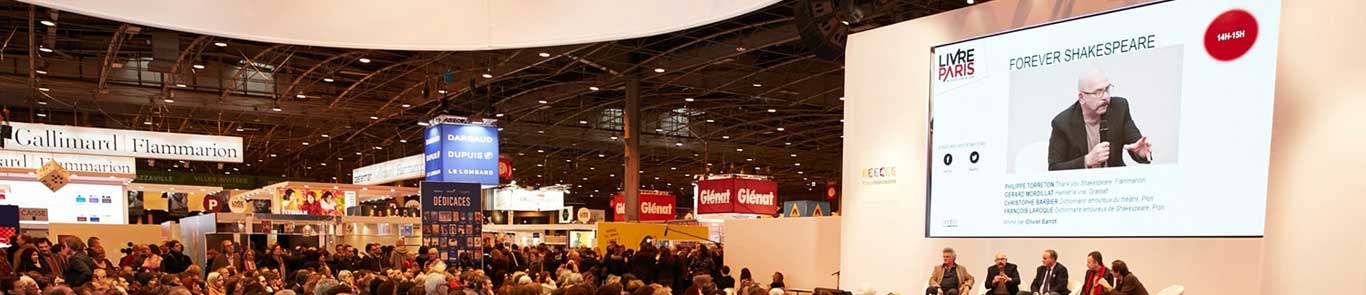
The Festival du Livre de Paris is a public literary festival bringing together the publishing sector and readers around books, reading and literary culture. The organiser presents the event as a meeting point for the wider editorial chain and a way to showcase a broad panorama of French-language publishers, while welcoming the reading public.
Dates: 16–18 April 2027
Venue: Grand Palais, Paris, France
Organiser: Paris Livres Événements, a subsidiary of the Syndicat national de l’édition (SNE).
Format: Public book festival with author encounters, book discovery and publishing-sector participation.
The organiser’s current event page confirms the dates and venue. Check its current visitor information closer to the event for the 2027 programme, daily schedule and ticket details.
Why Paris Book Festival matters
Discover books across genres
Readers can move across fiction, non-fiction and illustrated publishing in one visit. The 2026 edition brought together literature, comics, children’s books, romance, crime fiction, fantasy and humanities, so visitors could compare different forms of storytelling and subject matter rather than focusing on a single category.
Hear authors and take part in conversations
Author encounters and signings make the festival more than a browsing floor. Visitors can listen to authors discuss ideas, themes and creative choices, then use those conversations to decide which works or perspectives they want to explore further.
Connect publishing with its readers
The festival serves both a broad reading public and the publishing community. Readers can discover publishers and titles; professionals can observe how books are presented to audiences and explore conversations across the editorial chain. These are opportunities to investigate, not guaranteed commercial outcomes.
Published scale of the 2026 edition
- 121,000 visitors were thanked by the organiser.
- 1,800 authors took part.
- More than 300 encounters and 3,000 signing sessions were reported.
- Two exhibitions celebrated the ninth art, across 12 stages at the Grand Palais.
These are figures for the 2026 edition, not a forecast for 2027. They indicate the scale of the previous programme and the range of ways visitors engaged with books and authors.
Who should visit Paris Book Festival?
The festival addresses readers as well as people working in publishing. Decide which part of the programme matches your interests before setting priorities.
Readers and book enthusiasts
Useful if you want to discover new authors, compare books across genres or hear writers discuss their work. You can:
- Choose two or three genres to explore rather than trying to see everything.
- Note titles that interest you and compare them across publishers or themes.
- Use author conversations to understand the ideas behind a book before deciding what to read next.
- Keep a short list of titles, authors and follow-up reading so browsing leads to useful discoveries.
The organiser describes the festival as welcoming readers and celebrating books and reading for all audiences.
Families and younger readers
Useful if you are looking for books and cultural activities that can engage younger readers alongside adults. The 2026 programme included children’s books and a wide range of encounters. You may want to:
- Check the published 2027 programme for sessions suitable for the ages and interests in your group.
- Agree on a small number of priorities with younger visitors before entering the programme.
- Allow time for browsing as well as scheduled conversations or signings, if included in the final schedule.
- Keep a note of authors and titles to revisit after the event.
Age-specific activities, access conditions and session arrangements should be confirmed in the organiser’s 2027 visitor information.
Publishers and publishing professionals
Useful if you want to observe reader interests, present books to the public or engage with the wider editorial sector. The organiser says the festival aims to bring together the publishing chain and a broad panorama of French-language publishers. Consider:
- Which titles or editorial lines you want readers to notice.
- What questions about readership, positioning or creative choices you hope to explore.
- How your public-facing presentation can connect a title with its intended readers.
- Which conversations merit follow-up after the event, while respecting the limits of what the programme confirms.
The 2027 exhibitor list, professional arrangements and exhibitor terms need to be checked with the organiser when published.
Booksellers and other book-trade visitors
Useful if you want a broad view of books and publishers that may inform selection, recommendations or conversations with customers. Use genre and subject categories to structure your visit, record titles and publishers consistently, and check the final professional programme for relevant events. The festival page does not promise buyer meetings, distribution agreements or specific business results.
What can you find at Paris Book Festival?
The 2026 edition’s official description gives a broad view of the event’s book culture. These categories are documented from that edition and should not be read as a complete 2027 exhibitor list.
Literature and fiction
- Fiction and literary conversations.
- Romance, crime fiction and fantasy.
- Authors discussing themes, writing and the ideas behind their works.
Comics and graphic storytelling
- Comics and graphic novels as part of the festival’s programme.
- Exhibitions celebrating the ninth art were part of the 2026 edition.
- Readers can compare visual storytelling, formats and artistic approaches.
Children’s books and reading for younger audiences
- Children’s publishing featured among the genres represented in 2026.
- Families can check the next programme for age-specific sessions and activities.
Humanities and non-fiction
- Humanities and discussion of contemporary issues appeared in the 2026 event description.
- Visitors can use talks and encounters to identify books and viewpoints for further reading.
The official 2027 programme and exhibitor catalogue should determine which publishers, authors, sessions and special areas are available in the next edition.
What makes Paris Book Festival different?
It brings public reading, author encounters and the publishing sector into one cultural event. The organiser’s account of 2026 combines a large author presence, hundreds of encounters, thousands of signing sessions, genre diversity and exhibitions for comics. That combination allows visitors to move between browsing, listening and meeting authors rather than treating the event only as a display of books.
For readers, the value lies in connecting a title with the person, subject or conversation behind it. For publishing professionals, a public-facing festival can provide a setting to see how books and editorial identities meet readers. The 2026 figures are evidence of the previous edition’s activity; they do not guarantee the same programme or scale in 2027.
What should you try to achieve at Paris Book Festival?
A useful visit begins with a purpose. “See what is new” is too broad for a festival with multiple genres, stages and encounters. Choose a practical result that fits your role.
If you are a reader
Leave with a shortlist of titles and authors you want to read next. Set a theme or genre, then note why each selection appealed to you.
If you are visiting with younger readers
Identify books and sessions that match their interests and age group. Confirm the final programme and session conditions before planning the day.
If you work in publishing
Test how clearly your titles and editorial lines connect with their intended readership. Prepare a few questions about reader response and record meaningful conversations for a considered follow-up.
If you are a bookseller or book-trade professional
Build a focused list of titles, publishers or genres to investigate. Keep commercial discussions separate from general browsing and verify professional access and meeting arrangements with the organiser.
How to prepare before Paris Book Festival
1. Choose your reason for attending
Decide whether your main aim is reading discovery, family participation, author conversations or a publishing-sector perspective. Write down one primary goal and two secondary interests. That short list makes it easier to select sessions once the 2027 programme is available.
2. Check the official programme and access information
Use the organiser’s current information to confirm the programme, ticket conditions, daily opening hours, access requirements and any session booking rules. The homepage currently confirms the event dates and Grand Palais venue; it does not provide the complete 2027 programme in the material reviewed for this update.
3. Make a priority list
Divide activities into three groups: A — essential author conversations, sessions or professional objectives; B — useful genres, publishers or exhibitions; C — browse if time allows. Include the reason for each choice, not just a long list of names.
4. Prepare questions that match your purpose
- Readers: What question or theme do I want to take away from this conversation?
- Families: Which books and sessions fit the interests and ages of our group?
- Publishing professionals: Which reader group, title or editorial idea do I want to learn more about?
- Booksellers: Which genres, titles or publishers do I want to compare for my selection work?
- All visitors: Which sessions require advance booking, and what access arrangements apply?
5. Plan for a public cultural event
Expect choices between browsing and scheduled sessions. Leave room in your plan for movement, breaks and unexpected discoveries. Confirm the venue’s current visitor rules and event-specific entry arrangements before travelling.
How to make the most of the festival
Use a simple record for useful discoveries: Title or session → author or publisher → why it matters to me → question or idea → next step. This works for a personal reading list as well as professional research.
- After a session, record one idea or recommendation while it is fresh.
- When comparing books, note genre, audience, subject and what distinguishes the title.
- For professional conversations, record the business context and the agreed next action rather than relying on memory.
- Balance planned activity with browsing; a festival’s value can include discoveries outside your initial list.
- Check the official programme for any changes to session rooms, timing or access.
Do not assume that every author, publisher or activity from 2026 will return in 2027. Use previous-edition information as context, then plan from the current programme.
Plan your time realistically
The festival runs over three days, but the exact 2027 daily schedule and programme distribution must be confirmed by the organiser. A flexible structure can help you use the time without inventing a timetable.
Before the day
Choose your top sessions or encounters, identify any booking or entry requirements and group your interests into a short list. Check the venue’s current access information and allow for the time needed to enter and orient yourself.
During the visit
Prioritise scheduled activities first, then set aside a separate period for browsing. If you are attending with family or friends, agree on a meeting point and a small number of shared priorities using the official venue plan and event guidance.
At the end of each day
Review your notes, shortlist what you still want to see and remove lower-priority items if the next day is already full. Capture titles, authors and professional follow-ups before leaving the venue.
Beyond the exhibition floor: conversations and encounters
The 2026 edition included more than 300 encounters, 3,000 signing sessions and 12 stages, according to the organiser. These are examples of the previous edition, not promises about 2027. Its recorded 2026 conversations included writing, literature, universalism, political dystopias, children’s reading and other subjects. The 2027 programme should be checked when the organiser publishes it.
For a reader, a conversation can help place a book in context and suggest further reading. For a publishing professional, listening across sessions may reveal how authors and readers approach particular themes. Review the final schedule in advance and choose sessions by relevance rather than simply by prominence.
Networking and professional conversations
Although the festival welcomes the public, the organiser also describes it as a gathering for the wider publishing sector. Professional visitors can make conversations more useful by preparing a concise introduction to their role, the kinds of books or audiences they work with, and the question they hope to discuss.
- For publishers, be ready to explain the intended readership and distinct editorial contribution of a title.
- For booksellers and other trade visitors, identify the genres and publishing approaches relevant to your work.
- For authors and editorial professionals, prepare a clear question or point of discussion rather than relying on an open-ended exchange.
- Record context and an appropriate next step after a useful conversation.
Do not assume formal matchmaking, scheduled buyer meetings or a guaranteed commercial outcome. Check the 2027 professional information for any organised networking or business services.
Travelling to Paris Book Festival
The venue is the Grand Palais in Paris itself, at 17 Avenue du Général Eisenhower, 75008 Paris. The venue’s practical information currently lists nearby Metro stations Franklin D. Roosevelt (lines 1 and 9) and Champs-Élysées–Clemenceau (lines 1 and 13), and RER line C at Invalides. It also lists several bus routes and cycling access. These are general venue details; confirm event-specific entrances, service changes and transport arrangements before travelling in April 2027.
The venue’s current visitor information identifies the main entrance at Square Jean Perrin, 17 Avenue du Général Eisenhower. Check the festival’s own instructions for the correct entrance and any accessibility arrangements for the event.
Where should you stay?
Choose accommodation according to your main purpose and the rest of your Paris schedule. If most of your time is devoted to the festival, prioritise a location that makes the venue and your planned sessions practical to reach. If you are combining the festival with meetings elsewhere, consider those appointments as well as the event when deciding where to stay.
Families may value a plan with straightforward access and enough flexibility for breaks. Publishing professionals with meetings should allow time to travel between appointments and the venue. No particular hotel, price or travel time is implied here; compare current options and confirm the event schedule before booking.
One day or several days at Paris Book Festival?
One day
One day may suit visitors with a focused goal, such as a short list of author conversations, a specific genre or a family visit around a small number of sessions. Check the schedule before choosing the date so your priorities are actually available.
Two days
Two days can offer a balance between programmed encounters and book discovery. You may reserve one day for scheduled sessions and another for browsing or professional conversations, depending on the final programme.
Three days
Consider all three days if the published programme spans several interests that matter to you, or if your professional purpose requires time for both public events and sector conversations. The final 2027 programme and ticket conditions should determine whether a multi-day visit is worthwhile for your needs.
After Paris Book Festival: turn discoveries into next steps
Review your notes soon after the event, while the reason for each discovery is still clear. For personal reading, organise titles into “read next”, “explore later” and “share” lists. For family visits, note which books or sessions particularly engaged younger readers.
For publishing professionals and booksellers, sort conversations into immediate follow-up, future research and general market insight. Where a contact has agreed to a next step, follow up with a concise message that refers to the discussion. For titles or editorial ideas you want to assess, collect the relevant information and compare it against your audience, catalogue or business needs. Treat informal conversations as starting points for evaluation, not as evidence of a deal or confirmed partnership.
Who should consider exhibiting at Paris Book Festival?
The organiser describes the festival as bringing together the editorial sector and showcasing a wide range of French-language publishers. Publishers whose books and editorial programmes fit the public-facing festival may consider whether the audience and format serve their objectives. The 2027 exhibitor list, stand options, costs, deadlines and professional terms are not established by the current event page reviewed here.
Before making a decision, define the result you want: reader discovery, visibility for a title, author engagement or a broader view of audience response. Ask the organiser for current exhibitor conditions and assess the expected preparation, staffing and follow-up against that objective. Do not infer a guaranteed audience, sales result or distribution agreement from the visitor figures of a previous edition.
Paris Book Festival visitor checklist
Before
- ☐ Confirm the current 2027 programme, ticket conditions and venue instructions.
- ☐ Choose a primary reason for visiting and two secondary interests.
- ☐ Prioritise sessions, authors, genres or professional questions.
- ☐ Check booking, accessibility and entry requirements for your chosen activities.
- ☐ Plan transport using current venue and local transport information.
During
- ☐ Start with the sessions or objectives that matter most.
- ☐ Keep time for browsing and unplanned discoveries.
- ☐ Record titles, authors, publishers and why each item interested you.
- ☐ Confirm any programme changes through the organiser’s information.
- ☐ Take breaks and keep your group’s plan practical.
After
- ☐ Organise reading lists and session notes while they are fresh.
- ☐ Follow up professional conversations that have a clear next step.
- ☐ Compare any business leads or editorial ideas against your actual needs.
- ☐ Share useful discoveries with colleagues, customers or family.
Is Paris Book Festival worth visiting?
Paris Book Festival is most useful for readers who want to explore more than one genre and connect books with author conversations, and for publishing-sector visitors who want a public-facing view of the editorial ecosystem. Families can find value when the final programme fits their interests and ages. Professionals should confirm that the 2027 visitor or exhibitor arrangements match their objectives.
The festival’s 2026 scale shows how much activity can be available, but a large programme rewards selectivity. Choose what you want to discover, check the current schedule and leave with notes that help you continue reading or follow up constructively.
Paris Book Festival 2027 at a glance
| Item | Information |
|---|
| Event | Paris Book Festival (Festival du Livre de Paris) |
| Dates | 16–18 April 2027 |
| City and country | Paris, France |
| Venue | Grand Palais, 17 Avenue du Général Eisenhower, 75008 Paris |
| Organiser | Paris Livres Événements, subsidiary of the Syndicat national de l’édition |
| Main subjects | Books, publishing, literature, comics, children’s books, romance, crime fiction, fantasy and humanities |
| Main audiences | Readers, families and younger readers, publishers, booksellers and publishing professionals |
| Latest published scale | 2026: 121,000 visitors; 1,800 authors; more than 300 encounters; 3,000 signing sessions |
| 2027 programme | Dates and venue are confirmed; check the organiser for programme, opening hours, tickets and professional arrangements |
Use the 2027 official event information for final programme and participation details; previous-edition figures describe 2026 only.
Make your Paris Book Festival visit count
Ask yourself: Which books, ideas or conversations do I want to take away from Paris that I would not find through my usual reading routine? Choose a purpose, make room for discovery and record what matters to you. Read. Listen. Discover. Reflect. Follow up.
Book publishing opportunities in France
Market size and demand
The Syndicat national de l’édition reported publisher turnover of €2.88 billion in 2025, with 420 million copies sold. The same report said turnover declined 0.6% in value and volume fell 1.5% year on year. It also reported a 5.7% increase in book exports. These figures describe the French publishing sector in 2025, not demand at the 2027 festival; early 2026 indicators were described by the SNE as weaker still.
Market drivers and commercial opportunities
The evidence points to a mixed market rather than uniform growth. French book exports rose in 2025, while translation-rights and co-edition transactions fell 5.2% to 13,517. Publishers with titles suited to international distribution may investigate export channels, but the export figure does not identify destination markets or guarantee profitability. SNE also reported an 8.2% rebound in school publishing; companies in that segment may assess its relevance, although the festival has not confirmed school-publishing exhibitors for 2027.
Regulations and market-entry conditions
France’s fixed book-price framework is in force. The Ministry of Culture explains that the publisher or importer sets the retail price for new books and retailers generally must respect it, with discounts limited to 5% subject to exceptions. The ministry also describes rules covering online book sales and digital books. Publishers and sellers entering the French market should check the current legal text and how it applies to their products and sales channels.
What this means for exhibitors
Publishers may use the festival to present books to readers and assess how their editorial offer is received. Companies considering exports or school publishing should verify segment fit, applicable pricing rules and professional arrangements separately; the available national figures do not establish specific buyers or orders at the event.
What this means for visitors
Readers and book-trade visitors can explore a broad publishing culture and compare titles, genres and editorial approaches. Professionals investigating France as a market may use the event as one point of cultural and sector observation, while checking distribution, legal and market evidence through appropriate current sources.
Discover Paris
The Grand Palais is in Paris proper, so visitors can combine festival attendance with the city’s museums and monuments without treating the venue as an outlying suburb. Paris’s official tourism office highlights major landmarks and historic sites across the city.
Eiffel Tower
The Eiffel Tower is an iconic Paris monument with views over the Seine and surrounding landmarks.
Notre-Dame Cathedral
Notre-Dame is a historic cathedral among the celebrated monuments of Paris, offering a close encounter with the city’s architectural heritage.
Arc de Triomphe
The Arc de Triomphe is a major Paris monument identified by the city’s official tourism office.
Choose one or two places that fit around your festival schedule rather than trying to cover the whole city between sessions. Confirm current access information for each attraction independently.
For further information, please click
here .