CABSAT Dubai 2027
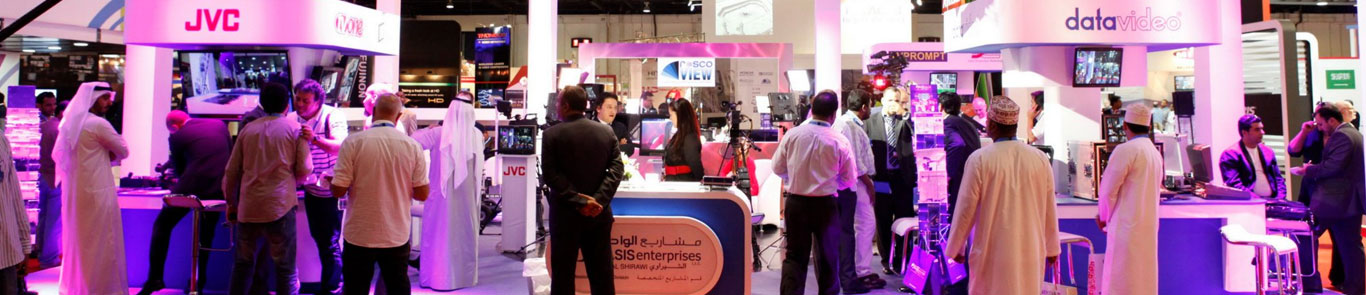
CABSAT is an international trade exhibition for broadcast, media technology and professional audiovisual systems, with satellite communications represented through its co-located SATExpo platform. The 2027 edition is scheduled for 4–6 May 2027 at Dubai Exhibition Centre, Expo City Dubai, Dubai, United Arab Emirates, in halls S17 and S19. It brings together technologies for creating, processing, distributing and experiencing media, giving broadcasters, producers, engineers, systems integrators, content businesses and technology suppliers a place to compare approaches and define what they need to investigate next.
CABSAT Dubai at a glance
| Item | Information |
|---|
| Event | CABSAT Dubai |
| Official event name | CABSAT |
| Edition | 2027 edition; the organiser has not stated its ordinal edition number on the current event pages |
| Event type | Business trade exhibition |
| Category | Media & Broadcasting |
| Dates | 4–6 May 2027 |
| Opening hours | 2027 visitor hours have not been published on the pages reviewed; confirm before planning each day |
| City and country | Dubai, United Arab Emirates |
| Venue | Dubai Exhibition Centre, Expo City Dubai, halls S17 and S19 |
| Organiser | Dubai World Trade Centre (DWTC) |
| Main sectors | Broadcast and media technology; content creation and production; cloud and IP workflows; satellite communications; professional audiovisual and integrated systems |
| Main audiences | Broadcasters, content producers and owners, media buyers and distributors, broadcast engineers, systems integrators, technical managers, technology suppliers |
| Latest published scale | The 2025 editions of CABSAT, Integrate Middle East and SATExpo together reported 32,000+ attendees and 820+ brands from 120+ countries; these are combined organiser figures, not CABSAT-only totals |
The 2027 date, venue and halls are published in the organiser’s visitor information. The next edition’s detailed programme and visitor opening hours should be checked as the organiser releases them.
Why CABSAT Dubai matters
See technologies across the media chain
Broadcast and content businesses depend on linked stages: capture and production, post-production, media management, transmission and delivery. CABSAT’s published themes include content creation and virtual production, media technology trends and cloud or IP workflows, alongside Pro AV, immersive environments and integrated systems. Looking across those areas can help a visitor frame system-level questions rather than compare a device in isolation.
Compare infrastructure and applications
Studios, broadcasters, telecom operators and systems integrators work with different technical constraints. A concentrated trade floor can help professionals compare equipment and workflow approaches, then ask suppliers about interoperability, implementation requirements, support and the operational context in which a solution is intended to work.
Connect content businesses with technology suppliers
Content owners, producers, distributors and media businesses have interests beyond equipment procurement: they may be looking for production partners, distribution approaches or co-production conversations. CABSAT’s 2025 programme included the Co-Production Salon, a content-collaboration feature; the 2027 programme has not yet been confirmed.
Use scale carefully
The organiser reported 32,000+ attendees and 820+ brands across the combined 2025 editions of CABSAT, Integrate Middle East and SATExpo. The same announcement identified CABSAT 2025 as its 31st edition. The combined attendance and brand figures describe the three-event group and should not be read as CABSAT-only totals.
Exhibition sectors and product groups at CABSAT Dubai
Content capture and production
For camera, studio and production teams, relevant product areas include:
- Professional cameras and camera-support equipment
- 3D and 4K/UHD production solutions
- Virtual production and real-time content tools
- Motion-capture systems
- Studio lighting, grip and set equipment
- Production software and workflow systems
Media technology, cloud and IP workflows
These technologies support the movement and management of media assets through complex operations:
- Broadcast automation and workflow management
- IT networking infrastructure and systems integration
- Cloud broadcasting and storage
- Encoding and decoding systems
- Digital media and rights-management systems
- Content security and encryption
Post-production, audio and digital content
Production and post-production teams can assess tools and services such as:
- Editing software and post-production services
- Animation and visual-effects solutions
- Subtitling, captioning, formatting and conversion
- Audio recording and production equipment
- Audio automation and post-production workflows
- Digital radio systems and services
Broadcast and content delivery
For organisations distributing content across broadcast and digital channels, the show’s published product scope includes:
- Broadcast and satellite services
- Antennas and transmitters
- Set-top boxes and receivers
- Test-and-measurement products and services
- Fibre-optic systems
- Content delivery and transmission solutions
Satellite communications
Satellite communications are a core adjacent area, with products and services including:
- Satellite operators and network providers
- Satellite communications technologies and equipment
- Receivers and transceivers
- Transmission services and VSAT solutions
- Broadband and satellite connectivity
- Fibre-to-the-home and related access technologies
Professional audiovisual and integrated systems
CABSAT’s current event positioning also includes Pro AV and integrated media environments. Visitors may find relevant themes in:
- Professional audiovisual systems and displays
- Immersive environments and visual experiences
- Integrated AV and media systems
- Digital signage and content presentation
- Live and hybrid production technology
- Technology for connected venues and media spaces
Product areas are a guide to the event’s published scope, not a promise that a particular brand, product or 2027 exhibitor will be present. Confirm the current exhibitor directory when it is available.
Who should visit CABSAT Dubai?
Broadcasters, television and radio operators
Useful if your organisation commissions, produces or distributes broadcast content. Prioritise equipment and workflows that address your own production, playout, transmission, security and delivery requirements. Compare operating fit and support needs, and bring the technical questions that determine whether a solution can work in your existing environment.
Content producers, studios and content owners
Useful if you develop filmed, television, audio, sports or digital content, or manage rights and distribution. Explore production and post-production tools, content workflows and potential collaboration themes. For any proposed partnership, establish rights, creative scope, financing, delivery standards and decision timelines in follow-up discussions.
Broadcast engineers, technical managers and systems integrators
Useful if you design, specify, install or maintain broadcast, media or communications systems. Compare components against system requirements, including interfaces, signal paths, network capacity, resilience, security, interoperability and service support. Ask suppliers for the documentation needed for a proper technical evaluation.
Telecom, satellite and media technology buyers
Useful if you evaluate connectivity, satellite services, network equipment, media delivery or related infrastructure. Separate the capabilities demonstrated from the requirements of your own market and deployment. Where equipment or spectrum is involved, identify the applicable UAE approval and frequency-management requirements before making a commercial commitment.
Technology manufacturers, distributors and service providers
Useful if you are assessing the region for customers, channels or technical partners. Prepare a clear description of your products, supported standards, service model and target customer. Use conversations to test fit and understand local requirements; an exhibition meeting is a starting point, not evidence of a contract or a confirmed route to market.
Relevant roles include chief technology officers, broadcast and network engineers, studio and production managers, procurement teams, content executives, producers, systems integrators, sales and business-development leaders, and distribution managers.
Why visit CABSAT Dubai?
- Compare camera, studio and production systems against the formats and workflows your team actually uses.
- Assess cloud, IP, automation and media-management approaches before planning a system change.
- Review satellite, fibre and transmission options in relation to your connectivity and delivery needs.
- Discuss interoperability, security, technical support and deployment requirements with relevant suppliers.
- Explore content-production and co-production conversations where the current programme and participant fit support them.
- Build a shortlist of technologies, partners or questions for a structured post-show evaluation.
Why exhibit at CABSAT Dubai?
Manufacturers, technology providers, distributors and specialist service companies may consider exhibiting when their offer is relevant to broadcast, content production, media workflows, satellite communications or professional audiovisual systems. The event’s professional audience and co-located satellite focus can provide a setting to explain products, demonstrate workflows and investigate regional channel or integration relationships. These are opportunities to explore, not guaranteed sales or access to particular buyers.
Before committing, define the buyer roles and use cases you need to reach, the demonstrations that will make your offer understandable, and the follow-up resources your team can provide. For products involving telecommunications equipment, spectrum or satellite services, check whether approvals, registration, licensing or frequency permissions apply to the specific product and activity in the UAE. Participation planning, stand selection and organiser coordination can be discussed with ilikevents.
What makes CABSAT Dubai different?
CABSAT’s focus connects media creation and broadcast delivery with the technologies that support them, while SATExpo adds a satellite communications and space-technology perspective to the co-located event setting. That combination can be useful to professionals working across content, connectivity and integrated systems, although each company should prioritise the products and sessions that match its own objectives.
The 2025 edition provides examples of the event’s previous programme, not a confirmed preview of 2027. The official post-show account described the 31st CABSAT and reported a Content Congress, AI-related broadcast solutions, sports-broadcasting discussion and the Co-Production Salon. The 2027 conference and feature schedule should be checked when published.
What should you try to achieve?
For broadcasters and operators
Leave with a shortlist of systems or suppliers that address a defined production, playout or distribution requirement. Record the technical fit, integration questions and next step for each conversation.
For producers and content owners
Identify the production, post-production or collaboration conversations that could advance a specific project. Prepare a concise project brief and clarify rights, format and timing before sharing sensitive material.
For engineers and integrators
Compare a set of relevant technical approaches against one live or planned system requirement. Capture interface, capacity, security, service and certification questions for formal review.
For exhibitors and distributors
Test which customer problems your product solves and what evidence a regional buyer needs next. Set a measurable target for qualified discussions, while treating commercial outcomes as dependent on fit and follow-up.
How to prepare before CABSAT Dubai
1. Define the decision you want to make
Write down whether you are sourcing production equipment, reviewing a broadcast workflow, evaluating connectivity, finding a distributor or developing a content relationship. A specific purpose helps you decide which stands and programme sessions deserve time.
2. Build a shortlist from the official directory
When the organiser releases the 2027 exhibitor directory and programme, check company profiles, product areas and session descriptions. Do not assume the 2026 exhibitor list or 2025 feature schedule will carry over unchanged.
3. Prioritise meetings
Classify target companies as A — essential to your project, B — relevant alternatives or potential partners, and C — explore if time allows. Request meetings through the organiser’s current channels where available, and leave space for discoveries on the show floor.
4. Prepare technical and commercial questions
For cameras and production systems, ask about supported formats, system interfaces, workflow integration, service and upgrade paths. For cloud and IP workflows, ask about network requirements, security, resilience, storage and interoperability. For satellite and transmission products, ask about coverage, capacity, terminals, licensing and operational support. For content partnerships, clarify rights, deliverables, territories and decision processes.
5. Confirm logistics and opening hours
The event is scheduled at Dubai Exhibition Centre in Expo City Dubai. The organiser’s visitor guidance for the 2026 show identified the Expo 2020 metro station, bus access and limited paid on-site parking; reconfirm routes and parking arrangements for May 2027. Visitor opening hours for 2027 have not been stated on the reviewed pages. Check the organiser’s latest guidance before travel. If you need support with visit planning, registration, travel arrangements or interpretation, ilikevents can help you assess the options.
How to make the most of the exhibition
A busy technology floor can produce many demonstrations but few useful decisions unless you record what matters. For each relevant conversation, note:
- Company and product: what system or service you evaluated.
- Use case: which production, delivery or connectivity problem it may address.
- Technical fit: formats, interfaces, capacity, security and integration dependencies.
- Evidence required: documentation, demonstration, references or a technical consultation needed next.
- Next action: who will follow up, what information is needed and by when.
Compare like with like. A polished demonstration does not replace validation against your specifications, total operating requirements, local compliance obligations and support model.
Plan your time realistically
CABSAT is scheduled across three days. Use the first part of your visit to orient yourself and confirm priority stands, reserve focused time for technical demonstrations and meetings, and keep a later block for second-look comparisons. If you attend sessions, check their timing against your meetings rather than trying to cover every topic. Finish each day by organising notes and assigning follow-up tasks while conversations are fresh.
Beyond the exhibition floor
CABSAT’s 2025 post-show account described a Content Congress and the Co-Production Salon. It also reported that the combined CABSAT, Integrate Middle East and SATExpo programme included 190 speakers across the CABSAT Content Conference and SATExpo Summit. These are examples from the 2025 event group, not a confirmed programme for CABSAT Dubai 2027. When the new agenda is released, review session themes and participation requirements in advance, then choose discussions that complement—not duplicate—your supplier meetings.
Networking at CABSAT Dubai
Prepare a short introduction that explains your role, the systems or content you work with, and the decision or collaboration you are exploring. Engineers should be ready to describe interfaces, formats, scale and constraints without disclosing confidential details. Producers and content owners can bring a concise, shareable project outline. Suppliers should state the intended use case, supported standards and service coverage clearly. Close each useful conversation by agreeing what information would help both sides decide whether to continue it.
CABSAT Dubai visitor profile and business opportunities
| Visitor profile | Possible focus at CABSAT |
|---|
| Broadcasters and media operators | Production, automation, playout, transmission and distribution systems |
| Content producers and studios | Capture, virtual production, editing, visual effects and audio workflows |
| Content owners, buyers and distributors | Content collaboration, rights, distribution and potential production partners |
| Broadcast and network engineers | Interoperability, IP workflows, security, resilience and technical support |
| Systems integrators | Equipment and software fit across larger broadcast, media and AV systems |
| Telecom and satellite professionals | Connectivity, satellite equipment, transmission and applicable regulatory conditions |
| Technology distributors | Product fit, local support, channel requirements and supplier evaluation |
Travelling to CABSAT Dubai
The organiser identifies Dubai Exhibition Centre at Expo City Dubai as the 2027 venue. The venue’s visitor information describes Expo City as accessible from Dubai’s principal urban area and near Al Maktoum International Airport. CABSAT’s 2026 visitor page named the Expo 2020 metro station and public buses as access options, and noted limited paid parking; treat that as previous-edition guidance and confirm the 2027 transport, parking and entrance details before setting your itinerary.
Practical information for international visitors
| Item | Information |
|---|
| Venue | Dubai Exhibition Centre, Expo City Dubai, Dubai, United Arab Emirates |
| Airport context | The venue describes itself as close to Al Maktoum International Airport; check your own flight and transfer plan against the 2027 arrangements |
| Public transport | The organiser’s 2026 visitor guidance identified Expo 2020 metro station and public bus access; reconfirm for 2027 |
| Parking | Limited paid on-site parking was stated in the 2026 visitor guidance; confirm the next edition’s arrangements |
| Opening hours | Not stated for the 2027 edition on the reviewed organiser pages |
| Registration | The organiser provides a 2027 visitor-registration route; check current eligibility and pass conditions before travelling |
Arrange travel documents, accommodation and local transport with enough time for your own requirements. Entry requirements depend on nationality and individual circumstances; use current official guidance. For planning and registration assistance, ilikevents can help you assess available support.
One day or several days?
A focused one-day visit may suit a visitor with a short target list and pre-arranged meetings. Two days can allow more time to compare systems, revisit suppliers and attend selected sessions. Across the three scheduled days, visitors with broad sourcing or technical-evaluation goals can reserve time for each priority area and still leave room for follow-up conversations. The right duration depends on the 2027 directory, programme and your own objectives.
CABSAT Dubai is particularly valuable if you have a project
If you are upgrading a studio, planning a broadcast workflow or evaluating a connectivity system, bring a non-confidential project brief. Include the operating context, required formats and interfaces, expected capacity, security and resilience needs, integration constraints, target implementation window and the questions your team must resolve. For content collaboration, prepare a short description of the project, rights position, intended audience and potential contribution. Specific requirements make supplier conversations more useful and make post-event comparisons easier.
After CABSAT Dubai: where the real value starts
Sort contacts into three groups: A — immediate project relevance, for suppliers or partners linked to an active decision; B — potential fit, for options needing more technical or commercial information; and C — market intelligence, for useful context without a current project. Follow up with the information each conversation requires: specifications, supported standards, integration details, service coverage, documentation, rights terms or a further technical discussion. Compare alternatives against the same criteria before making a selection.
CABSAT Dubai visitor checklist
Before
- Define the technical, sourcing or content objective for your visit.
- Review the official 2027 exhibitor directory and agenda when released.
- Prioritise companies and sessions; request meetings through current official channels where appropriate.
- Prepare project specifications and questions without carrying unnecessary confidential material.
- Confirm registration, opening hours, transport and travel requirements.
During
- Record the product, use case, technical fit and next action for each priority conversation.
- Compare solutions against consistent requirements rather than demonstrations alone.
- Separate confirmed capabilities from points that need written or technical verification.
- Review your notes at the end of each day and schedule follow-up.
After
- Prioritise contacts by project relevance and decision timing.
- Request missing technical, commercial or rights information.
- Share a concise evaluation with the colleagues who will approve or implement a solution.
- Agree owners and dates for follow-up actions.
Is CABSAT Dubai worth visiting?
CABSAT is most relevant to professionals working with broadcast, media production and delivery, satellite communications, and professional audiovisual systems. It can be valuable when you arrive with a defined sourcing, technical or content objective and use the three days to compare options and follow up deliberately. For general browsing without a project or priority list, the breadth of the technology themes may make it harder to translate demonstrations into decisions.
Make your next step count
Ask yourself: What system, supplier or content relationship do I need to evaluate at CABSAT Dubai that I cannot assess through desk research alone? Discover. Compare. Discuss. Decide. Follow up.
Broadcast, media and communications opportunities in the United Arab Emirates
Market indicators
UAE regulator TDRA reported that the country ranked first globally in its Telecommunications Sector Infrastructure Index in 2024. The index measures fixed and mobile networks, broadband services, international connectivity capacity, and internet availability and quality; it is an infrastructure measure, not a market-value or equipment-purchasing figure. TDRA also reported a sixth-place global ranking in its Telecommunications Sector Development Index in 2025, which considers access, usage, service quality and the sector’s support for digital transformation.
Market drivers and areas to assess
TDRA describes 5G, Internet of Things and satellite services as technologies supported by the UAE telecommunications ecosystem, and identifies infrastructure readiness and emerging technologies as part of its remit. For companies in CABSAT’s sectors, these facts support several questions to investigate—not assumptions of demand:
- Broadcast and IP infrastructure: suppliers may assess whether their networking, workflow and content-delivery products fit local operator or media requirements; customer demand and procurement budgets need direct validation.
- Telecommunications equipment: manufacturers and distributors can check which device categories require UAE type approval and what documentation applies before marketing or use.
- Satellite communications: operators and technology providers may evaluate service and equipment fit, while confirming applicable spectrum allocations, licensing and operational conditions.
- Integrated media systems: buyers and integrators can compare production, AV and connectivity components against deployment requirements and verify interoperability, support and compliance.
Regulations and market-entry conditions
TDRA’s type-approval framework requires telecommunications equipment covered by applicable rules to meet approved technical standards before it is marketed or used in the UAE. Coverage and procedures are product-specific, so companies should verify requirements for each device rather than assume that every broadcast or AV product is included. The UAE National Frequency Plan defines frequency allocation and use and is regularly reviewed against ITU radio regulations; spectrum-dependent services and equipment need the relevant approvals or permissions. These regulatory frameworks are in force, but the obligations that apply depend on the product and activity.
What this means for exhibitors
Exhibitors may use CABSAT to assess the fit of their broadcast, networking, satellite or AV products with a technologically developed communications environment, and to identify technical or distribution questions for follow-up. TDRA’s rankings do not demonstrate demand for a particular product. Product approval, spectrum permissions, procurement access and local support should be checked before treating an enquiry as a viable route to market.
What this means for visitors
Visitors can use the event to compare systems and supplier approaches, then check whether each option fits their network, production or transmission needs and the applicable UAE requirements. The regulator’s public materials provide a starting point for questions about type approval and spectrum; they do not replace product-specific confirmation with the competent authority.
Explore Event Opportunities
Find out how CABSAT Dubai could help your business evaluate broadcast and media systems, compare suppliers or explore relevant technology relationships, with practical support from ilikevents.
Get Expert Assistance from ilikevents to plan your visit or exhibition participation.
See the ilikevents services for this event
For further information, please click
here .